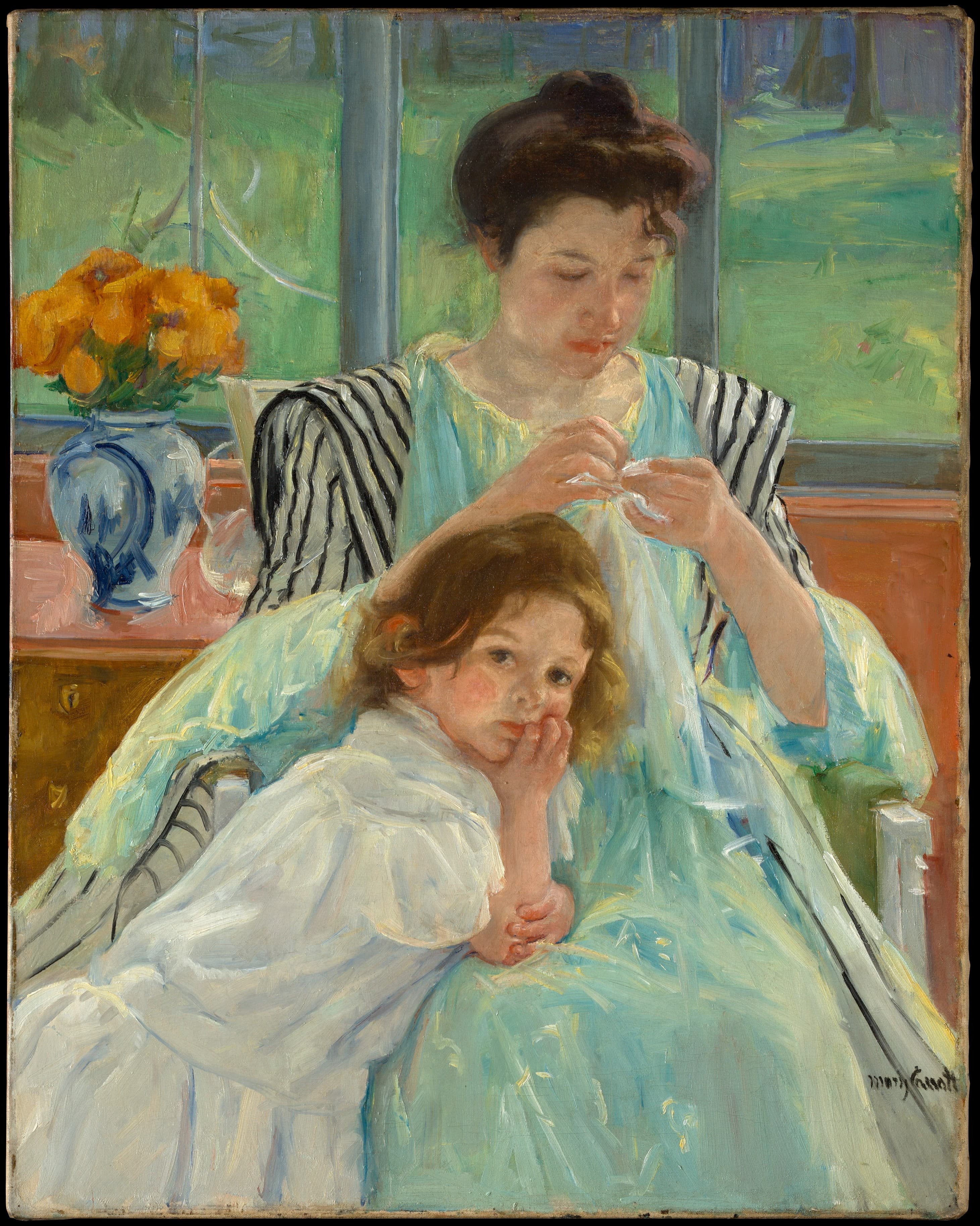
Young Mother Sewing
by Mary Cassatt
A woman bends over her needlework by a sunlit window. A small girl in white slumps against her knee, chin in hand, and looks straight out at whoever is looking in. Mary Cassatt painted it in 1900 and hired two models who were not related to each other to pose as mother and child. Louisine Havemeyer bought it the following year, and it has been at the Metropolitan Museum of Art in New York since 1929.
- 1900
- Oil on canvas
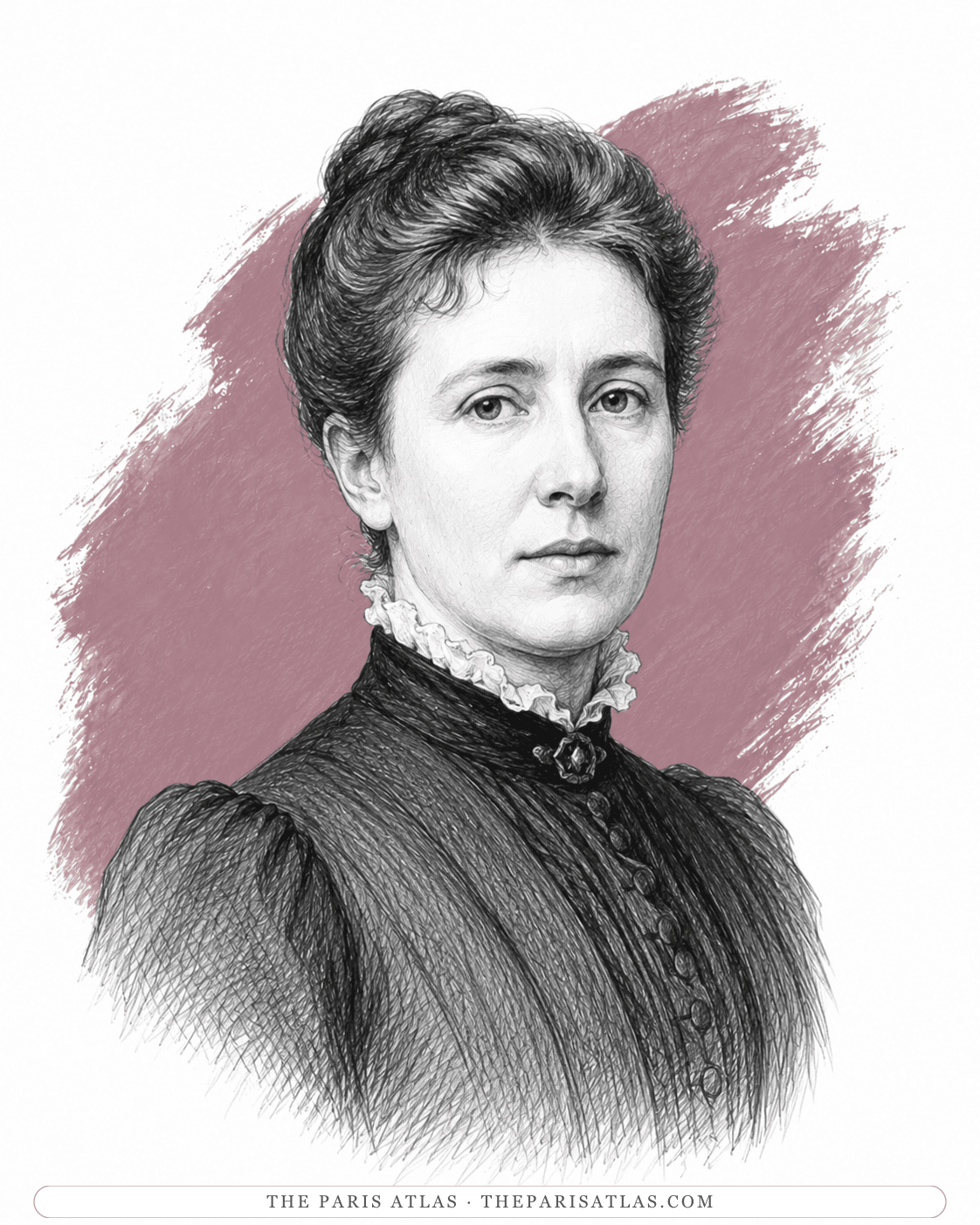
About Mary Cassatt
The child who will not be ignored
The woman keeps sewing. Her head is down, her hands are on the work, and her dress is pale green under a black-and-white wrapper. The child has thrown herself against the woman's knees and rests her chin in her hand, entirely at ease and entirely uninterested in the sewing. Behind them a window opens onto a green lawn and trees, and a vase of orange flowers stands on a chest of drawers to the left.
Louisine Havemeyer, who bought the painting, described exactly the moment Cassatt caught: "Look at that little child that has just thrown herself against her mother's knee, … oblivious to the fact that she could disturb 'her mamma.' … Mamma simply draws back a bit and continues to sew."
The Metropolitan Museum's curator Laura D. Corey has pointed out how unusual that ease was in 1900, when pictures of mothers and children were normally posed and formal. Nothing here is arranged for the viewer except the child's stare.
Not a mother and not her daughter
The two figures were strangers to each other. Cassatt hired two unrelated models and put them together: Reine Lefebvre as the woman and a small girl named Margot Lux as the child. Both sat for her repeatedly around this date.
That matters for how the picture is read. It is not a portrait of a family, and Cassatt was not recording a household she knew. She was constructing an image of ordinary attention — a woman occupied, a child certain of her welcome — out of two people who had to be paid to sit still.
Louisine Havemeyer bought it in 1901
Cassatt sold it through Durand-Ruel in Paris in 1901, and Louisine Havemeyer bought it there. Cassatt had met her in Paris in 1874 and spent nearly fifty years advising the Havemeyers on what to buy — Degas, Manet, Monet — building one of the great collections of European art in the United States. Havemeyer called Cassatt the fairy godmother of her collection.
Henry Osborne Havemeyer died in 1907 and Louisine kept the painting for another twenty-two years. Her 1929 bequest brought about two hundred works to the Metropolitan Museum of Art, this one among them, and the credit line still reads H. O. Havemeyer Collection, Bequest of Mrs. H. O. Havemeyer. It hangs in Gallery 768.
Where 1900 sits in her life
Cassatt was fifty-six, and had roughly fourteen working years left. From about 1890 she had narrowed her subjects to children and the women who look after them, and after 1900 she painted almost nothing else.
The eye trouble that ended her career was still a decade away. Cataracts, along with diabetes and rheumatism, were diagnosed around 1911 or 1912, and she stopped painting around 1914 or 1915. She died at her house in the Oise in 1926, nearly blind.
Close reading
Reading the work, detail by detail
A woman attends to her sewing while a child leans across her lap and looks outward. Move between their faces and hands, then the flowers and window that spread color through the room.
1.Attention on the work
The lowered eyes and inclined head gather attention toward the hands below. The dark hair sets the face apart from the green window, giving the quiet concentration a clear shape.
2.Fingers at work
The fingers approach the fabric with small, separate bends. These precise gestures occupy a compact area within the broad dress, making the scale of the work feel delicate against the figure's larger form.
3.The child's outward look
The child's eyes establish a direct connection with the viewer while the woman remains occupied. The hand pressed to the cheek makes that outward attention seem relaxed and sustained.
4.Leaning across the lap
The child's diagonal pose crosses the woman's more upright body. Overlapping arms, white clothing, and green fabric make their closeness visible through the pressure and placement of ordinary limbs.
5.Orange flowers and a blue vase
The orange flowers make a concentrated warm patch within a room dominated by greens. Curving blue marks on the vase add a smaller pattern beside the broad striped sleeve and the flowing dress.
6.Green beyond the window
The window frame divides the outdoor greens into upright sections. Similar colors return in the dress, carrying the garden's light into the figure and making the room feel connected to the view beyond it.
Young Mother Sewing quotes
Look at that little child that has just thrown herself against her mother's knee, … oblivious to the fact that she could disturb 'her mamma.' … Mamma simply draws back a bit and continues to sew.
Timeline
1900
Painted in France, with Reine Lefebvre and the child Margot Lux posing as an unrelated mother and daughter.
1901
Sold through Durand-Ruel in Paris to Henry Osborne and Louisine Havemeyer of New York.
1907
H. O. Havemeyer dies; Louisine keeps the painting.
1929
Enters the Metropolitan Museum of Art with Louisine Havemeyer's bequest of some two hundred works — accession 29.100.48.
1998–99
Plate 88 in the catalogue of Mary Cassatt: Modern Woman, shown in Chicago, Boston and Washington.
Where to see it
The Metropolitan Museum of Art
1000 Fifth Avenue, New York, NY 10028, United States
Displays and loans can change. Check whether this work is on view before making a special trip.
Plan your visit on the museum’s official website (opens in a new tab)Frequently asked questions
Where is Young Mother Sewing?
At the Metropolitan Museum of Art in New York, Gallery 768 — accession number 29.100.48, from the H. O. Havemeyer Collection. It is not at the National Gallery of Art, which holds no painting of this title.
Who are the woman and child in the painting?
Two professional models who were not related. The woman is Reine Lefebvre and the child is Margot Lux. Cassatt put them together to make the image; it is not a portrait of a real mother and daughter.
Who bought Young Mother Sewing?
Louisine Havemeyer, in 1901, from Durand-Ruel in Paris. She and her husband collected on Cassatt's advice for decades, and her 1929 bequest brought this painting and about two hundred other works to the Metropolitan Museum of Art.
How big is Young Mother Sewing?
92.4 by 73.7 centimeters — roughly 36 by 29 inches, an upright canvas a little under a meter tall.
Was Cassatt's eyesight failing when she painted this?
No. Cataracts, diabetes and rheumatism were diagnosed around 1911 or 1912, more than a decade after this painting, and she stopped working around 1914 or 1915.
Can I download an image of Young Mother Sewing?
Not from the Metropolitan Museum, which no longer flags the object as public domain and serves no downloadable file. The museum did release one under CC0 in 2017, and that file remains on Wikimedia Commons; the painting itself is out of copyright because Cassatt died in 1926.
More by Mary Cassatt
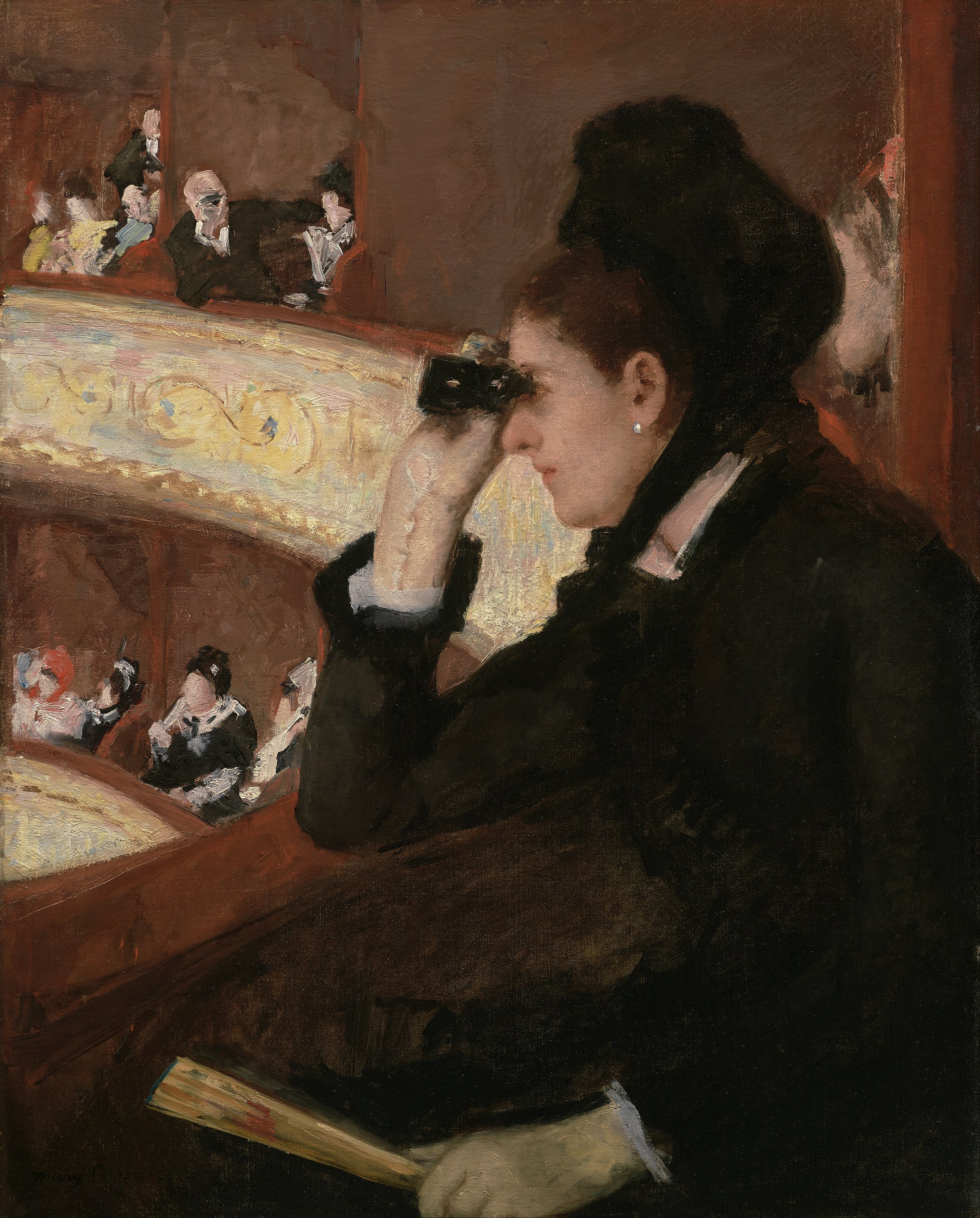
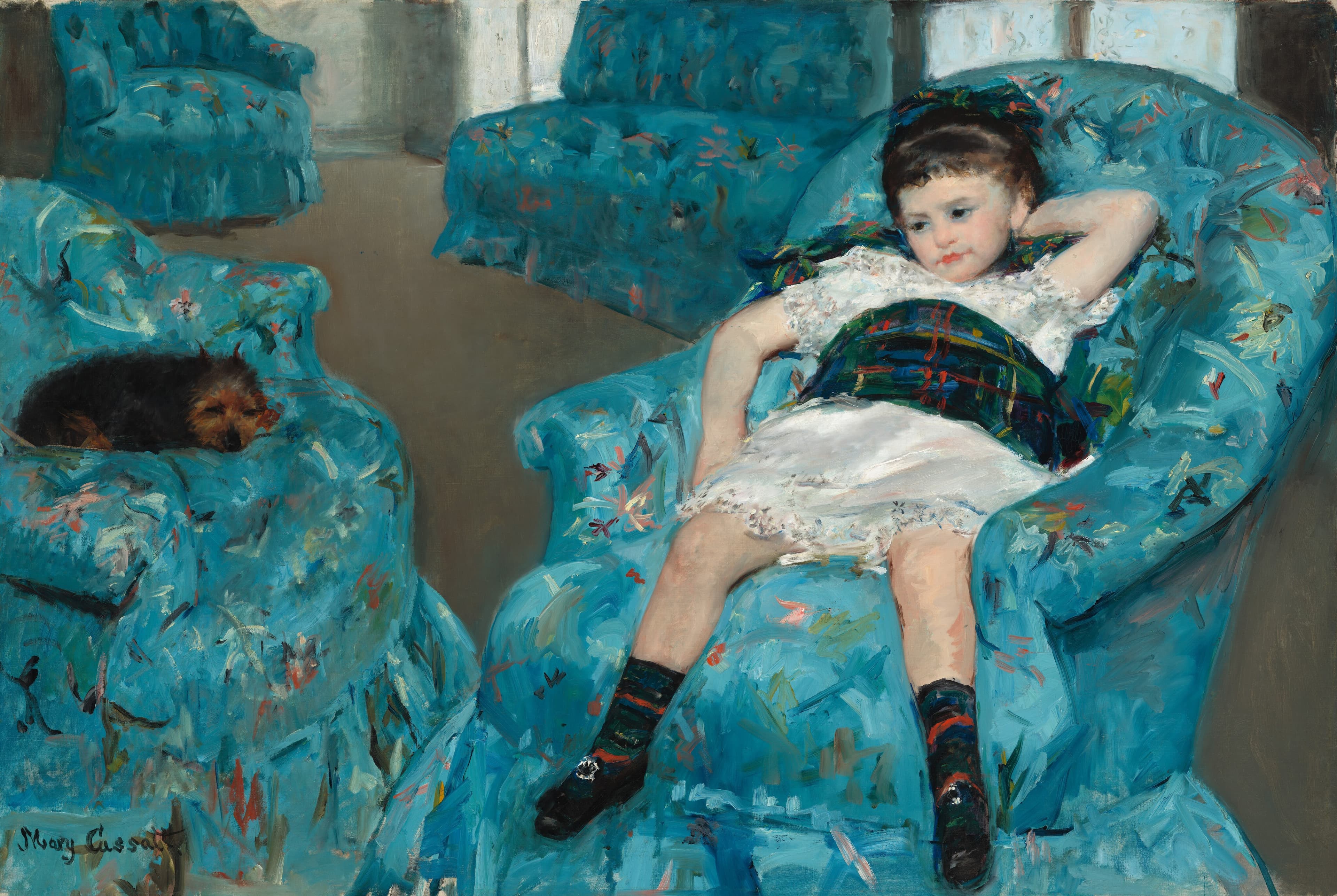
If you like Mary Cassatt
Explore painters from the same movements and circles.
Gustave Caillebotte
Painter of Haussmann's geometry and the group's organizer-financier; his bequest of Impressionist paintings forced the French state to take the movement in.
View artist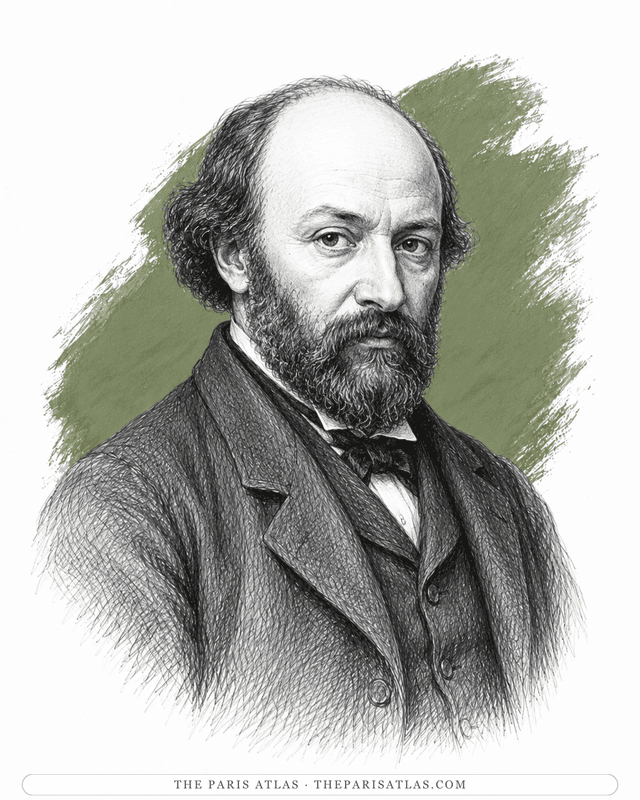
Paul Cézanne
Painter between Impressionism and everything after — shown in the independents' exhibitions, emulated by the Cubists, and present at the Orangerie through 15 works in the Walter-Guillaume collection.
View artist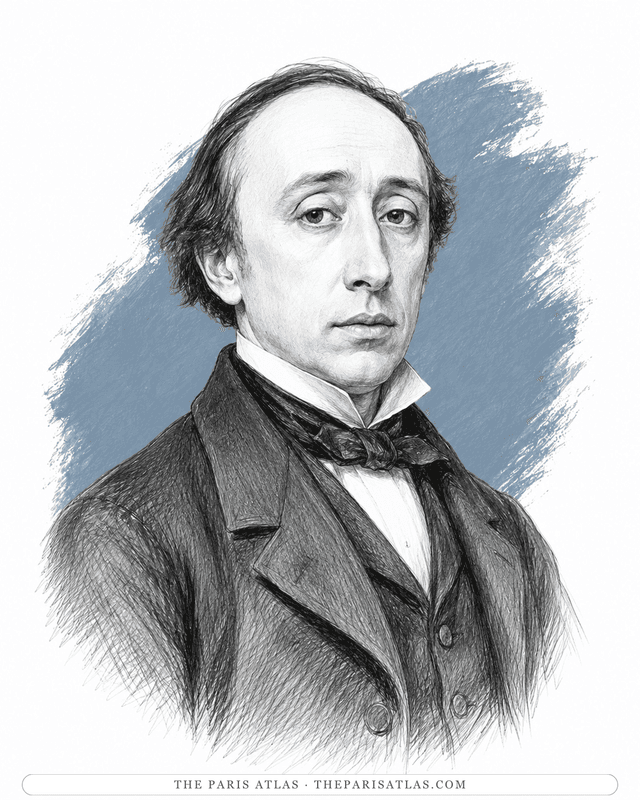
Edgar Degas
Painter of dancers, racecourses, and café interiors — among the founders of the independent exhibitions that became Impressionism, though he preferred the word 'independent' himself.
View artist
References
The sources below include collection records, catalogues, scholarly research, and primary materials that informed this page. They document Young Mother Sewing, its making, and its place in cultural history.


1Young Mother Sewing (Mary Cassatt, 1900) — The Metropolitan Museum of Art
WebsiteThe Metropolitan Museum of ArtUsed forWeb source consulted for documented facts and historical context presented on the Young Mother Sewing page.

2Young Mother Sewing (Mary Cassatt) — Inventories of American Painting and Sculpture
ArchiveSmithsonian American Art MuseumUsed forThe Smithsonian inventory record names both models, Reine Lefebvre and Margot Lux, and gives the catalogue raisonné number, Breeskin 415.
3Mary Stevenson Cassatt (1844–1926) — Heilbrunn Timeline of Art History
WebsiteThe Metropolitan Museum of ArtUsed forWeb source consulted for documented facts and historical context presented on the Young Mother Sewing page.
4Mary Cassatt Brings Girls and Women to the Museum — National Gallery of Art
WebsiteNational Gallery of Art, WashingtonUsed forWeb source consulted for documented facts and historical context presented on the Young Mother Sewing page.
These references provide the documented foundation for this work's history and interpretation. Claim-level citations remain attached to the specific claims they support.
 Explore more resources