Depicts · 1880
Mary Cassatt
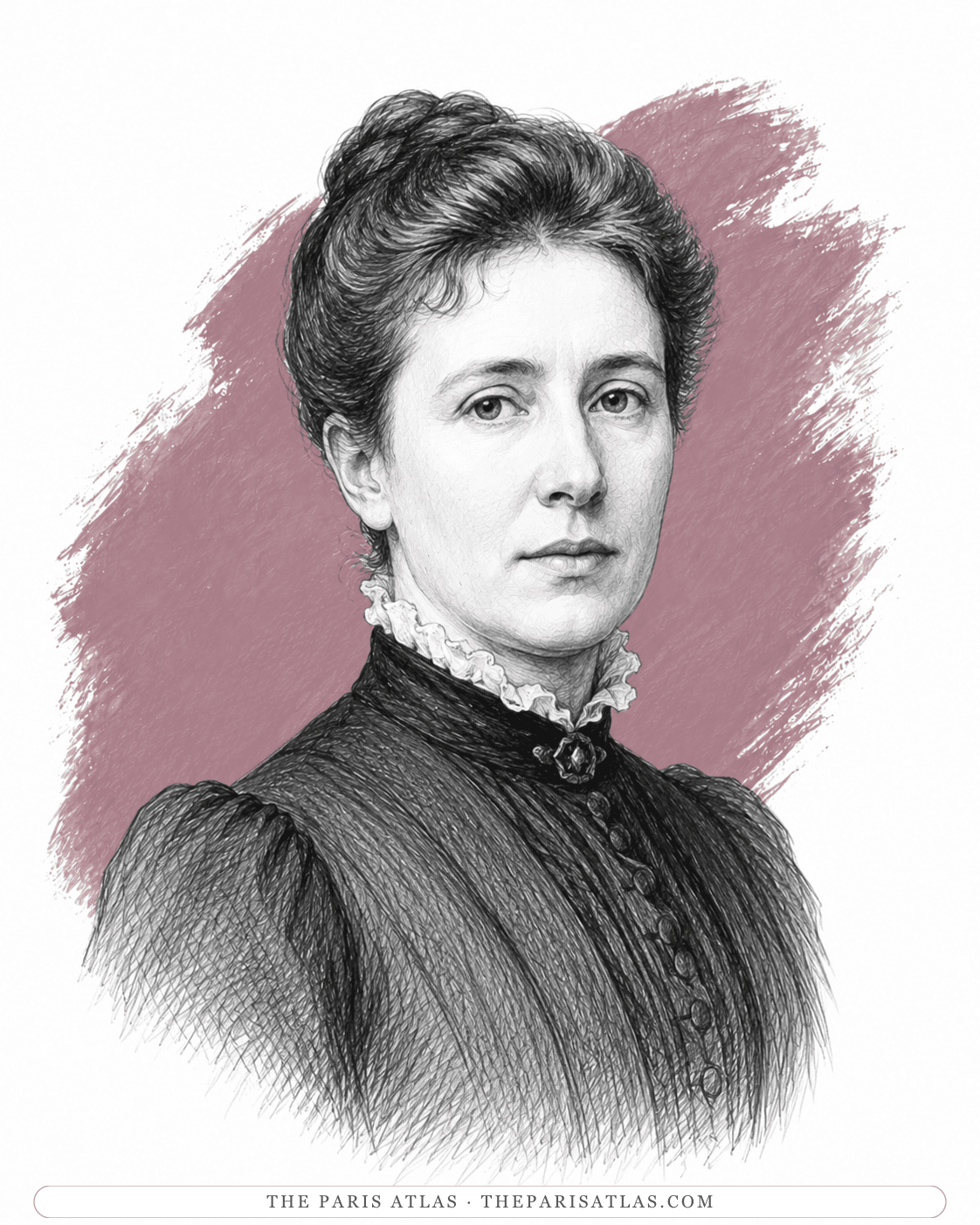
Cassatt painted herself about 1880 in gouache and watercolor over graphite. The National Portrait Gallery, which holds the sheet as NPG.76.33, records Mary Cassatt as both the artist and the sitter.
by Mary Cassatt
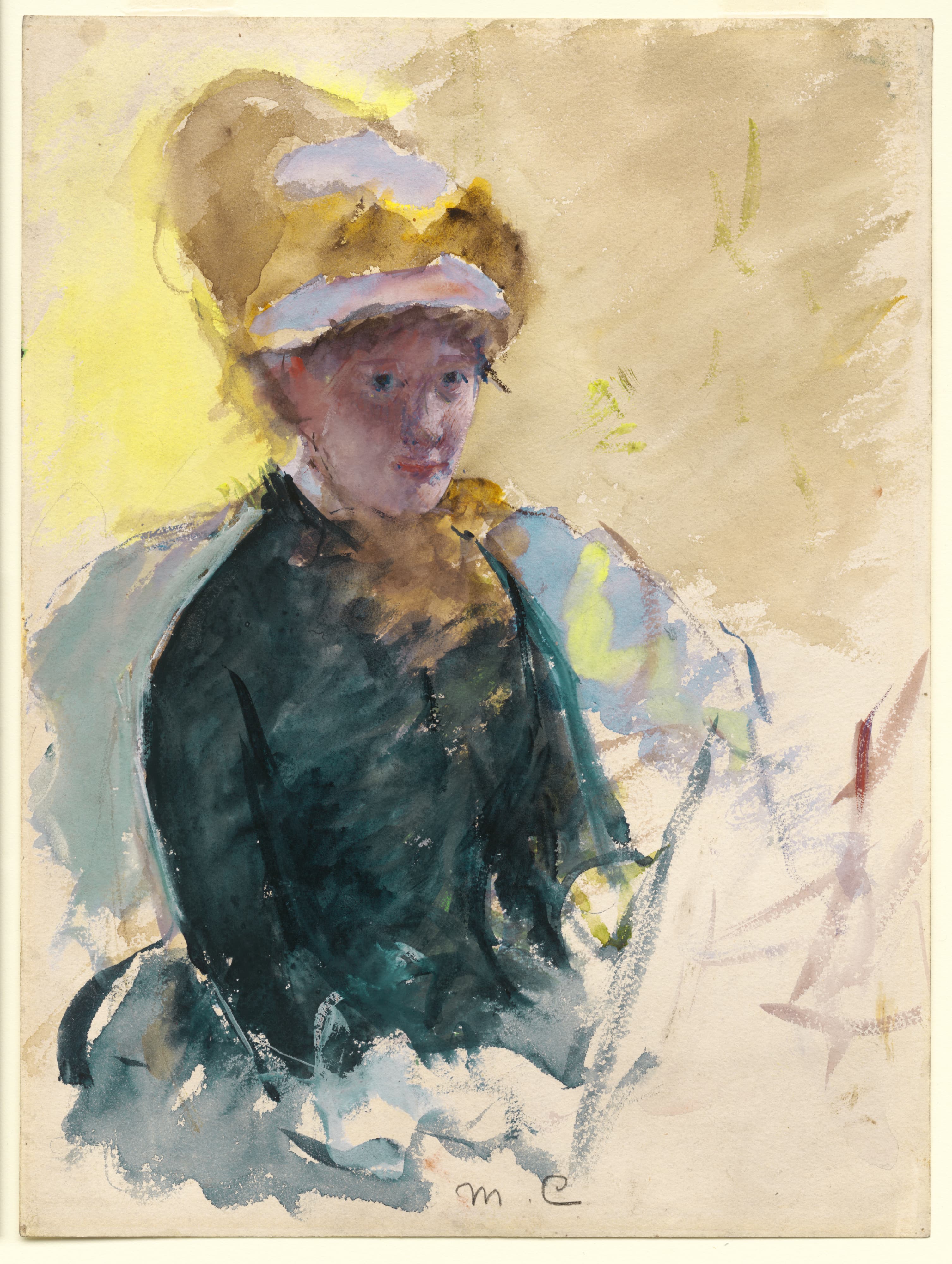
Mary Cassatt painted herself about 1880, in gouache and watercolor over pencil, hiding her sketching surface from view and looking directly out at whoever is looking at her. It is one of only two self-portraits she is known to have painted, and it belongs to the National Portrait Gallery in Washington.
Cassatt shows herself dressed for company, in a hat, at work. The sheet she is drawing on is turned away, so the viewer cannot see what she is making, and she looks steadily back rather than posing to be looked at. The National Portrait Gallery describes this as a reversal: the artist is appraising the viewer, not the other way round.
The painting is quick and open. Strokes of green at the right suggest wallpaper, a wash of yellow at the left stands in for sunlight coming over her shoulder, and that light leaves her own face in shadow. Large areas of the paper are left bare.
The date puts the picture a year or two after Degas brought her into the independent exhibitions. He invited her in 1877, and she showed with the group for the first time in 1879. She appeared again in 1880, 1881 and 1886 — four of the eight exhibitions the independents held, and she was the only American in any of them.
She painted herself very seldom. Two painted self-portraits are documented: this one, and a watercolor of 1878 at the Metropolitan Museum of Art, which the Met titles Portrait of the Artist. The art historian Nicole Georgopulos has argued that a third should be counted, the drypoint print Reflection of about 1889–90.
Photographs of her are scarce as well. The best known was taken in 1913, when Cassatt was sixty-nine, and a note on the back from her dealer Durand-Ruel claims it was the only photograph she ever posed for.
The National Portrait Gallery acquired the sheet in the mid-1970s. Its object number, NPG.76.33, points to 1976, while the Smithsonian's own chronology records the acquisition under 10 February 1977, calling it a rare self-portrait and one of only two the artist painted. The record names no fund and no previous owner, and the drawing is not currently on view.
The same museum bought Degas's oil portrait of Cassatt, painted about 1880–84, in 1984. Her own picture of herself and his picture of her are now in one collection.
Close reading
This self-portrait balances a closely observed face with freely handled clothing and open paper. The details show where Cassatt sharpens an edge and where she lets a form dissolve.
1.The concentrated face
A few concentrated marks establish expression within broader washes of color. Their precision makes the face the place where the otherwise loose image settles into likeness.
2.The oversized hat
The hat is built from uneven patches and exposed light areas. Its broad shape gives the small face a conspicuous upper frame without requiring a fully drawn contour.
3.The dark bodice
The dark clothing gives weight to the center of the sheet. Varied washes keep that mass active, with some passages dense and others translucent.
4.The right shoulder
The shoulder is described by separated color touches rather than a continuous outline. The viewer completes the volume across the gaps.
5.Edges left open
The open paper participates in the figure's lightest passages. The unfinished-looking edge directs attention back toward the more definite face and dark torso.
6.The lower marks
The figure breaks into isolated strokes before reaching the signature. This visible change from body to mark preserves the sense of a portrait being discovered on the sheet.
1877
Edgar Degas invites Cassatt to exhibit with the independent group.
1879
Cassatt shows with the Impressionists for the first time, at the fourth exhibition.
c. 1880
Paints this self-portrait in gouache and watercolor over graphite.
1976
Acquired by the National Portrait Gallery, Smithsonian Institution, as NPG.76.33; the Smithsonian chronology records the acquisition on 10 February 1977.
1984
The same museum acquires Degas's oil portrait of Cassatt, painted about 1880–84.
National Portrait Gallery, Smithsonian Institution
8th and G Streets NW, Washington, DC, United States
Visitor entrances are on G Street and F Street, and all visitors pass through security screening. Check the museum's current display information before travelling; much of the collection is not on view at any one time.
Plan your visit on the museum’s official website (opens in a new tab)At the National Portrait Gallery, Smithsonian Institution, in Washington — object number NPG.76.33. It is not currently on view.
Two are documented: this one of about 1880 at the National Portrait Gallery, and a watercolor of 1878 at the Metropolitan Museum of Art, which the Met calls Portrait of the Artist. The art historian Nicole Georgopulos has argued that her drypoint Reflection, of about 1889–90, should count as a third.
Gouache and watercolor over graphite on paper — the image measures 32.7 by 24.6 centimeters, roughly 13 by 10 inches. The National Portrait Gallery catalogues it as a drawing rather than a painting.
Yes. The National Portrait Gallery designates the record CC0 under Smithsonian Open Access and offers a high-resolution file for download, and the artwork itself is in the public domain.
Yes, including a well-known one from 1913, when she was sixty-nine. A note on the back of that print, from her dealer Durand-Ruel, claims it was the only photograph she ever posed for.
Depicts · 1880
Cassatt painted herself about 1880 in gouache and watercolor over graphite. The National Portrait Gallery, which holds the sheet as NPG.76.33, records Mary Cassatt as both the artist and the sitter.
Explore painters from the same movements and circles.
Painter of Haussmann's geometry and the group's organizer-financier; his bequest of Impressionist paintings forced the French state to take the movement in.
View artist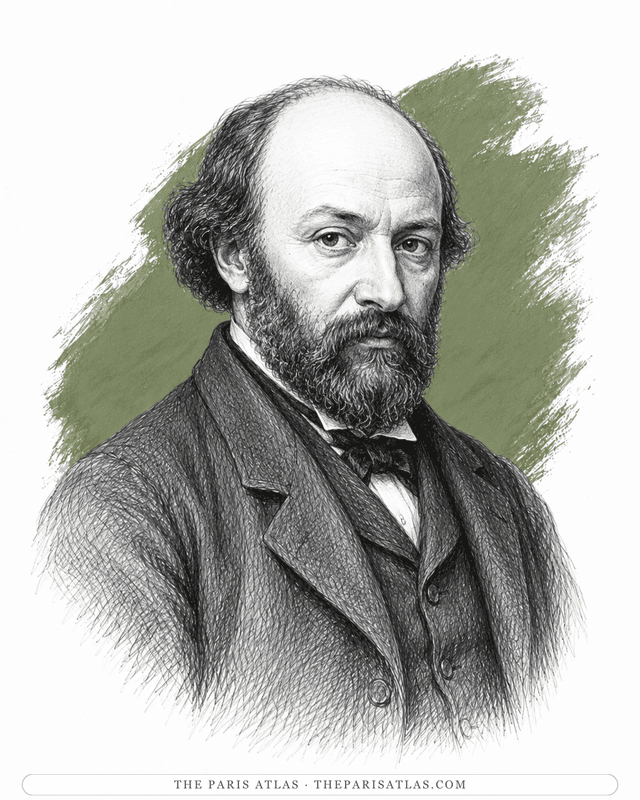
Painter between Impressionism and everything after — shown in the independents' exhibitions, emulated by the Cubists, and present at the Orangerie through 15 works in the Walter-Guillaume collection.
View artist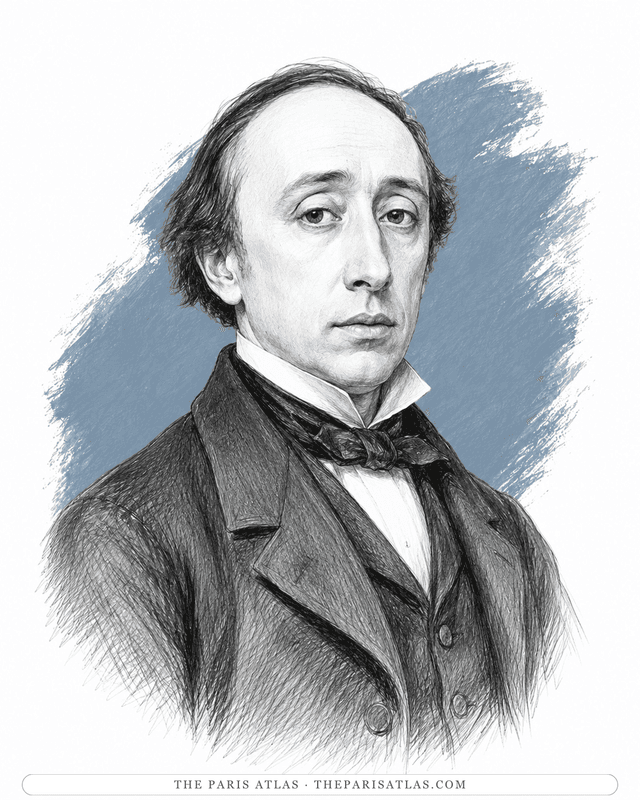
Painter of dancers, racecourses, and café interiors — among the founders of the independent exhibitions that became Impressionism, though he preferred the word 'independent' himself.
View artistThe sources below include collection records, catalogues, scholarly research, and primary materials that informed this page. They document Mary Cassatt Self-Portrait, its making, and its place in cultural history.


Web source consulted for documented facts and historical context presented on the Mary Cassatt Self-Portrait page.
Records Degas's 1877 invitation and the four Impressionist exhibitions Cassatt took part in.

Catalogue scholarship used to verify attribution, provenance, chronology, and interpretive context for Mary Cassatt Self-Portrait.
Independent account of where Cassatt stood in her career around 1880.
Web source consulted for documented facts and historical context presented on the Mary Cassatt Self-Portrait page.
These references provide the documented foundation for this work's history and interpretation. Claim-level citations remain attached to the specific claims they support.
 Explore more resources