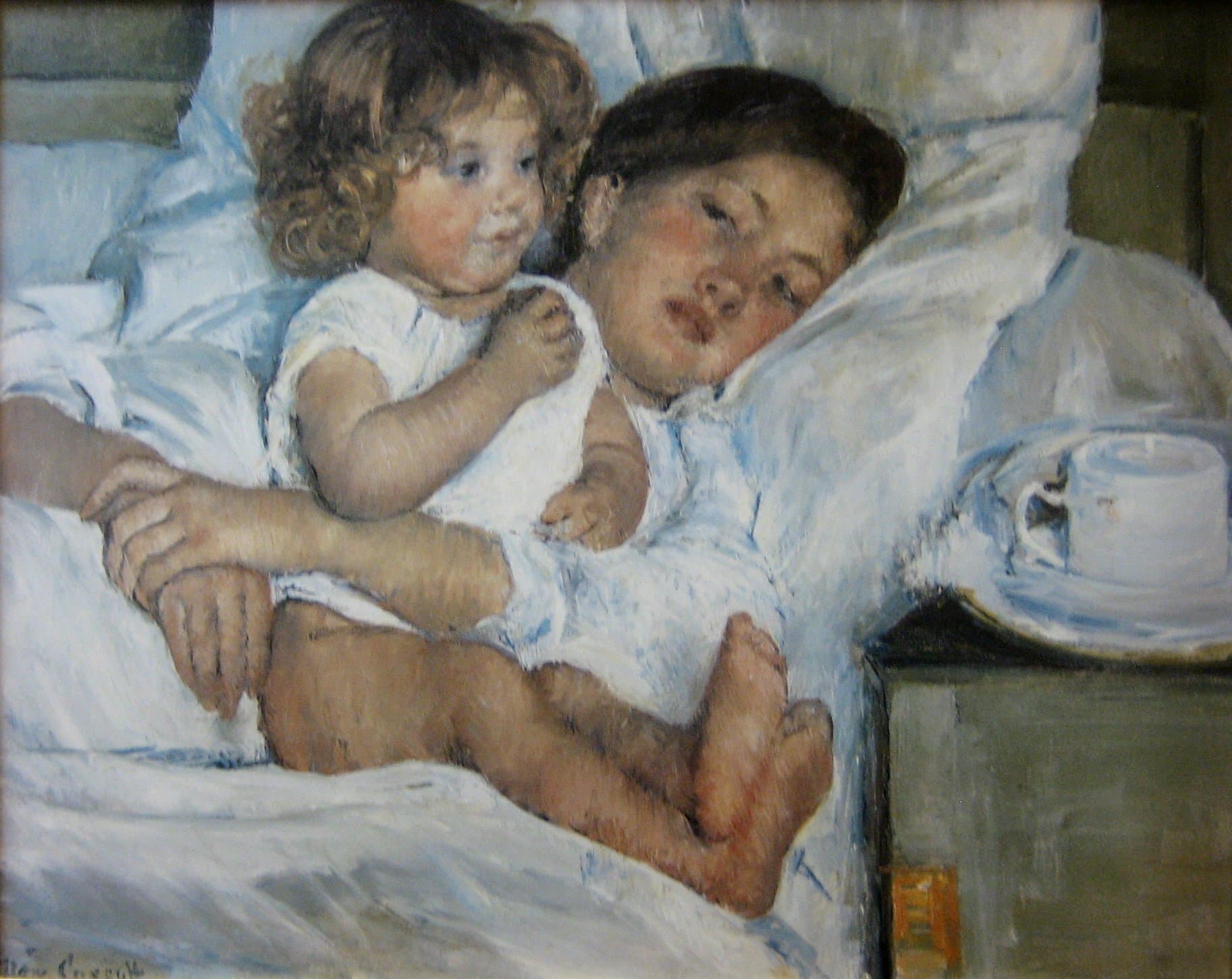
Breakfast in Bed
by Mary Cassatt
A woman lies flat on her pillow with both arms around a small child who is sitting bolt upright on top of the bedclothes, wide awake and looking off out of the picture. A cup and saucer wait on the nightstand. Mary Cassatt painted it in 1897, and it is at The Huntington in San Marino, California.
- 1897
- Oil on canvas
About Mary Cassatt
One of them is awake
The whole picture turns on the difference between the two figures. The woman's head is down on the pillow, her eyes heavy and turned toward the child. The child sits up on top of the covers with bare legs drawn under, mouth slightly open, staring at something outside the frame. The woman's hand is closed around the child's foot.
The Huntington, which owns the painting, describes Cassatt returning again and again to this tension: a mother's attention fixed on her child, and the child's attention already somewhere else. Here the woman looks at the child and the child looks at the room.
The breakfast that gives the painting its title is easy to miss. It is a white cup and saucer on a tray, on the pale nightstand at the right edge. Everything else is white and pale blue bedding, worked in broken strokes, against a grey-brown wall.
The subject she had settled into
Cassatt began painting mothers and children in the 1880s and, as The Huntington puts it, the subject absorbed her for the rest of her career. By 1897 she had been working at it for more than a decade.
The two figures are not identified. No museum record names them, and it is not established that the woman was the child's mother or that either was anything other than a hired model — which was Cassatt's usual practice for these pictures.
A photograph of it reached America first
The painting was reproduced as a halftone in a periodical in 1903, six years after Cassatt made it, and the Amon Carter Museum of American Art in Fort Worth holds a copy of that printed sheet. Photomechanical reproduction was how most Americans encountered her work at the time, long before the canvas itself crossed the Atlantic.
The painting entered The Huntington as a gift of the Virginia Steele Scott Foundation, whose 1979 gift of fifty American paintings and its endowment established the museum's American art galleries. Its accession number is 83.8.6.
It remains one of the most reproduced pictures in the collection: The Huntington's own print shop lists it among its best sellers, alongside Gainsborough's Blue Boy and Lawrence's Pinkie.
Close reading
Reading the work, detail by detail
An upright child and a reclining woman share a bed filled with pale folds. These details follow their different expressions, the arm that holds them together, and the few objects that define the morning scene.
1.The child's alert face
The child's upright head rises from the surrounding white fabric. Small dark accents in the eyes and curls sharpen the face, giving it an alertness that contrasts with the reclining pose beside it.
2.The reclining face
The slant of the face follows the pillow's yielding surface. Soft transitions around the eyelids and cheek slow the expression, placing a quieter rhythm beside the child's open-eyed attention.
3.The enclosing arm
The long forearm forms a horizontal connection across the child's upright body. Its warm color remains clear among the pale clothes, making the shared pose readable through a single continuous gesture.
4.The cup at the bedside
The cup gives the title a small, concrete presence at the edge of the bed. Its firm rounded shape and the furniture's straight corner provide a stable boundary beside the loose folds of pillows and clothing.
5.Bare feet against the sheets
The nearer sole turns toward the viewer and makes the child's position feel close. Warm skin stands out against cool folds, while the overlapping legs give the lower part of the scene its compact depth.
6.The many colors of white
The bedding contains several colors within what first reads as white. Long diagonal strokes gather the fabric into folds and carry light across the foreground without outlining every crease.
Timeline
1897
Painted in France.
1903
Reproduced as a halftone in a periodical; the Amon Carter Museum of American Art holds a copy of the printed sheet.
1979
The Virginia Steele Scott Foundation gives The Huntington fifty American paintings, funds for a building and an endowment.
1984
The Virginia Steele Scott Galleries of American Art open at The Huntington.
Where to see it
The Huntington Library, Art Museum, and Botanical Gardens
A public viewing address has not yet been confirmed for this holding.
Frequently asked questions
Where is Breakfast in Bed?
At The Huntington Library, Art Museum, and Botanical Gardens in San Marino, California — accession number 83.8.6, a gift of the Virginia Steele Scott Foundation. It moves in and out of storage, so check the museum's object record before traveling to see it.
Is Breakfast in Bed a pastel?
No. It is oil on canvas, as the museum's record states. Cassatt worked extensively in pastel, which is probably where the confusion comes from, but this is an oil painting.
Who are the woman and child?
Unidentified. No museum record names them, and Cassatt generally used hired models for her mother-and-child pictures rather than painting actual families.
How big is Breakfast in Bed?
58.4 by 73.7 centimeters — 23 by 29 inches, a horizontal canvas. Note that a larger figure, 65 by 73.6 centimeters, circulates widely online and does not match the museum's own record.
What is the child doing?
Sitting up on top of the bedclothes and looking away, out of the picture, while the woman lies flat and watches her. The Huntington reads the picture as being about exactly that split of attention.
More by Mary Cassatt
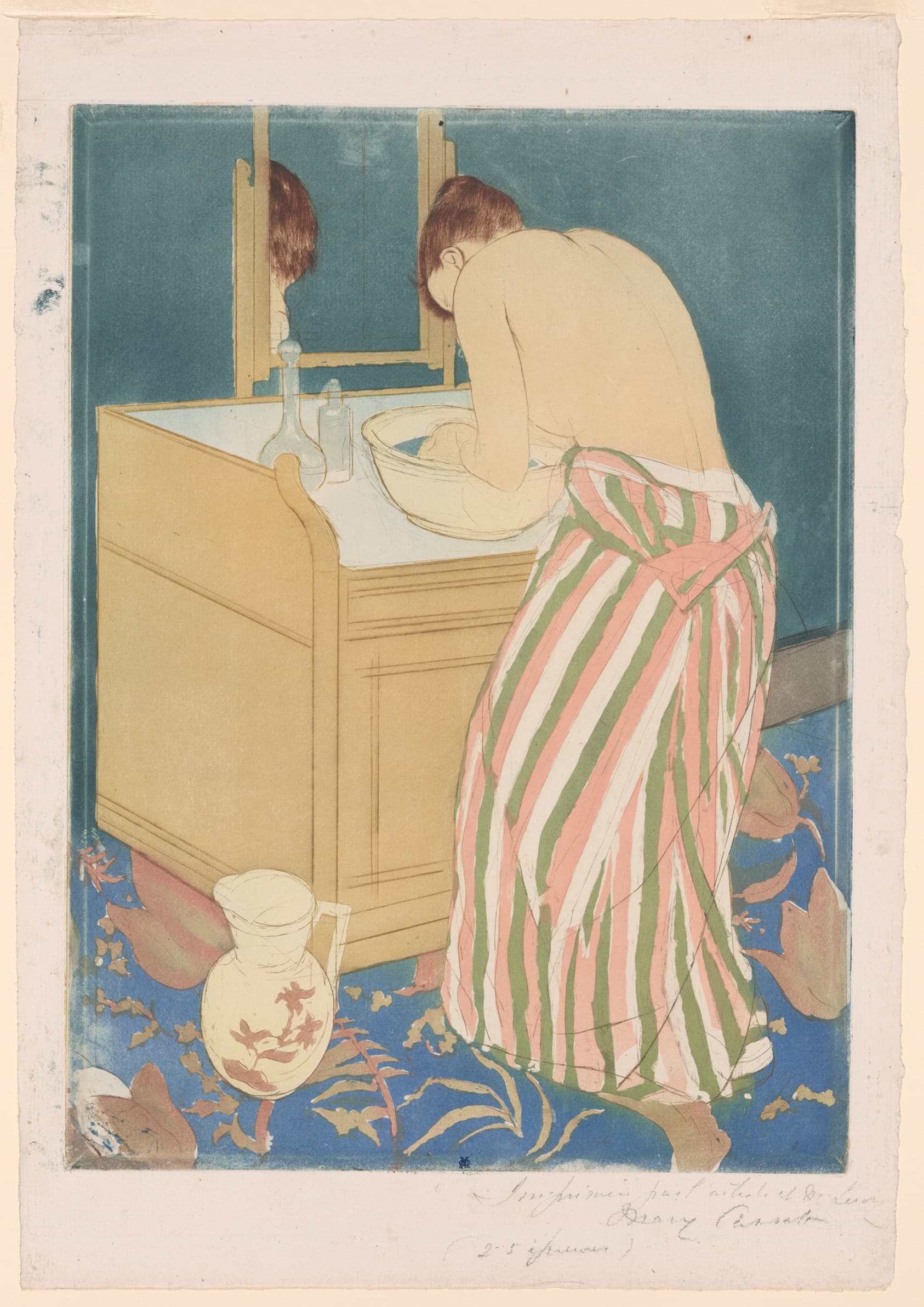
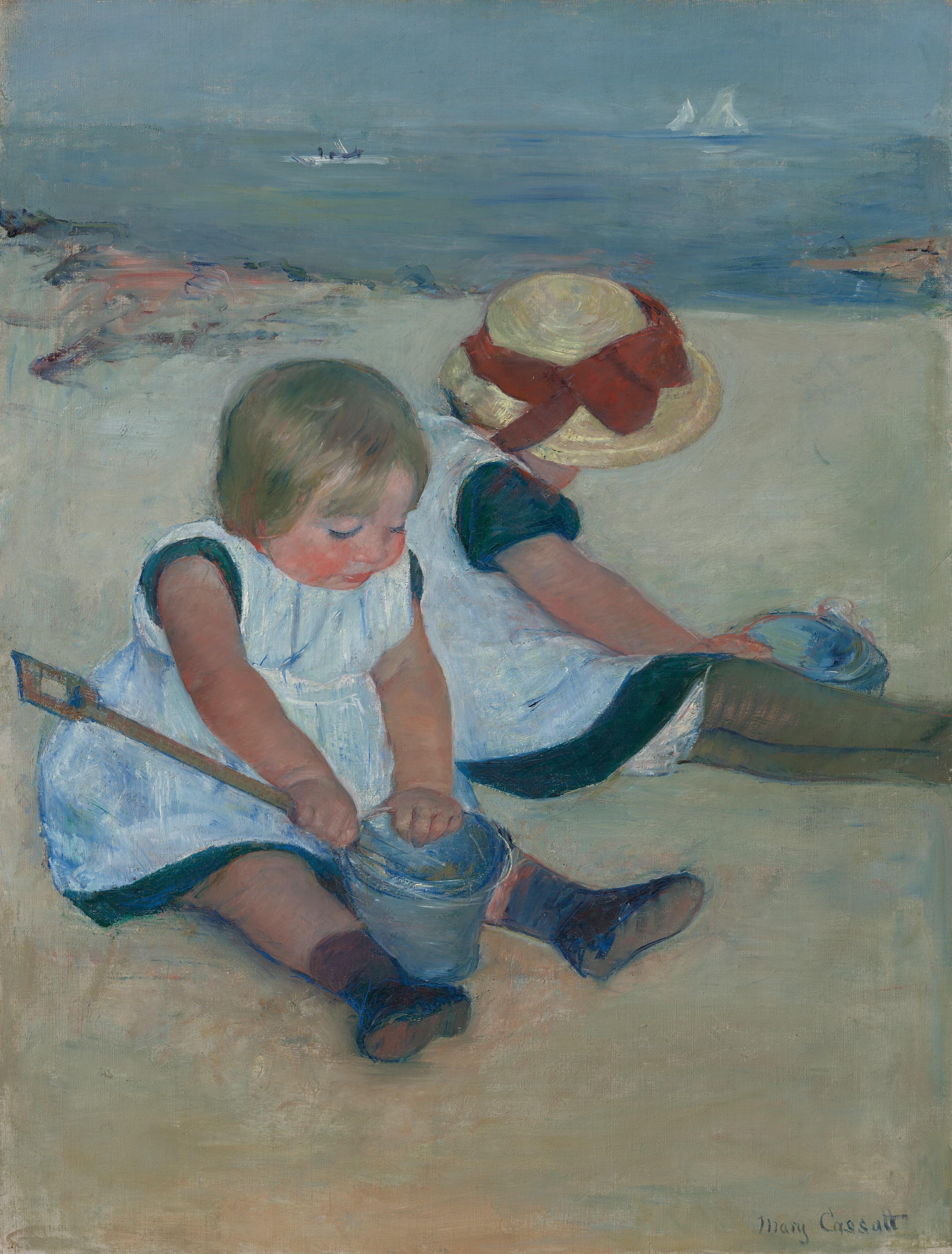
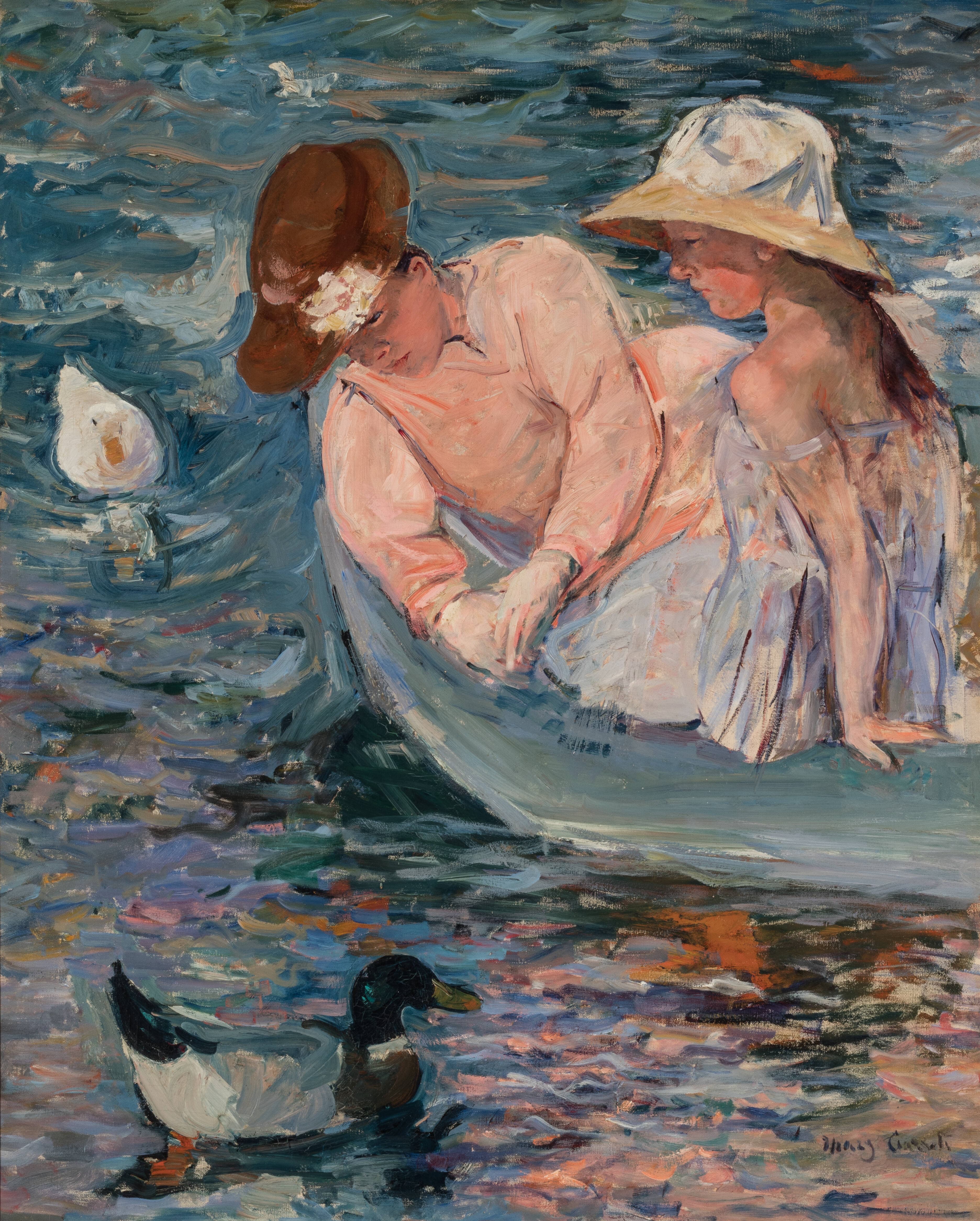
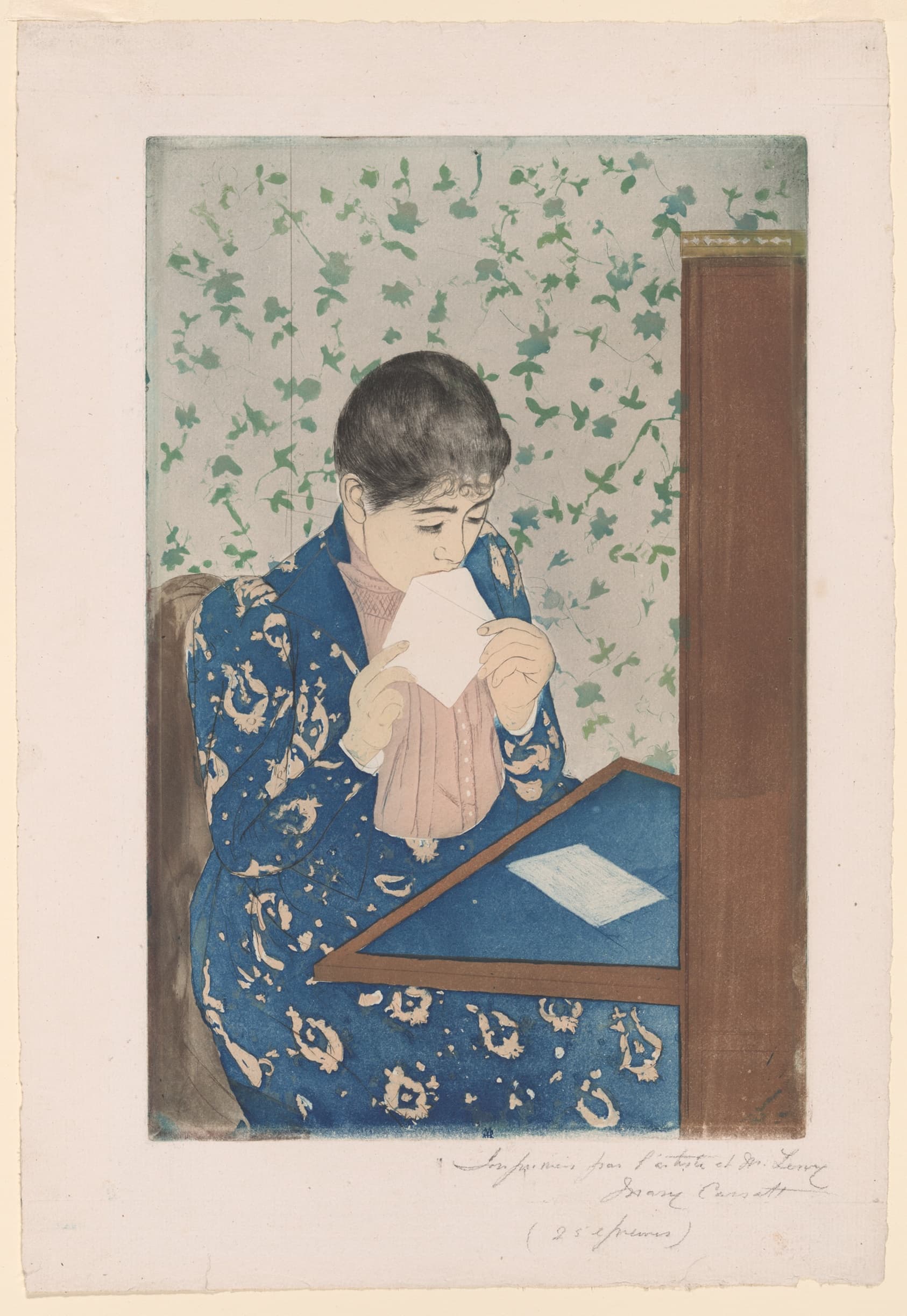
If you like Mary Cassatt
Explore painters from the same movements and circles.
Gustave Caillebotte
Painter of Haussmann's geometry and the group's organizer-financier; his bequest of Impressionist paintings forced the French state to take the movement in.
View artist
Paul Cézanne
Painter between Impressionism and everything after — shown in the independents' exhibitions, emulated by the Cubists, and present at the Orangerie through 15 works in the Walter-Guillaume collection.
View artist
Edgar Degas
Painter of dancers, racecourses, and café interiors — among the founders of the independent exhibitions that became Impressionism, though he preferred the word 'independent' himself.
View artist
References
The sources below include collection records, catalogues, scholarly research, and primary materials that informed this page. They document Breakfast in Bed, its making, and its place in cultural history.


1Breakfast in Bed (Mary Cassatt, 1897) — The Huntington
WebsiteThe Huntington Library, Art Museum, and Botanical GardensUsed forWeb source consulted for documented facts and historical context presented on the Breakfast in Bed page.
2Breakfast in Bed, 1903 halftone after Mary Cassatt — Amon Carter Museum of American Art
WebsiteAmon Carter Museum of American ArtUsed forThe Amon Carter Museum holds a 1903 halftone reproduction of the painting and describes the pose independently of The Huntington.
3Mary Stevenson Cassatt (1844–1926) — Heilbrunn Timeline of Art History
WebsiteThe Metropolitan Museum of ArtUsed forWeb source consulted for documented facts and historical context presented on the Breakfast in Bed page.
4Mary Cassatt — National Museum of Women in the Arts
WebsiteNational Museum of Women in the ArtsUsed forWeb source consulted for documented facts and historical context presented on the Breakfast in Bed page.
These references provide the documented foundation for this work's history and interpretation. Claim-level citations remain attached to the specific claims they support.
 Explore more resources