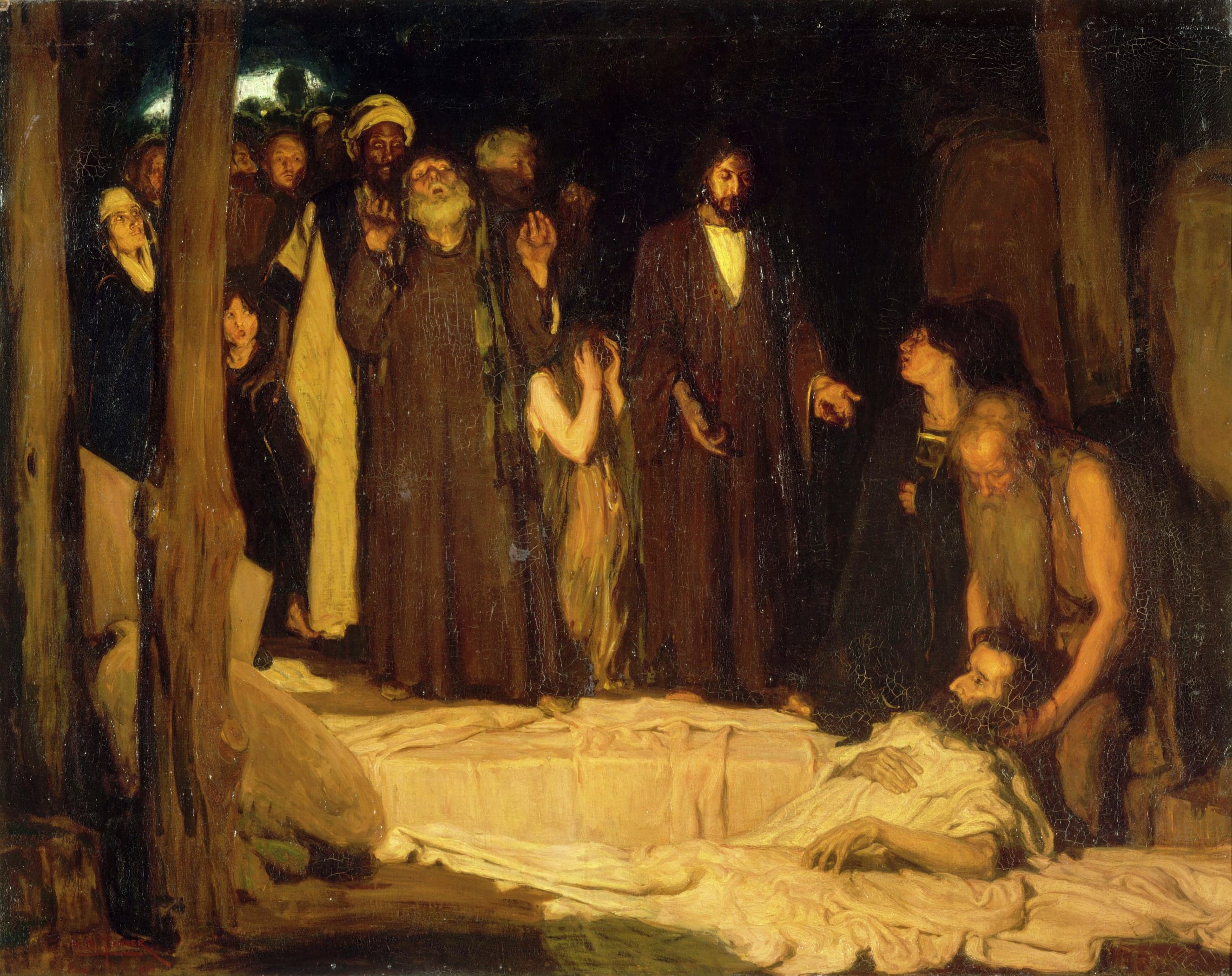
Christ stands over the shrouded body of Lazarus in a dark tomb, one hand pointing down at him, while an old man lifts the dead man's head and a crowd presses in from the left. Henry Ossawa Tanner painted it in Paris through the summer and autumn of 1896. At the Salon of 1897 it won a third-class medal and was bought by the French state for the Musée du Luxembourg, the museum of living artists. It now belongs to the Musée d'Orsay, which lists it as not currently exhibited.
The scene is set inside a dark tomb. Two rough tree trunks cut across the left side of the canvas, and a patch of pale night sky shows at the upper left. Lazarus lies on a stone slab at the lower right, wrapped in a white shroud that spreads across the ledge. His head is raised, his eyes are open and one hand rests on his chest. An old man in a sleeveless tunic bends over him and holds his head up with both hands.
Christ stands to the right of centre in a dark brown robe with a white collar. His face is bent down towards Lazarus and his right hand is extended over the body, the fingers pointing at it. His left hand hangs open at his side. Below the pointing hand a young figure with dark hair looks up at him, mouth open, a band of gold catching the light at the wrist.
The crowd fills the left half. Behind Christ stand a man in a yellow turban and a bald old man whose head is thrown back with his mouth open. A woman in a white headcloth watches from behind the nearer trunk at the far left, and a child's face peers out below her. In the centre a girl in a pale dress presses both hands to her face. A large flat stone leans against the trunk at the lower left.
The canvas is 94.7 by 120.5 centimetres, about thirty-seven by forty-seven inches, and is signed H.O.Tanner at the lower left. The Musée d'Orsay catalogues it as La Résurrection de Lazare. In English it is called both The Raising of Lazarus and The Resurrection of Lazarus, which is the title Henry Ossawa Tanner used himself.
How it was painted
Henry Ossawa Tanner described the making of the picture in 1909, in a two-part memoir for the American magazine The World's Work. He had come to Paris in 1891 to study at the Académie Julian under Jean-Joseph Benjamin-Constant and Jean-Paul Laurens. In 1896 he stayed in the city through the summer instead of going to the country, because models were cheaper in summer, and finished the canvas at the start of winter.
A friend persuaded him that a picture with this much promise should be much larger, and he bought a canvas six feet by ten. After working on it for a long time he decided it could only be a watered-down version of the smaller one, and he went back to what he called his first love, taking criticism more cautiously. He took the finished picture to Jean-Joseph Benjamin-Constant's studio early one morning, and his teacher had it carried into his son's bedroom to show him.
The Salon of the Société des artistes français for 1897, held in the Palais de l'Industrie on the Champs-Élysées, listed the painting as number 1608. The catalogue gives Henry Ossawa Tanner's address as 51 boulevard Saint-Jacques, in the 14th arrondissement.
Bought by the French state
Henry Ossawa Tanner was not in Paris when the Salon opened. He had shown the finished picture to a Philadelphia businessman with an office in Paris, who liked it enough to think that a glimpse of the Holy Land would do the painter good. The National Gallery of Art and Dewey F. Mosby's 1991 catalogue both name him as Rodman Wanamaker, of the department-store family. Tanner travelled to Palestine and Egypt from January to April 1897, spent six weeks in Jerusalem, and came home through Italy.
The letter offering to buy the picture for the French government reached him in Venice early in May, three weeks after it was sent. He called the offer the greatest surprise of his life and sent a long telegram of acceptance that, he wrote, nearly broke the bank. A few days later came the reply that made it certain. A friend then wrote from Paris: "Come home, Tanner, to see the crowds before your picture." He left the next morning. The State paid 1,800 francs, about $346 at the time, according to Dewey F. Mosby, who notes that a French landscape of comparable size fetched 600 francs at the same Salon.
The Musée d'Orsay records the acquisition as a purchase from the artist by the State at the Salon of 1897, for the Musée du Luxembourg, then the State's museum of living artists, where it carried the number LUX 801. The National Gallery of Art in Washington records that the painting also won a third-class medal at that Salon. Henry Ossawa Tanner wrote that he lived for several years in dread that the picture might lose the place it held in the Luxembourg.
In the Luxembourg
At the Luxembourg the painting hung among works by living artists that included, Dewey F. Mosby notes, James McNeill Whistler's portrait of his mother and Jean-Léon Gérôme's cockfight. Booker T. Washington, who visited Henry Ossawa Tanner in Paris in 1899, wrote about seeing his work there in Up from Slavery, published in 1901.
“Few people ever stopped, I found, when looking at his pictures, to inquire whether Mr. Tanner was a Negro painter, a French painter, a German painter. They simply knew that he was able to produce something which the world wanted — a great painting — and the matter of his color did not enter into their minds.”
From the Luxembourg to the Orsay
The Orsay's provenance record follows the canvas through the national collections. It stayed at the Musée du Luxembourg from 1897 to 1922, then went to the Louvre's Jeu de Paume from 1922 to 1946, and from 1946 to 1980 it belonged to the Musée national d'art moderne.
In 1981 that museum returned it to the Direction des Musées de France, which assigned it to the Louvre's paintings department for the collections of the future Musée d'Orsay by an order of 24 July 1981. Its inventory number there is RF 1980 173; the record also lists the Jeu de Paume number JdeP 60.
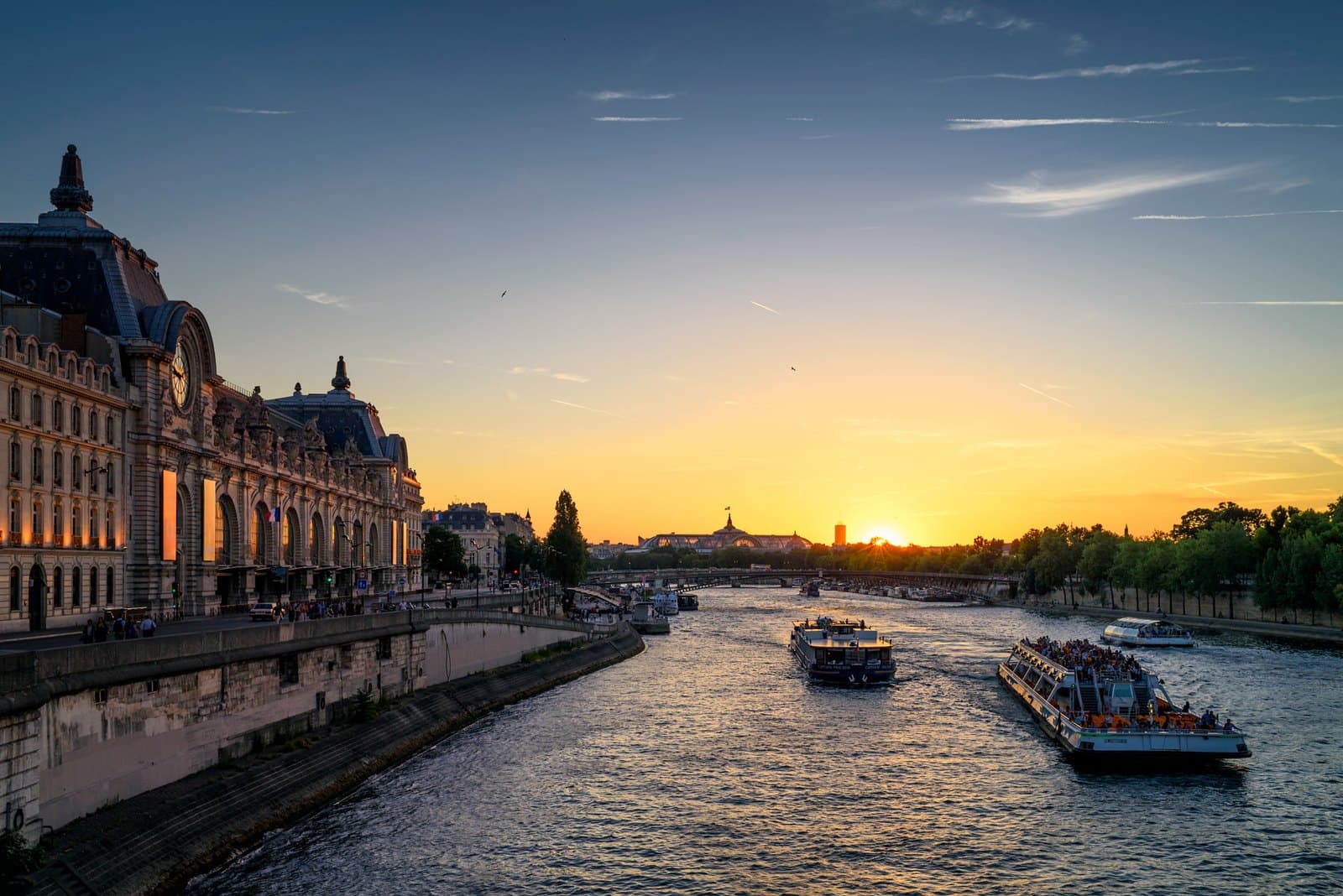
The Musée d'Orsay opened in the former Gare d'Orsay in 1986. As of September 2026 its record lists the painting as not currently exhibited, so anyone travelling to see it should check first. It has travelled several times: to a Paris exhibition marking the centenary of Uncle Tom's Cabin in 1953, and to Blérancourt in 1984. The retrospective Henry Ossawa Tanner: Modern Spirit took it to Philadelphia, Cincinnati and Houston in 2012–13, and the Fundación Mapfre showed it in Madrid in 2015.
Close reading
Reading the work, detail by detail
The picture is dark, and most of what happens in it is in the faces and hands. Close views take the hand that points, the head that lifts, the man who does the lifting and the crowd that has come to watch, then the stone and the signature at the lower left.
1.The hand that points
Christ does not touch Lazarus. His right hand is extended over the body with the fingers pointing at it, and his face above is bent down in shadow. In John's Gospel he calls Lazarus out with his voice; Henry Ossawa Tanner gives the command to the hand.
2.Lazarus opens his eyes
The dead man is already awake. His eyes are open, his mouth is closed, and one hand has come up to rest on his chest while the old man holds his head from behind. The shroud is painted in thick white strokes that catch the light, the brightest paint on the canvas.
3.The bare arm of the man who lifts him
He is the only figure doing physical work in the picture. His head is bowed over the body and his bare arm, lit along its length, reaches down to support Lazarus's head. Henry Ossawa Tanner painted the picture from models through the summer of 1896, when, he wrote, they were cheaper to hire.
4.Two men behind Christ
The man in the turban stares straight out with wide eyes. The old man beside him has tipped his head back with his mouth open, the one figure in the crowd who reacts with his whole body. A hand is raised between them, palm out.
5.A woman and a child behind the trunk
They are the farthest from Christ and the nearest to the viewer. The woman's headcloth is the one white note on the left side of the canvas. The child below her has its mouth open and looks out past the trunk.
6.A girl with her hands to her face
She stands in the centre of the canvas, between the crowd and Christ, in the palest dress in the picture. Both hands cover her face. Whether she is weeping or shielding her eyes the painting does not say.
7.The stone and the signature
A flat stone leans against the nearer trunk, presumably the slab that closed the tomb. A white cloth lies on the ledge behind it. The signature, H.O.Tanner, sits below in the corner of the canvas, almost lost in the dark.
Timeline
1891
Henry Ossawa Tanner arrives in Paris and enrols at the Académie Julian under Jean-Joseph Benjamin-Constant and Jean-Paul Laurens.
1896
Painted in Paris over the summer and finished at the start of winter, after a larger version on a canvas six feet by ten was abandoned.
1897
Shown at the Salon of the Société des artistes français as number 1608. Wins a third-class medal and is bought from the artist by the State for the Musée du Luxembourg, LUX 801.
1897
Henry Ossawa Tanner travels to Palestine and Egypt from January to April at Rodman Wanamaker's expense. The offer of purchase reaches him in Venice early in May, and he accepts by telegram.
1922
Transferred from the Musée du Luxembourg to the Louvre's Jeu de Paume, JdeP 60.
1946
Passes to the Musée national d'art moderne.
1981
Assigned to the Louvre's paintings department for the Musée d'Orsay collections by an order of 24 July, as RF 1980 173.
2012–13
Lent to Henry Ossawa Tanner: Modern Spirit at the Pennsylvania Academy of the Fine Arts, the Cincinnati Art Museum and the Museum of Fine Arts, Houston.
2015
Shown at the Fundación Mapfre in Madrid in an exhibition of academic Salon painting from the Musée d'Orsay.
Where to see it
Musée d'Orsay
Esplanade Valéry Giscard d’Estaing, 75007 Paris, France
The museum's record lists the painting as not currently exhibited (September 2026). Check before visiting.
Where is The Raising of Lazarus by Henry Ossawa Tanner?
At the Musée d'Orsay in Paris, inventory number RF 1980 173. The museum's record lists it as not currently exhibited as of September 2026, so check before travelling. It entered the French national collections in 1897, when the State bought it at the Salon for the Musée du Luxembourg.
Did the French government really buy The Raising of Lazarus?
Yes. The Musée d'Orsay records a purchase from the artist by the State at the Salon of 1897, for the Musée du Luxembourg, the museum of living artists. Henry Ossawa Tanner learned of the offer in Venice, on his way home from Jerusalem, and accepted by telegram.
What prize did The Raising of Lazarus win?
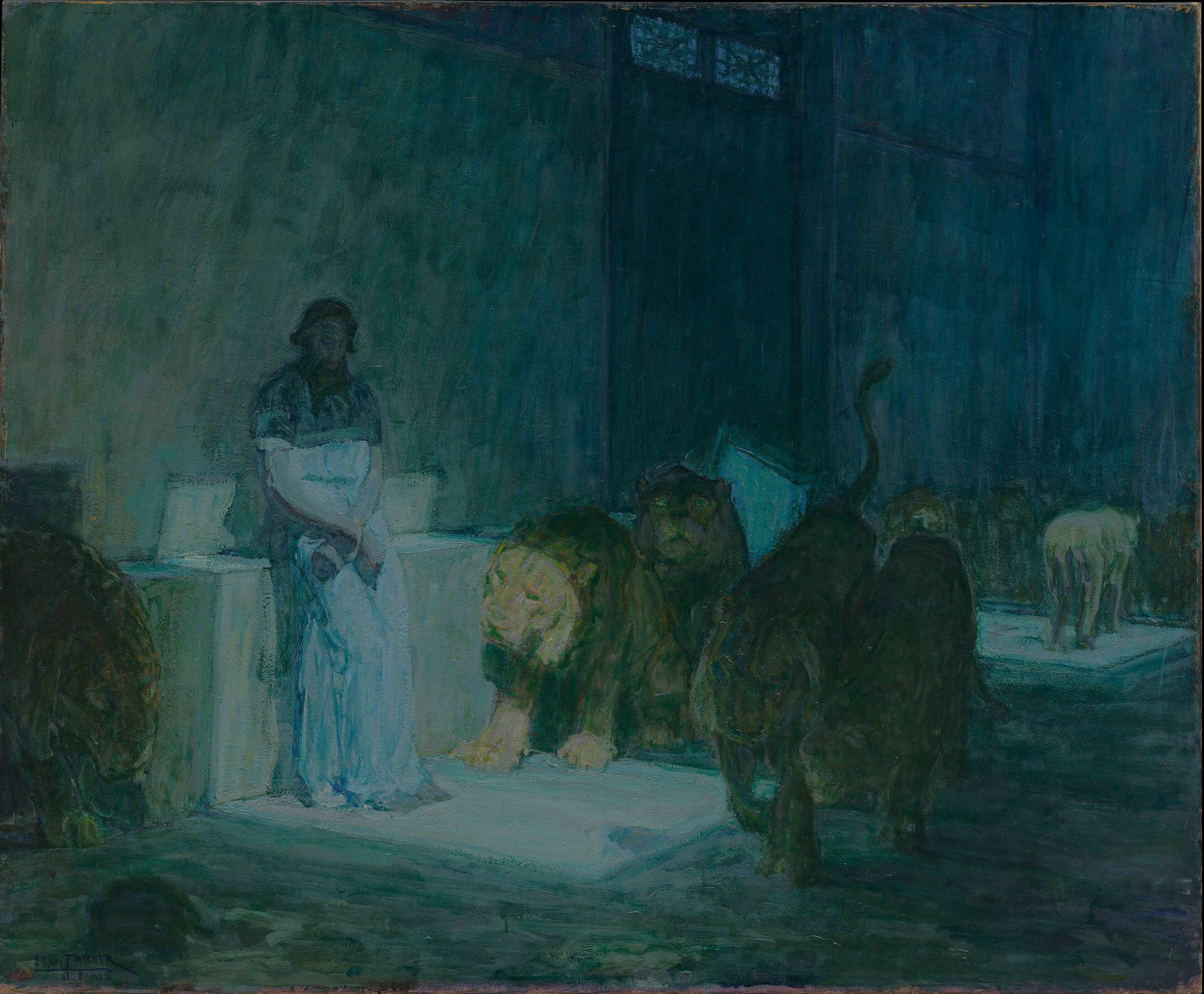
A third-class medal at the Paris Salon of 1897, according to the National Gallery of Art in Washington. It was Henry Ossawa Tanner's second Salon award: Daniel in the Lions' Den had received an honourable mention the year before.
What does The Raising of Lazarus show?
The moment in John's Gospel when Christ raises Lazarus from the dead. Lazarus lies in a white shroud on a stone slab, his eyes open, while an old man lifts his head. Christ stands over him pointing down, and a crowd of mourners and onlookers presses in from the left inside a dark tomb.
How big is The Raising of Lazarus?
94.7 by 120.5 centimetres, about thirty-seven by forty-seven inches, in oil on canvas. Henry Ossawa Tanner wrote that a friend persuaded him to start a version six feet by ten, which he abandoned in favour of this small one.
Is it The Raising of Lazarus or The Resurrection of Lazarus?
Both titles are used in English. The Musée d'Orsay catalogues it in French as La Résurrection de Lazare, and Henry Ossawa Tanner called it the Resurrection of Lazarus in his memoir. The Raising of Lazarus is the usual English name for the Gospel episode.
Where was The Raising of Lazarus painted?
In Paris, over the summer and autumn of 1896. Henry Ossawa Tanner stayed in the city instead of going to the country because models were cheaper in summer. The 1897 Salon catalogue gives his address as 51 boulevard Saint-Jacques.
In the atlas
What the graph records about this work — every claim carries its citation.
Bought by the French State at the Salon of 1897 for the Musée du Luxembourg, and assigned to the Louvre's paintings department for the Musée d'Orsay collections by an order of 24 July 1981 (RF 1980 173). The museum occupies the former Gare d'Orsay; its record lists the painting as not currently exhibited in September 2026.
— The Resurrection of Lazarus, RF 1980 173; History - Provenance
Explore painters from the same movements and circles.
Tarsila do Amaral
Brazilian painter who spent the 1920s moving between São Paulo and Paris, studied Cubism under André Lhote, Albert Gleizes and Fernand Léger, and used what she learned to paint Brazilian towns, railways, plants and bodies. Her 1928 painting Abaporu prompted the manifesto that gave the Anthropophagic movement its name.
Strasbourg-born sculptor and poet — Hans in German, Jean in French, both all his life — who co-founded Dada at the Cabaret Voltaire in 1916, composed collages by dropping torn paper 'according to the laws of chance', and settled at Meudon outside Paris in a house his wife Sophie Taeuber-Arp designed.
The sources below include collection records, catalogues, scholarly research, and primary materials that informed this page. They document The Raising of Lazarus, its making, and its place in cultural history.
1The Resurrection of Lazarus
Website
Musée d'Orsay
Used for
Web source consulted for documented facts and historical context presented on the The Raising of Lazarus page.
These references provide the documented foundation for this work's history and interpretation. Claim-level citations remain attached to the specific claims they support.



 View source