The Annunciation
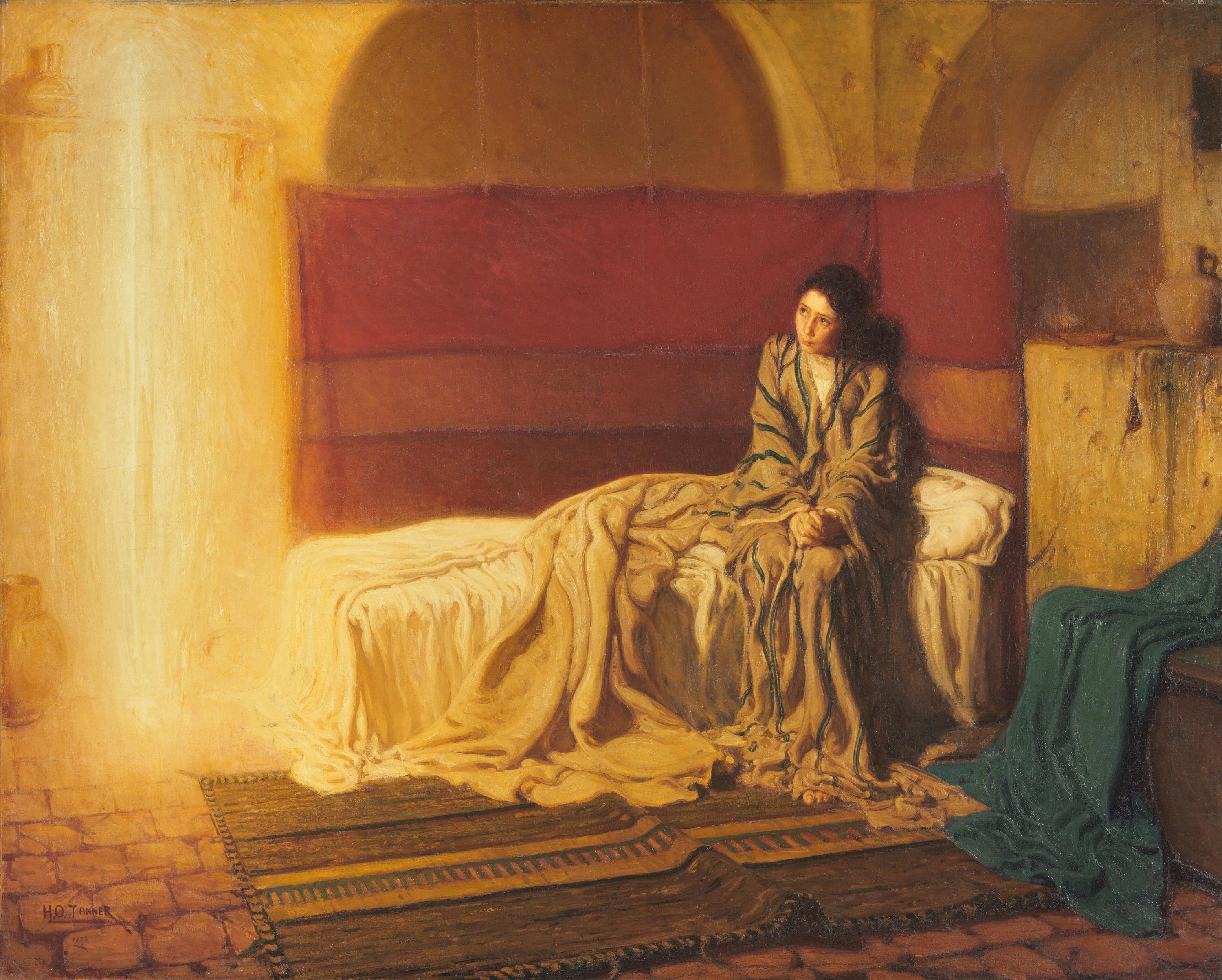
A girl in striped peasant clothes sits on the edge of an unmade bed and looks at a tall column of light standing in the corner of the room. Henry Ossawa Tanner painted it in Paris in 1898, after his first journey to Egypt and Palestine, and showed it at that year's Salon. The Philadelphia Museum of Art bought it in 1899 with the W. P. Wilstach Fund and calls it the first of his works to enter an American museum.
- 1898
- Oil on canvas
- Philadelphia Museum of ArtPhiladelphia, United States
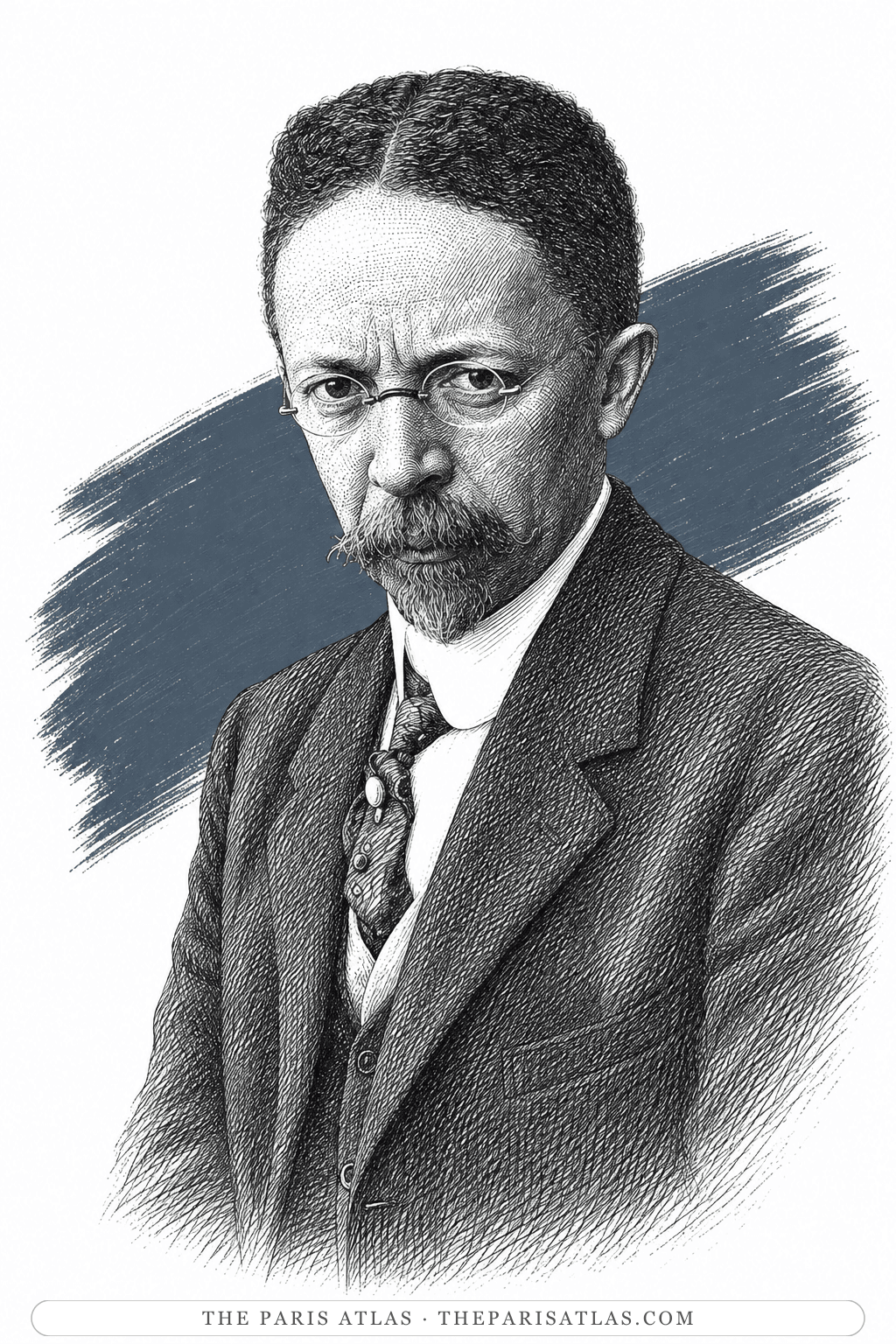
About Henry Ossawa Tanner
What the painting shows
Mary sits on the edge of a bed to the right of centre, her hands clasped in her lap and her bare feet on a striped rug. She wears a loose beige robe with narrow blue-green stripes over a white shift, and her dark hair is pulled back. Her head is turned to the left, towards the corner of the room, where a column of white-gold light stands from the floor almost to the top of the canvas. It has no face, no wings and no outline.
The room is a vaulted stone chamber. A red cloth hangs on the wall behind the bed beneath a shallow arch, and a second arch opens at the upper right. The bedclothes are pushed back in a heap of white and gold. A green cloth lies over a wooden chest at the lower right. A clay jar stands on the floor at the far left, half dissolved in the light, and a niche with a bottle is cut into the wall above it. The floor is stone flags, with the rug laid across them.
The Philadelphia Museum of Art's label puts the departure plainly: "Mary is shown as an adolescent dressed in rumpled Middle Eastern peasant clothing, without a halo or other holy attributes. Gabriel appears only as a shaft of light."
The canvas is 144.8 by 181 centimetres, about fifty-seven by seventy-one inches, and is signed H.O. Tanner at the lower left with the date 1898 beneath.
Painted after Palestine
Rodman Wanamaker, of the Philadelphia department-store family, paid for Henry Ossawa Tanner's first journey to Egypt and Palestine in 1897. The museum's label records that he painted The Annunciation soon after returning to Paris. As the son of a minister in the African Methodist Episcopal Church, the label says, he wanted to experience the people, culture, architecture and light of the Holy Land.
In his 1909 memoir Henry Ossawa Tanner wrote that the first canvas of the subject was so unsatisfactory that the only way out was to begin a new one, and that the second was more fortunate. He was writing after it had gone to Philadelphia: it "now hangs in the Wilstack Collection", he said, misspelling the name of the fund.
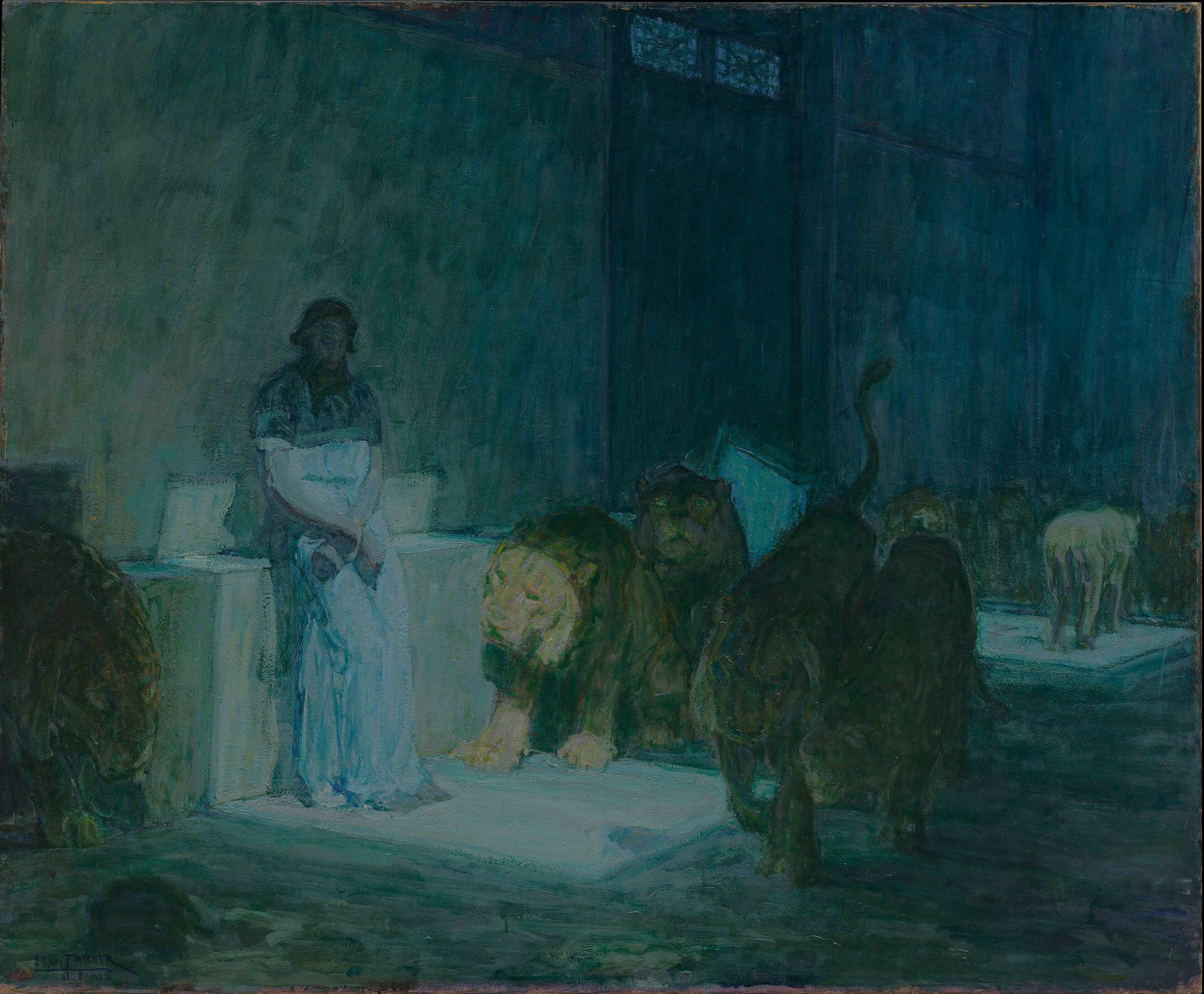
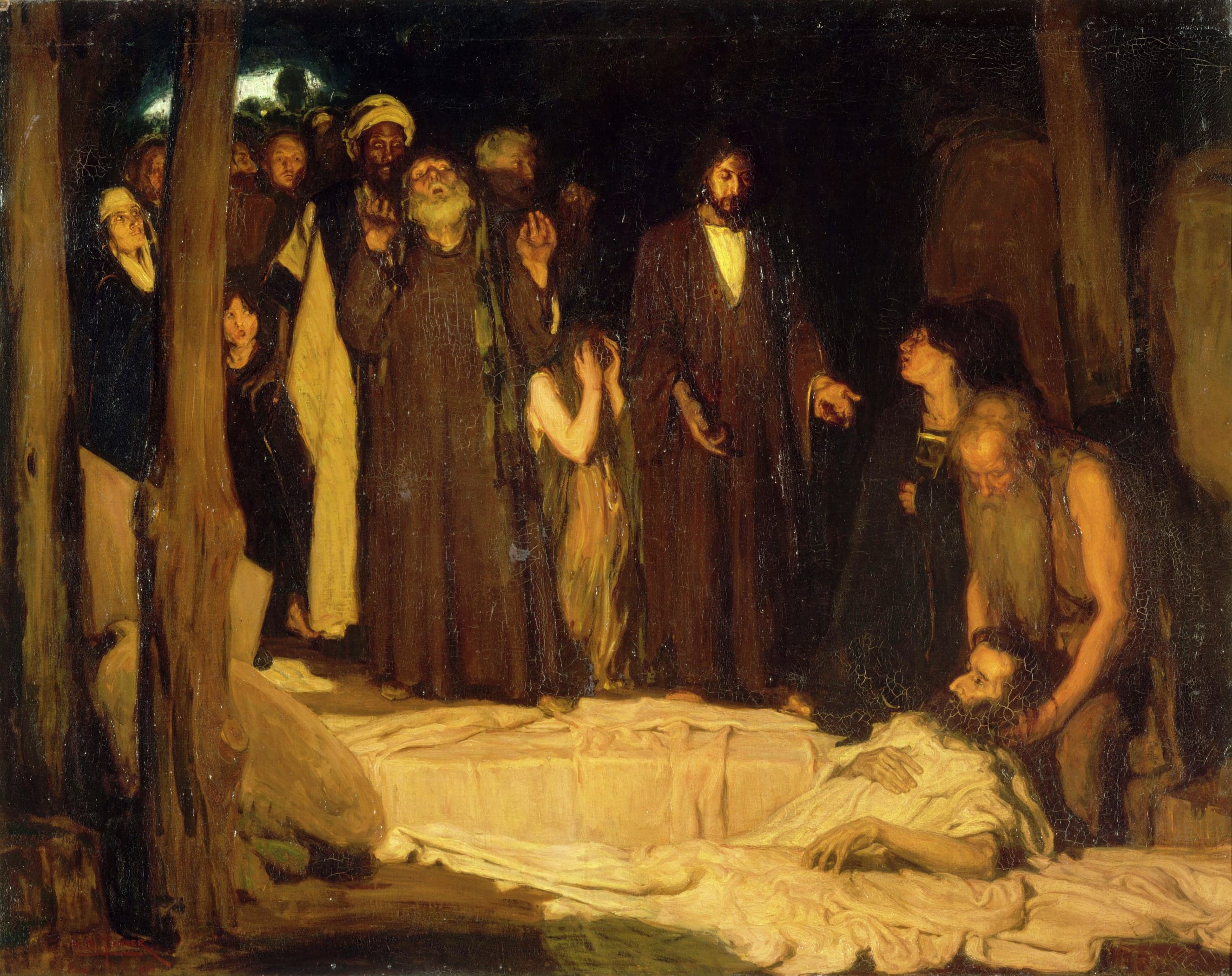
The 1898 Salon of the Société des artistes français listed it as number 1918, L'Annonciation, with the artist's address at 51 boulevard Saint-Jacques. It followed Daniel in the Lions' Den, which had won an honourable mention at the Salon of 1896, and The Raising of Lazarus, which the State had bought at the Salon of 1897.
Bought for Philadelphia
The painting toured the United States in 1898 and 1899: the Art Institute of Chicago in October 1898, the Pennsylvania Academy of the Fine Arts in January 1899 and the Century Club in New York that March. Dewey F. Mosby's 1991 catalogue records that the chairman of the Wilstach Collection's acquisition committee saw it at the Academy, and that the collection bought it from Rodman Wanamaker on 5 April 1899 for $1,750. The Philadelphia Museum of Art, the Wilstach Collection's successor, gives the accession number W1899-1-1 and calls it the first of Henry Ossawa Tanner's works to enter an American museum. He had trained in the city, at the Academy, under Thomas Eakins from 1879.
As of September 2026 the museum lists it as on view in Gallery 358, on the third floor of the main building. An oil study on wood, 21.5 by 27.4 centimetres, belongs to the Smithsonian American Art Museum in Washington, which describes the vertical line of white paint at its left as the divine presence of the angel.
Close reading
Reading the work, detail by detail
The angel is a column of light, so the close views begin there and then move across the room to the girl who is looking at it: her face, her clasped hands, her bare feet, and the ordinary things around the bed.
1.The column of light
Gabriel is this. The light has a rounded top and a bright core and fades into the gold of the wall on both sides. The Philadelphia Museum of Art's label says simply that Gabriel appears only as a shaft of light.
2.Mary's face
Her eyes are on the light and her mouth is closed. The museum's label calls her an adolescent, without a halo or other holy attributes. There is nothing above her head except the red cloth on the wall.
3.Clasped hands
Her hands are clasped in her lap with the fingers interlaced. The stripes of the robe run down over her knees in narrow lines of blue-green. It is the pose of someone sitting still to listen.
4.Bare feet on the rug
Her feet are bare on the rug. The hem of the robe has been dragged across the floor and the bedclothes trail down beside it. The rug is woven in stripes of green, gold and red, the one pattern in a room of plain surfaces.
5.The red hanging and the arches
A plain red cloth hangs on the wall behind the bed, sagging along its top edge. Above it the stone vault curves in a shallow arch. Henry Ossawa Tanner had come back from Palestine the year before, and the museum links the room to what he saw of its architecture.
6.The green cloth on the chest
A green cloth lies over a chest at the lower right, the coolest colour in a picture of gold and red. Its folds fall to the stone floor next to the fringe of the rug.
7.Signed and dated 1898
The signature sits on the stone flags at the lower left, with the date 1898 beneath it. The 1898 Salon catalogue lists the picture as number 1918 under the title L'Annonciation.
Timeline
1897
Henry Ossawa Tanner travels to Egypt and Palestine for the first time, paid for by Rodman Wanamaker.
1898
Painted in Paris after his return. A first canvas of the subject is abandoned and a second begun.
1898
Shown at the Salon of the Société des artistes français as number 1918, L'Annonciation.
1898–99
Shown at the Art Institute of Chicago in October 1898, the Pennsylvania Academy of the Fine Arts in January 1899 and the Century Club, New York, in March 1899.
1899
Bought from Rodman Wanamaker for the Wilstach Collection on 5 April for $1,750, now W1899-1-1 at the Philadelphia Museum of Art.
Where to see it
Philadelphia Museum of Art
2600 Benjamin Franklin Parkway, Philadelphia, PA 19130, United States
Gallery 358, third floor of the main building, according to the museum's record in September 2026.
Plan your visit on the museum’s official website (opens in a new tab)Frequently asked questions
Where is The Annunciation by Henry Ossawa Tanner?
At the Philadelphia Museum of Art, accession number W1899-1-1. As of September 2026 the museum lists it as on view in Gallery 358 on the third floor of the main building on the Benjamin Franklin Parkway.
Why is there no angel in Tanner's Annunciation?
Henry Ossawa Tanner painted Gabriel as a column of light in the corner of the room, with no face, wings or outline. The museum's label says he created an unconventional image of the moment, with Mary as an adolescent in rumpled peasant clothing and Gabriel appearing only as a shaft of light.
What is Mary wearing in The Annunciation?
A loose beige robe with narrow blue-green stripes over a white shift, with bare feet. The Philadelphia Museum of Art describes it as rumpled Middle Eastern peasant clothing, without a halo or other holy attributes, and links it to the artist's journey to Egypt and Palestine in 1897.
When was The Annunciation painted?
In 1898, in Paris, soon after Henry Ossawa Tanner returned from Egypt and Palestine. He wrote that his first canvas of the subject failed and that he began a second, which is the painting that went to the Salon of 1898 and then to Philadelphia.
How big is The Annunciation?
144.8 by 181 centimetres, about fifty-seven by seventy-one inches, in oil on canvas. In its frame it measures 187.3 by 221.6 centimetres.
Was The Annunciation shown at the Paris Salon?
Yes. The illustrated catalogue of the 1898 Salon of the Société des artistes français lists it as number 1918, L'Annonciation, and gives Henry Ossawa Tanner's address as 51 boulevard Saint-Jacques.
More by Henry Ossawa Tanner
If you like Henry Ossawa Tanner
Explore painters from the same movements and circles.
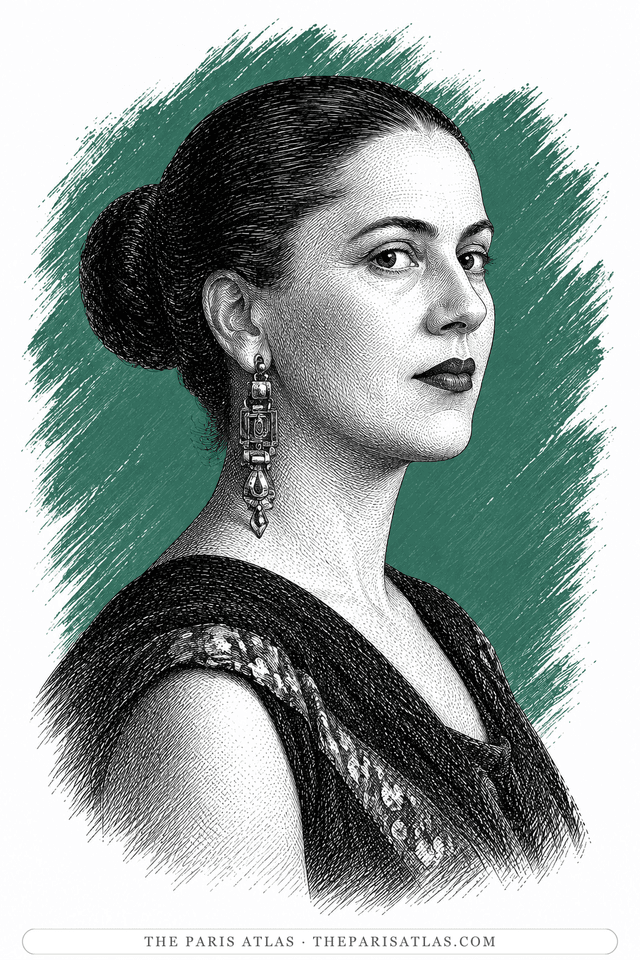
Tarsila do Amaral
Brazilian painter who spent the 1920s moving between São Paulo and Paris, studied Cubism under André Lhote, Albert Gleizes and Fernand Léger, and used what she learned to paint Brazilian towns, railways, plants and bodies. Her 1928 painting Abaporu prompted the manifesto that gave the Anthropophagic movement its name.
View artist
Arman
French-American artist, lifelong friend of Yves Klein, and a founder of New Realism.
View artist
Jean Arp
Strasbourg-born sculptor and poet — Hans in German, Jean in French, both all his life — who co-founded Dada at the Cabaret Voltaire in 1916, composed collages by dropping torn paper 'according to the laws of chance', and settled at Meudon outside Paris in a house his wife Sophie Taeuber-Arp designed.
View artist
References
The sources below include collection records, catalogues, scholarly research, and primary materials that informed this page. They document The Annunciation, its making, and its place in cultural history.


1The Annunciation
WebsitePhiladelphia Museum of ArtUsed forWeb source consulted for documented facts and historical context presented on the The Annunciation page.
2The Story of an Artist's Life, II: Recognition
MemoirThe World's Work, vol. 18, no. 3 (July 1909), pp. 11769–11775, 1909Used forFirst-person evidence and historical context used in preparing the The Annunciation page.

3Catalogue illustré de peinture et sculpture, Salon de 1898
Exhibition catalogueSociété des artistes français; Ludovic Baschet, Paris, 1898Used forCatalogue scholarship used to verify attribution, provenance, chronology, and interpretive context for The Annunciation.
4Henry Ossawa Tanner
Exhibition cataloguePhiladelphia Museum of Art; Rizzoli International Publications, New York, 1991Used forCatalogue scholarship used to verify attribution, provenance, chronology, and interpretive context for The Annunciation.
5Henry Ossawa Tanner — artist biography
WebsiteNational Gallery of Art, WashingtonUsed forWeb source consulted for documented facts and historical context presented on the The Annunciation page.
6Study for the Annunciation
WebsiteSmithsonian American Art MuseumUsed forWeb source consulted for documented facts and historical context presented on the The Annunciation page.
These references provide the documented foundation for this work's history and interpretation. Claim-level citations remain attached to the specific claims they support.
 Explore more resources