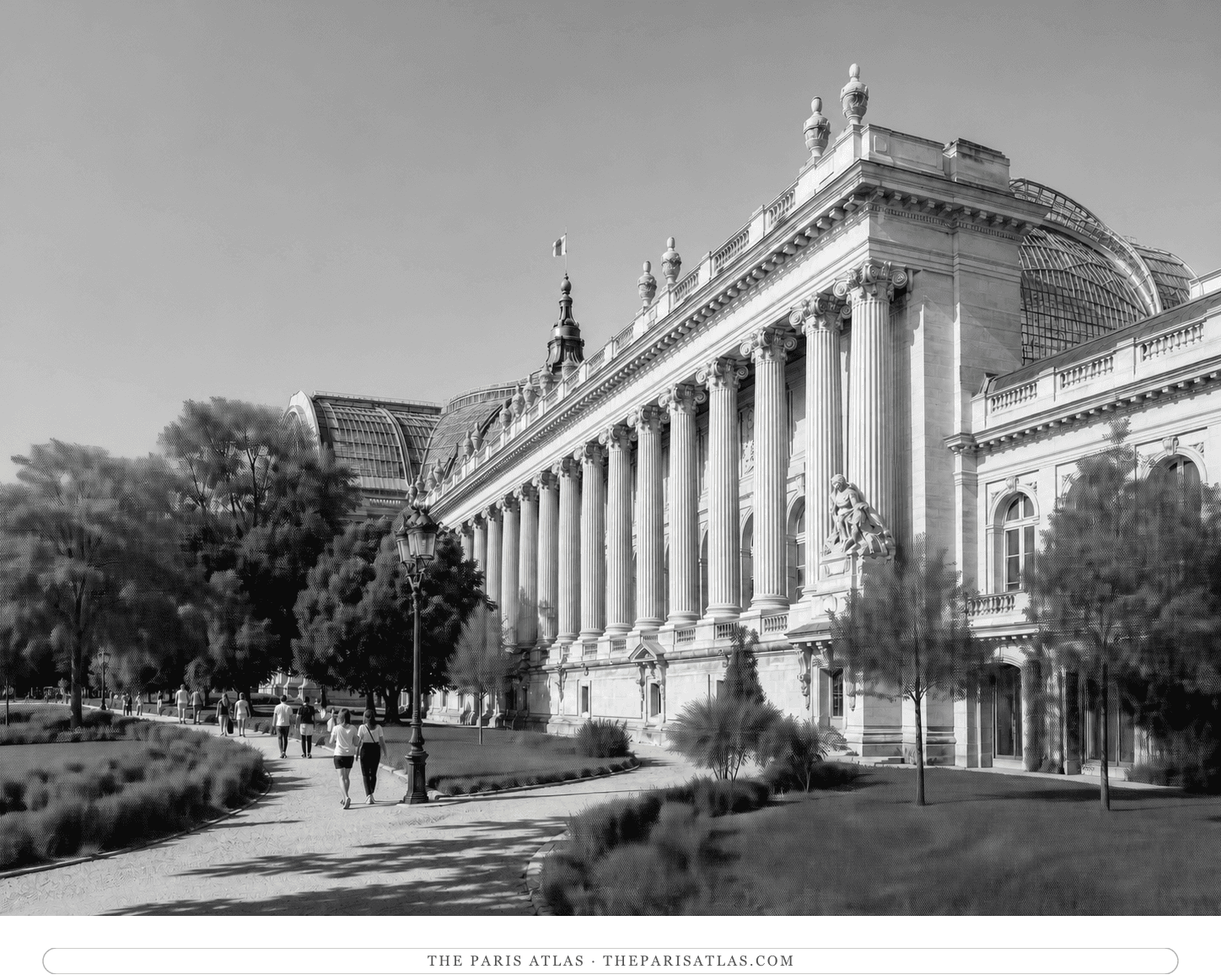
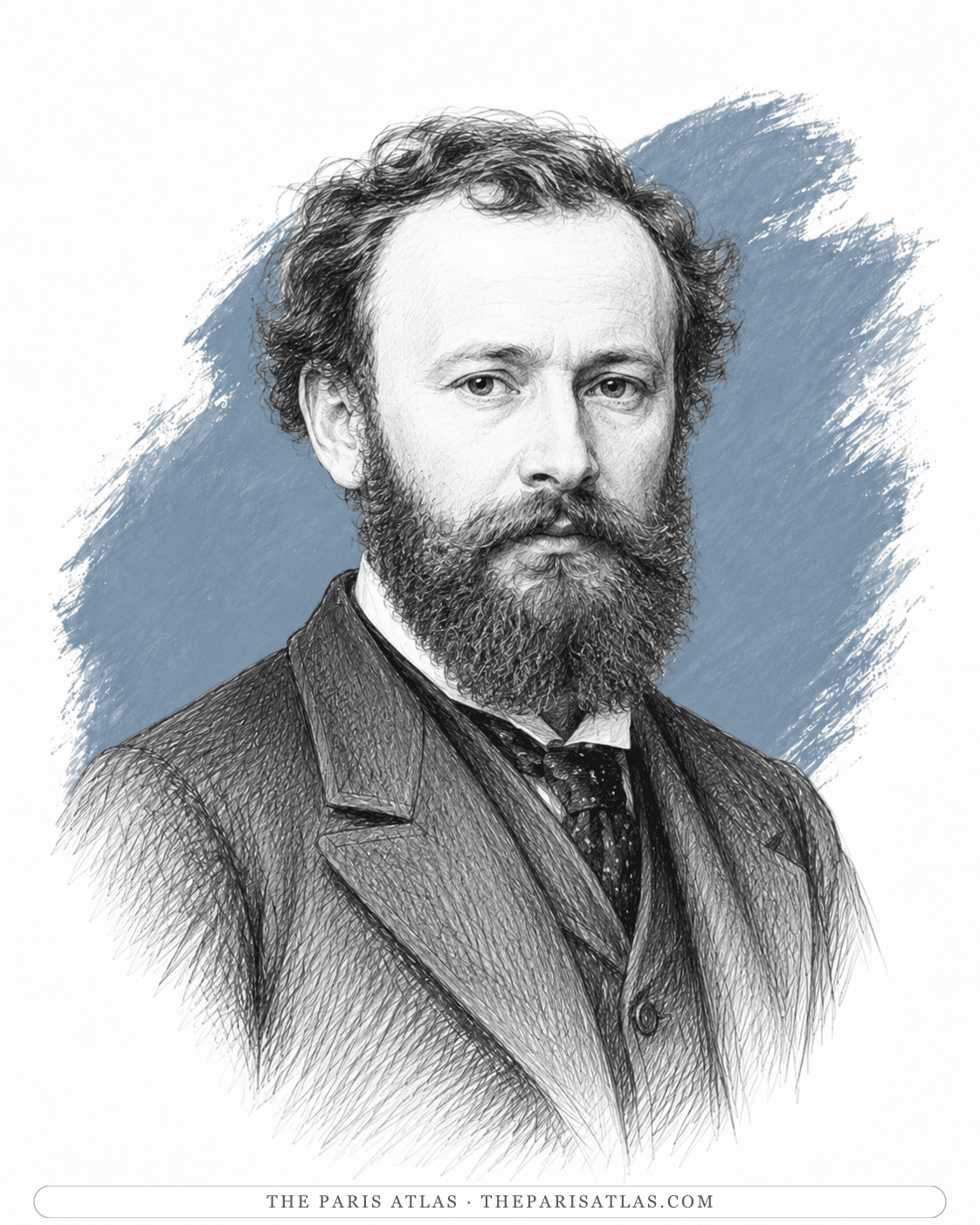
Édouard Manet
Manet showed the painting then titled Le Bain, now known as Le Dejeuner sur l'herbe, at the Salon des Refuses of 1863, held in the Palais de l'Industrie.
The vast iron-and-glass exhibition hall on the Champs-Élysées that housed the annual Salon — and, in 1863, the Salon des Refusés, where Manet's Déjeuner sur l'herbe was hung and mocked. It was demolished to make way for the Grand Palais.
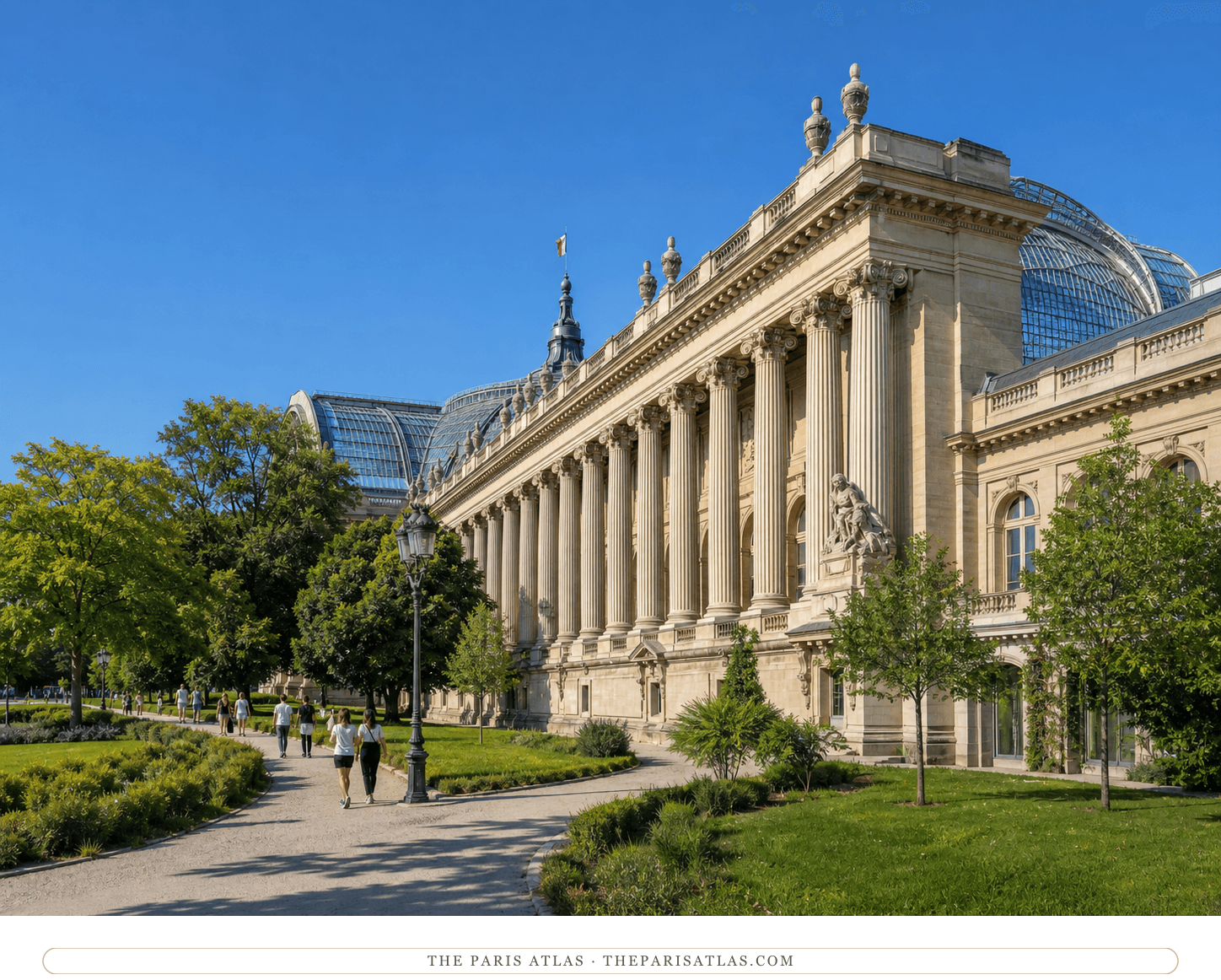
The Palais de l'Industrie was put up on the Champs-Élysées for the Exposition Universelle of 1855 and afterwards became the home of the annual Salon — the official exhibition that decided, in practice, whether a French painter had a career. Everything about a nineteenth-century artistic reputation ran through this building.
In 1863 the jury rejected an unusually large number of submissions and the resulting complaints reached the Emperor, who ordered that the refused works be shown separately so the public could judge for itself. The Salon des Refusés opened in the same building. Édouard Manet showed the painting then called Le Bain and now known as Le Déjeuner sur l'herbe, and it drew the crowds and the ridicule that made him famous.
The Salon was also the ordinary route for painters who had no interest in scandal. Berthe Morisot made her official debut here in 1864, exhibiting at the annual Salon a decade before she joined the independent exhibitions.
The hall was demolished in the 1890s and the Grand Palais and Petit Palais were built on the ground for the Exposition Universelle of 1900. The site is easy to stand on; the building is entirely gone.
The Palais de l'Industrie is built for the Exposition Universelle.
The Salon des Refusés is held here; Manet shows Le Déjeuner sur l'herbe.
Berthe Morisot makes her Salon debut.
The Grand Palais and Petit Palais stand on the site for the new Exposition.
An exhibition of works rejected by the 1863 Salon jury, ordered by the Emperor after the scale of the rejections caused an outcry. It was held in the Palais de l'Industrie alongside the official Salon.
No. It was demolished in the 1890s, and the Grand Palais and Petit Palais were built on the site for the 1900 Exposition Universelle.
On the Champs-Élysées, on the ground now occupied by the Grand Palais and Petit Palais. The coordinate here is an approximation taken at the Grand Palais.
Manet showed the painting then titled Le Bain, now known as Le Dejeuner sur l'herbe, at the Salon des Refuses of 1863, held in the Palais de l'Industrie.
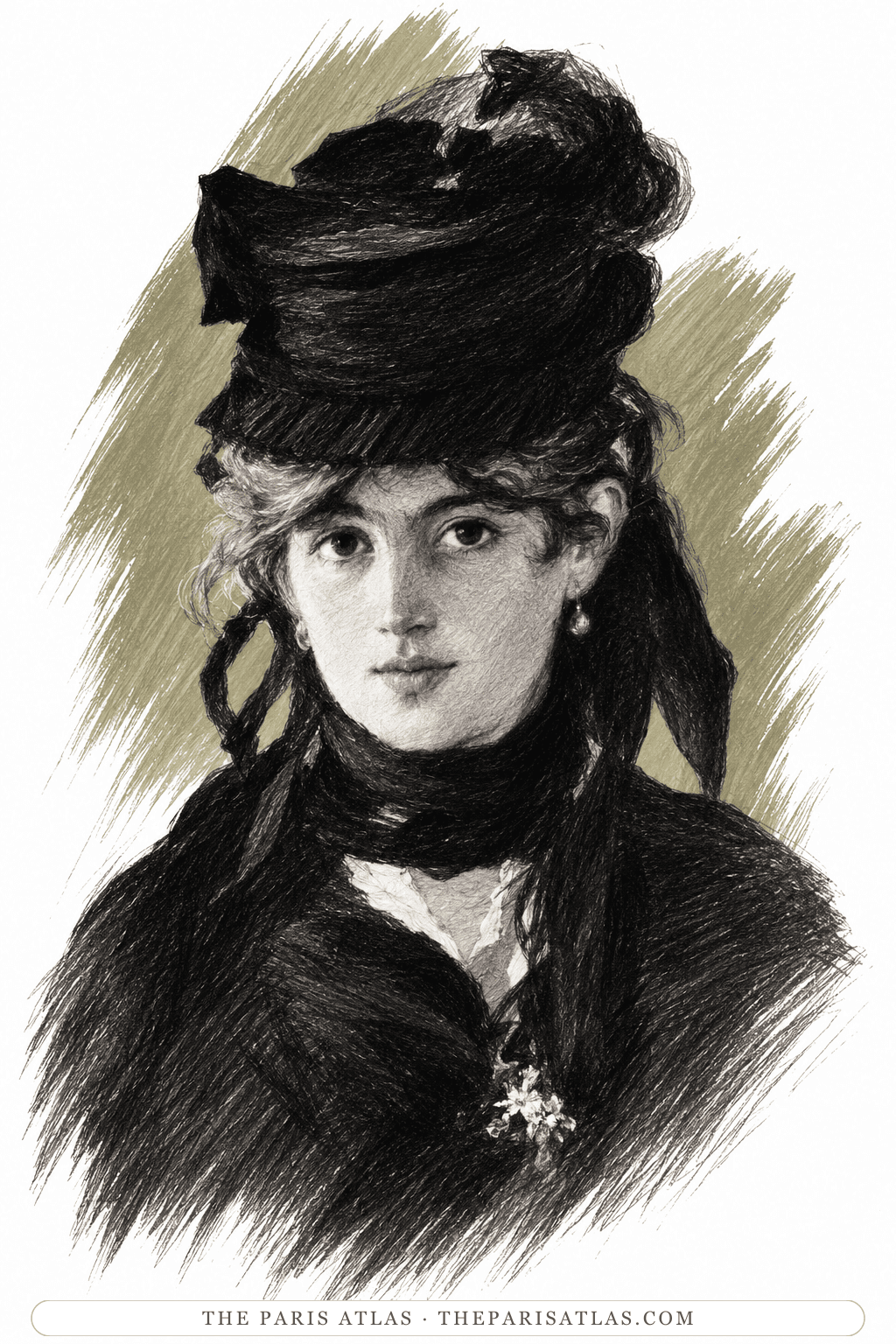
Morisot made her official Salon debut in 1864, exhibiting at the annual Salon held in the Palais de l'Industrie, a decade before she joined the independent exhibitions.
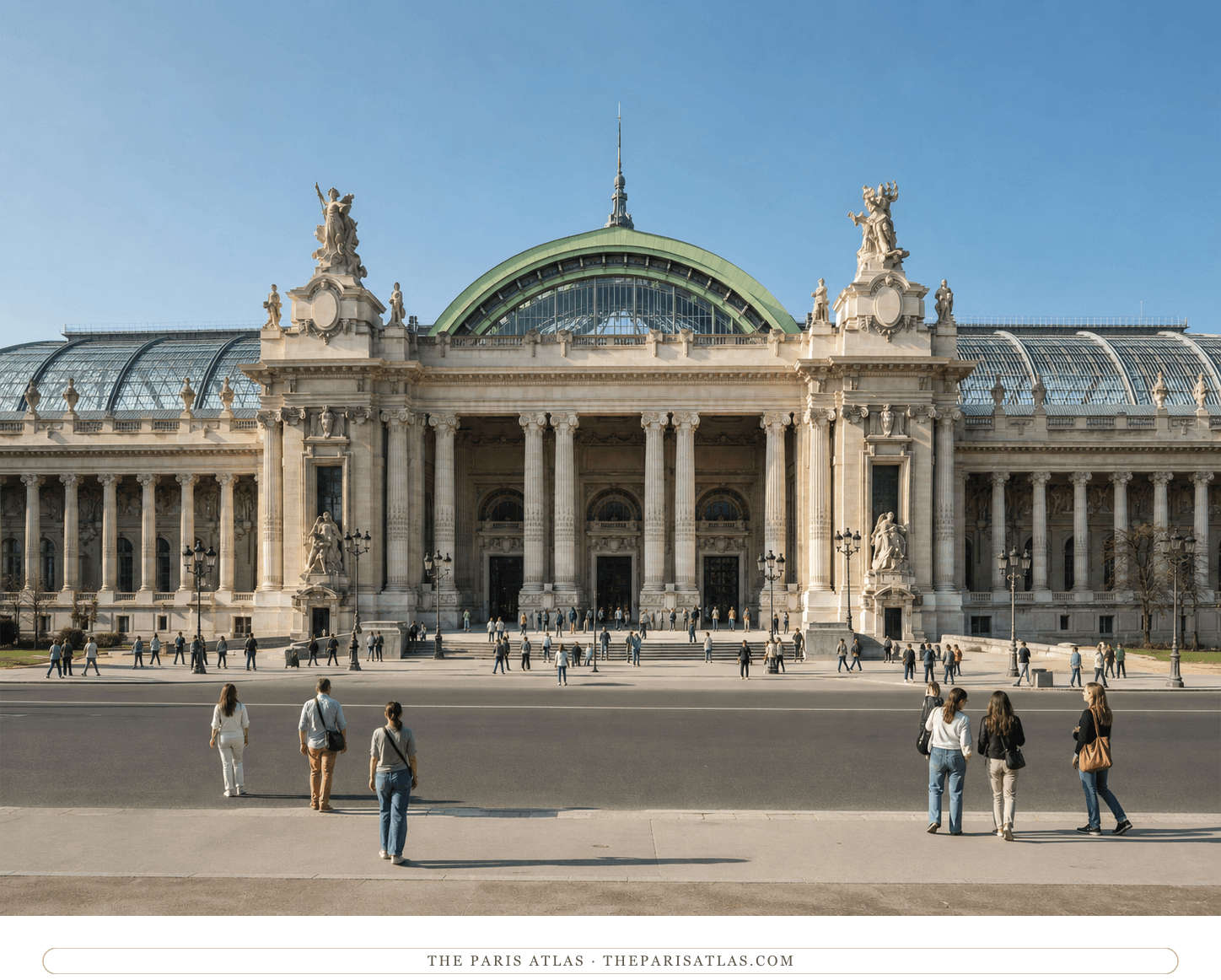
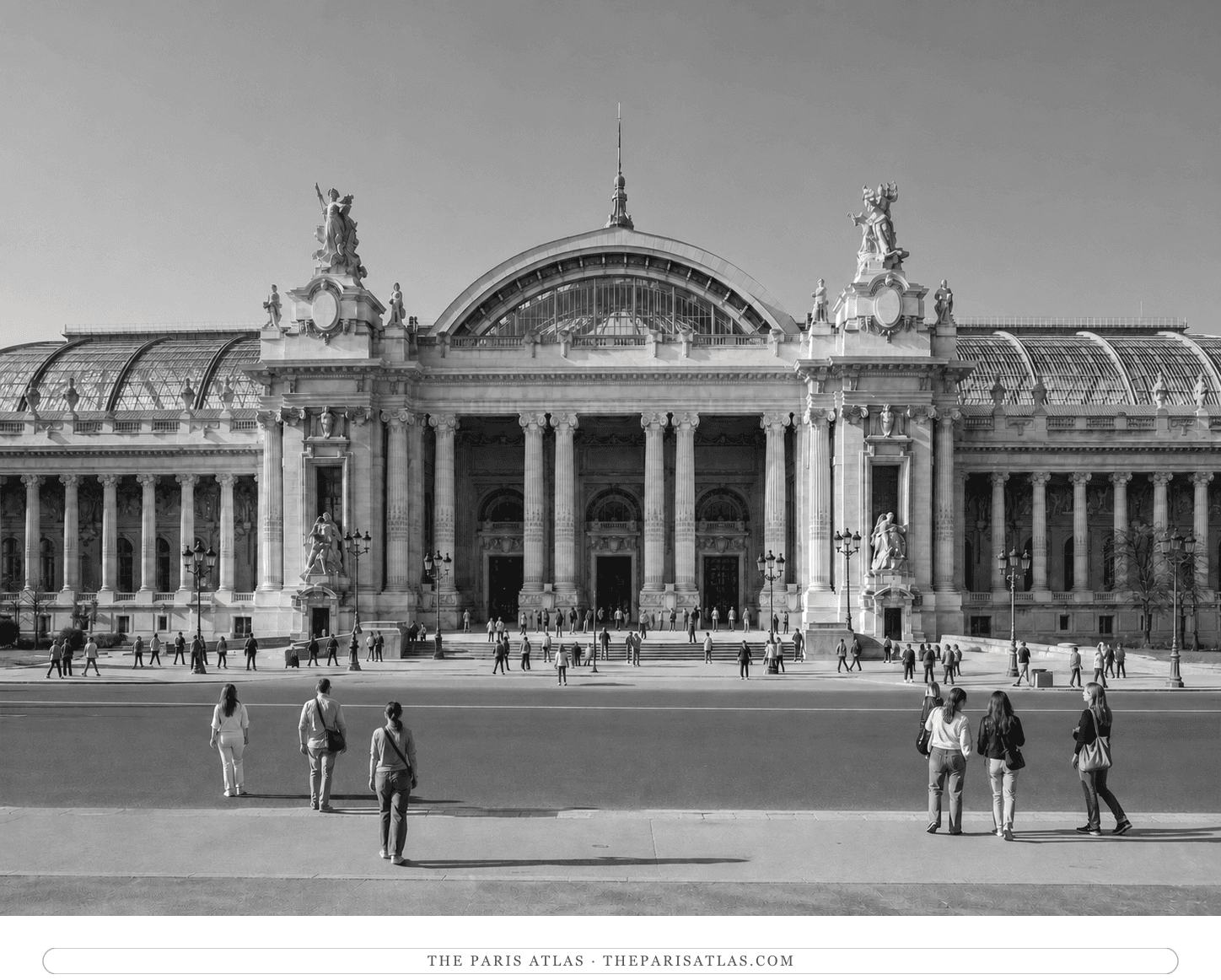
The glass-vaulted exhibition hall on the Champs-Élysées, built for the World's Fair of 1900 and used ever since for the shows Paris wants to hold under one roof — art retrospectives, fashion collections, commissioned sculpture, and the fencing at the 2024 Olympic Games.
Visit the place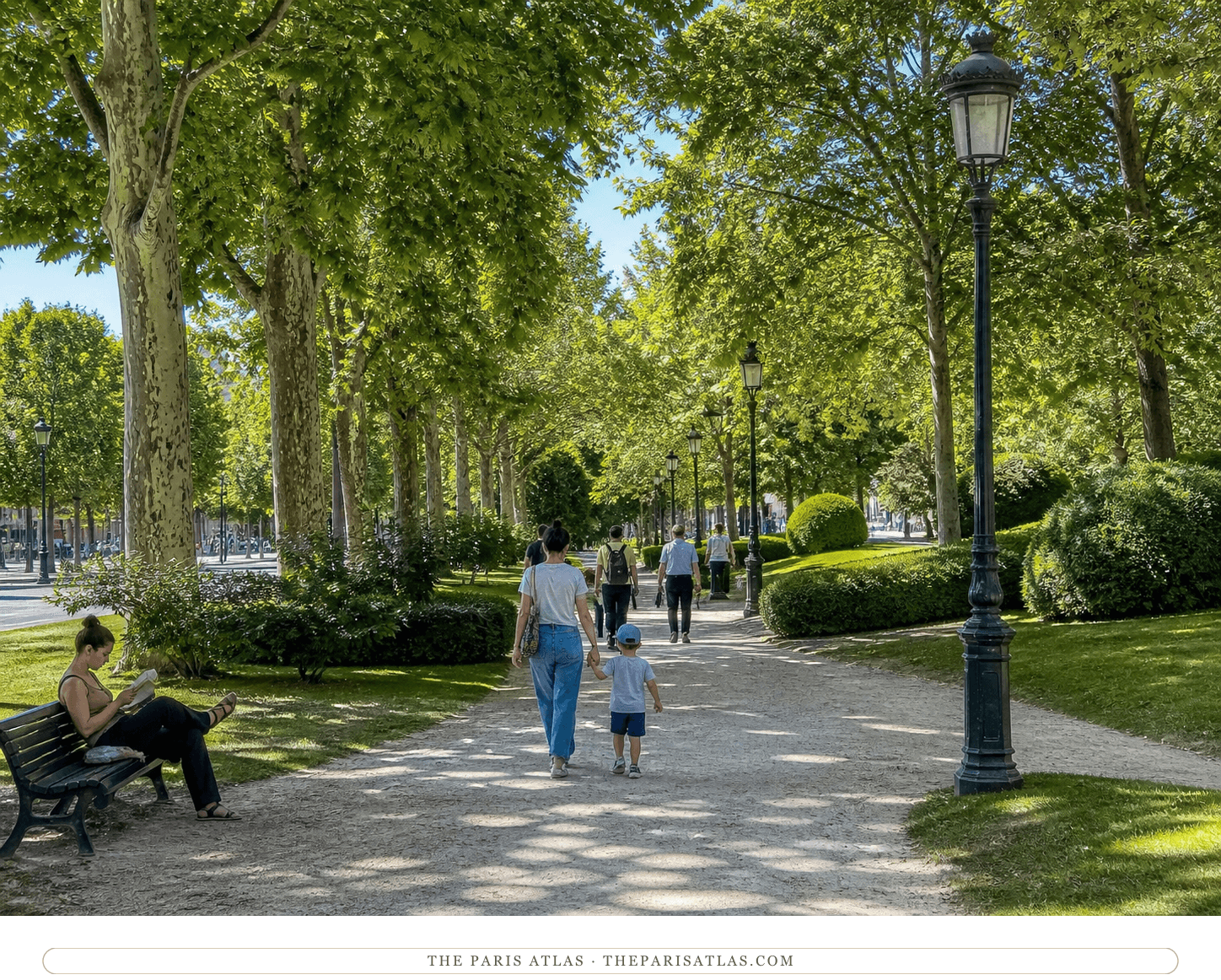
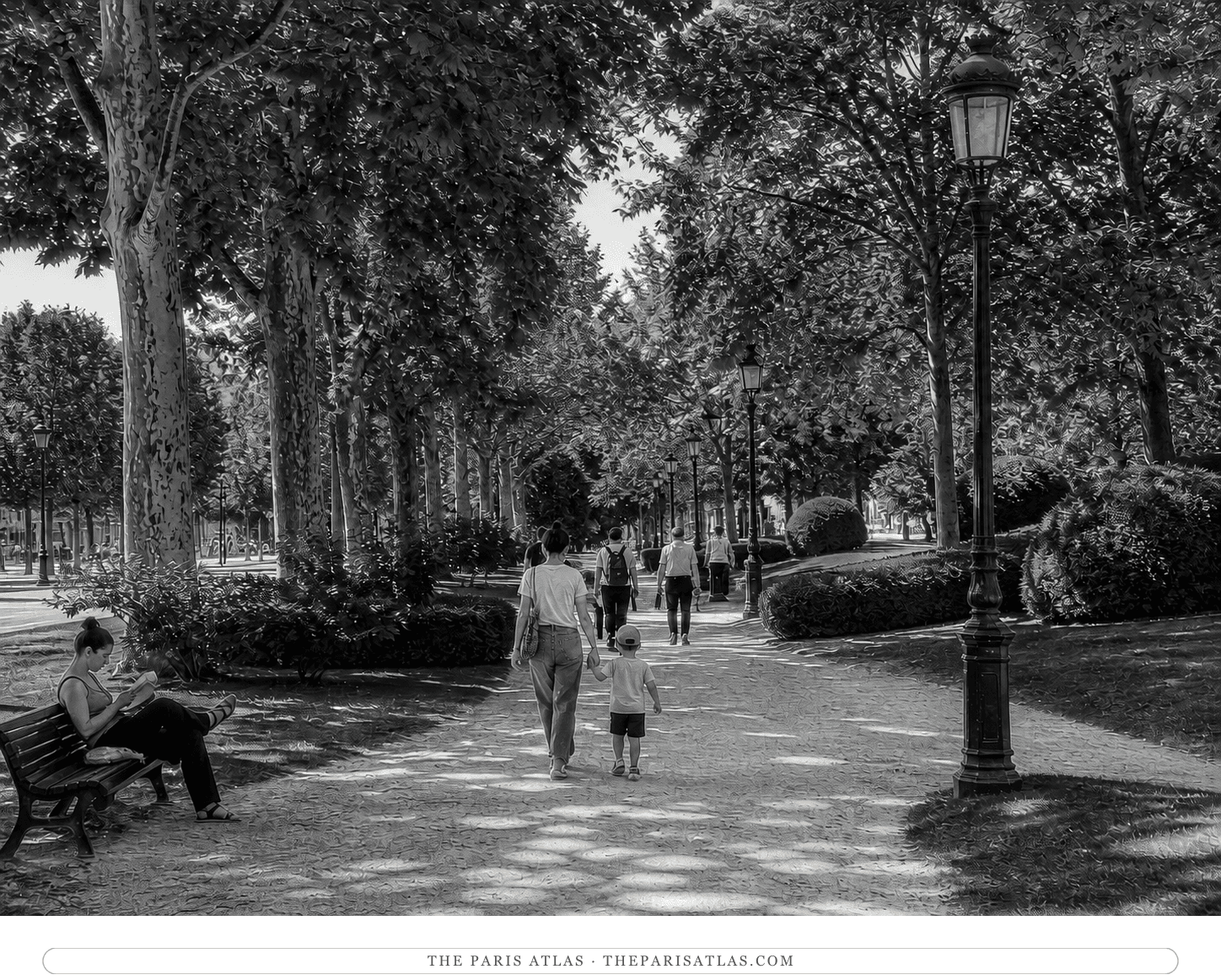
The gardens along the lower Champs-Élysées, between the Rond-Point and the Concorde — where the young Marcel Proust played, and where in July 1886 he met Marie de Bénardaky, his first love and a source for Gilberte in In Search of Lost Time. One of the paths is now officially the Allée Marcel-Proust.
Visit the place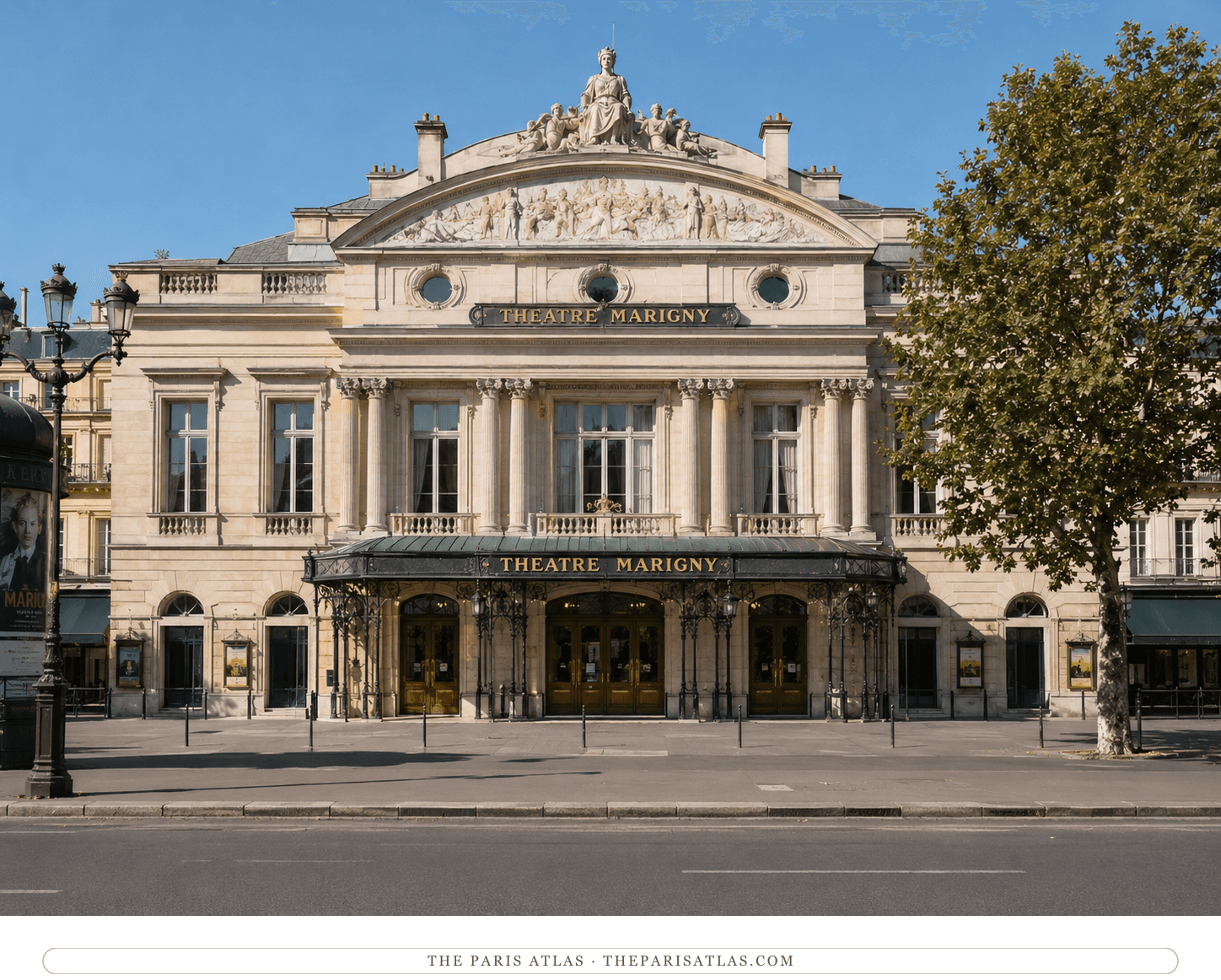
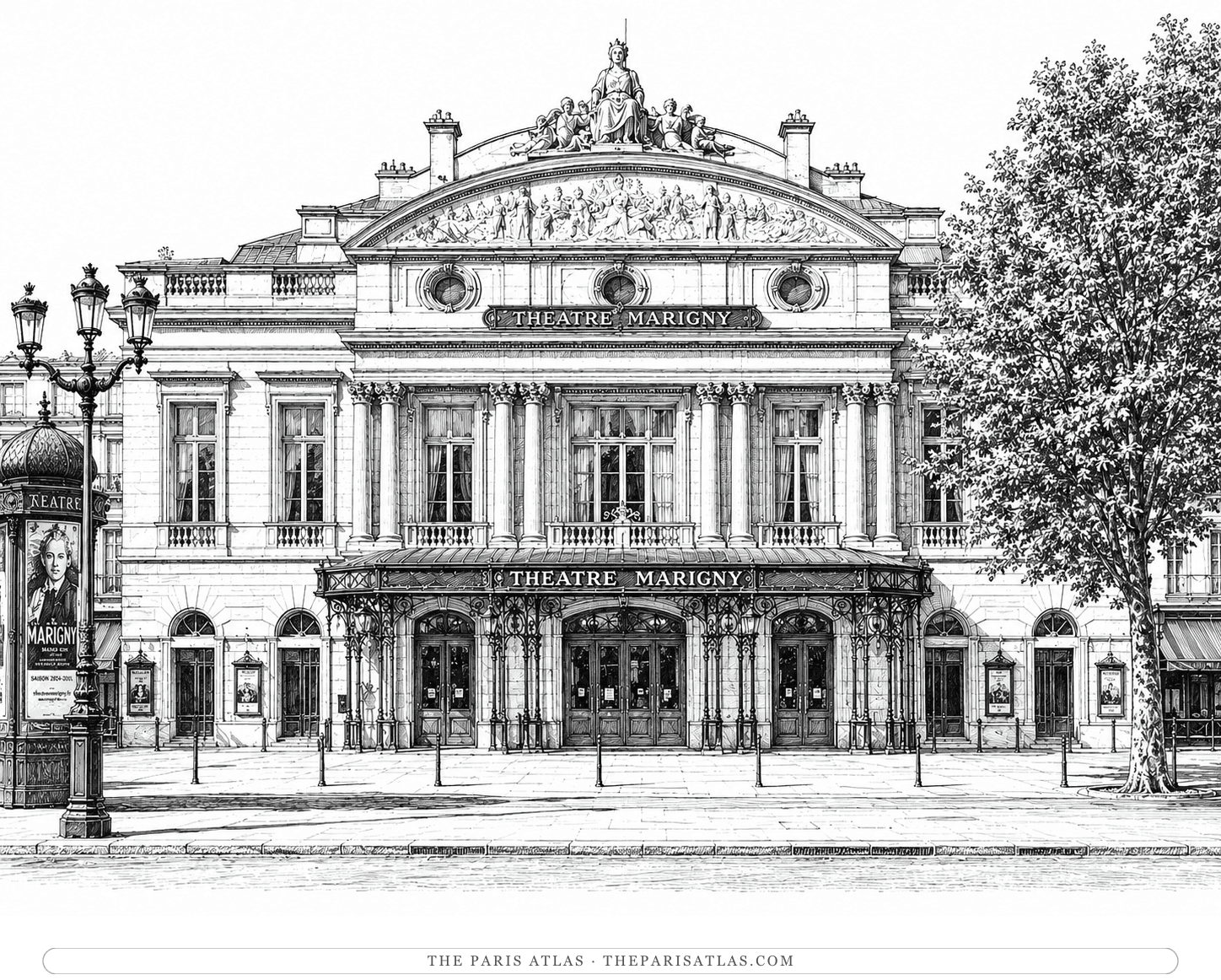
The theatre in the Champs-Élysées gardens where Colette played Paniska in Pan in 1906.
Visit the place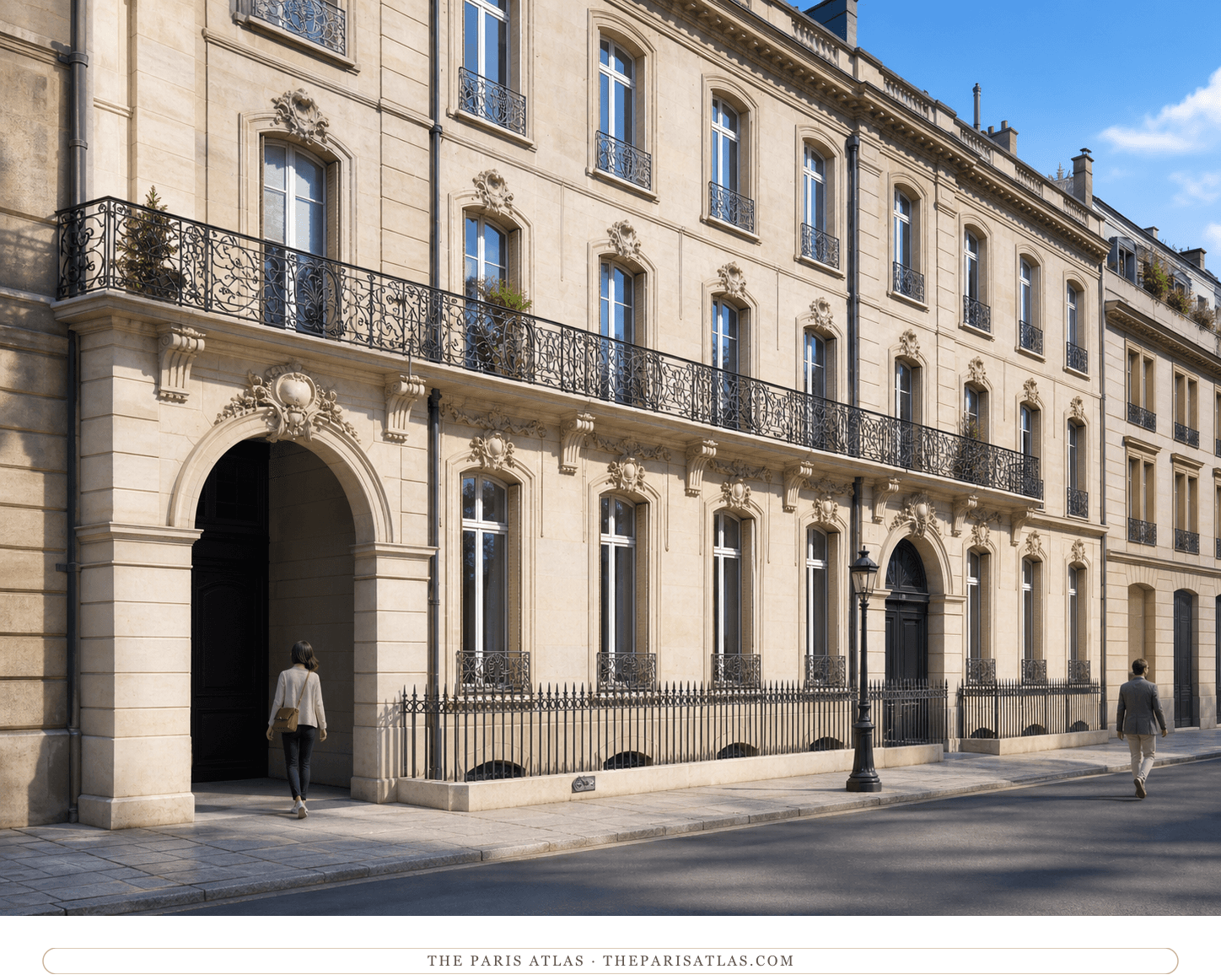
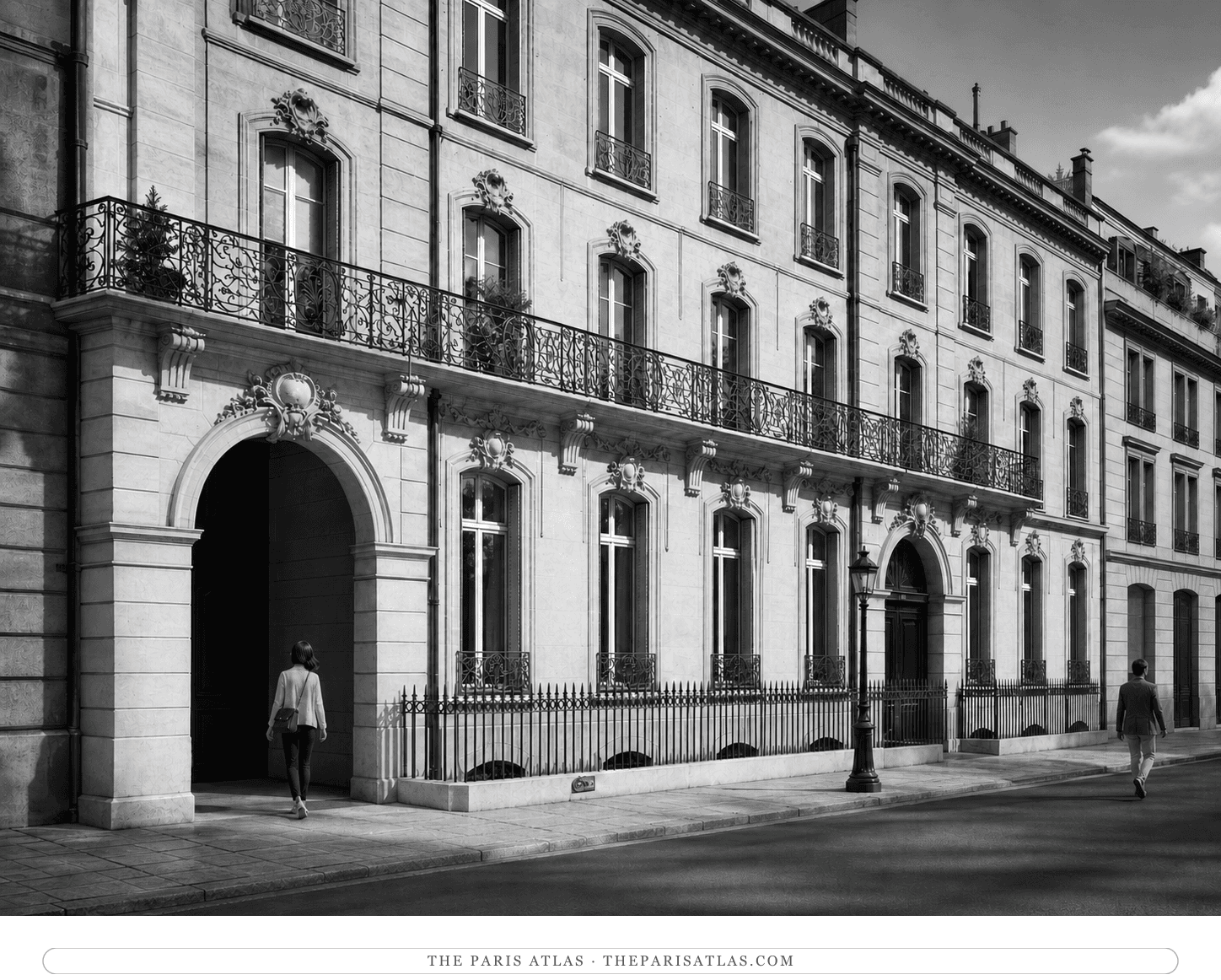
The surviving mansion that housed the American Library in Paris from 1920 to 1936—a center of transatlantic reading and literary life where Langston Hughes unsuccessfully asked for work.
Visit the placeThe sources below include histories, archival materials, scholarly research, and official records that informed this page. They document Palais de l'Industrie, the people connected to it, and its place in Paris.


Web source consulted for documented facts and historical context presented on the Palais de l'Industrie page.
Web source consulted for documented facts and historical context presented on the Palais de l'Industrie page.
Web source consulted for documented facts and historical context presented on the Palais de l'Industrie page.
Web source consulted for documented facts and historical context presented on the Palais de l'Industrie page.
Web source consulted for documented facts and historical context presented on the Palais de l'Industrie page.
Web source consulted for documented facts and historical context presented on the Palais de l'Industrie page.
These references provide the documented foundation for this page's history and context. Claim-level citations remain attached to the specific claims they support.
 Explore more resources
Newsletter
The cafés, studios, and walk-up flats where the work was made — one story from the map in every letter.