
Great Expectations
Pip's changing understanding of wealth and gratitude develops related questions through a much longer life story.
Read our take
A miser's haunted night asks what his money, memories and remaining time could do for other people.
Charles Dickens's 1843 Christmas novella follows Ebenezer Scrooge, a London businessman who treats generosity as an unwelcome expense. The ghost of his former partner, Jacob Marley, warns him that a life confined to business has consequences beyond death. Three further spirits take him through remembered Christmases, present households and a possible future. Dickens connects the celebrations to cold rooms, inadequate wages and people excluded from their neighbors’ prosperity.
Dickens makes Scrooge's character visible through temperature. His clerk cannot obtain enough coal, strangers avoid him, and even his own dinner and rooms offer little comfort. The opening jokes expose how a wealthy man can organize a life around deprivation and impose it on others.
The ghosts do more than frighten him. They change the position from which he sees familiar things: a lonely schoolboy becomes his younger self, an employer's party reveals the value of kindness, and a poor family's meal draws attention to the work needed to make a celebration.
The five sections are called staves, borrowing the language of music for a book whose title promises a carol. Repeated phrases acquire new meanings as speakers return Scrooge's own judgments to him. Its comic narrator can move quickly from a joke about a door knocker to a serious demand for responsibility.
On Christmas Eve, Scrooge rejects his nephew Fred's invitation and refuses a charitable donation. Marley appears that night carrying a chain made from the instruments of his business. He explains that concern for other people should have been part of that business and announces three visitors.
Christmas Past shows Scrooge's lonely childhood, his apprenticeship under the generous Fezziwig and the loss of Belle, who saw wealth displace their love. Christmas Present takes him to Bob Cratchit's family and Fred's gathering, then reveals the neglected children named Ignorance and Want.
Christmas Yet To Come shows an unmourned man's death and the Cratchits grieving for Tiny Tim. Scrooge discovers his own name on the grave and asks whether different conduct can alter the future. He wakes on Christmas morning with time to act.
He sends the Cratchits a turkey anonymously, makes a substantial donation and joins Fred for dinner. The next morning he raises Bob's salary and orders more coal. The narrator says he keeps his promises, becomes a second father to Tiny Tim and that the child does not die. The transformation continues beyond the holiday.
At the beginning, Scrooge treats poverty as a problem already assigned to institutions. His references to prisons and workhouses let him refuse a personal encounter with need. The Ghost of Christmas Present later returns this reasoning to him in the presence of vulnerable children, making its human consequences harder to evade.
Tiny Tim and the figures of Ignorance and Want serve different purposes. Tim belongs to a particular household with relationships and habits; the two children beneath the spirit's robe personify collective neglect. Together they prevent Scrooge's education from ending with sympathy for one appealing family.
The lonely schoolboy helps explain Scrooge's isolation without making his later conduct inevitable. The same journey through memory includes Fezziwig, whose treatment of his employees demonstrates a different way to exercise economic power. Scrooge remembers how much another employer's small decisions once mattered to him.
Belle's release of their engagement identifies a change in his priorities. Money has become a form of security that displaces attachment. The sequence gives his present character a history made of choices and losses, so the possibility of choosing differently has a foundation beyond the ghosts' command.
The last spirit initially makes Scrooge encounter the consequences of a death without naming the dead man. Casual business talk, stolen belongings and indifference allow him to see a life assessed from outside its owner's account books. Recognition comes after he has heard the verdict.
The Cratchits' grief supplies a different measure of a person's absence. Their household tries to preserve tenderness through remembered acts. These future scenes remain conditional: their force lies in what present conduct may produce, and the final stave confirms that the deaths and estrangements shown are not all fixed predictions.
Scrooge's joy produces comic reversals of his earlier habits, but Dickens also names material changes. He gives money, provides more warmth and raises Bob Cratchit's salary. A new feeling becomes credible through altered treatment of people whose comfort he has the power to affect.
The account extends beyond Christmas morning to Scrooge's continuing conduct and his relationship with Tiny Tim. That duration matters. The story's five staves build toward a changed pattern of life, with repeated words and encounters acquiring new meanings as Scrooge learns to participate in them differently.
All five staves, especially Fezziwig and Belle in II, the Cratchits and Ignorance and Want in III, the conditional future in IV, and the continuing changes in V.
Mankind was my business.
I will honour Christmas in my heart, and try to keep it all the year.
Scrooge's authority appears in a small workplace decision: who can add fuel to the fire. The final increase in warmth makes his change measurable.
Fezziwig's party makes Scrooge defend an employer's kindness before he recognizes the relevance to his own clerk. The lesson arrives through an experience he already values.
The final spirit shows consequences that need not become inevitable. That uncertainty gives the ending its urgency and makes action more important than regret alone.
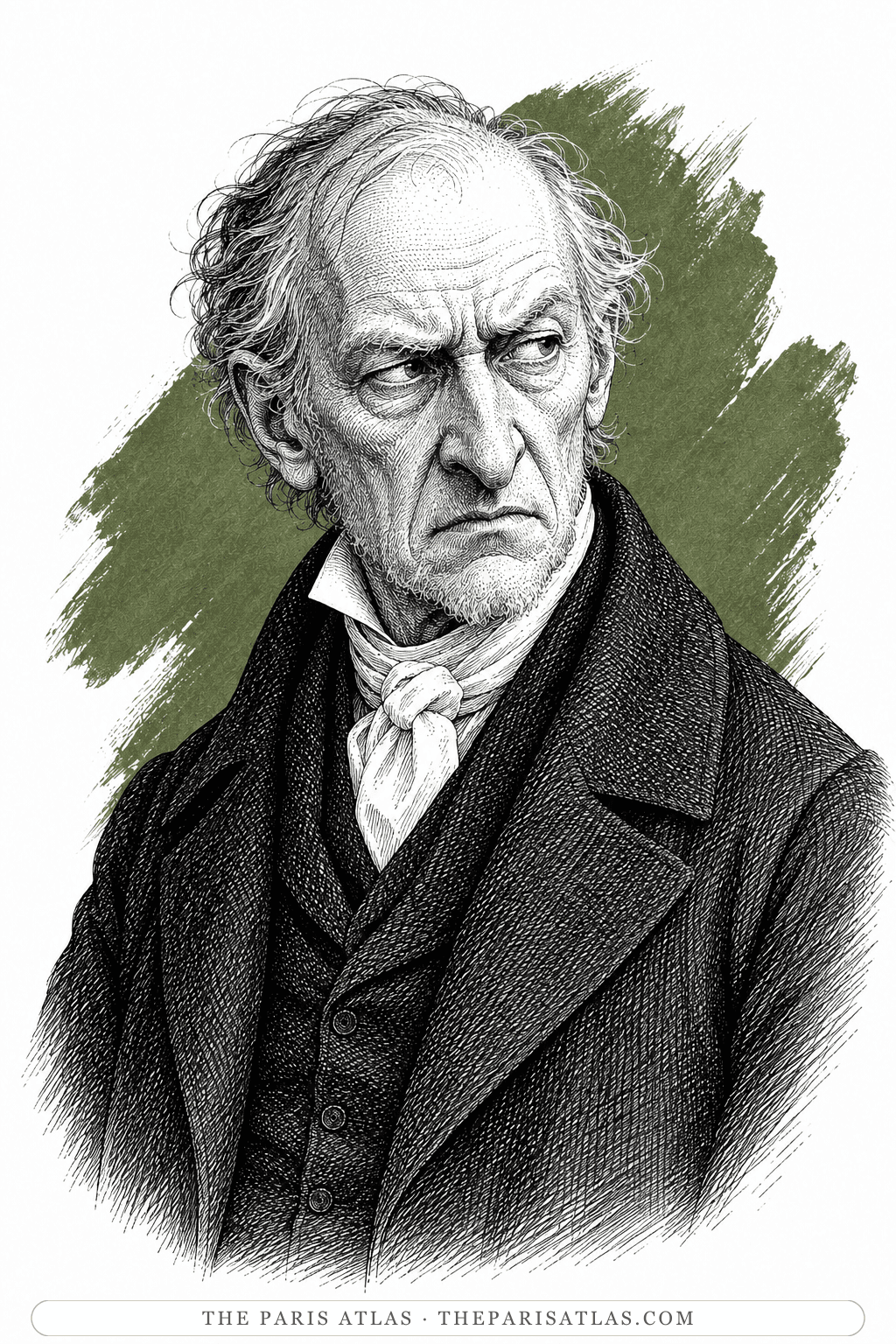
A prosperous London businessman whose haunted Christmas changes the uses he finds for money and time.
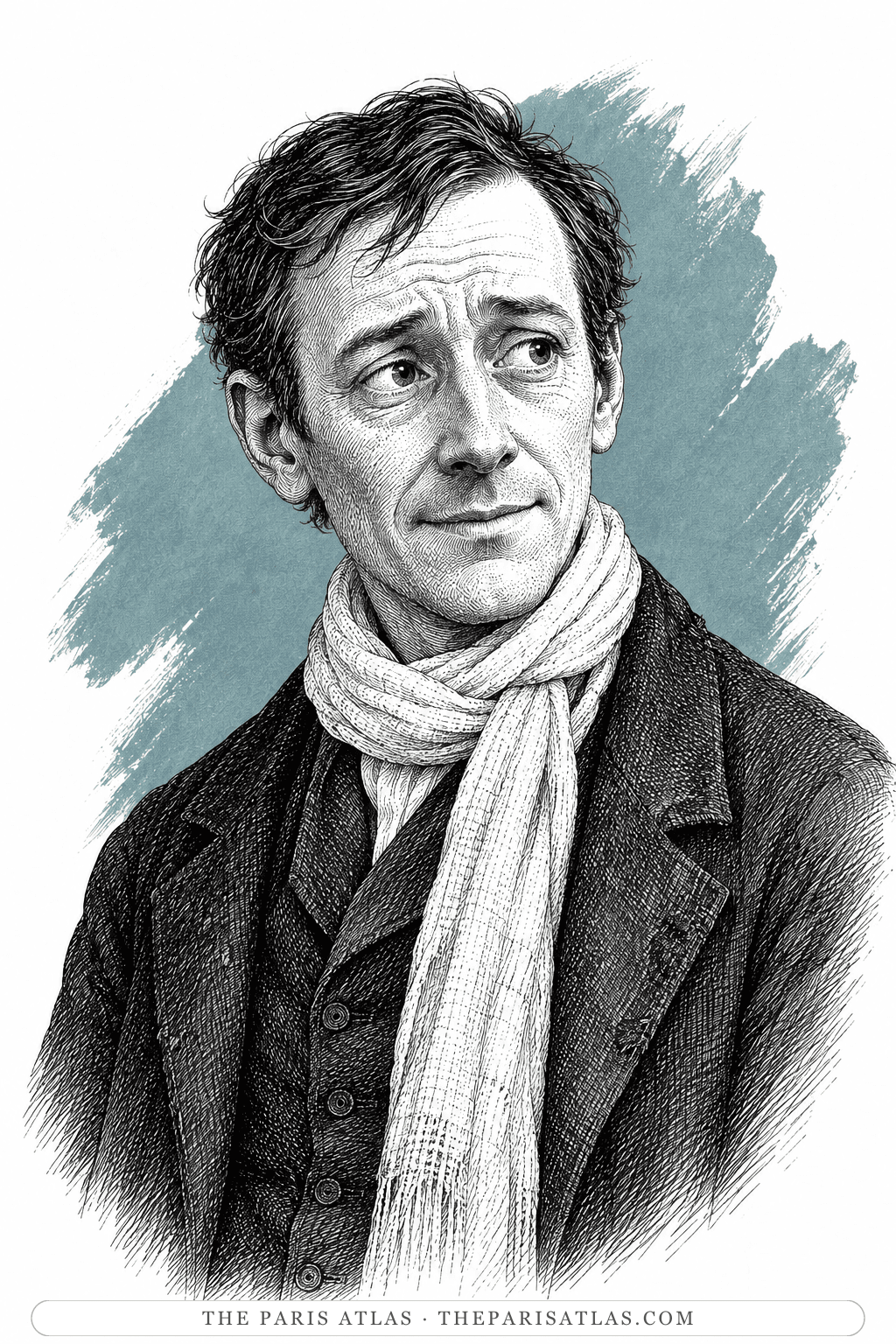
Scrooge's poorly paid clerk, whose family life reveals both affection and the material costs of his employer's stinginess.
Autumn 1843
Dickens composes the novella in roughly six weeks.
December 19, 1843
Chapman and Hall publishes the first edition, illustrated by John Leech.
2008
Puffin Books publishes the selected standalone US paperback on September 11, with Anthony Horowitz's introduction.

Pip's changing understanding of wealth and gratitude develops related questions through a much longer life story.
Read our take
The historical novel also imagines a life gaining meaning through responsibility toward other people.
Read our take
Wilde gives concealed conduct a supernatural visible form, with a darker account of the possibility of change.
Read our takeChapman and Hall published it in London on December 19, 1843, with illustrations by John Leech.
It is commonly described as a novella: a complete short book in five sections, which Dickens calls staves. It is the first of his five Christmas books.
Four named visitors appear: Jacob Marley, Christmas Past, Christmas Present and Christmas Yet To Come. Marley announces the three spirits, which explains why summaries sometimes count three.
He dies in the possible future shown by the last spirit. The actual conclusion explicitly says that he does not die after Scrooge changes his conduct. Dickens does not name Tim's illness or a specific treatment.
In the original story he accepts Fred's invitation and eats with his nephew's household. He sends the Cratchits a turkey anonymously, then sees Bob at the office the following morning.
That is the selected Puffin Books paperback published September 11, 2008, ISBN 9780141324524, with Anthony Horowitz's introduction. It is a standalone edition, not a volume collecting all five Christmas books.
Explore authors with a similar voice, perspective, and influence.
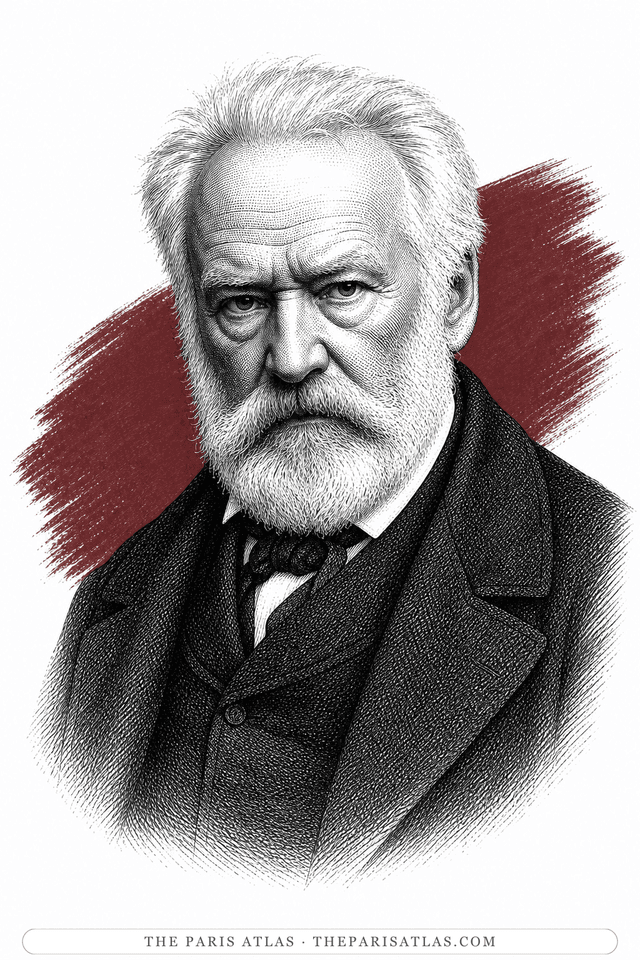
Poet, novelist and playwright who spent sixteen years in an apartment on the Place des Vosges that is now his museum, wrote a novel about Notre-Dame that shamed France into repairing the cathedral, spent nineteen years in exile for opposing the emperor Napoleon III, and was buried in the Panthéon — the Paris monument where France buries its most honoured dead — in 1885 after a funeral that brought roughly two million people into the streets of Paris.
View author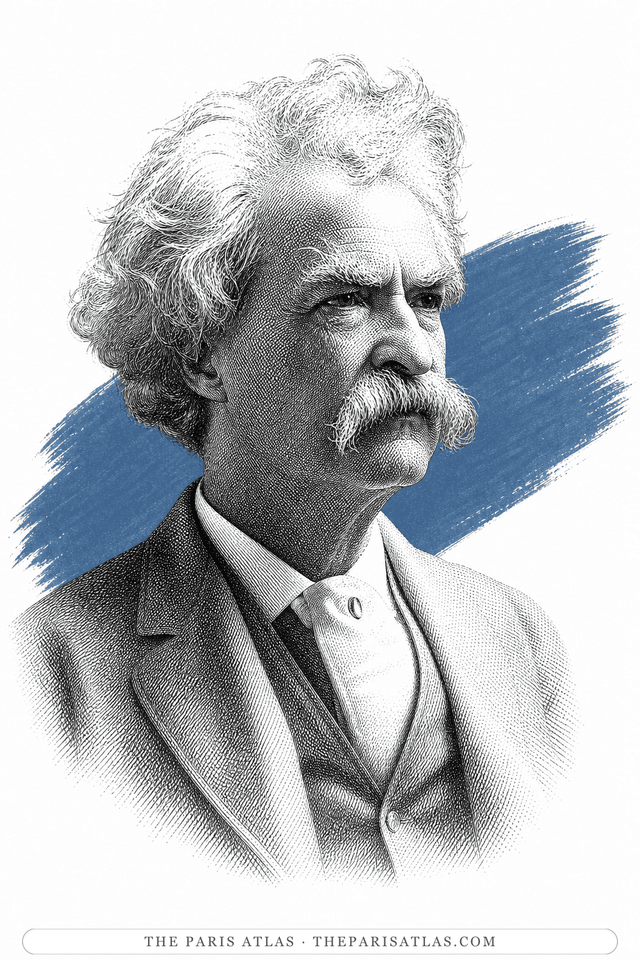
The Missouri newspaperman who became America's most famous writer, and whose first book made its reputation partly out of Paris: in 1867 he arrived with a shipload of American tourists, renamed his guide Ferguson, watched the high-kicking can-can through his fingers and wrote it all down. He kept coming back — and was living in Paris in the mid-1890s, broke, while finishing the novel he considered his best, Personal Recollections of Joan of Arc.
View author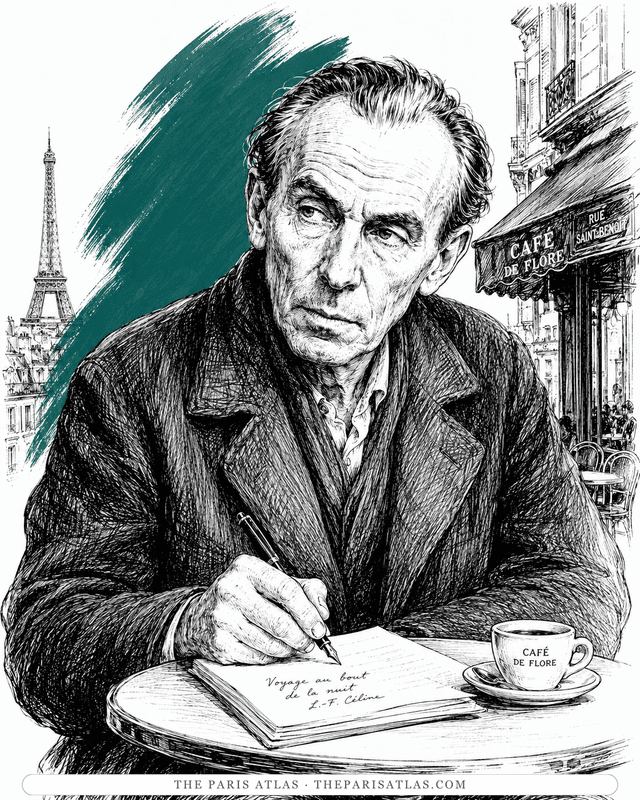
The doctor of the Paris slums who wrote the century's blackest, funniest novel — and changed the sound of French prose.
View authorThe sources below include the primary text, editions, scholarship, archival materials, and other records that informed this page. They document A Christmas Carol, its publication, and its place in literary history.


The primary text represented by this page, used for descriptions of the work’s contents and for any quoted passages shown here.
Primary text for the plot, all twelve character observations and both quotations.
Manuscript introduction: six-week composition and December 19, 1843 publication.
Original publisher, John Leech illustrations and the sequence of five Christmas books.
Selected standalone ISBN, September 2008 issue, 160 pages and Anthony Horowitz introduction.
The primary text is the baseline reference for every book page. Additional references document publication history, interpretation, and historical context where that evidence is available.
 Explore more resources