
The Last Man
Shelley expands the question of human companionship into a future world devastated by plague.
Read our take
by Mary Shelley
A creator abandons the being he brings to life, then struggles to escape the claims it makes on him.
Victor Frankenstein, a young student from Geneva, discovers how to animate lifeless matter. He recoils from the creature he has made and leaves it without care or guidance. Their accounts of what follows reach the reader through Robert Walton, an explorer whose own pursuit of knowledge has brought his ship into dangerous Arctic ice.
Victor tells Walton that his early ambition was to banish disease and overcome the limits of life. At Ingolstadt, that ambition absorbs his time, health and attention. When his experiment succeeds, he responds to the creature’s appearance with disgust, then relies on his friend Henry Clerval to nurse him through his own collapse.
The creature gives a different account of the aftermath. It learns to distinguish sensations, find food and shelter, and understand language by observing a family living in a cottage. Its education brings pleasure and sympathy, but also a clearer understanding of its exclusion from human company.
Walton writes these stories to his sister, Margaret Saville. He admires Victor, who is allowed to correct his notes, while the creature’s voice reaches him through Victor’s recollection. The final encounter gives Walton a chance to hear the creature directly.
Victor’s younger brother William is murdered, and Justine Moritz is condemned after a portrait taken from the child is found in her clothing. Victor suspects his creature but keeps his secret. Justine later explains that pressure from her confessor made her confess falsely.
On an Alpine glacier, the creature persuades Victor to listen to its history. It describes learning from the De Lacey household, being driven away, killing William and placing the portrait to implicate a young woman. It demands a female companion and promises that they will leave human society.
Victor agrees, then destroys the unfinished companion while working on an Orkney island. The creature threatens to appear on his wedding night. Clerval is subsequently found murdered in Ireland, and Victor is detained before evidence of his whereabouts clears him of the charge.
Victor interprets the wedding-night threat as a danger to himself and leaves Elizabeth alone while searching the inn at Evian. The creature kills her. After his father’s death, Victor pursues it north, eventually reaching Walton’s ship, where he dies.
Walton agrees to turn back when his crew demands an end to the expedition. He then finds the creature mourning over Victor’s body. It speaks of remorse and its intention to destroy itself, before departing on an ice raft. Walton watches it disappear, but does not witness its death.
Walton records Victor's story, and Victor is allowed to correct the record. The creature's long narrative reaches the reader inside that account, so even its attempt to explain itself depends on the person who has rejected it. This arrangement makes testimony and editorial control part of the conflict.
Walton eventually hears the creature directly after Victor's death. That encounter neither verifies every earlier claim nor cancels the murders. It prevents Victor's final judgment from remaining the only available conclusion about the being he made. The frame asks the listener to retain sympathy without confusing it with acquittal.
The creature's education begins with sensation and practical needs, then develops through observing the De Lacey household. Discovering the family's poverty changes its behavior: it stops taking their food and secretly gathers fuel for them. Sympathy appears as learned attention expressed through work.
Language and books also supply categories by which it can understand its own isolation. Accounts of human achievement and belonging reveal what it lacks. The failed appeal to the blind father makes that education especially painful: speech briefly allows a hearing, but the returning family's response to its appearance overwhelms what has been said.
Victor treats animation as the completion of a difficult experiment, then withdraws when the living result repels him. The creature experiences the same event as the beginning of a life without care. The disagreement concerns what achievement requires of its maker after the moment of success.
The proposed female companion repeats the problem in another form. Victor fears that she might make choices neither he nor the creature can dictate. Yet Victor and the creature negotiate her possible existence around their own plans. Destroying the unfinished body ends the bargain without resolving how a created person could possess an independent will and receive responsible care.
Walton resembles Victor in his hunger for distinction and his claim that dangerous work may benefit humanity. His crew's demand to return therefore tests more than his courage. It asks whether the people exposed to an ambitious project can place a limit on it.
He agrees to turn south, although resentment remains in his account. The decision interrupts a pattern of sacrificing relationships to a goal without making Walton wholly wise. Likewise, the creature's announced intention to die is not a death the narrative witnesses. The ending preserves the difference between a person's final declaration and an outcome another observer can confirm.
The 1818 text: Walton's letters and continuation; volume I, chapters III–IV; volume II, chapters III–IV and VII–IX; volume III, chapter III. These readings do not silently substitute details from the 1831 revision.
I was benevolent and good; misery made me a fiend.
I desire the company of a man who could sympathize with me; whose eyes would reply to mine.
The cottage chapters follow its efforts to understand speech, books and kindness. They give the excluded being a history and arguments of its own.
Victor neglects the creature and his family while Walton must answer to a crew. Their decisions make responsibility a practical question about people whose safety depends on them.
Walton records Victor, and Victor recounts the creature. Reading their claims beside their actions helps reveal where sympathy and self-justification influence the account.
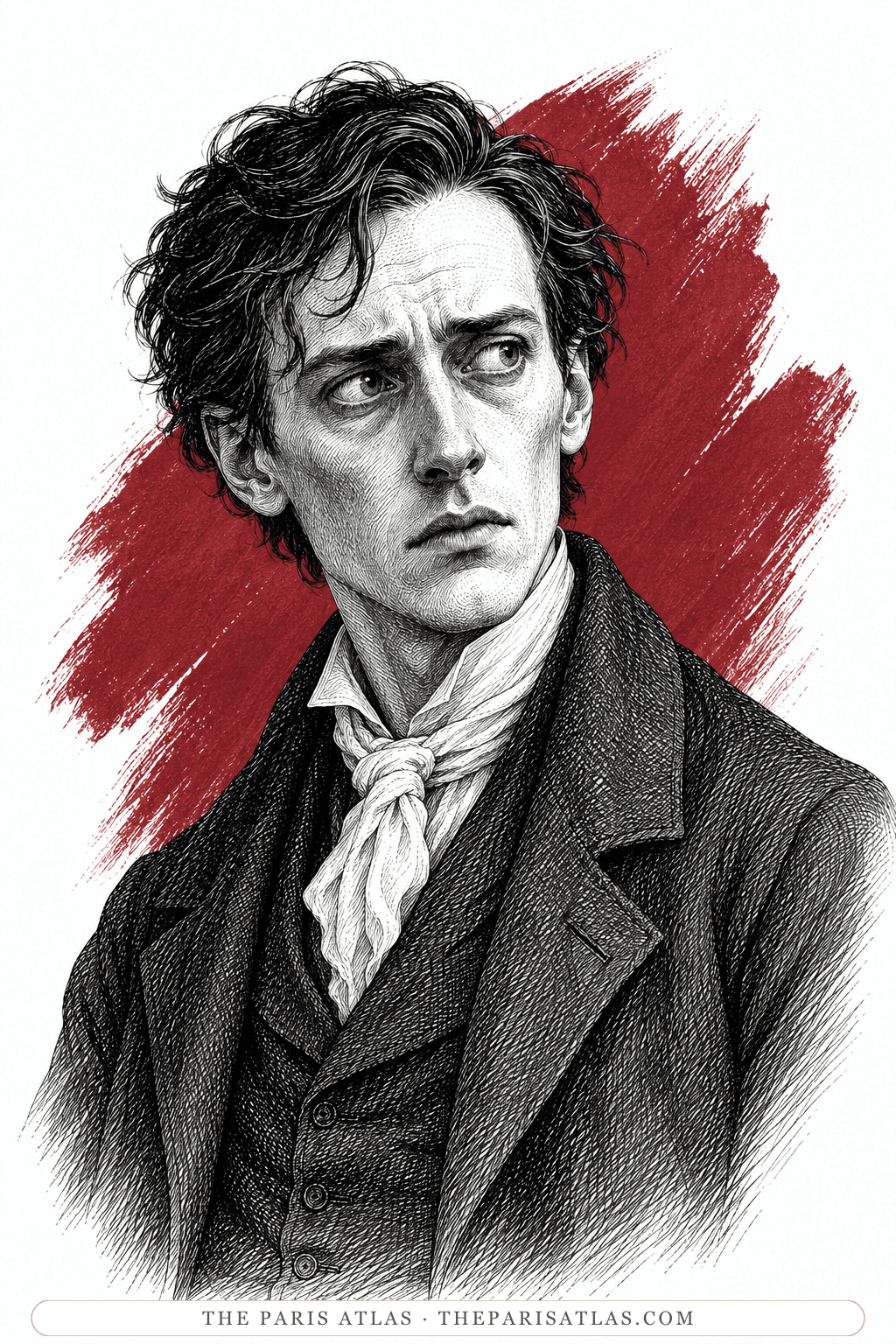
The Genevan student who creates a living being and narrates his history to Walton.
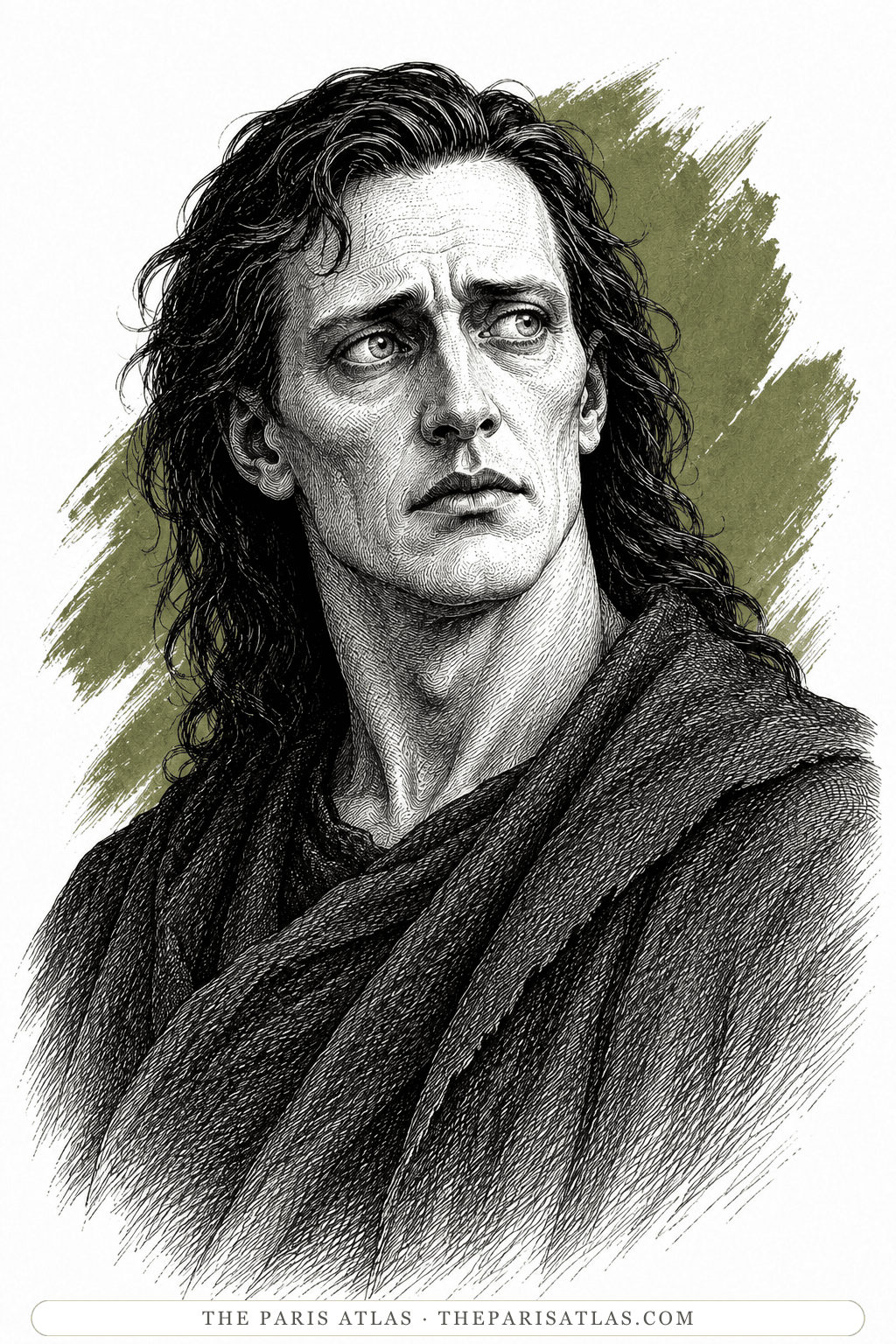
The unnamed being Victor brings to life, who learns to speak and recounts its own history.
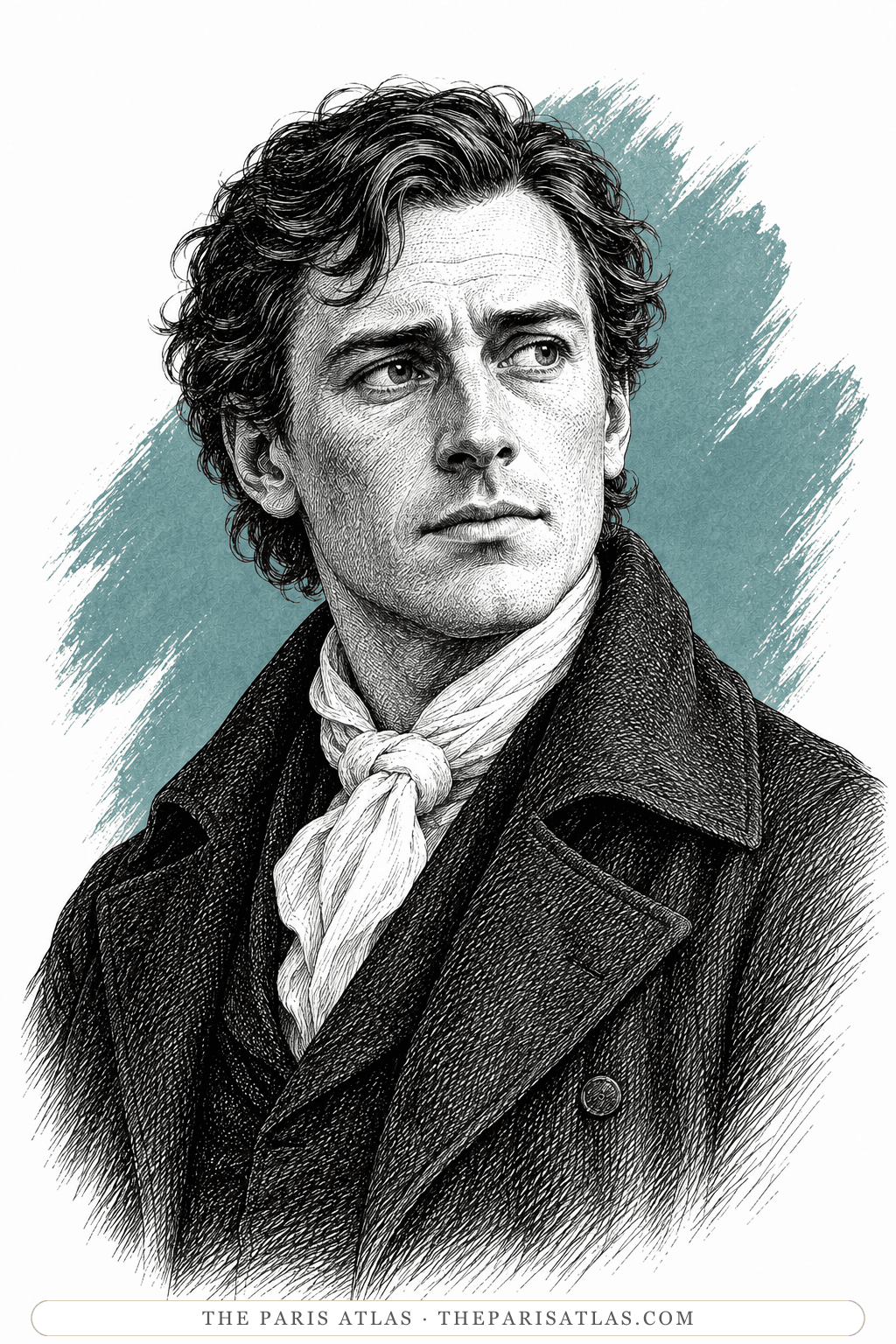
The English Arctic explorer whose letters contain Victor’s history and the novel’s ending.
1816–1817
Shelley develops the story begun near Geneva into a novel. The surviving manuscripts show drafting and revision before the three-volume publication.
1818
The novel appears anonymously in London on January 1, in three volumes, published by Lackington, Hughes, Harding, Mavor, & Jones.
1831
Shelley publishes a revised one-volume text with a new introduction. It is a version of the same novel, not a separate sequel.
2018
Penguin Classics publishes the selected US paperback of the 1818 text on January 16, with editorial contributions by Charlotte Gordon and Charles E. Robinson.

Shelley expands the question of human companionship into a future world devastated by plague.
Read our take
Shelley’s later novella gives another isolated narrator the task of writing a painful family history.
Read our take
Kafka also follows a being whose altered body makes familiar relationships difficult, but places the crisis inside a household.
Read our takeFrankenstein is Victor’s family name. The creature has no personal name in the novel, although different speakers call it a monster, a being or a demon.
He says that he discovers how to animate lifeless matter but refuses to explain the method to Walton. The text mentions instruments and a spark of being without supplying a reproducible procedure or the familiar cinematic laboratory sequence.
The 1818 first edition, with three volumes and chapter numbering that restarts in each. Shelley revised the novel in 1831. Both belong to this one work.
It tells Walton that it intends to destroy itself, then leaves on an ice raft. Walton sees it disappear into darkness and distance. The narrative does not show the announced death.
She began the story in the summer of 1816, when she was eighteen, and developed it through 1817. She was twenty when it appeared anonymously in January 1818.
Penguin Classics’ 2018 US paperback, Frankenstein: The 1818 Text, ISBN 9780143131847, 288 pages. The chapter references here come from the public 1818 transcription, rather than the paperback’s page numbers.
Explore authors with a similar voice, perspective, and influence.
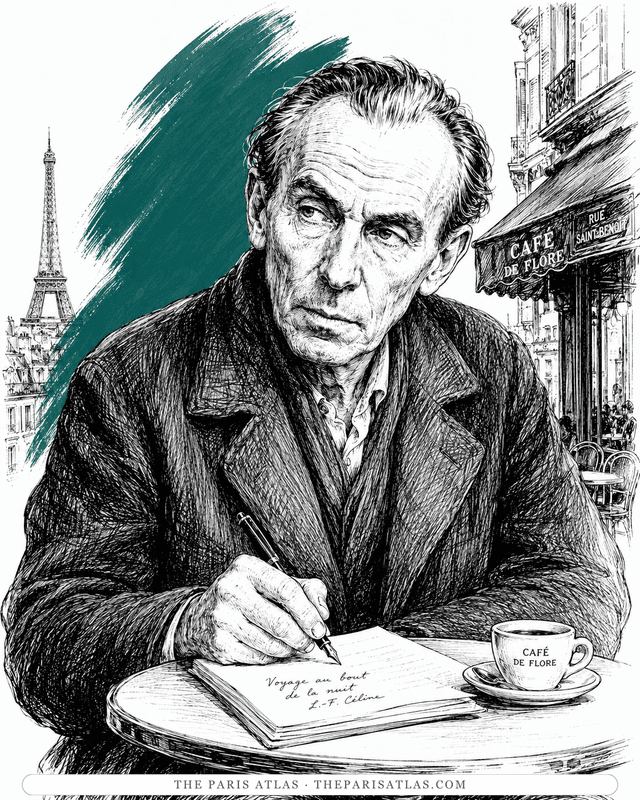
The doctor of the Paris slums who wrote the century's blackest, funniest novel — and changed the sound of French prose.
View author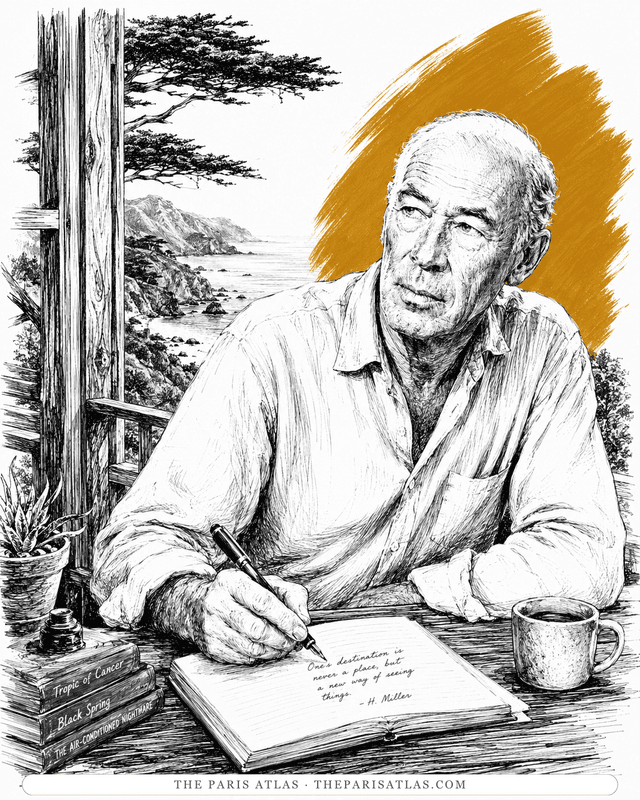
The Brooklyn dropout who arrived in Paris broke at thirty-eight and wrote the exuberant, banned books that ended American censorship.
View author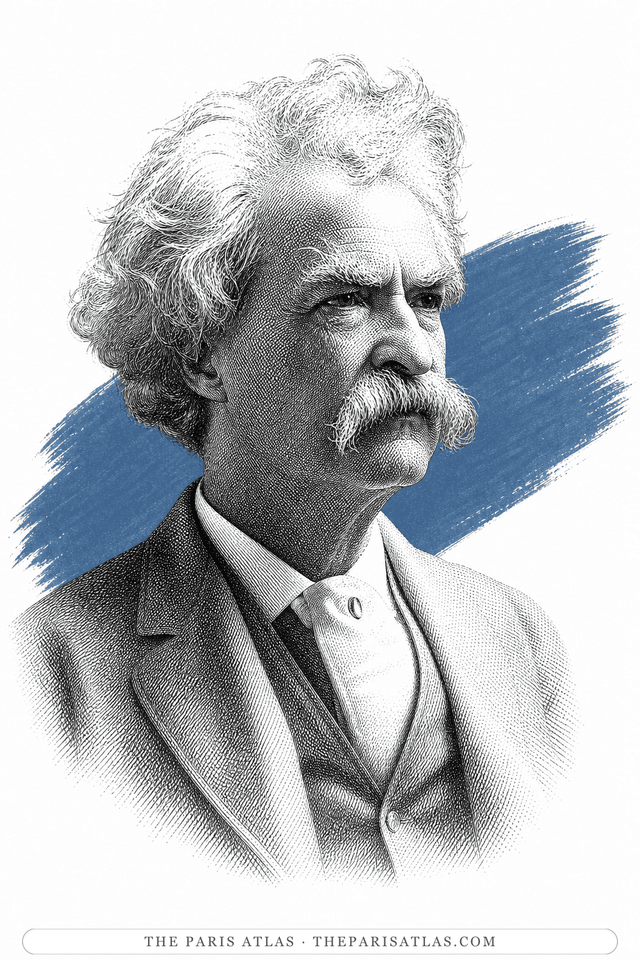
The Missouri newspaperman who became America's most famous writer, and whose first book made its reputation partly out of Paris: in 1867 he arrived with a shipload of American tourists, renamed his guide Ferguson, watched the high-kicking can-can through his fingers and wrote it all down. He kept coming back — and was living in Paris in the mid-1890s, broke, while finishing the novel he considered his best, Personal Recollections of Joan of Arc.
View authorThe sources below include the primary text, editions, scholarship, archival materials, and other records that informed this page. They document Frankenstein, its publication, and its place in literary history.

The primary text represented by this page, used for descriptions of the work’s contents and for any quoted passages shown here.
Primary text for the plot, eighteen guide observations and two quotations. These chapters and the complete final Walton continuation were consulted; the whole novel is not claimed as read.
Archive’s composition history verifies the 1816–1817 development, surviving manuscript stages and January 1, 1818 three-volume publication.
Institutional timeline supports the 1816 beginning, 1818 anonymous publication and 1831 revision. Unrelated family dates are not used.
Publisher record verifies the selected 2018 US paperback, ISBN, 288 pages and editorial credits. Contemporary introduction, chronology and essay were not read.
The primary text is the baseline reference for every book page. Additional references document publication history, interpretation, and historical context where that evidence is available.
 Explore more resources