
Frankenstein
Shelley returns to education, isolation and obligations to other beings, expanding them into a future history of human loss.
Read our take
by Mary Shelley
A survivor remembers the friendships and public hopes that plague has carried away.
In a future England, Lionel Verney rises from an impoverished childhood through his friendship with Adrian, the son of an abdicated king. Their private attachments and political hopes are overtaken by a plague that spreads across the world. Lionel tells the story from the isolation announced in the title, trying to preserve the people whose company made his life meaningful.
The novel begins with an imagined discovery of prophetic writings in the cave of the Cumaean Sibyl. The person who arranges those fragments admits to reshaping them. Lionel’s history therefore arrives as both a survivor’s record and a work of reconstruction.
Before plague dominates the story, Shelley gives considerable space to friendship, courtship and government. Adrian’s republican convictions oppose his mother’s hopes of restoring the monarchy. Lord Raymond seeks distinction in English politics and the Greek wars. Lionel, once a poacher, gains education and social standing through Adrian’s friendship.
As disease spreads, public decisions and domestic care become inseparable. Leaders must provide food, organize movement and respond to panic; families must nurse the ill and endure repeated losses. Lionel’s affectionate account also reveals errors, prejudice and attempts to control other people for their supposed good.
Adrian befriends Lionel and helps him enter an educated social world. Lionel marries Adrian’s sister Idris, while his own sister Perdita marries Raymond and becomes Clara’s mother. Raymond’s pursuit of glory leads him back to Greece and into Constantinople, where Lionel later recovers his body from the devastated city.
Perdita wishes to remain beside Raymond’s tomb near Athens. Lionel secretly drugs her and takes her aboard a ship for England, believing that he can restore her happiness. She dies by suicide during the voyage. He recognizes his coercion as a disastrous failure of judgment and takes responsibility for Clara.
When plague reaches London, Adrian undertakes relief work and becomes deputy to the Lord Protector. The surviving population eventually prepares to leave England. Lionel recovers from the disease, but his son Alfred dies; Idris, already exhausted, dies during a winter journey. The emigrants continue through France toward Italy.
Eventually Lionel, Adrian and Clara travel together as the last known survivors. They leave Venice in a small boat, hoping to reach Greece. A storm wrecks it; Adrian and Clara drown, and Lionel reaches the shore alone.
Lionel settles in Rome, writes his account and waits for another survivor. No one comes. He marks the year 2100 at St. Peter’s and prepares a boat with books, provisions and a dog for further searching. The novel ends with that proposed journey, without revealing whether he ever finds human company.
The first part gives substantial room to ambitions about government, rank and glory. Their presence matters when disease makes many of those distinctions useless. Adrian's authority increasingly rests on organizing care, subsistence and movement rather than on inherited position or a promise of military distinction.
The conflict with arriving migrants makes that test severe. Adrian has to resist violence among people already threatened by disease, and his intervention comes after lives have been lost. The episode does not present crisis as an automatic teacher of solidarity: fear can strengthen exclusion even when people face a common danger.
Lionel's treatment of Perdita exposes a failure inside his account of devoted family feeling. Convinced that departure will rescue her from grief, he removes her from Raymond's burial place through deception and coercion. Her death makes him confront the distance between wanting someone's good and respecting her wishes.
That failure should remain visible beside his later acts of nursing, protection and endurance. A survivor's affectionate portrait can preserve real devotion while also revealing harm. Shelley makes the history harder to read as a simple opposition between caring individuals and destructive public events.
Lionel recovers from plague, but the narrative supplies no complete explanation of why he survives when others do not. Later, swimming ability helps distinguish his fate from Adrian's and Clara's in the wreck. Neither event establishes that the last survivor is the wisest or most valuable person.
Animals continue after human society has nearly vanished from his experience. Their presence changes the scale of the catastrophe: a world that feels empty to Lionel still contains living creatures with needs of their own. The dog accompanying his proposed journey offers company without undoing the loss of human conversation.
The imagined editor's discovery and reconstruction of the Sibyl's leaves place Lionel's account inside another uncertain act of transmission. Within that account, Lionel writes in Rome without knowing whether anyone will read him. Both frames make preservation depend on the possibility of an unknown receiver.
The final plan to travel with books, provisions and a dog keeps that possibility open. The novel does not reveal a surviving community or prove that every other human being is dead. Its title expresses the extremity of Lionel's position, while the last movement remains a search rather than a verified census of the world.
Introduction; volume I, chapters I–III; volume II, chapters III, VI and IX; volume III, chapters II–III and IX–X.
Shall man be the enemy of man, while plague, the foe to all, even now is above us, triumphing in our butchery, more cruel than her own?
I also will write a book, I cried—for whom to read?—to whom dedicated?
Adrian’s principles are tested in hospitals, food provision and the prevention of further killing. The novel asks what public responsibility means when ordinary institutions can barely function.
Lionel celebrates his friends while describing mistakes of his own, including his treatment of Perdita. His attachment to others does not guarantee that he understands their wishes.
The final Roman chapters ask whom a last survivor can address. Remembering the dead gives Lionel an occupation, even as writing exposes their absence again.
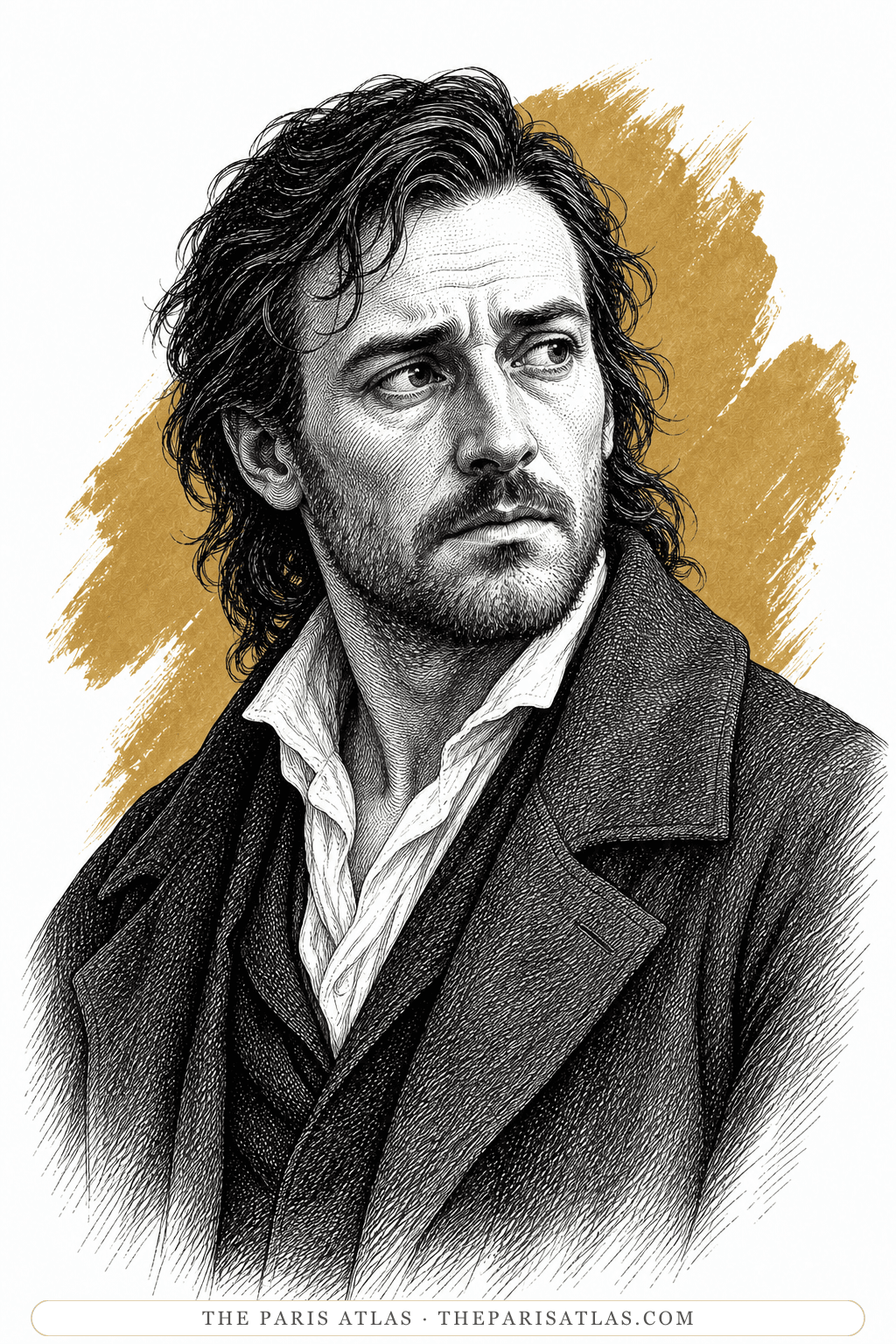
The narrator, a former Cumberland shepherd who becomes Adrian’s friend and Idris’s husband.
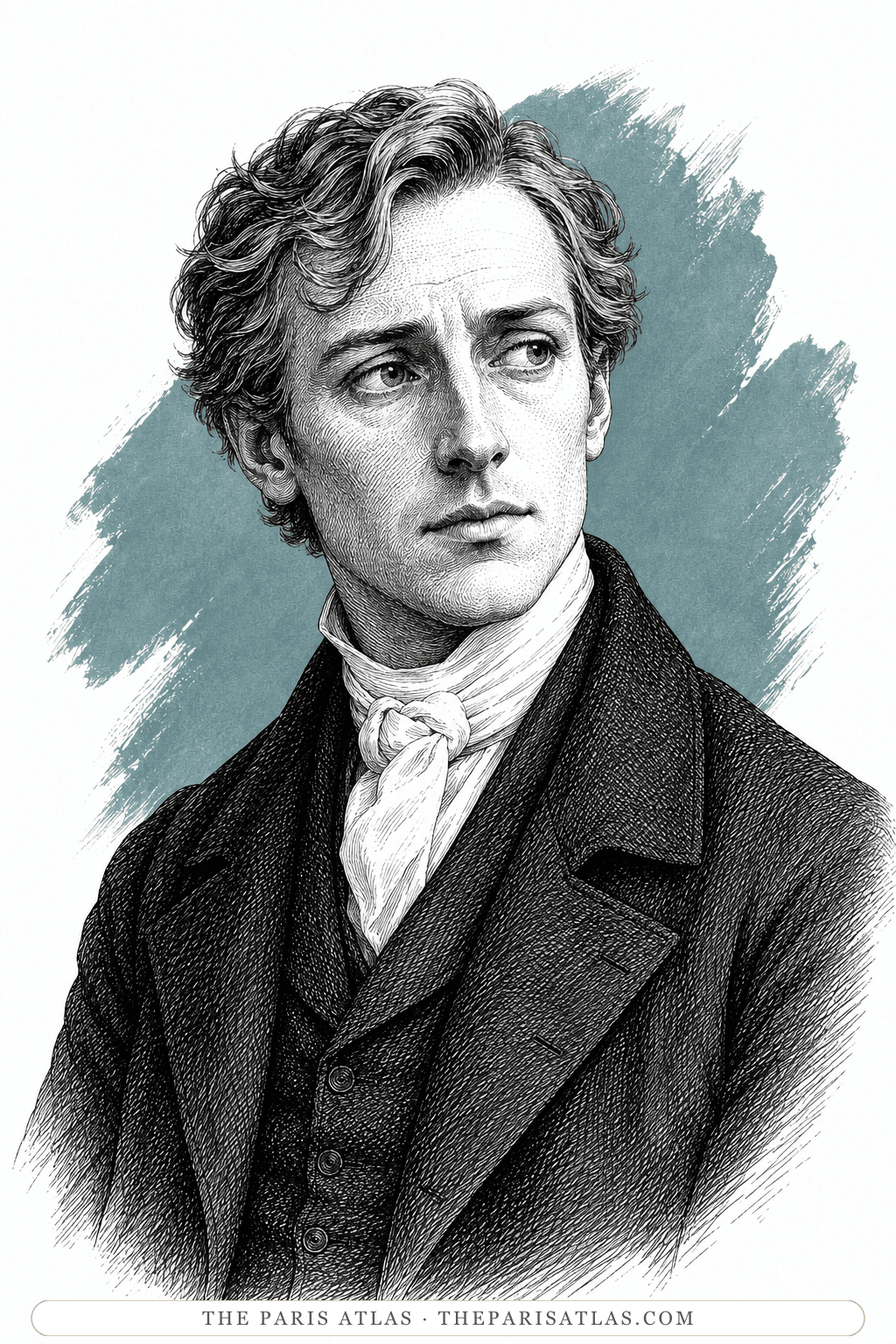
The Earl of Windsor, son of the former king, and the friend who leads the survivors’ relief efforts.
1825
The Shelley chronology records a probable first draft by February and copying of the manuscript by November.
1826
Henry Colburn publishes The Last Man in London in three volumes, attributed to the author of Frankenstein. The chronology gives January 23 as the publication date.
2024
Penguin Classics issues the selected US paperback on April 9, with John Havard’s introduction and Rebecca Solnit’s foreword.

Shelley returns to education, isolation and obligations to other beings, expanding them into a future history of human loss.
Read our take
An isolated narrator again writes to preserve a painful personal history, on the much smaller scale of a family.
Read our take
Camus also examines care and public responsibility during an epidemic, but within a different historical setting and narrative design.
Read our takeIts imagined history belongs to the late twenty-first century and reaches the year 2100. The introductory discovery of Sibylline writings takes place in 1818, creating a frame for that future narrative.
No. His father abdicates, and Adrian supports republican government. During the plague he becomes deputy to the Lord Protector and assumes responsibility for relief and the survivors’ movement.
No. He recovers after an apparently fatal illness, but the story supplies no treatment or mechanism that can be shared to save everyone else.
No. Disease devastates the population, but several major deaths have other causes. Perdita dies by suicide, Idris after severe exhaustion and a winter journey, and Adrian and Clara in a shipwreck.
No. Lionel prepares to search for another survivor with a dog as his companion. The novel does not show the result of that voyage or confirm that someone else is found.
Penguin Classics’ US paperback of April 9, 2024, ISBN 9780143137900, 512 pages. The scene references and quotations use the public Gutenberg text rather than that edition’s pagination.
Explore authors with a similar voice, perspective, and influence.
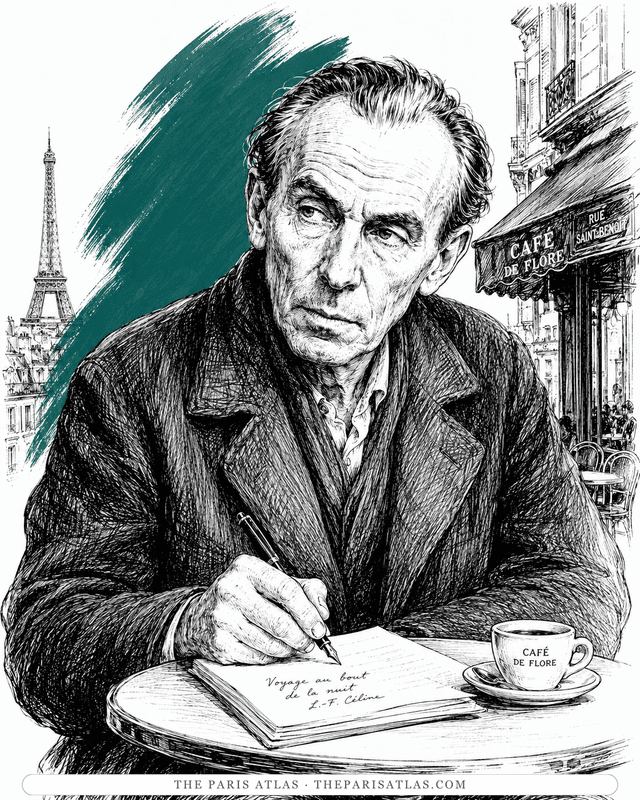
The doctor of the Paris slums who wrote the century's blackest, funniest novel — and changed the sound of French prose.
View author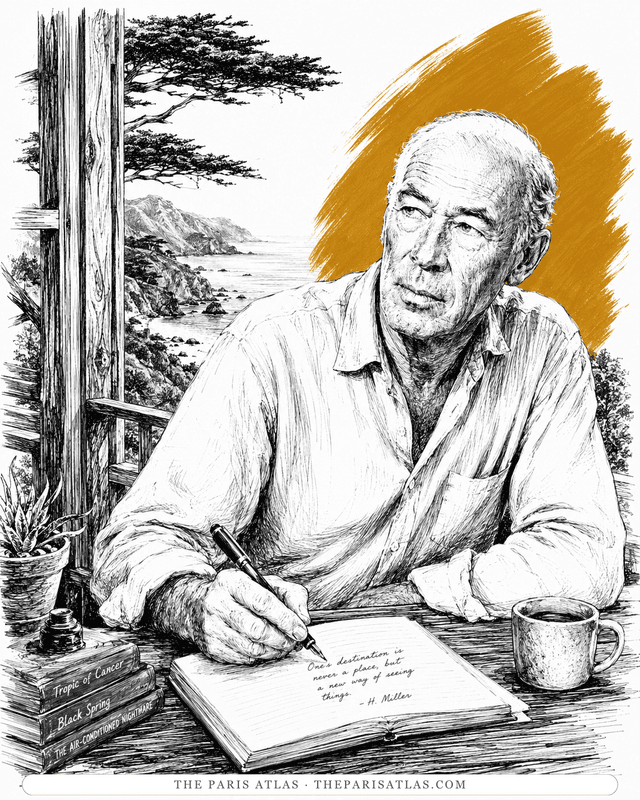
The Brooklyn dropout who arrived in Paris broke at thirty-eight and wrote the exuberant, banned books that ended American censorship.
View author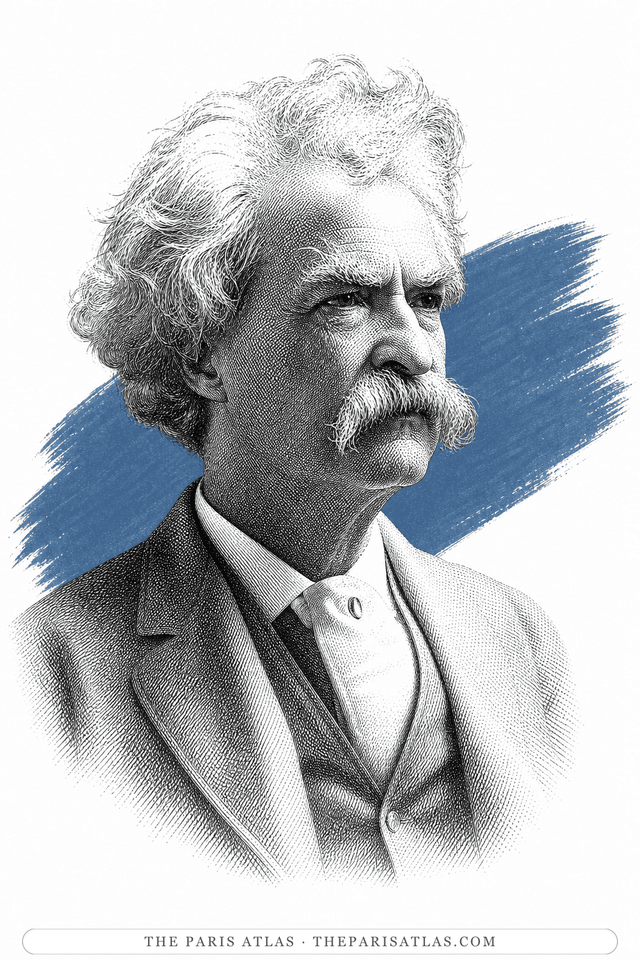
The Missouri newspaperman who became America's most famous writer, and whose first book made its reputation partly out of Paris: in 1867 he arrived with a shipload of American tourists, renamed his guide Ferguson, watched the high-kicking can-can through his fingers and wrote it all down. He kept coming back — and was living in Paris in the mid-1890s, broke, while finishing the novel he considered his best, Personal Recollections of Joan of Arc.
View authorThe sources below include the primary text, editions, scholarship, archival materials, and other records that informed this page. They document The Last Man, its publication, and its place in literary history.


The primary text represented by this page, used for descriptions of the work’s contents and for any quoted passages shown here.
These complete chapters supply the plot details, twelve character observations and quotations. The intervening chapters and the selected paperback’s editorial material were not consulted; no whole-novel reading is claimed.
Shanon Lawson’s scholarly chronology, preserved on a University of Valencia page, supplies the qualified draft chronology and January 23, 1826 three-volume publication date.
Publisher catalogue verifies the selected 2024 paperback’s date, ISBN, length and editorial credits. Broad promotional claims about inventing genres are not adopted.
The indexed catalogue entry identifies the 1826 Henry Colburn first edition in three volumes. The live page returned an access error; only the retrieved catalogue fields are used, not an examination of the physical copy.
The primary text is the baseline reference for every book page. Additional references document publication history, interpretation, and historical context where that evidence is available.
 Explore more resources