

The Last Man
Mary Shelley's 1826 novel also follows the last man alive after a plague, told as he looks back on the world that ended.
Read our takeOryx and Crake
Margaret Atwood
Margaret Atwood's novel about the last man alive after an engineered plague: Snowman looks after a tribe of gene-spliced people and works out how his best friend ended the world.
Oryx and Crake is the first novel in Margaret Atwood's MaddAddam trilogy.[1] Snowman, who was called Jimmy before a plague wiped out humanity, may be the last human alive. He lives on a beach beside the Children of Crake, gentle green-eyed people made in a laboratory. As he tries to survive, he remembers his best friend, Crake, and Oryx, the woman they both loved.[1] The novel was published in 2003 and shortlisted for the Booker Prize.[2]
The novel opens before dawn. Snowman sleeps in a tree and wakes to the sound of the tide. He wears a dirty bedsheet like a toga, a baseball cap and sunglasses with one lens missing. His watch no longer works, and its blank face frightens him. Nobody knows what time it is any more.[1]
He is hungry. His store of food, kept under slabs of concrete, holds a single mango, a can of fake cocktail sausages and part of a bottle of Scotch.[1] He talks to himself to keep his mind in order. Scraps of half-remembered books float up in his head, and he cannot always finish a sentence.[1]
Children come up from the beach to show him what they have found: a hubcap, a piano key, a broken computer mouse. He tells them these are things from before. The children are naked and beautiful, each a different skin colour and all with green eyes. They ask why he has moss growing out of his face. He tells them it is feathers.[1]
The name Snowman is his own joke. Crake had a rule that no name could be used for something that had never physically existed. With Crake gone, Snowman chose the name of the Abominable Snowman, a creature that may or may not exist.[1] The story of how the world ended comes back to him in flashbacks, while he makes a dangerous trip back to the place where it began.[3]
Snowman lives in a tree by the sea, near the Crakers, and is running out of food. He decides he has to walk back to the RejoovenEsense Compound, where he knows there are supplies, and tells the Crakers he is going to see Crake. On the way, pigoons hunt him.[4]
In flashbacks, Jimmy grows up in a Compound. His mother leaves the family and takes his pet rakunk, a skunk crossed with a raccoon. His father takes up with a colleague called Ramona. Jimmy's only real friend is Crake, and the two boys spend hours playing games and watching violent and pornographic videos online. In one video Jimmy sees a young girl he later believes is Oryx.[4]
After college Jimmy writes advertising copy and drinks too much. His mother, he learns, has been executed by Compound security for treason. Crake, now powerful at RejoovenEsense, gives Jimmy an injection before a night out in the pleeblands and offers him a job in his project inside a dome called Paradice.[4]
At Paradice, Crake shows Jimmy the Crakers. He is also making a pill called BlyssPluss, sold as a pleasure drug that secretly stops people having children. Oryx works for Crake. She teaches the Crakers and takes the pills to sex clinics around the world. She is Crake's lover, and she begins an affair with Jimmy.[4]
A plague spreads across every continent. Oryx calls Jimmy in tears: the plague was in the pills she had been handing out, and she did not know. Crake's injection has made Jimmy immune. Crake arrives at the dome carrying Oryx, cuts her throat, and Jimmy shoots him. Thomas L. Erskine's account for EBSCO says instead that Jimmy kills both of them, and the two plot summaries disagree on this point.
Jimmy waits in the sealed dome while most of humanity dies, then leads the Crakers out to the shore. In the present, he reaches Paradice, steps over the remains of Oryx and Crake, gathers supplies and returns with an infected foot.
The Crakers tell him they have seen people who look like him. He finds three of them, two men and a woman, sitting by a fire on the beach. He is armed and cannot decide what to do. The novel ends there, at what Erskine calls zero hour. Atwood carried the story on in The Year of the Flood (2009) and MaddAddam (2013).
Jimmy grows up before the plague, in a Compound. The Compounds are gated towns owned by biotechnology companies, where the scientists and their families live. Everyone else lives outside in the pleeblands, which are more open, seedier and more dangerous. The publisher's guide notes that the middle class has disappeared. Large companies and their private security forces hold much of the power.
The companies make new animals. Pigoons are pigs bred to grow human organs. After the plague, pigoons and wolvogs roam the ruins of the pleeblands. Jimmy's mother used to work for the companies. She quits in disgust at their experiments on animals and later runs away from home.
Atwood said the book invents nothing we have not already invented or started to invent. She called it speculative fiction rather than science fiction proper, with no space travel and no Martians. Its question, she wrote, is simple: what if we continue down the road we are already on?
Jimmy and Crake meet as boys. Jimmy is a words person and Crake is a numbers person. After school, Crake goes to the prestigious Watson-Crick Institute for the sciences, and Jimmy goes to the run-down Martha Graham Academy for the arts. Thomas L. Erskine, writing for EBSCO, reads the two schools as a measure of how much the society values science over the arts.
As boys they play computer games. One, called Extinctathon, asks players to name species that have died out. Crake takes his name from one of them, the red-necked crake. Atwood wrote that the whole novel came to her while she watched real red-necked crakes in the undergrowth near Cairns, in Australia.
Jimmy ends up writing advertising, which Erskine describes as working not as a wordsmith but as a wordserf. Crake becomes a powerful scientist. Atwood asked readers not to take the book as anti-science. She described science as a tool, like electricity, that can be bought, sold and turned to bad uses.
Crake designs a new kind of people. The Crakers are built to be beautiful and calm. They are not supposed to be racist, aggressive or religious, and they come into heat at set times, like animals. Crake also tried to breed art and religion out of them.
Crake's plan to remove religion fails. The Crakers keep asking Snowman why, and he answers with stories. Without meaning to, he invents a creation myth in which Crake is their maker and Oryx is the one who made the animals and cares for them. He holds his dead watch to his ear and pretends to talk to Crake through it.
In the novel Crake says that God is a cluster of neurons, and that removing the religious impulse without making zombies has been hard. Snowman's stories show that the impulse survived anyway. By the end of the book, Erskine notes, the Crakers are starting to form ideas of ambition and rank.
Atwood began the novel in March 2001, while still touring for The Blind Assassin. After the tour she went bird-watching in the rain forest of northern Australia with her partner, Graeme Gibson, and two friends. At Cassowary House, near Cairns, run by the birder Philip Gregory, the novel came to her almost whole. She started making notes that night.
She wrote several chapters that summer on a boat in the Arctic, where she could see how fast the glaciers were shrinking. She had reached the end of Part 7 when, sitting in Toronto airport, she learned about the attacks of 11 September 2001. She stopped writing for weeks.
Atwood said she did not change the plot, but she almost abandoned the book. The anthrax scare that followed came too close to what she had invented. She also explained where the novel's knowledge of science came from. The acknowledgements thank “the boys at the lab”, the graduate students who worked with her father at his forest-insect research station in northern Quebec.
Snowman wakes before dawn.
Nobody nowhere knows what time it is.
These are things from before.
God is a cluster of neurons
Snowman is filthy, hungry, lonely and very funny. His habit of correcting himself mid-thought, and the scraps of half-remembered books in his head, carry the book.
Margaret Atwood wrote that she had spent years clipping small news items about science. She said the book invents nothing that had not already been invented or begun.
Oryx and Crake was on the shortlists for the 2003 Booker Prize, the Giller Prize and the Governor General's Award, and for the 2004 Orange Prize.
The Year of the Flood and MaddAddam carry the story on, so a reader who is gripped has two more books waiting.
The man the novel follows. Called Jimmy before the plague, he may be the last human alive, and he looks after the Children of Crake.
Jimmy's brilliant childhood friend, who becomes a powerful scientist and designs both the Crakers and the plague.
A woman with a past in the sex trade who teaches the Crakers and is loved by both Jimmy and Crake.
A former company scientist who quits in disgust at the experiments, leaves her family, and is later executed for treason.
Jimmy's father's colleague, who moves in with them after Jimmy's mother leaves.
2001
In March, on a book tour in Australia, Margaret Atwood begins the novel while bird-watching near Cairns.
2001
She writes several chapters that summer on a boat in the Arctic. On 11 September she has reached the end of Part 7, and she stops writing for weeks.
2003
Oryx and Crake is published by McClelland & Stewart in Toronto, Nan A. Talese in New York and, on 5 May, Bloomsbury in London.
2003
The novel is shortlisted for the Booker Prize, the Giller Prize and the Governor General's Award for fiction.
2004
The novel is shortlisted for the Orange Prize. Anchor Books publishes the paperback on 30 March.
2005
Robert Laffont publishes the French translation, Le dernier homme, by Michèle Albaret-Maatsch, in Paris.
2009
The Year of the Flood, the second book of the trilogy, is published. MaddAddam follows in 2013.


Mary Shelley's 1826 novel also follows the last man alive after a plague, told as he looks back on the world that ended.
Read our take
Mary Shelley's scientist also makes a new kind of being, and the novel asks who is responsible for it.
Read our take
Aldous Huxley's novel imagines people designed in laboratories to be content. Crake's Crakers are a newer version of the same idea.
Read our take
Margaret Atwood's earlier speculative novel works by the same rule: nothing in it that people have not already done.
Read our take
One of the novel's two epigraphs comes from Virginia Woolf's To the Lighthouse. The other comes from Jonathan Swift's Gulliver's Travels.
Read our takeA man called Snowman, once Jimmy, who may be the last human alive after a plague. He lives beside the Crakers, gentle people made in a laboratory, and remembers how his friend Crake and the woman they both loved, Oryx, brought the old world to an end.
Yes. The book is the first novel of the MaddAddam trilogy. The Year of the Flood followed in 2009 and MaddAddam in 2013.
A new kind of people designed by Crake. They are beautiful, calm and green-eyed, and were meant to be free of aggression, racism and religion. Snowman calls them the Children of Crake.
He chose the name himself, after the Abominable Snowman. Crake had a rule that nothing could be named after a creature that did not physically exist. With Crake gone, Snowman broke the rule on purpose.
Margaret Atwood calls it speculative fiction. She wrote that it has no space travel and no Martians, and that it invents nothing people have not already invented or started to invent.
From the red-necked crake, a bird. In the novel Crake takes it from a game about extinct species. Atwood wrote that the book came to her while she watched red-necked crakes near Cairns, in Australia.
The novel was shortlisted, not a winner. Oryx and Crake reached the shortlists for the 2003 Booker Prize, the Giller Prize and the Governor General's Award, and the 2004 Orange Prize.
Explore authors with a similar voice, perspective, and influence.

American novelist and composer whose expatriate fiction explores dislocation, unstable intimacy, fatalism, and North Africa.
View author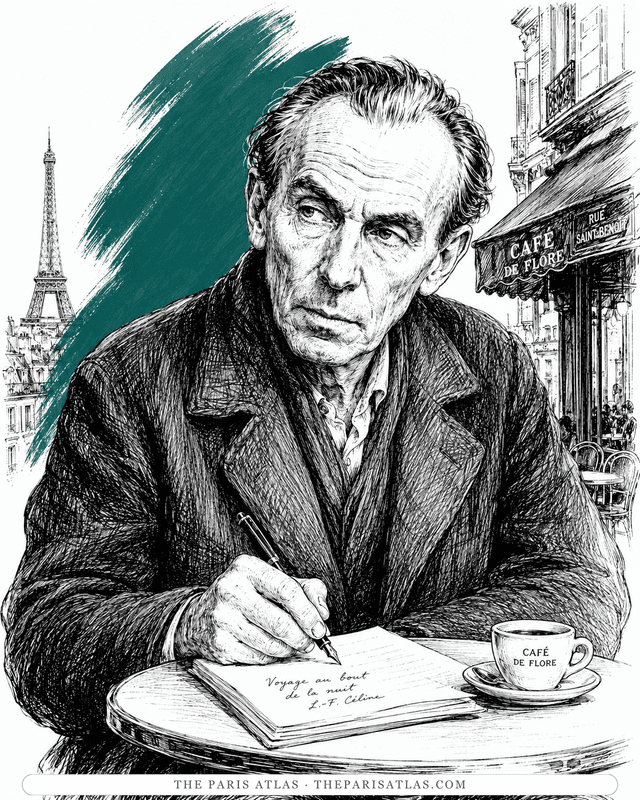
The doctor of the Paris slums who wrote the century's blackest, funniest novel — and changed the sound of French prose.
View author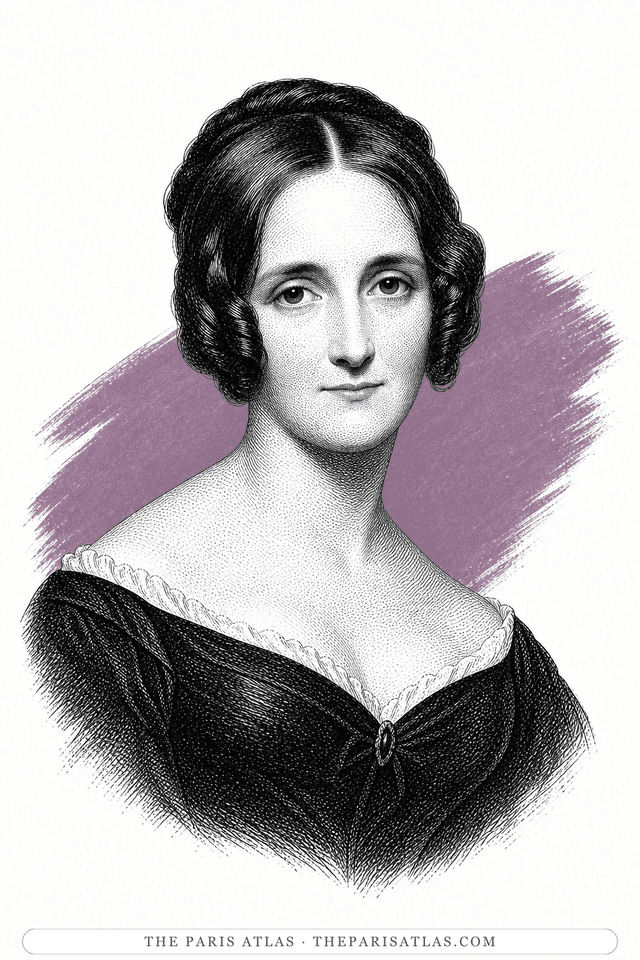
The author of Frankenstein, who first saw Paris at sixteen as a runaway. In the summer of 1814 she crossed from England to Calais with the poet Percy Bysshe Shelley and her stepsister Claire Clairmont, spent a week trapped in an expensive Paris hotel with no money, then bought a donkey and walked south-east across a France still wrecked by the Napoleonic wars. That journey became her first published book. Two years later, on a lake in Switzerland, she began her second.
View authorThe sources below include the primary text, editions, scholarship, archival materials, and other records that informed this page. They document Oryx and Crake, its publication, and its place in literary history.

Publisher's page. Primary text for the opening chapter, plus the description and the paperback's current details. The excerpt does not go past Chapter 1.
The Booker Library entry: shortlisted for the 2003 prize, published by Bloomsbury on 5 May 2003. Read through the Wayback Machine capture of 16 October 2025.
Publisher's introduction and discussion questions, used for details they reproduce from the novel: Extinctathon, pigoons and wolvogs, the epigraphs, and Crake's line in Part Seven.
Margaret Atwood's own account of writing the novel, from Australia in March 2001 to 11 September 2001. Read through the Wayback Machine capture of 3 October 2003.
Publisher's question-and-answer interview with Atwood on Snowman, science and September 2001. Read through the Wayback Machine capture of 6 January 2009.
Thomas L. Erskine's account for EBSCO Research Starters, from Magill's Survey of World Literature. Used for the schools, the Crakers and the ending, with one disagreement noted in the plot.

Library of Congress record for the first United States edition: New York, Nan A. Talese, 2003, 376 pages.
Library of Congress record for the Toronto edition: McClelland & Stewart, 2003, 378 pages.
Bibliothèque nationale de France record for Le dernier homme, Paris, Robert Laffont, 2005, translated by Michèle Albaret-Maatsch, with Oryx and Crake as the original title.
Margaret Atwood's own award list: the Booker, Giller and Governor General's shortlists in 2003 and the Orange Prize shortlist in 2004.
Open Library edition and work records, used to confirm each ISBN and the first-publication years of The Year of the Flood and MaddAddam.
The primary text represented by this page, used for descriptions of the work’s contents and for any quoted passages shown here.
The primary text is the baseline reference for every book page. Additional references document publication history, interpretation, and historical context where that evidence is available.
 Explore more resources