
The Handmaid's Tale
The first novel, published in 1985. Read it first: The Testaments assumes you know how Gilead works and who Aunt Lydia is.
Read our takeThe Testaments
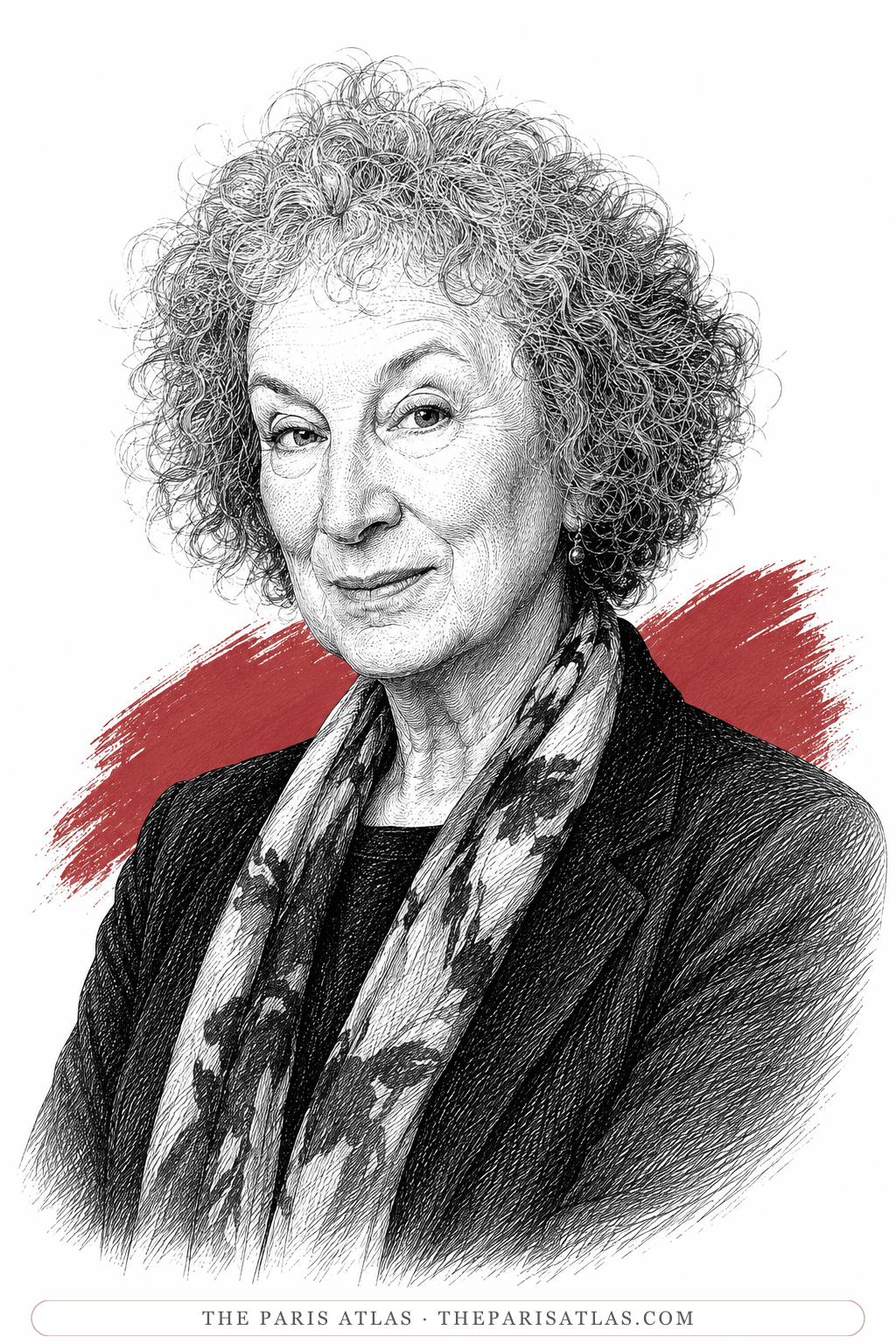
Margaret Atwood
Margaret Atwood's sequel to The Handmaid's Tale: fifteen years on, three women write down what they know about Gilead, and one of them is Aunt Lydia.
The Testaments is Margaret Atwood's sequel to The Handmaid's Tale, set more than fifteen years after the first novel.[1] Three women tell the story. Aunt Lydia, the most powerful woman in Gilead, writes a secret account inside Ardua Hall. Agnes Jemima grows up as a Commander's daughter in Gilead. Daisy grows up in Toronto and learns she was smuggled out of Gilead as a baby.[2] The novel was published on 10 September 2019 and shared the Booker Prize that year with Bernardine Evaristo's Girl, Woman, Other.[3][4]
The first voice belongs to Aunt Lydia, the woman who trained the Handmaids in the first novel. She opens by describing a statue of herself that Gilead put up while she is still alive. The statue shows her holding a girl's hand, with a Handmaid crouched at her side and a Taser on her belt.[1] She writes at night in the library of Ardua Hall and hides the pages from the surveillance cameras, which she placed there herself.[1]
Lydia is not writing for Gilead. She says outright that writing is dangerous and that several women in Ardua Hall would love to get their hands on her pages. She writes to “my unknown reader”, someone who may find the pages later.[1] The Booker Prize reading guide says she is secretly working against the regime from inside its highest ranks.[2]
The second voice is Agnes Jemima, the adopted daughter of Commander Kyle and his wife Tabitha. She has a comfortable childhood in Gilead. After Tabitha dies, Agnes is promised in marriage to a much older Commander, and she becomes a Supplicant, an Aunt in training, to escape the wedding.[2][5]
The third voice is Daisy, a sixteen-year-old in Toronto whose parents run a secondhand clothes shop. When her parents are killed, she discovers that she was adopted and that she was carried out of Gilead as a baby.[2][5] The novel moves between the three accounts until the women's stories meet at Ardua Hall.
Aunt Lydia, the most powerful Aunt in Gilead, writes in secret at Ardua Hall. For years she has gathered evidence of crimes by Gilead's leaders. Her rival, Aunt Vidala, schemes against her, and Commander Judd is hunting for a traitor who leaks information to Mayday. He does not suspect Lydia.[5]
In Gilead, Agnes Jemima loses her adoptive mother, Tabitha, and learns that her birth mother was a Handmaid who escaped. As a teenager she is promised to Commander Judd. Lydia offers her a way out, and she joins her friend Becka at Ardua Hall as a Supplicant, where both learn to read.[5]
In Toronto, Daisy's adoptive parents are killed by a car bomb. Her adoptive mother's friend Ada takes her into hiding and tells her she is Baby Nicole. Mayday trains her and sends her into Gilead as a convert named Jade, and she is placed with Agnes and Becka at Ardua Hall.[5]
Lydia reveals herself as Mayday's source. She tells Agnes and Daisy that they are half-sisters, daughters of the same escaped Handmaid. She hides a microdot holding her evidence in Daisy's arm and plans for the two young women to leave for Canada disguised as Pearl Girls, Gilead's missionaries.[5]
Commander Judd's men raid Ardua Hall, and Agnes and Daisy have to leave early. Becka stays behind so the plan can work, and she dies rather than be caught and questioned. On their way out, Aunt Vidala catches them, and Daisy punches her so hard that she falls into a coma. The two young women are passed from helper to helper through New Hampshire and Maine. They nearly drown before reaching the Canadian shore, where Mayday picks them up.
The evidence is taken from Daisy's arm and broadcast around the world. Agnes and Daisy meet their mother. Lydia ends her account knowing she has been found out and planning to kill herself with morphine before she can be questioned. Her last words to her reader ask not to be judged too harshly.
An epilogue returns to the academic conference format of The Handmaid's Tale. A historian named Pieixoto speaks at a conference in 2197, confirms that Gilead fell after the evidence was released, and suggests that the young women's mother was Offred. Letters carved into a windowsill at a refugee house called Roosevelt Cottage may be the initials of the main characters.
In The Handmaid's Tale, Aunt Lydia is a voice in Offred's memory, teaching the Handmaids to blame themselves. In The Testaments she speaks for herself. Margaret Atwood told an interviewer that she wanted to know how Lydia got that way, and also how regimes like Gilead fall apart.
Lydia's account starts with vanity and a joke. Her statue makes her look younger and slimmer than she is, and she would have liked more emphasis on herself. After nine years the stone is marked by pigeons and growing moss. Believers leave eggs, oranges and croissants at its feet, and Lydia pockets the oranges.
Her past comes out in pieces. Before Gilead she was a judge. When the regime took power she was arrested and tortured, then offered a place helping to design the rules for women. The publisher's readers guide quotes the moment she puts on the clothes of the women who do the shooting in the stadium. She felt a chill, she put it on, and she asks what else she should have done.
Ron Charles, reviewing the novel for The Washington Post, wrote that making Lydia a narrator was “a brilliant strategic move that turns the world of Gilead inside out.” Barbara VanDenburgh of USA Today wrote that Atwood starts “by making us root for dastardly Aunt Lydia.”
Agnes belongs to the first generation to come of age in Gilead. The publisher's readers guide points to the clothes that sort the girls by age and class: pink, white and plum dresses for the special girls, green for girls about to be married, and drab stripes for the poorer Econofamilies.
Agnes and her friend Becka are taught to fear men's desire and to feel ashamed of their own bodies. Both have been abused by Becka's father, Dr. Grove. When Becka is told she must marry, she cuts her wrist, and Lydia offers her a place as an Aunt instead.
Ardua Hall gives the two girls something no other women in Gilead are allowed: reading. Agnes calls her admission to the Hildegard Library a golden key. There she learns the truth about the Bible story of the Concubine Cut into Twelve Pieces, and about her own half-sister. Reading the Bible for themselves, and finding evidence of crimes by Gilead's leaders, convinces Agnes and Becka that the regime is corrupt all the way through.
In The Handmaid's Tale, Canada is the border Offred's family tried to reach. In The Testaments, Canada is where half the story is told. Daisy's adoptive parents, Neil and Melanie, run a clothes shop in Toronto called The Clothes Hound. They are also working for Mayday, the resistance against Gilead, and a car bomb at the shop kills them on Daisy's sixteenth birthday.
Daisy learns that she is Baby Nicole, a child famous for having been smuggled out of Gilead. Mayday asks her to go into Gilead pretending to be a new convert, to collect documents from a source inside. She goes in under the name Jade. The Booker guide describes her as a girl recruited into a mission to bring back papers that could destroy the regime.
Aunt Lydia admits in her account that Gilead has “an embarrassingly high emigration rate.” The publisher's guide asks whether anyone who leaves Gilead can ever truly escape.
The Booker Prize library says the sequel was inspired by readers' responses to the first book and by “the world we've been living in.” Atwood started thinking about it in 2015. She wrote to her publishers in February 2017 to say she had the book.
Atwood said she was old enough to have lived through the major totalitarian regimes of the 20th century. She said she was interested in how such regimes get in, why people welcome them, and how they crumble. She placed The Testaments in a middle period, when Gilead is already corrupt and the crumbling has begun.
The Booker guide also records that Atwood named a biography of Thomas Cromwell, Henry VIII's chief minister, as one inspiration, in an interview with Paul Waldie of The Globe and Mail. The guide points readers to Hilary Mantel's Wolf Hall, the Booker-winning novel about Cromwell's rise.
Only dead people are allowed to have statues, but I have been given one while still alive. Already I am petrified.
Wait, I counsel them silently: it will get worse.
One person alone is not a full person: we exist in relation to others. I was one person: I risked becoming no person.
Goodbye, my reader. Try not to think too badly of me, or no more badly than I think of myself.
The woman who ran the Handmaids' training in the first novel writes her own secret account. She is funny, vain and ruthless, and she is plotting against the state she helped build.
The Handmaid's Tale ends with Offred stepping into a van without knowing where it will take her. The Testaments picks up the story more than fifteen years later and answers some of what readers wanted to know.
The Testaments shared the 2019 Booker Prize with Bernardine Evaristo's Girl, Woman, Other. The judges called it a savage and beautiful novel.
Three accounts take turns, and a planned escape drives the second half. Michiko Kakutani called it a fast, immersive narrative.
The most powerful Aunt in Gilead and one of its founders. She writes a secret account at Ardua Hall and works against the regime from inside.
The adopted daughter of Commander Kyle and his wife Tabitha, raised inside Gilead. She becomes a Supplicant at Ardua Hall to avoid an arranged marriage.
A sixteen-year-old in Toronto who learns she was smuggled out of Gilead as a baby. She goes back in under the name Jade.
Agnes's friend, who escapes marriage by becoming an Aunt. Her father, Dr. Grove, abused both girls.
One of Gilead's most powerful officials, hunting for the traitor who leaks information to Mayday. Agnes is promised to him in marriage.
Lydia's rival at Ardua Hall, always scheming to replace her.
A friend of Daisy's adoptive mother who takes Daisy into hiding and tells her who she really is.
2015
Margaret Atwood begins thinking about a sequel to The Handmaid's Tale.
2017
In February she writes to her publishers to say she has the book.
2019
The Testaments is published on 10 September, by Chatto & Windus in London and Nan A. Talese/Doubleday in New York.
2019
The novel shares the Booker Prize with Bernardine Evaristo's Girl, Woman, Other, Atwood's second Booker win. The novel is also shortlisted for the Giller Prize.
2019
Robert Laffont publishes the French translation, Les testaments, by Michèle Albaret-Maatsch, in Paris.
2020
Anchor Books publishes the paperback on 1 September.
2026
A television series of The Testaments premieres in April, with Ann Dowd as Aunt Lydia, Chase Infiniti as Agnes and Lucy Halliday as Daisy.


The first novel, published in 1985. Read it first: The Testaments assumes you know how Gilead works and who Aunt Lydia is.
Read our take
George Orwell's novel also shows a regime from inside and ends with a note that looks back on it after the fact, much as both of Margaret Atwood's Gilead novels do.
Read our take
Yevgeny Zamyatin's novel is written as a secret record by a man inside a total state, the same form as Aunt Lydia's hidden manuscript.
Read our take
Ray Bradbury's novel is about a state that burns books. Lydia writes in one of the few libraries left after Gilead's book burnings.
Read our takeOryx and Crake
Margaret Atwood
Margaret Atwood's other famous speculative novel imagines a different collapse, caused by biotechnology companies rather than a religious state.
Read our takeYes. The Testaments is set more than fifteen years after The Handmaid's Tale, in the same Republic of Gilead. The publisher says it can also be read on its own.
Three women. Aunt Lydia writes a secret account at Ardua Hall. Agnes Jemima is a girl raised in a Commander's household in Gilead. Daisy is a teenager from Toronto who learns she was smuggled out of Gilead as a baby.
Yes, jointly. The 2019 judges refused to choose a single winner and split the prize between The Testaments and Bernardine Evaristo's Girl, Woman, Other. Atwood had already won in 2000 for The Blind Assassin.
Only briefly. She is not one of the narrators. In the epilogue, a historian suggests that Agnes and Daisy's mother was Offred.
On 10 September 2019, thirty-four years after The Handmaid's Tale. Chatto & Windus published it in London and Nan A. Talese/Doubleday in New York.
Yes. The series premiered in April 2026, with Ann Dowd returning as Aunt Lydia, Chase Infiniti as Agnes and Lucy Halliday as Daisy. The publisher describes it as a Hulu Original series.
The home and training centre of the Aunts, the senior women of Gilead who train the Handmaids. Aunt Lydia writes her account in its library, one of the few left after Gilead's book burnings.
Explore authors with a similar voice, perspective, and influence.
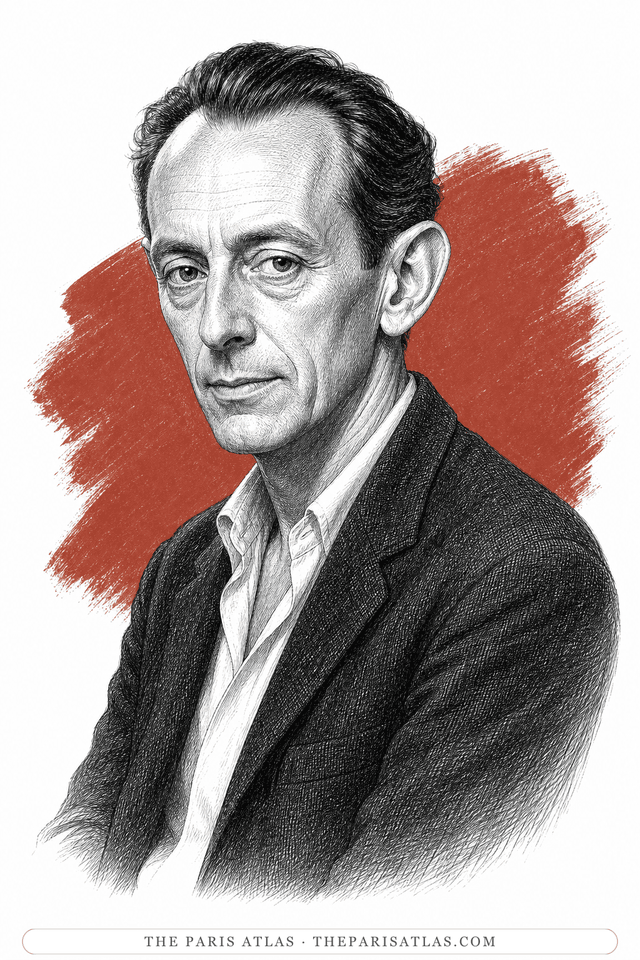
American novelist and composer whose expatriate fiction explores dislocation, unstable intimacy, fatalism, and North Africa.
View author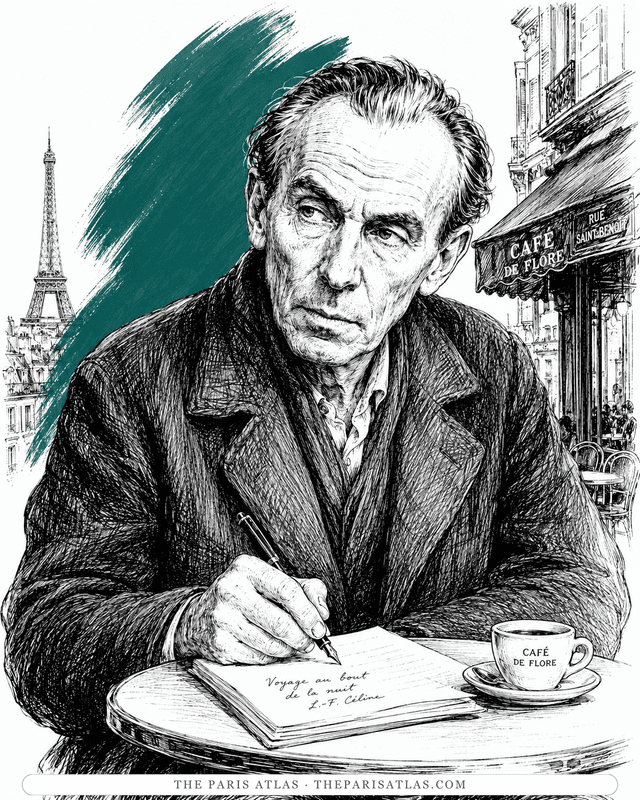
The doctor of the Paris slums who wrote the century's blackest, funniest novel — and changed the sound of French prose.
View author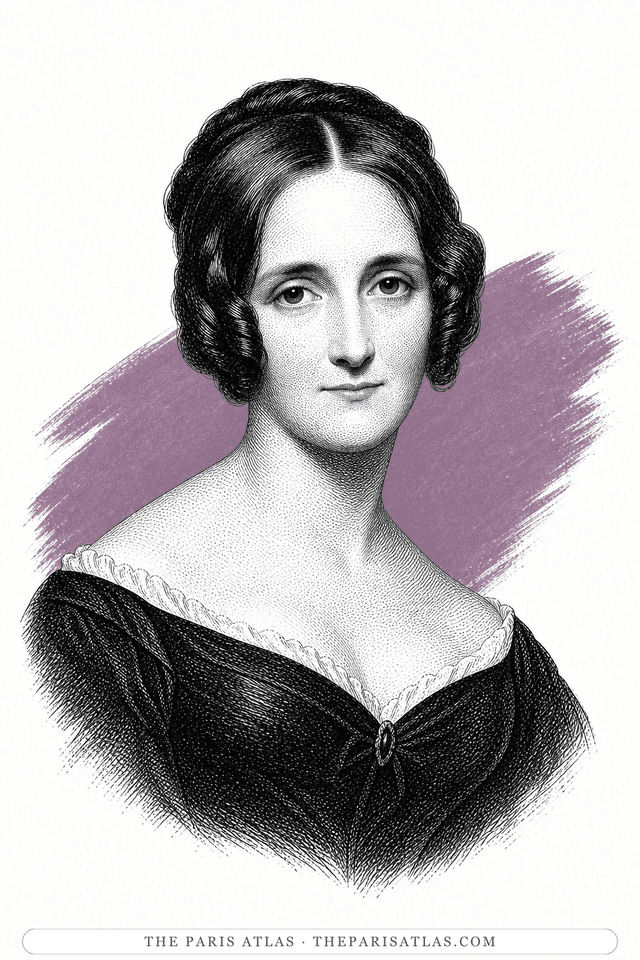
The author of Frankenstein, who first saw Paris at sixteen as a runaway. In the summer of 1814 she crossed from England to Calais with the poet Percy Bysshe Shelley and her stepsister Claire Clairmont, spent a week trapped in an expensive Paris hotel with no money, then bought a donkey and walked south-east across a France still wrecked by the Napoleonic wars. That journey became her first published book. Two years later, on a lake in Switzerland, she began her second.
View authorThe sources below include the primary text, editions, scholarship, archival materials, and other records that informed this page. They document The Testaments, its publication, and its place in literary history.

Publisher's page. Primary text for the opening chapter, plus the description, awards, formats and audiobook readers. The excerpt does not go past Chapter 1.
Emily Facoory's reading guide for the Booker Prizes, April 2026: characters, critics, Atwood's interviews on the book's origins, and two passages quoted from the novel. Read through the Wayback Machine capture of 21 April 2026.
The Booker Library entry: winner of the 2019 Booker Prize, the Chatto & Windus publication date and the judges' comment.
The Booker Prize's account of the 2019 split decision between The Testaments and Girl, Woman, Other.
Publisher's discussion questions, used for details they reproduce from the novel: the dresses, the emigration rate and the Hildegard Library.

Library of Congress record for the first United States edition: New York, Nan A. Talese/Doubleday, 2019, x, 419 pages, with the hardcover, paperback and ebook ISBNs.
Bibliothèque nationale de France record for Les testaments, Paris, Robert Laffont, 2019, translated by Michèle Albaret-Maatsch.
Margaret Atwood's own award list: the Booker Prize for The Testaments, 2019.
Open Library edition records, used to confirm that each ISBN listed here resolves to The Testaments.
The primary text represented by this page, used for descriptions of the work’s contents and for any quoted passages shown here.
The primary text is the baseline reference for every book page. Additional references document publication history, interpretation, and historical context where that evidence is available.
 Explore more resources