
Frankenstein
Published less than two months later. The Chamonix trip in Letter IV gave the novel its glacier, where Victor meets the creature.
Read our takeHistory of a Six Weeks' Tour
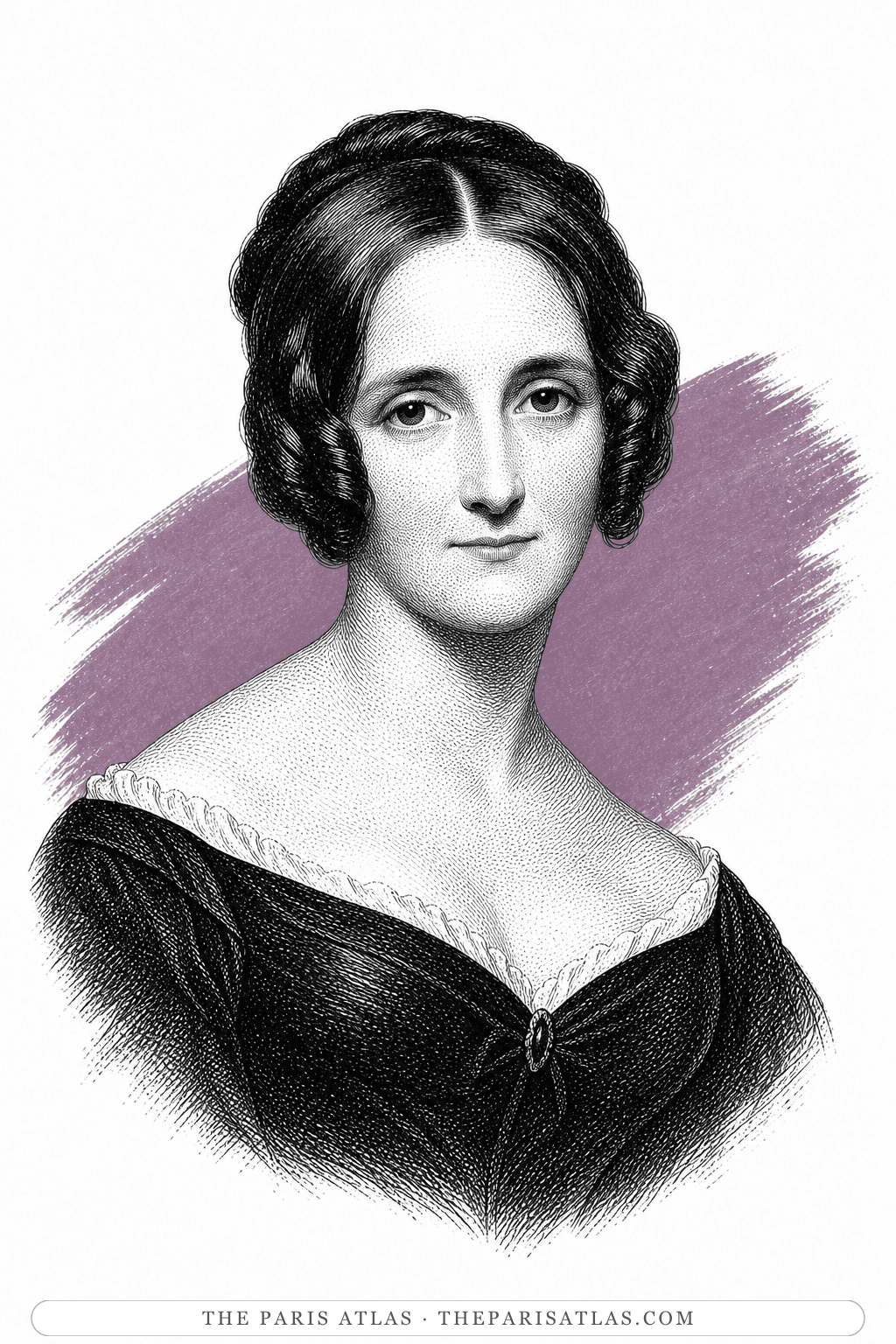
Mary Shelley
by Mary Shelley
Mary Shelley's first book: sixteen, eloping, stuck for a week in a Paris hotel, then walking out of the city with a donkey.
History of a Six Weeks' Tour is Mary Shelley's first published book, written with Percy Bysshe Shelley and issued anonymously in London in November 1817. Most of it is the journal of their 1814 elopement. Mary, aged sixteen, Percy and her stepsister Claire Clairmont crossed to Calais in a storm and spent a week stuck in a Paris hotel. Then they bought a donkey and walked south-east through a France just fought over by the armies that had brought Napoleon down. They reached Switzerland and came home down the Rhine, almost penniless. Four letters from their second journey, in the summer of 1816, follow the journal. They cover Paris again, Geneva, the Castle of Chillon and the glaciers of Chamonix. The book ends with Percy's poem Mont Blanc.
The title page names no author. The preface calls the book an unpresuming little volume, put together from an imperfect journal and a few letters to friends in England. The travellers, in its words, are the author, with her husband and sister, on foot through France and Switzerland.[1] The three were Mary, Percy Bysshe Shelley and Claire Clairmont, who had left London together on 28 July 1814.[2]
The journal is signed M. Its opening lines admit that it was written up nearly three years after the journey, from notes that were not very full. The first two letters, from Geneva in 1816, are also signed M. The last two, describing the sail round the lake and the trip to Chamonix, are signed S. The preface says Mont Blanc is by the author of those two letters.[1]
T. Hookham, Jun., of Old Bond Street and C. and J. Ollier of Welbeck Street published it together in 1817.[1] The book appeared in November, less than two months before Frankenstein.[3]
The journal opens on 28 July 1814, a day hotter than anyone could remember. The party will not wait for the next day's packet boat at Dover. They hire a small boat that evening, promised a two-hour crossing, and are tossed about all night before a squall drives them into Calais at sunrise.[1]
Early in August they reach Paris and spend a week in an expensive hotel, waiting for money. When it comes they buy a donkey and walk out of the city on 8 August. They sell the donkey at Charenton and buy a mule. They walk on through villages burned by the Cossacks, and Percy sprains his ankle. At Troyes they buy an open carriage and hire a driver to take them to Neuchâtel.[1]
In Switzerland they plan to find a cottage by the Lake of Lucerne. At Brunnen they rent two bare rooms and count their money: twenty-eight pounds, with nothing more due until December. They turn for home at once, travelling by water down the Reuss and the Rhine through Germany and Holland. They land at Gravesend on 13 September, having spent less than thirty pounds on eight hundred miles.[1]
The four letters come from the summer of 1816. Letter I crosses France again, through Paris in May and over the snowbound Jura to Geneva. Letter II describes the cottage near Coligny, the thunderstorms over the lake and the town of Geneva. Letter III follows an eight-day sail round the lake, with the Castle of Chillon and Clarens. Letter IV climbs to the glacier of Montanvert above Chamonix. The poem Mont Blanc closes the book.[1]
The travellers reach Paris after two days on the road from Calais. Mary is unwell from the heat. They learn that no Paris hotel will let rooms for a night or two, so they take an apartment for a week. The rooms are dear and not very pleasant: a bedroom, a closet with a bed, and an anteroom they use as a sitting room.
The heat keeps them indoors until the afternoon. On the first evening they walk to the Jardin des Tuileries, and Mary dislikes it: the trees are clipped into shapes and there is no grass. She much prefers the Boulevards, wide and lined with trees. She admires the Porte Saint-Denis, and fears the armies that had just occupied Paris may since have damaged it.
The week feels like a prison. When a small sum of money arrives, they decide to walk across France, with a donkey to carry the luggage and whoever is tired. Percy and Claire buy the animal at the donkey market on Monday 8 August. A Madame L'Hôte calls to warn them that disbanded soldiers are roaming the country. They go anyway, in a cab from the hotel door, with the donkey following behind.
The donkey can hardly carry the small bag, let alone a rider. They dismiss the cab at the city gate and walk on in the dusk, merry enough, and reach Charenton at about ten. The donkey is sold there the next morning and a mule bought for ten napoleons, gold coins of the day. The journal notes that all three were dressed in black silk.
The party left something behind in Paris: a box of papers. Mary Shelley later suspected that its letters were the ones a man calling himself George Byron used to try to blackmail her in 1845.
Earlier that year, the armies allied against Napoleon had crossed this country on their way to Paris. The journal records what they left. Nogent-sur-Seine has been wrecked by the Cossacks, the Russian cavalry. Houses have been burned and cattle killed. Mary writes that the sight gave a sting to her hatred of war.
At the village of Echemine the cottages have no roofs, only blackened beams. The villagers have not heard that Napoleon has been deposed. They say they are afraid to rebuild in case the Cossacks come back. Two leagues on, at Pavillon, the people are already repairing their houses, and Mary wonders what makes the difference.
The war also left stories. At Guignes the travellers sleep in the room where Napoleon and some of his generals had slept during the campaign, and the old woman of the house is proud of it. Leaving Troyes, their driver points out a battlefield and insists the French won. When asked how the Russians then got into Troyes, he says they took a roundabout route.
Letter I opens with a second arrival in Paris, on 8 May 1816. The party is held there for two days while the French authorities sign their passports. Again no one will let rooms by the day, so again they must take them for a week. They have no letters of introduction and no friends in the city, and mostly stay in the hotel.
Mary finds the French sullen and resentful towards the English. Their government, she writes, keeps troops in France and props up a hated royal family on its throne. She thinks the French are right to be angry, and that the government alone deserves it. From Paris the route runs back through Troyes, then south through Dijon and over the Jura in snow to Geneva. Mary and Percy travelled with their baby son William and with Claire Clairmont, who was following Lord Byron to Geneva.
Lord Byron is in the book by name only once. The journal was written up in 1817, and on the Rhine it sends readers to the third canto of Byron's Childe Harold's Pilgrimage, which describes the same stretch of river. The travellers read those verses with delight, it says.
Letter III, signed S., describes a sail round the Lake of Geneva with an unnamed companion. The companion was Byron, who toured the lake with Percy Bysshe Shelley in the last days of June 1816. At the Castle of Chillon the letter describes the dungeon cut below the lake, its seven columns and the iron rings for prisoners. Byron wrote The Prisoner of Chillon at Ouchy during the same trip.
Letter IV climbs to the glacier of Montanvert above Chamonix, which it also calls the Sea of Ice. The Chamonix trip of July 1816 gave Mary Shelley material for Frankenstein. In the novel, published a few weeks after this book, Victor Frankenstein climbs alone to the same glacier. There the creature comes bounding towards him across the ice.
In this city there are no hotels where you can reside as long or as short a time as you please, and we were obliged to engage apartments at an hotel for a week.
After remaining a week in Paris, we received a small remittance that set us free from a kind of imprisonment there which we found very irksome.
the distress of the inhabitants, whose houses had been burned, their cattle killed, and all their wealth destroyed, has given a sting to my detestation of war, which none can feel who have not travelled through a country pillaged and wasted by this plague, which, in his pride, man inflicts upon his fellow.
A week stuck in a hotel in August 1814, the Tuileries, the Boulevards and a donkey bought at the market. She passed through again in May 1816, and the letters say so.
Burned villages, roofless cottages and people who had not heard that Napoleon had fallen, seen by three young travellers on foot.
The glacier of Montanvert in Letter IV is where Victor Frankenstein meets his creature. The book came out less than two months before the novel.
1814
Mary Godwin, Percy Bysshe Shelley and Claire Clairmont leave London on 28 July and cross to Calais overnight.
1814
Early in August they spend a week in a Paris hotel. On 8 August they buy a donkey and walk out of the city.
1814
Short of money at Brunnen on the Lake of Lucerne, they turn back. They land at Gravesend on 13 September.
1816
A second journey: Paris on 8 May, Geneva by mid-May, the sail round the lake with Lord Byron in late June, and Chamonix in late July.
1817
Hookham and the Olliers publish History of a Six Weeks' Tour anonymously in November.
1818
Frankenstein is published on 1 January, with its meeting on the glacier of Montanvert.
2002
Woodstock Books reissues the 1817 edition in facsimile.

Published less than two months later. The Chamonix trip in Letter IV gave the novel its glacier, where Victor meets the creature.
Read our takeThe Prisoner of Chillon and Other Poems
Lord Byron
Byron wrote it during the sail round the Lake of Geneva that Letter III describes, just after the visit to Chillon.
Read our takeChilde Harold's Pilgrimage
Lord Byron
The journal points readers to the third canto for the same stretch of the Rhine the travellers drifted down in 1814.
Read our takeSunny Memories of Foreign Lands
Harriet Beecher Stowe
Another famous woman writer's letters from Paris and Switzerland, written by Harriet Beecher Stowe in 1853.
Read our takeMary Shelley's first book, published anonymously in November 1817. The book is the journal of her 1814 elopement across France, Switzerland, Germany and Holland. Four letters from a second trip in 1816 and Percy Bysshe Shelley's poem Mont Blanc follow the journal.
Mary Shelley and Percy Bysshe Shelley. The journal and the first two letters are signed M. The last two letters are signed S., and the preface gives Mont Blanc to the author of those letters.
In August 1814, aged sixteen, she spent a week in an expensive Paris hotel with Percy Bysshe Shelley and Claire Clairmont, waiting for money. They walked in the Tuileries and on the Boulevards. When the money came they bought a donkey and walked out of the city on 8 August.
Percy Bysshe Shelley and Claire Clairmont, Mary's stepsister. The preface describes the party as the author, with her husband and sister. Mary and Percy did not in fact marry until 1816.
Yes. The 1816 trip to Chamonix in Letter IV gave Mary Shelley material for the novel. Victor Frankenstein meets his creature on the same glacier, Montanvert. Frankenstein came out less than two months after this book.
Only by name, once, in the Rhine chapter. Letter III describes a sail round the Lake of Geneva with an unnamed companion. The companion was Byron.
Free at Project Gutenberg as ebook 52790. Woodstock Books published a facsimile of the 1817 edition in 2002, ISBN 9781854772572.
Explore authors with a similar voice, perspective, and influence.
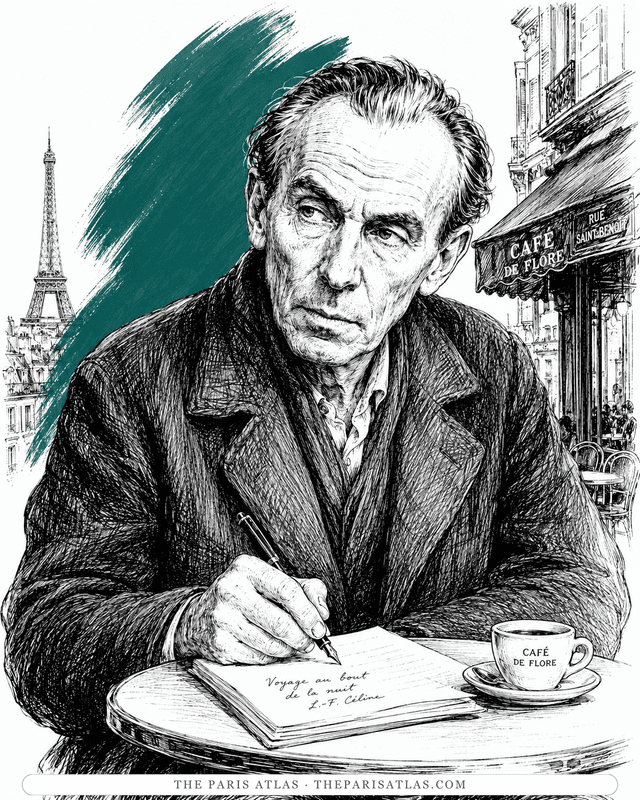
The doctor of the Paris slums who wrote the century's blackest, funniest novel — and changed the sound of French prose.
View author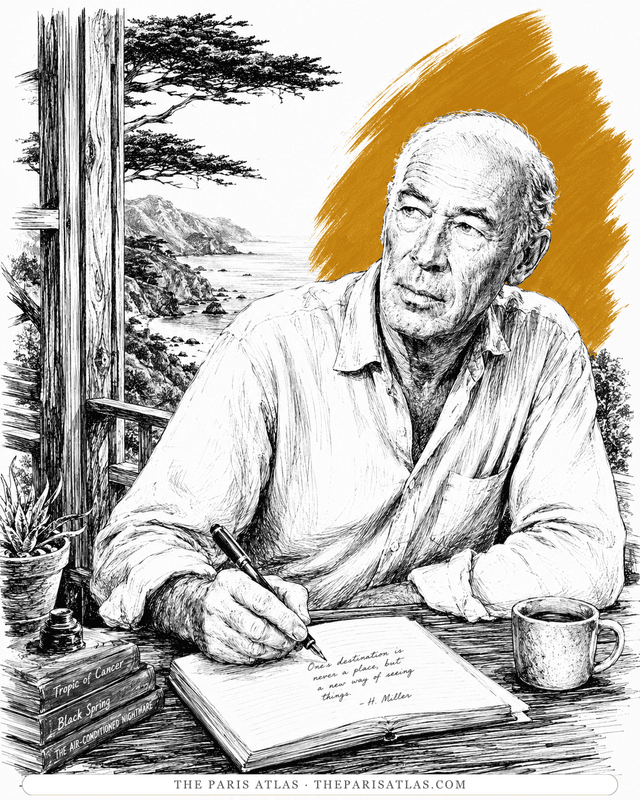
The Brooklyn dropout who arrived in Paris broke at thirty-eight and wrote the exuberant, banned books that ended American censorship.
View author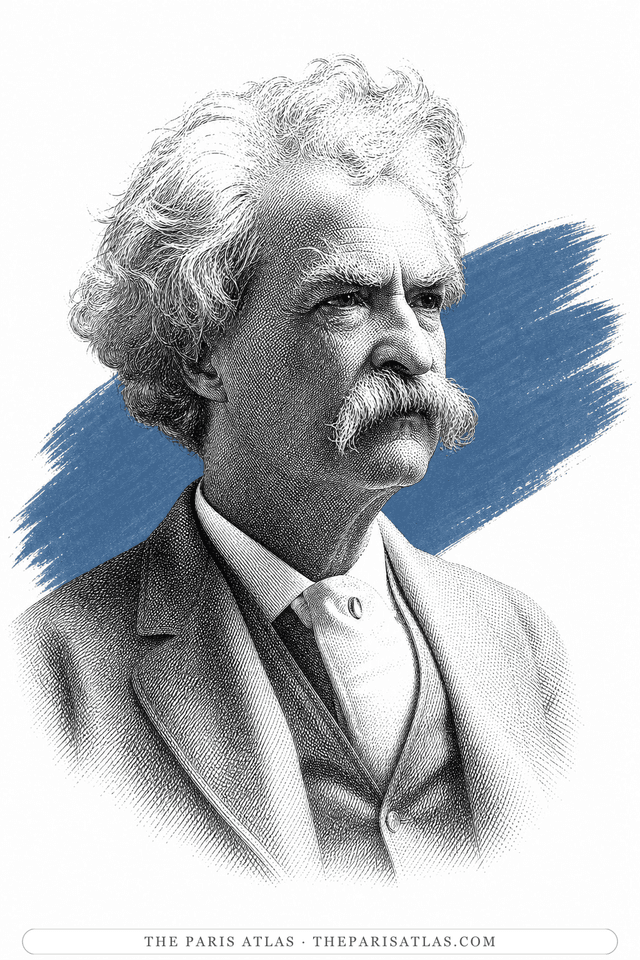
The Missouri newspaperman who became America's most famous writer, and whose first book made its reputation partly out of Paris: in 1867 he arrived with a shipload of American tourists, renamed his guide Ferguson, watched the high-kicking can-can through his fingers and wrote it all down. He kept coming back — and was living in Paris in the mid-1890s, broke, while finishing the novel he considered his best, Personal Recollections of Joan of Arc.
View authorThe sources below include the primary text, editions, scholarship, archival materials, and other records that informed this page. They document History of a Six Weeks' Tour, its publication, and its place in literary history.

Shanon Lawson's scholarly chronology, for the 1814 departure, the box left in Paris, the 1816 route and the Byron–Shelley boat tour.
The same chronology, for the publication month and Frankenstein's publication date.

Ernest Hartley Coleridge's edition of Byron, for the writing of The Prisoner of Chillon at Ouchy during the lake tour.
The 1818 text, for Victor's climb to Montanvert and the creature's approach across the ice.
Library catalogue records, for the Woodstock Books facsimile and its ISBN.
The primary text represented by this page, used for descriptions of the work’s contents and for any quoted passages shown here.
The primary text is the baseline reference for every book page. Additional references document publication history, interpretation, and historical context where that evidence is available.
 Explore more resources