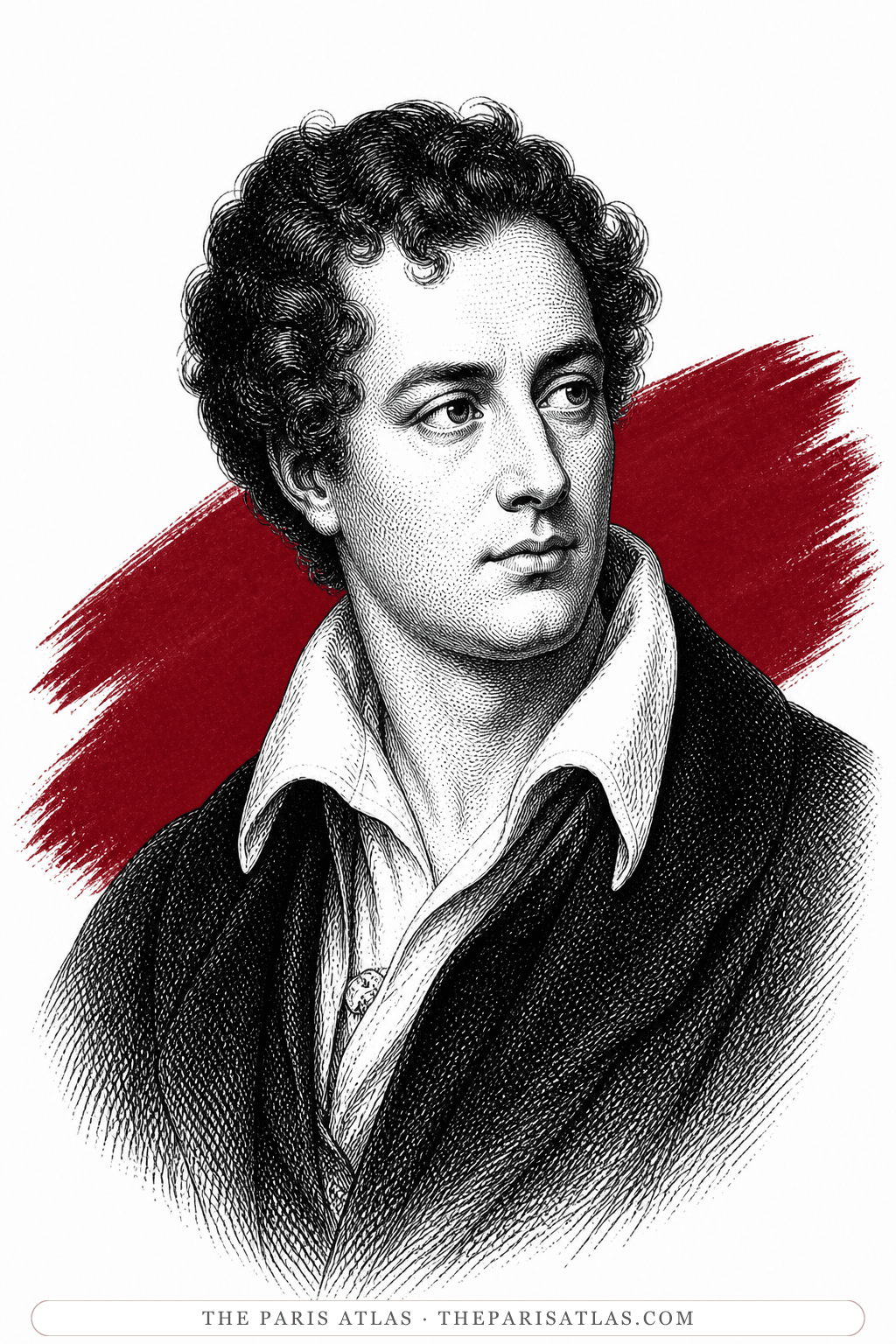
The Prisoner of Chillon
Written at Ouchy in late June 1816. A prisoner in the dungeon of Chillon watches his two brothers die.
The Prisoner of Chillon and Other Poems
Lord Byron
by Lord Byron
Eight poems from Byron's first summer of exile on Lake Geneva: a prisoner in a castle dungeon, the end of the world, and a poem of thanks to his sister.
The Prisoner of Chillon and Other Poems is a slim volume Lord Byron wrote in the summer of 1816, his first summer abroad after leaving England. John Murray published it on 5 December 1816. The title poem is spoken by a man held for years in the dungeon of the Castle of Chillon on Lake Geneva, chained to a pillar while his two brothers die beside him. The seven shorter poems include Darkness, a vision of the sun going out, and Stanzas to Augusta, written to Byron's half-sister. Most of the book was written at the Villa Diodati near Geneva, the same house and the same wet, cold summer that produced Mary Shelley's Frankenstein.[1][2]
In June 1816 Byron and Percy Bysshe Shelley sailed round Lake Geneva together. On about 26 June they visited the Castle of Chillon, which stands at the edge of the lake. Bad weather then held them for two days at a small inn at Ouchy, near Lausanne. Thomas Moore, Byron's biographer, says The Prisoner of Chillon was written there, and Ernest Hartley Coleridge dates it between 27 and 29 June 1816.[1]
Most of the other poems were written in July at the Villa Diodati, the house Byron had rented near Geneva. The Dream, Darkness and Prometheus all come from there that month. The manuscript of The Prisoner of Chillon that Murray received was in the handwriting of Claire Clairmont, who was staying nearby with the Shelleys. Murray had it in London by 11 October, and the book came out on 5 December with eight poems in all.[1]
The British Library describes 1816 as the year without a summer, after a huge volcanic eruption in Indonesia. The party at the Villa Diodati was often stuck indoors and had to light candles against the gloom. Byron's ghost-story competition, which started Frankenstein, came out of those same evenings.[2]
The book opens with the Sonnet on Chillon, fourteen lines in praise of liberty that call the prisoner's cell a holy place. The title poem follows, fourteen sections long. The speaker is the last survivor of six brothers. Their father was burned at the stake for his faith, and three of the sons were locked in the vaults of Chillon, below the level of the lake.[1]
The brothers are chained to three separate pillars. They can hear each other but cannot see each other's faces. The middle brother, a hunter used to the mountains, dies first. The youngest, the one their father loved best, fades more slowly and dies too. The narrator is left alone beside their graves, and for a time he feels nothing at all.[1]
A bird singing at the barred window brings him back. Later he climbs to the window slit and sees the mountains, the lake and a small green island with three trees on it. The sight makes the dungeon harder to bear, not easier.[1]
The shorter poems are The Dream, a look back at Byron's boyhood love for Mary Chaworth; Darkness; Churchill's Grave; Prometheus; the Sonnet to Lake Leman; and Stanzas to Augusta, written to his half-sister Augusta Leigh.[1]
After years he has stopped counting, men come to set the prisoner free. By then he has made friends with the spiders and watched the mice at play. He no longer cares where he is. The poem ends with its most famous turn: his chains and he have grown friends, and he regains his freedom with a sigh.
The prisoner is based on François Bonivard, a real man. He was prior of St Victor, a monastery just outside Geneva, and he backed the city's fight to break free of the Duke of Savoy. The duke had him seized and held at Chillon from 1530 until the Bernese took the castle and freed him on 29 March 1536. Bonivard later wrote that he spent four of those years in a cell below the lake. He walked so much that he wore a path into the rock floor.
Byron admitted in a note to the first edition that he knew little of Bonivard's history when he wrote the poem. The father burned at the stake and the five brothers of the narrator are his invention. Coleridge points out that the real Bonivard had only two brothers. The Sonnet on Chillon, printed before the poem, praises Bonivard by name.
Darkness is dated at the Villa Diodati in July 1816. The poem is a dream in which the sun goes out and never comes back. People burn their houses and forests for light. Famine and war return, and a faithful dog guards his dead master and starves. Two last survivors meet at an altar fire, see each other's faces and die of the sight. The poem ends with the whole world still and dark.
Walter Scott reviewed the volume in the Quarterly Review in October 1816 and did not like Darkness. He called that kind of dream-picture a dangerous employment for a poet's imagination. The poem was written in the dark, wet summer the British Library calls the year without a summer. Byron himself never said the weather prompted the poem.
Eugène Delacroix painted The Prisoner of Chillon in 1834 for the Duke of Orléans. Delacroix showed it at the Paris Salon of 1835. The painting passed to the collector Étienne Moreau-Nélaton, who gave it to the Louvre in 1906.
The poem itself was on sale in Paris in English within three years of its publication. Galignani, the English-language bookseller and publisher at 18 rue Vivienne, printed The Prisoner of Chillon at the start of the fourth volume of its 1819 edition of Byron's works. An 1821 Paris edition sold by François Louis and Baudry included it along with Darkness.
My hair is grey, but not with years, Nor grew it white In a single night, As men's have grown from sudden fears
My very chains and I grew friends, So much a long communion tends To make us what we are:—even I Regained my freedom with a sigh.
Eternal Spirit of the chainless Mind! Brightest in dungeons, Liberty! thou art
I had a dream, which was not all a dream. The bright sun was extinguished, and the stars Did wander darkling in the eternal space
The title poem can be read in half an hour. The story is simple, and the last line, about regaining freedom with a sigh, stays with readers.
A dream of the sun going out, written in the dark summer of 1816. The opening line is I had a dream, which was not all a dream.
Written at the Villa Diodati in the same weeks as the ghost-story competition that started Mary Shelley's novel.
Stanzas to Augusta and The Dream were written months after his marriage collapsed, and they are about the people he had lost or kept.
Written at Ouchy in late June 1816. A prisoner in the dungeon of Chillon watches his two brothers die.
Dated at the Villa Diodati, July 1816. A dream of the sun going out and the world dying in the dark.
Dated 24 July 1816. A poem of thanks to Byron's half-sister, Augusta Leigh, who stood by him.
Written at the Villa Diodati in July 1816. Byron's look back at his boyhood love for Mary Chaworth.
1530
François Bonivard, prior of St Victor near Geneva, is imprisoned at Chillon by the Duke of Savoy.
1536
The Bernese take Chillon and free Bonivard on 29 March.
1816
Byron and Percy Bysshe Shelley visit Chillon in late June. Byron writes The Prisoner of Chillon at Ouchy, then Darkness, The Dream and Prometheus at the Villa Diodati in July.
1816
John Murray publishes The Prisoner of Chillon and Other Poems on 5 December. Walter Scott reviews it in the Quarterly Review.
1819
Galignani prints The Prisoner of Chillon in English in Paris, in its edition of Byron's works.
1835
Eugène Delacroix shows The Prisoner of Chillon, painted the year before for the Duke of Orléans, at the Paris Salon.
1906
Étienne Moreau-Nélaton gives Delacroix's painting to the Louvre.


Begun at the Villa Diodati in June 1816, the house where Byron wrote Darkness and The Dream a few weeks later.
Read our takeChilde Harold's Pilgrimage
Lord Byron
Byron finished the third canto at Ouchy on 27 June 1816, during the same stop at which he wrote The Prisoner of Chillon.
Read our takeHebrew Melodies
Lord Byron
The short poems of the year before, written in the first weeks of the marriage whose collapse sent Byron abroad.
Read our takeDon Juan
Lord Byron
The comic epic Byron began two years later in Venice, when the gloom of 1816 had lifted.
Read our takeA man imprisoned for his family's religion in the dungeon of the Castle of Chillon on Lake Geneva. He is chained to a pillar near two of his brothers and watches both die. After years alone, with a bird and the spiders for company, he is released and finds he is almost sorry to go.
Yes, in part. François Bonivard, prior of St Victor near Geneva, was held at Chillon by the Duke of Savoy from 1530 until 1536. Byron admitted he knew little of Bonivard's history when he wrote the poem, and the brothers are invented.
At a small inn at Ouchy, near Lausanne, where bad weather held him and Percy Bysshe Shelley in late June 1816, just after they had visited the castle. Ernest Hartley Coleridge dates it between 27 and 29 June.
The Sonnet on Chillon, The Dream, Darkness, Churchill's Grave, Prometheus, the Sonnet to Lake Leman and Stanzas to Augusta. Byron's poem Darkness is the best known of them after the title poem.
The poem is dated at the Villa Diodati in July 1816, during the summer the British Library calls the year without a summer, when the party there lit candles against the gloom. Byron did not say the weather prompted it, but the dates match.
Byron never visited Paris. Galignani printed the poem in English there in 1819, and Eugène Delacroix's painting The Prisoner of Chillon, shown at the Paris Salon of 1835, is in the Louvre.
Explore authors with a similar voice, perspective, and influence.
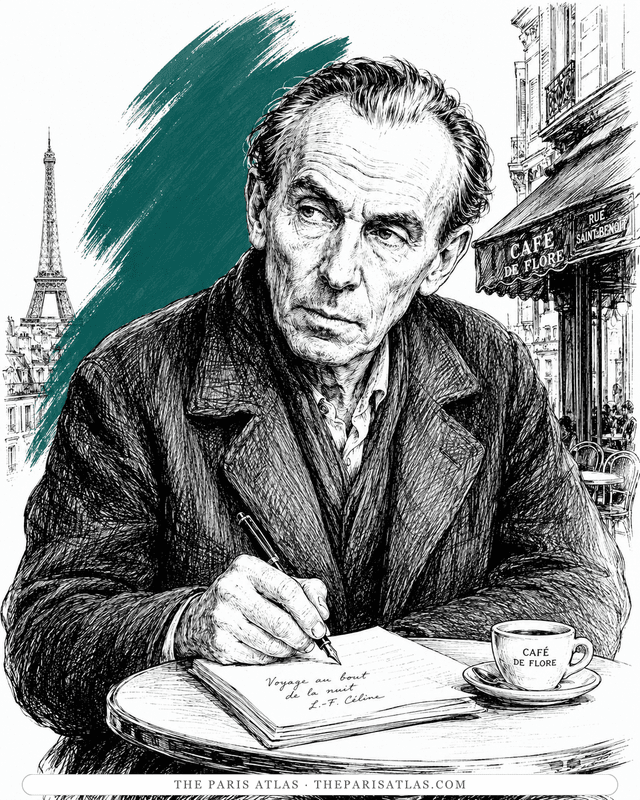
The doctor of the Paris slums who wrote the century's blackest, funniest novel — and changed the sound of French prose.
View author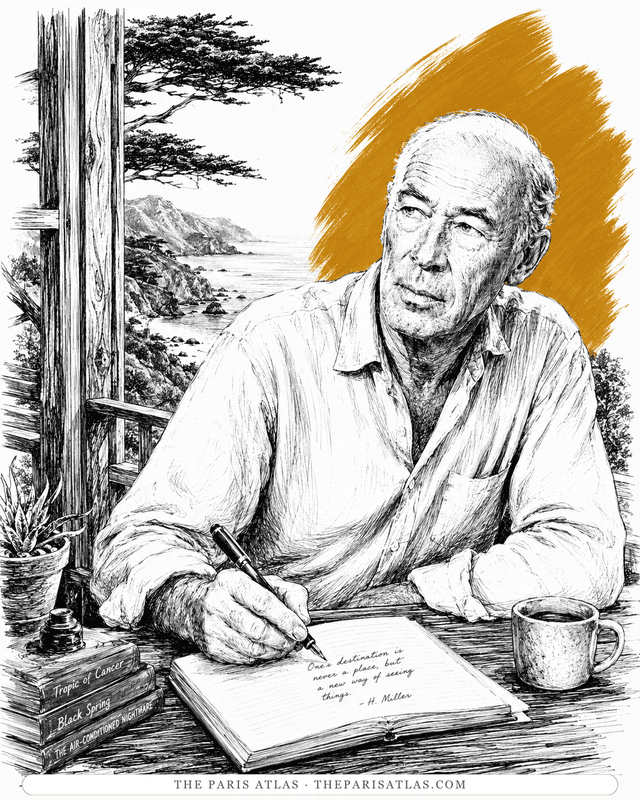
The Brooklyn dropout who arrived in Paris broke at thirty-eight and wrote the exuberant, banned books that ended American censorship.
View author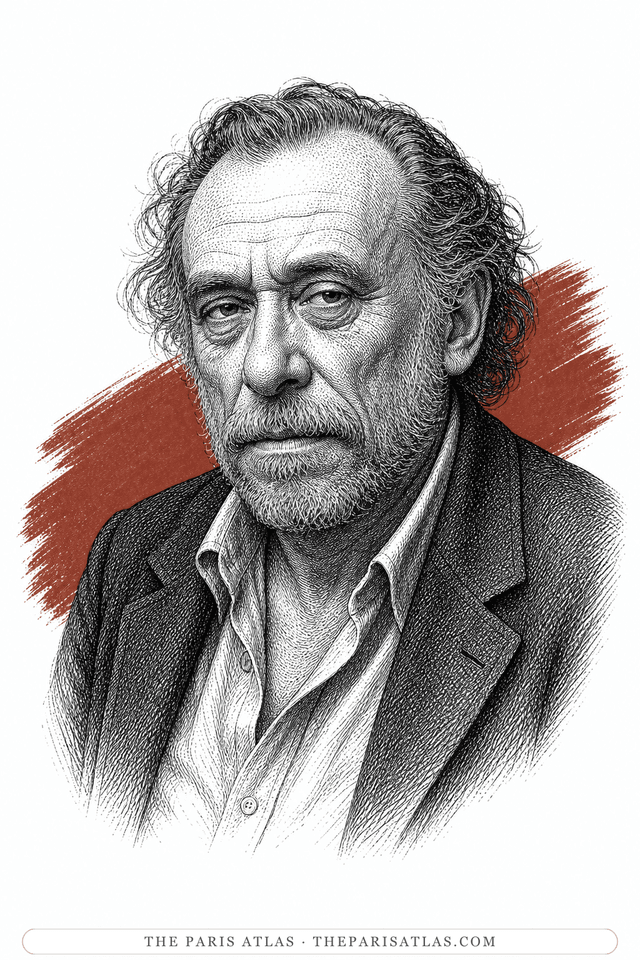
American poet and novelist of Los Angeles rooming houses, racetracks and the post office, who quit his job to write when a publisher offered him a hundred dollars a month. He came to Paris once, in September 1978, drank his way through a live television book programme and walked off the set — and French television has been replaying it ever since.
View authorThe sources below include the primary text, editions, scholarship, archival materials, and other records that informed this page. They document The Prisoner of Chillon and Other Poems, its publication, and its place in literary history.

Every poem of the 1816 volume with Ernest Hartley Coleridge's introductions and notes: the writing at Ouchy and Diodati, the publication date, the history of François Bonivard and Scott's review of Darkness. The quotations were checked against it.

Chillon Castle's history dates the Bernese capture of the castle to 29 March 1536, correcting the 1 February date in Coleridge's older introduction.
The Louvre's record for Delacroix's Prisoner of Chillon (1834, RF 1660), painted for the Duke of Orléans and shown at the Salon of 1835.
Coleridge's bibliography, used for the Paris editions of 1819 and 1821 that printed the poem in English.
Catalogue records for the modern editions, used with the Library of Congress record to confirm the Woodstock Books ISBN.
The primary text represented by this page, used for descriptions of the work’s contents and for any quoted passages shown here.
The primary text is the baseline reference for every book page. Additional references document publication history, interpretation, and historical context where that evidence is available.
 Explore more resources