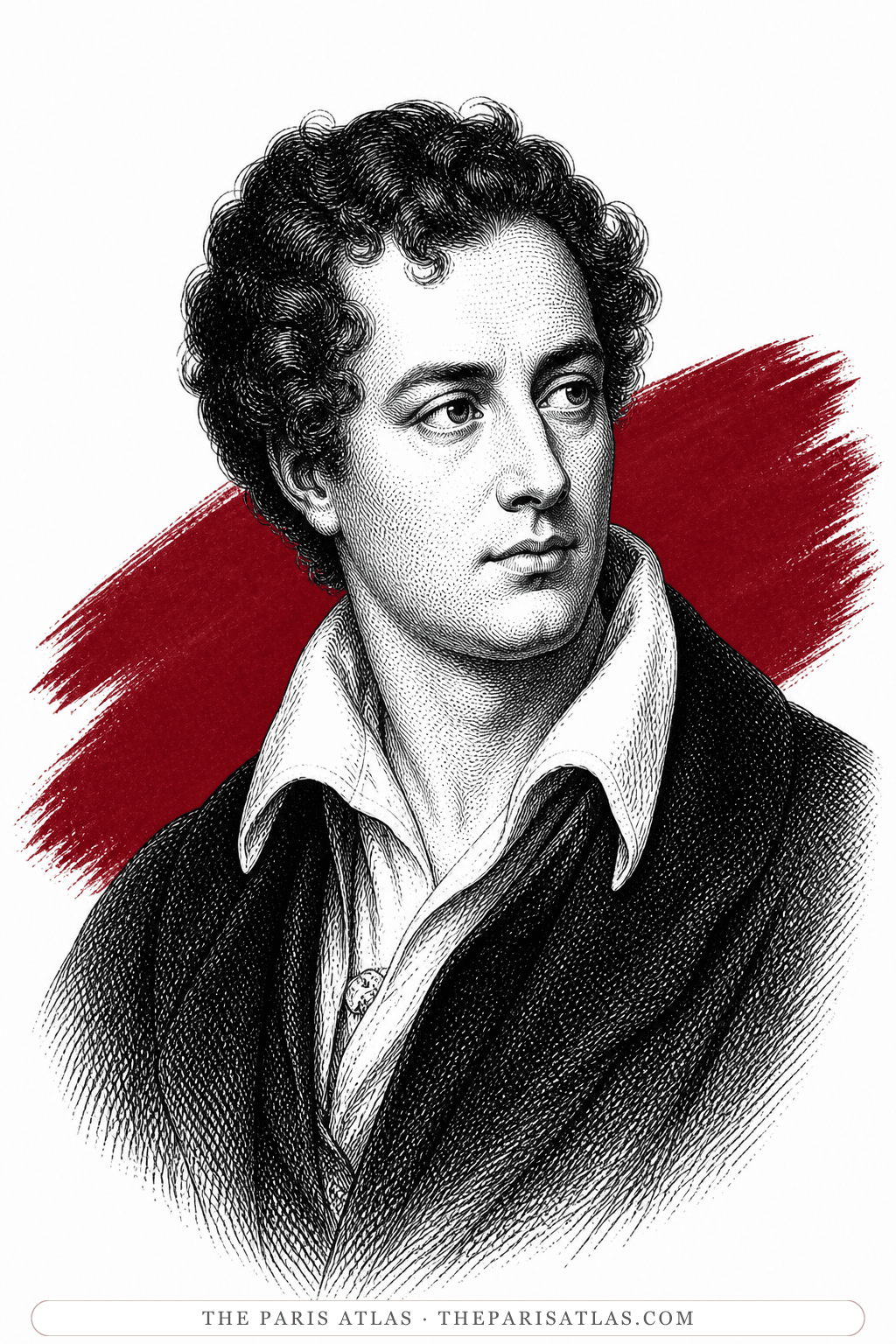
Childe Harold's Pilgrimage
Lord Byron
Childe Harold's Pilgrimage
Byron's other long travelling poem, written in the opposite mood: solemn where Don Juan laughs.
Read our takeDon Juan is Lord Byron's long comic poem, published in parts between 1819 and 1824. Byron took the name of the legendary Spanish seducer and turned the story round. His Juan is a handsome, rather passive young man whom women pursue. He is sent away from Seville at sixteen after an affair with a married woman. Then he is shipwrecked, rescued by a pirate's daughter, sold as a slave in Constantinople, sent to a siege, taken up by Catherine the Great and posted to England. The real star is the narrator, who keeps stopping the story to mock poets, politicians and himself. Byron finished sixteen cantos and was writing a seventeenth when he died in 1824.[1][2]
Byron began the first canto in Venice on 6 September 1818 and finished it on 1 November. He wrote the second between December 1818 and January 1819. John Murray, his publisher, brought out the two cantos together on 15 July 1819. Neither Byron's name nor Murray's appeared on the title page. Cantos three to five followed on 8 August 1821. After that Murray would not publish any more, and the later cantos came out in 1823 and 1824 from John Hunt.[2]
The poem is written in ottava rima, an eight-line stanza borrowed from Italian comic poetry. The first six lines rhyme alternately and the last two rhyme with each other. Byron uses that closing pair like the punchline of a joke. He had tried the stanza a year earlier in Beppo, a short Venetian story, and its success led him to try it on a larger scale.[2]
Byron's friends and his publisher were nervous from the start. When Murray asked him for the plan of the poem, Byron answered on 12 August 1819: "I have no plan—I had no plan; but I had or have materials." In the same letter he said the poem was meant "to giggle and make giggle." Later he told Murray he meant to take Juan on a tour of Europe and had not decided whether to end him in Hell or in an unhappy marriage.[2]
Modern editions open with a dedication mocking Robert Southey, the Poet Laureate, along with William Wordsworth and Samuel Taylor Coleridge; Murray omitted it from the original publication. Then the narrator announces that he wants a hero and will take "our ancient friend Don Juan." Juan grows up in Seville under a strict, learned mother, Donna Inez. At sixteen he falls into an affair with Donna Julia, a married woman of twenty-three whose husband, Don Alfonso, is fifty. Alfonso nearly catches them in Julia's bedroom, and Juan is sent abroad.[2][1]
Juan's ship goes down in a storm in the second canto. The survivors drift in a longboat until hunger drives them to eat Juan's spaniel and then his tutor, Pedrillo. Juan washes up alone on a Greek island. Haidée, the daughter of a pirate named Lambro, finds him on the beach and hides him in a cave. In the third and fourth cantos the young couple live together while her father is away at sea, and a poet sings The Isles of Greece at their feast.[2][1]
Lambro comes home, Juan is wounded and shipped off, and Haidée dies of grief. Juan is sold at the slave market in Constantinople. Gulbeyaz, the Sultan's wife, has him dressed as a woman and hidden in the harem. He escapes and joins the Russian army at the siege of Ismail, a Turkish fortress, where he saves a ten-year-old Turkish girl named Leila. Carrying news of the victory, he arrives in Saint Petersburg and becomes a favourite of Catherine the Great.[2][1]
Catherine sends Juan to England on a diplomatic errand. He is attacked by a highwayman on the road into London, enters society, and goes to stay at Norman Abbey, the country house of Lord Henry and Lady Adeline Amundeville. The house party includes the quiet Aurora Raby and the flirtatious Duchess of Fitz-Fulke. Guests talk about the ghost of a Black Friar said to walk the house at night.[2]
The sixteenth canto, the last Byron published, ends at night in Norman Abbey. The Black Friar appears again in Juan's room, and Juan reaches out to touch it. The ghost turns out to be the Duchess of Fitz-Fulke in a monk's hooded robe. The poem stops there.
Byron began a seventeenth canto in Italy on 8 May 1823 and took the pages with him to Greece. Edward John Trelawny, his companion, found them in Byron's room at Missolonghi after his death. The fragment runs to fourteen stanzas and was printed for the first time in Ernest Hartley Coleridge's edition of 1903.
In the old Spanish legend Don Juan is a predator who is dragged down to Hell. English audiences knew him from a stage pantomime, and Byron kept little of the legend except the name. His Juan never plans a conquest. Julia, Haidée, Gulbeyaz, Catherine the Great and the Duchess of Fitz-Fulke all choose him. The British Library's summary puts it plainly: he is seduced rather than being a seducer.
Because Juan does so little, the narrator does the talking. He interrupts the story to complain about his critics, confess his age, argue about marriage and run through his opinions of other poets. The most famous digressions are general truths delivered as jokes. In the fourteenth canto he remarks that truth is always strange, stranger than fiction.
The first readers were shocked by two things. One was the sex, handled lightly and, in Byron's own word, now and then voluptuously. The other was the satire of political and religious figures. Byron also wrote a dedication attacking the Poet Laureate by name, but Murray suppressed it in 1819; it entered the collected works in 1833. Murray printed the first two cantos without Byron's name, and some stanzas were left out of the early editions altogether.
Byron defended the poem as honest rather than wicked. When his friend John Cam Hobhouse and others lectured him about morality, he replied that it was "the most moral of poems." Percy Bysshe Shelley wrote to him in October 1821 that nothing like it had ever been written in English. Walter Scott and Goethe both praised it in print.
Byron never went to Paris, but Don Juan reached the city almost at once. Galignani, an English-language bookseller and publisher at 18 rue Vivienne, printed Byron's collected works in Paris from 1818. A Galignani edition begun in 1822 added each new batch of Don Juan cantos as it appeared, with the last volume in 1824. A French translation of all sixteen cantos, signed with the initials A. P., was published in Paris in 1827.
Eugène Delacroix painted the shipwreck of the second canto in 1840: survivors crowded into an open boat on a heaving sea. He showed The Shipwreck of Don Juan at the Paris Salon of 1841, the state's annual art exhibition. The painting was given to the Louvre in 1883, and the museum's record names the second canto of Byron's poem as its subject.
'T is strange,—but true; for Truth is always strange— Stranger than fiction: if it could be told, How much would novels gain by the exchange!
Man's love is of man's life a thing apart, 'T is a Woman's whole existence
I want a hero: an uncommon want, When every year and month sends forth a new one
Byron wrote it, in his own words, to giggle and make giggle. The joke usually lands in the last two lines of each eight-line stanza.
Byron's Juan is the one being chased. Every woman in the poem makes the first move.
Poets, politicians, marriage, war, money and his own fading youth all get a stanza or twenty. Truth, he says in one of them, is stranger than fiction.
A shipwreck, a pirate island, a harem in Constantinople, a siege and the court of Catherine the Great arrive in the first ten cantos.
1818
Byron writes the first canto in Venice in September and begins the second in December.
1819
John Murray publishes Cantos I and II on 15 July, with neither author nor publisher named on the title page.
1821
Cantos III, IV and V are published on 8 August.
1822
Galignani in Paris begins a collected edition of Byron's works that adds the Don Juan cantos volume by volume.
1823
John Hunt publishes Cantos VI to XIV in three batches after Murray declines. Byron begins a seventeenth canto on 8 May.
1824
Cantos XV and XVI are published on 26 March. Byron dies at Missolonghi on 19 April with the seventeenth canto unfinished.
1827
A French translation of all sixteen cantos is published in Paris.
1841
Eugène Delacroix shows The Shipwreck of Don Juan at the Paris Salon. The painting is now in the Louvre.
1903
The fourteen stanzas of the seventeenth canto are printed for the first time, in Ernest Hartley Coleridge's edition.


Childe Harold's Pilgrimage
Lord Byron
Byron's other long travelling poem, written in the opposite mood: solemn where Don Juan laughs.
Read our takeThe Giaour
Lord Byron
An earlier Eastern tale of a Venetian, a Turk and a murdered woman, told without a single joke.
Read our takeThe Prisoner of Chillon and Other Poems
Lord Byron
The poems of the 1816 summer on Lake Geneva, written two years before the first canto.
Read our takeHebrew Melodies
Lord Byron
Short, serious lyrics from the months of Byron's marriage, the opposite of Don Juan's sprawl.
Read our takeA young Spaniard's adventures across Europe, told as a comic poem. Juan is sent away from Seville after an affair at sixteen and survives a shipwreck. He falls in love with a pirate's daughter on a Greek island and is sold as a slave in Constantinople. He fights at the siege of Ismail, becomes a favourite of Catherine the Great and ends up at an English country house. The narrator comments on everything as it happens.
As two syllables, JOO-an. In the first stanza Byron rhymes Juan with new one and true one, and the British Library gives the pronunciation as Joo-ann.
No. He published sixteen cantos between 1819 and 1824 and had written fourteen stanzas of a seventeenth when he died at Missolonghi in April 1824. The fourteen stanzas were first printed in 1903.
Yes, in Don Juan, Canto XIV, stanza CI, published in 1823: truth is always strange, stranger than fiction. The narrator adds that novels would gain a great deal if the truth could be told.
For its sexual frankness and its satire of political and religious figures. Byron's dedication also attacked the Poet Laureate, Robert Southey, but was suppressed when the first two cantos appeared in 1819. Those cantos had no author or publisher named, and Byron's own publisher, John Murray, stopped after the fifth canto.
An eight-line stanza from Italian comic poetry. Lines one to six rhyme alternately and lines seven and eight rhyme together, which gives Byron a built-in punchline at the end of every stanza.
Not in person; Byron never visited Paris. But Galignani printed the cantos in English in Paris in Byron's lifetime, a French translation followed in 1827, and Eugène Delacroix's painting of the shipwreck in Canto II hangs in the Louvre.
Explore authors with a similar voice, perspective, and influence.
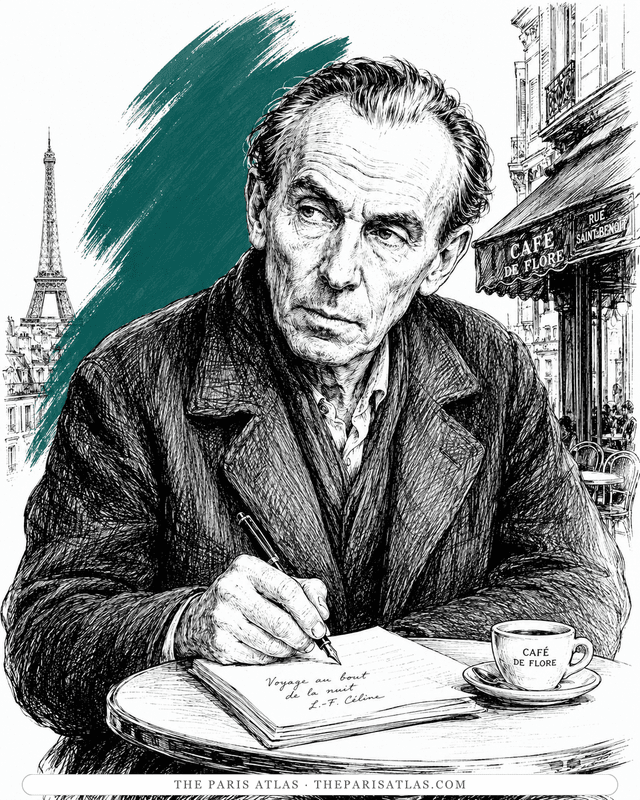
The doctor of the Paris slums who wrote the century's blackest, funniest novel — and changed the sound of French prose.
View author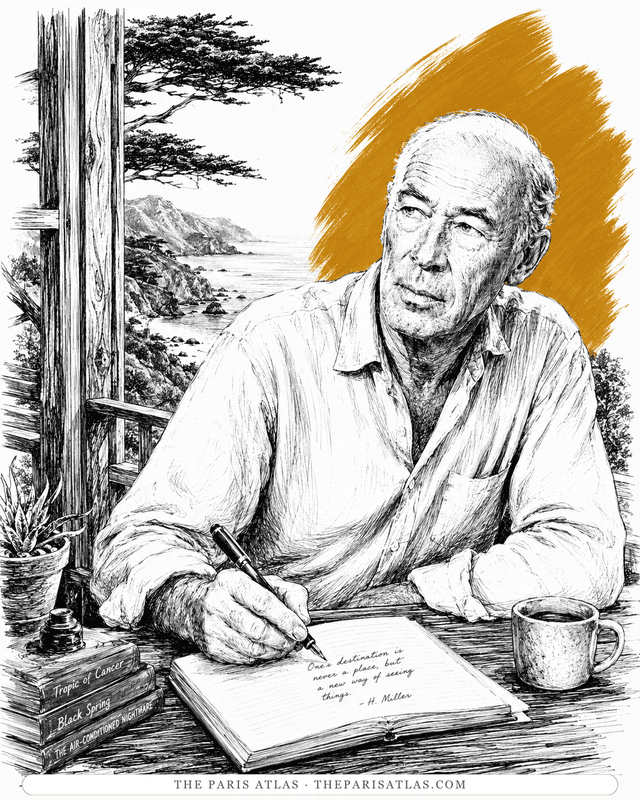
The Brooklyn dropout who arrived in Paris broke at thirty-eight and wrote the exuberant, banned books that ended American censorship.
View author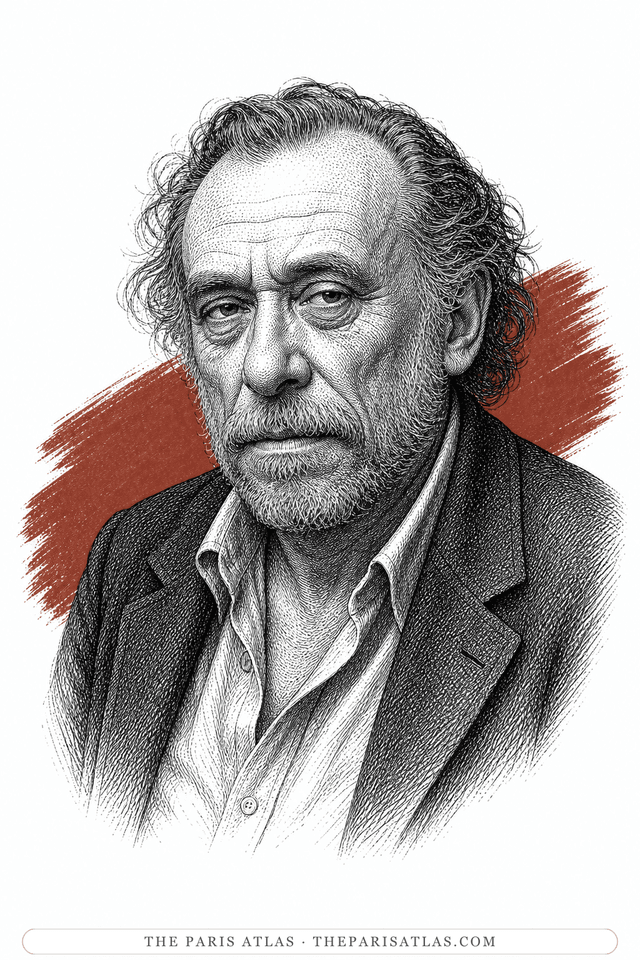
American poet and novelist of Los Angeles rooming houses, racetracks and the post office, who quit his job to write when a publisher offered him a hundred dollars a month. He came to Paris once, in September 1978, drank his way through a live television book programme and walked off the set — and French television has been replaying it ever since.
View authorThe sources below include the primary text, editions, scholarship, archival materials, and other records that informed this page. They document Don Juan, its publication, and its place in literary history.


The complete poem in Ernest Hartley Coleridge's annotated edition, with his introduction on the writing and publication dates, Byron's letters about the poem and the history of the seventeenth canto. The quotations were checked against it.
Coleridge's bibliography of editions and translations, used for the anonymous 1819 quarto, the Galignani editions printed in Paris and the 1827 French translation.

The Louvre's record for Delacroix's Shipwreck of Don Juan (1840, RF 359), shown at the Salon of 1841 and given to the museum in 1883.
Catalogue records for the modern editions, used with the Library of Congress record to confirm the Penguin Classics ISBN.
The primary text represented by this page, used for descriptions of the work’s contents and for any quoted passages shown here.
The primary text is the baseline reference for every book page. Additional references document publication history, interpretation, and historical context where that evidence is available.
 Explore more resources