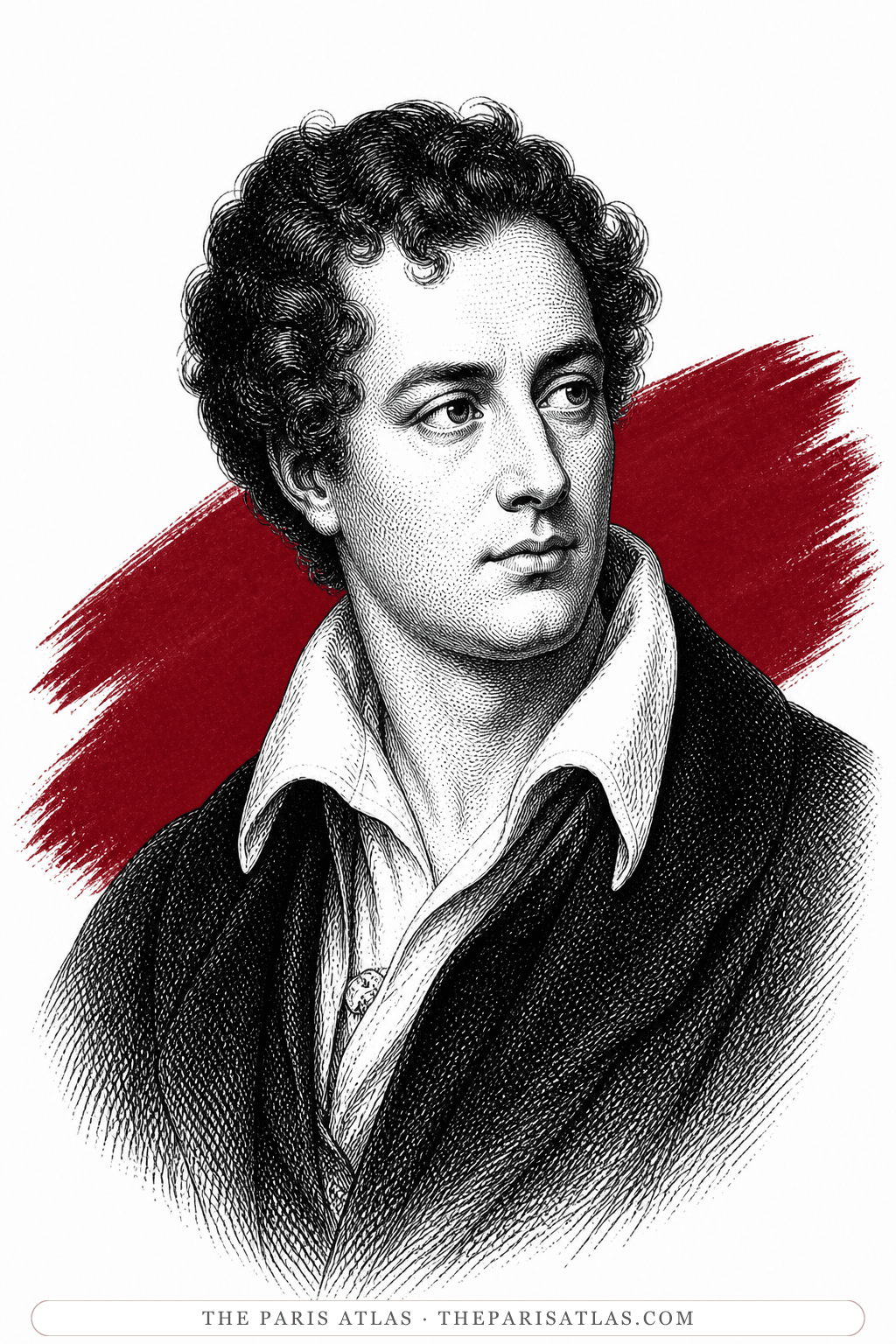
She Walks in Beauty
Dated 12 June 1814. Three six-line stanzas on a woman whose beauty is like a starry night.
Hebrew Melodies
Lord Byron
by Lord Byron
Two dozen short poems written as song lyrics in the winter of Byron's marriage, including She Walks in Beauty and The Destruction of Sennacherib.
Hebrew Melodies is a set of short poems Lord Byron wrote in late 1814 and early 1815 as words for music. The composer Isaac Nathan had arranged traditional Jewish synagogue tunes, and Byron's friend Douglas Kinnaird asked Byron to write lyrics for them. Most of the poems retell stories from the Hebrew Bible: Saul, Jephthah's daughter, Belshazzar's feast, the exile in Babylon and the destruction of Sennacherib's army. A few are love poems that have nothing to do with the Bible, and the most famous of them, She Walks in Beauty, opens the book. The songs came out with Nathan's music in April 1815, and John Murray published the words on their own the same year.[1]
Byron became engaged to Anne Isabella Milbanke in September 1814 and spent the rest of that year in London. Ernest Hartley Coleridge, who edited Byron's poems a century later, thought the Hebrew Melodies were begun that autumn. They were finished at Seaham in January and February 1815, just after the wedding. One surviving copy of two of the poems is in Lady Byron's handwriting.[1]
Isaac Nathan was a young composer who had first been meant for a religious career. Kinnaird introduced him to Byron, and Byron liked him and gave him the copyright of the poems. The plan was for the singer John Braham to perform them in public. Braham's work kept him from it, but the first part of Selections of Hebrew Melodies, Ancient and Modern, came out in April 1815 as a large folio priced at one guinea. A second part followed in 1816.[1]
Thomas Moore, Byron's friend and a songwriter himself, laughed at the way some of the melodies had been set. Byron grumbled in letters about Nathan's music, half as a joke. Nathan remembered things differently. He wrote that Byron often asked to hear She Walks in Beauty while the book was being prepared, and sometimes joined in the singing.[1]
The standard edition of Byron's poems prints twenty-four Hebrew Melodies. Most are short, between two and six stanzas, and written to be sung. Byron's own note at the front says only that the poems were written at Douglas Kinnaird's request and published with music arranged by John Braham and Isaac Nathan.[1]
The Bible poems take a single scene and put it in the mouth of someone who was there. The Harp the Monarch Minstrel Swept is about King David's music. Jephtha's Daughter is spoken by the girl her father has vowed to sacrifice. Saul describes the ghost of the prophet Samuel raised for the king, and Song of Saul Before His Last Battle gives the king's own voice. Vision of Belshazzar tells the story of the writing on the wall. By the Rivers of Babylon We Sat Down and Wept retells the psalm of the exiles.[1]
Three of the poems are love songs with no Bible story in them: She Walks in Beauty, Oh! Snatched Away in Beauty's Bloom and I Saw Thee Weep. Coleridge pointed out that they make the book's title somewhat misleading.[1]
Coleridge's edition ends with The Destruction of Sennacherib and A Spirit Passed Before Me, a short piece taken from the Book of Job. The Sennacherib poem describes an Assyrian army gleaming at sunset and found dead in the morning, killed in the night by the Angel of Death.[1]
She Walks in Beauty is dated 12 June 1814, months before the other poems and before Byron's engagement. James Wedderburn Webster, a friend, later wrote down how it began. He had taken Byron to a party given by Lady Sitwell, and there Byron saw his cousin by marriage, Anne Beatrix Wilmot, for the first time. She was in mourning, and her dress was scattered with spangles.
Back at his rooms in the Albany, Byron drank a tumbler of brandy to her health, Webster says, and wrote the poem the next day. The dark mourning dress with its spangles helps explain the opening image. The woman is beautiful like a night of cloudless skies full of stars, with dark and bright meeting in her face and eyes. The poem has nothing to do with the Bible, but Byron put it first in the book.
The Destruction of Sennacherib is dated at Seaham, 17 February 1815, a few weeks into Byron's marriage. The poem tells a story from the Hebrew Bible. In the Bible, Sennacherib, king of Assyria, brings his army against Jerusalem, and in one night the whole host dies. Byron gives the poem six four-line stanzas, each line galloping along with a strong beat after every two light syllables.
The poem is built from pictures a reader can see. The army glitters in purple and gold, and the spears shine like stars on the Sea of Galilee. Then comes the morning: a dead horse with the foam of its last gasp lying white on the grass, and a rider with dew on his brow and rust on his armour. The tents are silent and the trumpets unblown, and the widows of Assyria are wailing.
Byron never visited Paris, but the Hebrew Melodies were on sale there in English in his lifetime. Galignani, the English-language bookseller and publisher at 18 rue Vivienne, printed Byron's works in Paris from 1818. The second Galignani edition, of 1819, prints the Hebrew Melodies in its third volume, and an 1821 Paris edition sold by François Louis and Baudry includes six of them.
She walks in Beauty, like the night Of cloudless climes and starry skies; And all that's best of dark and bright Meet in her aspect and her eyes
The Assyrian came down like the wolf on the fold, And his cohorts were gleaming in purple and gold; And the sheen of their spears was like stars on the sea, When the blue wave rolls nightly on deep Galilee.
And the might of the Gentile, unsmote by the sword, Hath melted like snow in the glance of the Lord!
My soul is dark—Oh! quickly string The harp I yet can brook to hear
The poem most people know by Byron opens a book of songs about kings, prophets and exiles, and the contrast is part of its effect.
The Destruction of Sennacherib is built to be heard. Its first line, the Assyrian came down like the wolf on the fold, is one of the best-known openings in English verse.
No long digressions and no narrator. Each poem is one scene, one voice and a few stanzas.
Written in the months around Byron's wedding and finished in the weeks after it. One copy of two of the poems is in Lady Byron's handwriting.
Dated 12 June 1814. Three six-line stanzas on a woman whose beauty is like a starry night.
Dated Seaham, 17 February 1815. An Assyrian army destroyed in one night outside Jerusalem.
The exiles' psalm retold: the captors demand a song, and the singers refuse.
1814
On 12 June Byron writes She Walks in Beauty, the day after seeing Anne Beatrix Wilmot at Lady Sitwell's party. In September he becomes engaged to Anne Isabella Milbanke.
1815
Byron finishes the Hebrew Melodies at Seaham in January and February, just after his wedding. The Destruction of Sennacherib is dated 17 February.
1815
The first part of Isaac Nathan's Selections of Hebrew Melodies, with Byron's words, is advertised on 6 April. John Murray publishes the words alone the same year.
1816
The second part of Nathan's musical edition appears. Francis Jeffrey, in the Edinburgh Review, calls the poems obviously inferior to Byron's other work but praises their skill.
1819
Galignani's Paris edition of Byron's works prints the Hebrew Melodies in English in its third volume.


The Prisoner of Chillon and Other Poems
Lord Byron
The next short collection, written in the summer of 1816 after the marriage had collapsed.
Read our takeThe Giaour
Lord Byron
Written two years earlier, and just as full of Eastern scenes, but a violent tale rather than a songbook.
Read our takeDon Juan
Lord Byron
Childe Harold's Pilgrimage
Lord Byron
The long travel poem that had made Byron famous two years before he wrote these songs.
Read our takeA group of short poems Byron wrote in 1814 and 1815 as lyrics for traditional Jewish melodies arranged by the composer Isaac Nathan. Most retell stories from the Hebrew Bible. They were published with music in 1815 and 1816, and John Murray published the words alone in 1815.
Anne Beatrix Wilmot, the wife of Byron's second cousin Robert John Wilmot. Byron's friend James Wedderburn Webster recorded that Byron saw her at Lady Sitwell's party in a mourning dress scattered with spangles, and wrote the poem the next day. The poem is dated 12 June 1814.
Yes. The poem is the first in the book, although it is a love poem with no biblical subject. Byron wrote it before the rest of the collection and included it when the songs were gathered.
The Bible story of the Assyrian king Sennacherib, whose army besieged Jerusalem and died in a single night. Byron shows the army gleaming at sunset and then lying dead in the morning, struck down by the Angel of Death.
Isaac Nathan arranged the melodies, with the singer John Braham named as co-arranger on the title page. Byron gave Nathan the copyright of the poems.
Ernest Hartley Coleridge's standard edition prints twenty-four. Nathan's musical edition and later printings differ slightly in what they include.
Yes. Project Gutenberg ebook 21811 has all of them, with Coleridge's notes on the circumstances of each poem.
Explore authors with a similar voice, perspective, and influence.
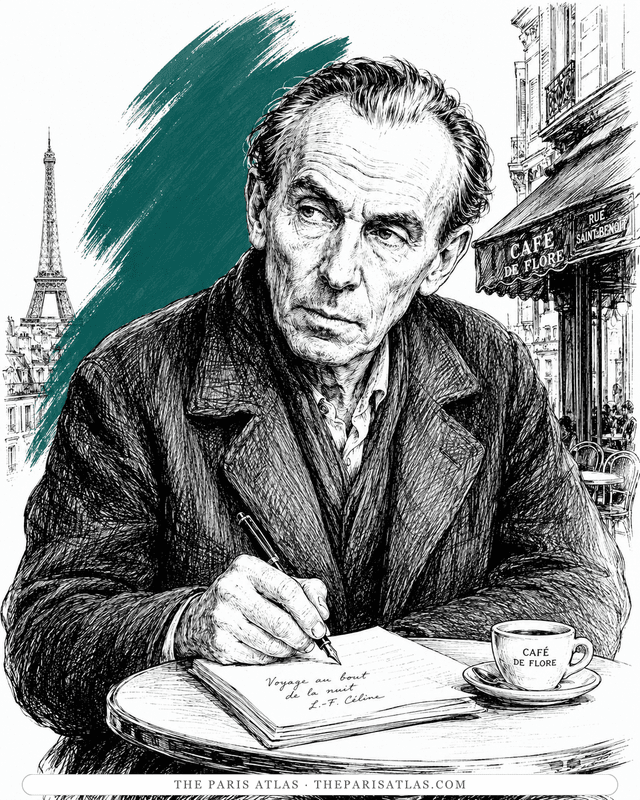
The doctor of the Paris slums who wrote the century's blackest, funniest novel — and changed the sound of French prose.
View author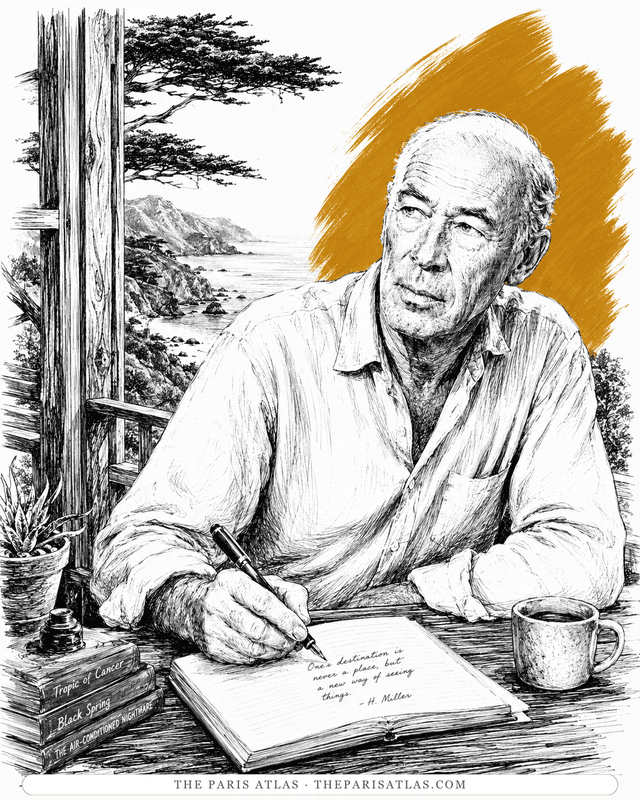
The Brooklyn dropout who arrived in Paris broke at thirty-eight and wrote the exuberant, banned books that ended American censorship.
View author
American poet and novelist of Los Angeles rooming houses, racetracks and the post office, who quit his job to write when a publisher offered him a hundred dollars a month. He came to Paris once, in September 1978, drank his way through a live television book programme and walked off the set — and French television has been replaying it ever since.
View authorThe sources below include the primary text, editions, scholarship, archival materials, and other records that informed this page. They document Hebrew Melodies, its publication, and its place in literary history.


The full text of the Hebrew Melodies with Ernest Hartley Coleridge's introduction and notes: the Kinnaird commission, Isaac Nathan's folio, Wedderburn Webster's account of She Walks in Beauty and the dates of the poems. The quotations were checked against it.
Coleridge's bibliography, used for the Paris editions of 1818, 1819 and 1821 that printed the Hebrew Melodies in English.

The catalogue record for Thomas L. Ashton's 1972 edition and study, confirmed against the Library of Congress record.
Catalogue records for the Oxford Major Works selection.
The primary text represented by this page, used for descriptions of the work’s contents and for any quoted passages shown here.
The primary text is the baseline reference for every book page. Additional references document publication history, interpretation, and historical context where that evidence is available.
 Explore more resources