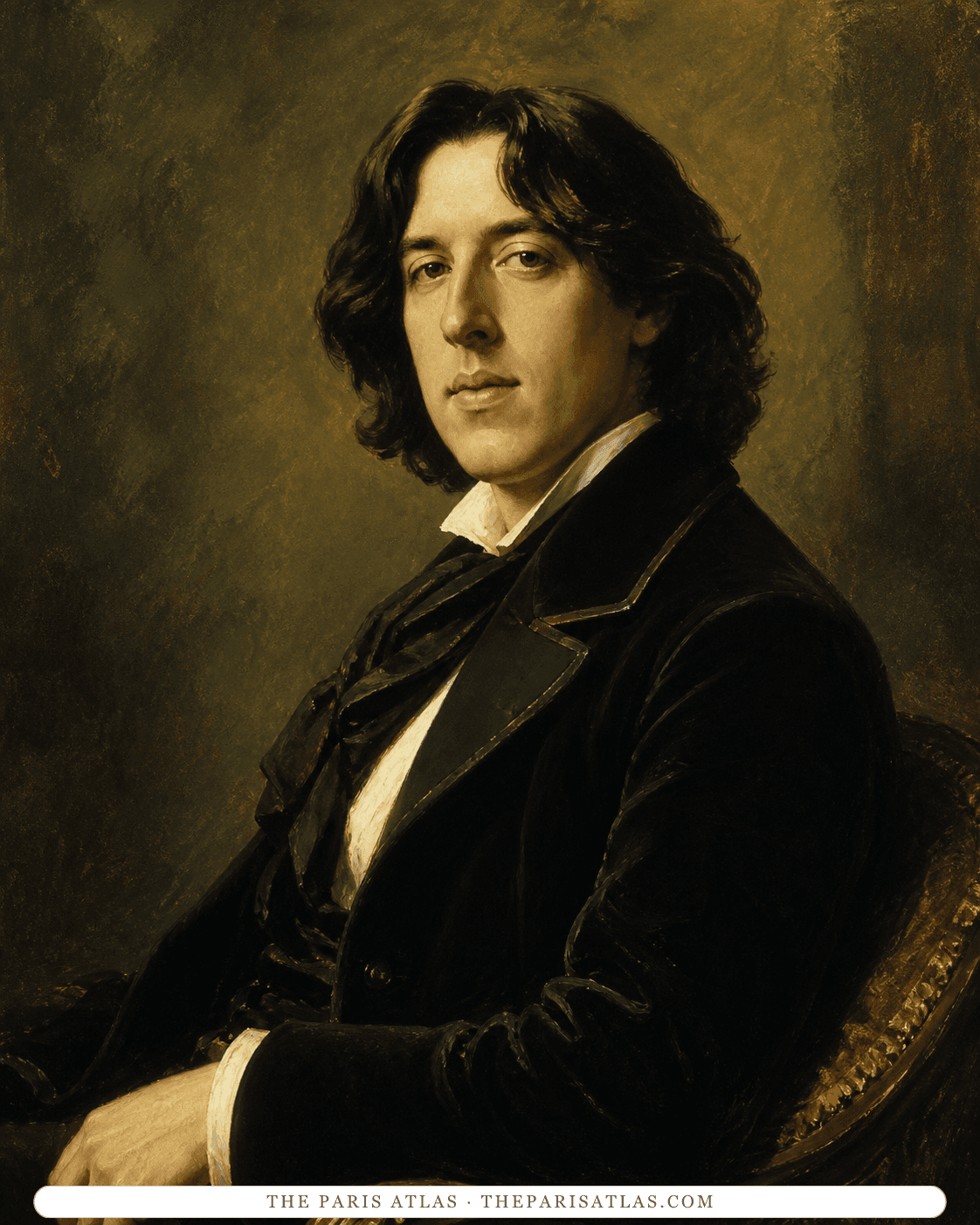

The Happy Prince and Other Tales
Five literary fairy tales about generosity, vanity, friendship, poverty, and the cost of seeing other people's suffering.
Read our take
by Oscar Wilde
Six very short parables that use biblical language to unsettle simple lessons about miracles, suffering, knowledge, and desire.
Poems in Prose is a group of six short prose parables: 'The Artist,' 'The Doer of Good,' 'The Disciple,' 'The Master,' 'The House of Judgment,' and 'The Teacher of Wisdom.' Wilde borrows the rhythm and setting of religious teaching, then removes the expected moral or makes it turn against the person seeking certainty. The six pieces are Wilde's most concentrated experiment with the parable form, closer in shape and register to the New Testament than to his fairy tales or his society comedies.
The six parables appeared together as 'Poems in Prose' in The Fortnightly Review in July 1894, under Wilde's byline. They were the last major piece Wilde would publish before his 1895 trials and imprisonment; De Profundis and The Ballad of Reading Gaol would come from prison and afterwards. The parables are called poems because their compression, repetition, and symbolic structure matter more than plot.
Wilde had told several of the parables at dinner parties and salons for years before printing them. The 1894 magazine text is a version polished by repetition — Wilde adjusted the parables through spoken telling before he committed them to print. That accounts for their unusual density: each is a piece that has been read aloud to careful listeners and revised for a listening ear.
The parables draw on the Gospels, on Wilde's own long attraction to Roman Catholicism (Wilde would convert on his deathbed in 1900), and on the fable tradition running from Aesop through La Fontaine to Wilde's contemporary friends. They also anticipate the argument of De Profundis (1897) — Wilde's image of Christ as an artist and individualist appears here first, in miniature.
Each piece is only a few pages or paragraphs long and stands alone. Read together they form a sequence: 'The Artist' opens with a sculptor melting down his own past work to make a new statue about the same subject; 'The Doer of Good' shows Christ returning to earth and finding that the people he healed have not become good; 'The Disciple' rewrites Narcissus as the story of a pool that mourns him not for himself but for what the pool saw reflected; 'The Master' returns to Joseph of Arimathea after the burial; 'The House of Judgment' stages a soul before God and refuses the expected outcome; 'The Teacher of Wisdom' is the longest and closes the group with a wisdom teacher who loses his knowledge in order to save one soul.
'The Doer of Good' and 'The House of Judgment' are the two parables most anthologised and the clearest examples of Wilde's method. Both begin with a familiar moral structure — the returning Christ, the soul at judgement — and refuse the answer a reader expects. The refusal is not cynicism; it is Wilde asking what the moral structure actually demands.
The parables are almost always printed together as a group. Modern collected editions place them alongside Wilde's other short prose (the fairy tales, The Portrait of Mr. W. H., some occasional pieces) but the six pieces of 'Poems in Prose' are a fixed sequence Wilde arranged for their July 1894 appearance.
The Artist makes permanence a problem of meaning rather than material. Bronze survives the furnace, but the memorial's promise does not: an emblem of lasting sorrow becomes one of passing pleasure. The repeated names of these opposed feelings make the transformation sound almost inevitable, while the tomb gives it an emotional cost. Creation requires dismantling an earlier act of devotion. Wilde leaves readers between renewal and betrayal, without supplying a moral that would make the artist's choice comfortable.
The Disciple delays its reversal until the pool explains its love. The Oreads assume that mourning proves attention to Narcissus's beauty; the pool instead remembers its own reflection in his eyes. The final reply changes the meaning of the preceding tears without making them unreal. Two apparently different roles, admired youth and admiring pool, become versions of the same self-regard. Wilde's miniature asks whether attachment can be intensely felt while leaving the other person almost unknown.
The miniature form shows how Wilde's paradox works without the machinery of a full play.
It belongs beside the fairy tales and De Profundis, where religious language is used for different purposes.
Wilde told several of the parables at dinner parties for years before printing them, so they read as spoken pieces polished by repetition — the seed of the voice a reader hears in his fairy tales and in Salomé.
Late 1880s – early 1890s
Wilde tells several of the parables aloud at dinner parties and salons, polishing them through repetition.
July 1894
The Fortnightly Review publishes the six parables together as 'Poems in Prose' — Wilde's last substantial publication before the 1895 trials.
May 1895
Wilde is convicted of gross indecency and sentenced to two years' hard labour.
1897
De Profundis is written in Reading Gaol; the argument about Christ as an individualist artist that the parables had begun is now developed at length.
1908
The parables are collected in Robert Ross's edition of Wilde's works, published by Methuen.
Five literary fairy tales about generosity, vanity, friendship, poverty, and the cost of seeing other people's suffering.
Read our take
Oscar Wilde's long prison letter to Lord Alfred Douglas, combining accusation, self-criticism, memory, suffering, art, and a new interpretation of Christ.
Read our takeSix short prose parables Wilde published together in The Fortnightly Review in July 1894: 'The Artist,' 'The Doer of Good,' 'The Disciple,' 'The Master,' 'The House of Judgment,' and 'The Teacher of Wisdom.' Each borrows the rhythm and setting of a Gospel parable and then removes the expected moral, or makes it turn against the person seeking certainty.
Wilde used 'poem' to name the pieces' compression, cadence, and symbolic structure — the qualities the parables have in common with lyric poetry — while writing them as prose paragraphs rather than as verse. The form was already familiar in French literature (Baudelaire's 1869 Le Spleen de Paris is the most influential precedent for the English 'prose poem'). Wilde's title places the parables inside that tradition.
The six parables appeared together in The Fortnightly Review, London, in July 1894 under the collective heading 'Poems in Prose.' They were the last substantial piece Wilde published before his 1895 trials. He had told several of them aloud at dinner parties for years before printing them.
Christ returns to earth and finds that the specific people he healed and forgiven during his ministry have not become good — the man healed of blindness has taken up new sins the healing made available to him. The parable refuses the moral sequence a reader expects (healed → grateful → virtuous), and instead asks what miracles actually do to the people they touch.
They belong to the same religious-imaginative line as Wilde's fairy tales (The Happy Prince, The House of Pomegranates) and the extended argument about Christ as the great individualist artist that Wilde would develop three years later in De Profundis. The parables are the seed of the argument the prison letter would make at length.
Only if a reader expects a moral resolution the parables refuse to give. Each is a few paragraphs long and could be read in a minute or two — but the compression means each carries more argument than its length suggests, and readers who work through them slowly usually find them richer than a first reading suggests.
Explore authors with a similar voice, perspective, and influence.
Both writers use style, performance, and social comedy to examine the roles assigned to women, artists, and people whose private lives do not fit public rules.
View author
The doctor of the Paris slums who wrote the century's blackest, funniest novel — and changed the sound of French prose.
View author
The Brooklyn dropout who arrived in Paris broke at thirty-eight and wrote the exuberant, banned books that ended American censorship.
View authorThe sources below include the primary text, editions, scholarship, archival materials, and other records that informed this page. They document Poems in Prose, its publication, and its place in literary history.


The primary text represented by this page, used for descriptions of the work’s contents and for any quoted passages shown here.
The Artist and The Disciple in the 1914 Selected Prose transcription; no magazine collation.

Used to place Poems in Prose within Oscar Wilde's published work and verify its bibliographic context.
Used for independent biographical, archival, or historical context surrounding Oscar Wilde's career and the period in which Poems in Prose appeared.
Used to cross-check authorship, chronology, and the work's place in Oscar Wilde's wider catalogue.
Used to verify Oscar Wilde's bibliography and place Poems in Prose within the broader chronology of Oscar Wilde's career.
The primary text is the baseline reference for every book page. Additional references document publication history, interpretation, and historical context where that evidence is available.
 Explore more resources