The Paris AtlasCharting the artists, works, and places worth returning to.

In their own words

Oscar Wilde quotes

38 quotations, each verified against its source and credited to the work it comes from — the wording as Oscar Wilde wrote or said it, not as the internet passes it around. Page 1 of 2.

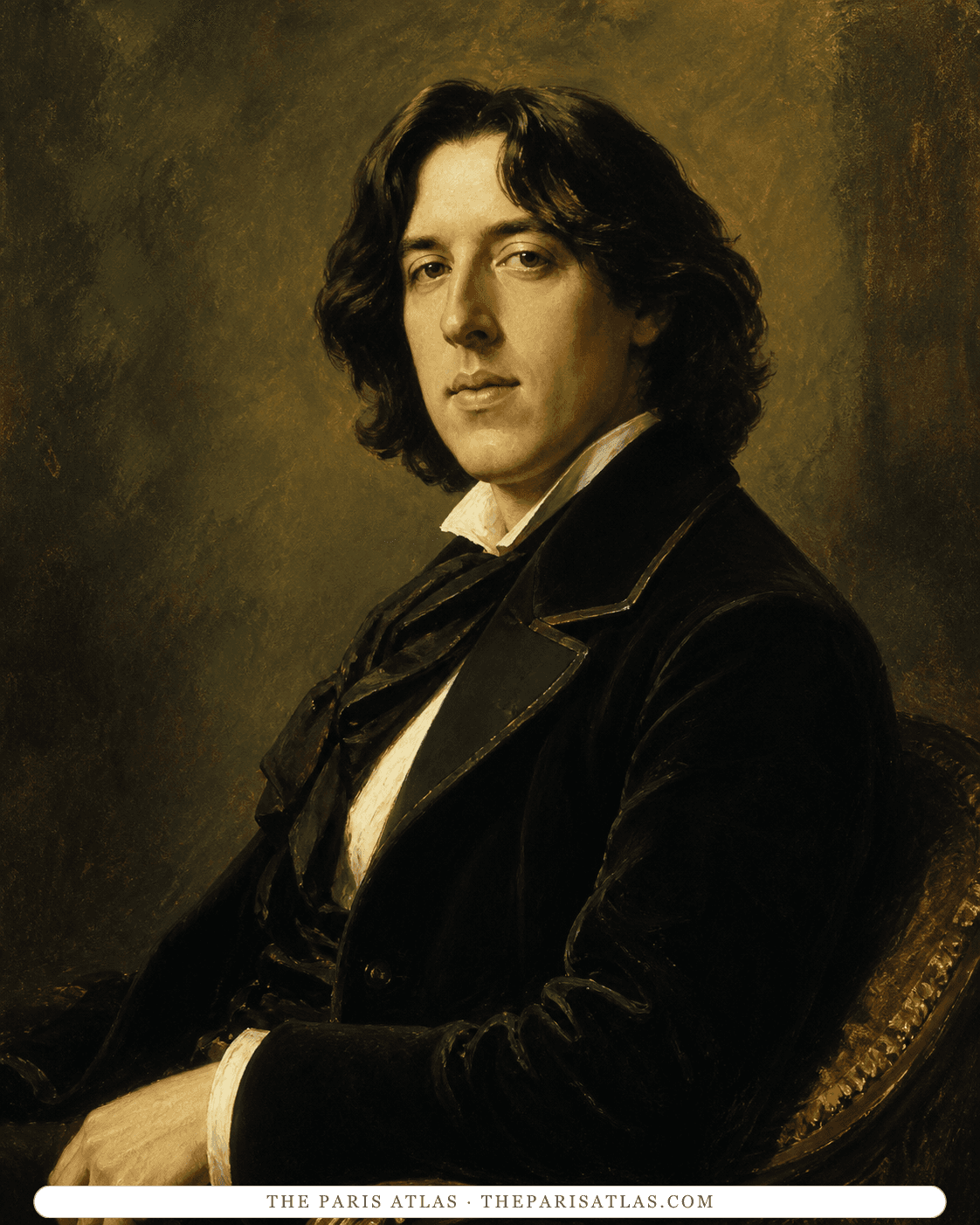
Illustrated portrait of Oscar Wilde

How these quotes were checked

How we decide whether a quote is genuine

Oscar Wilde may be the most quoted writer in English after Shakespeare, and he is certainly among the most misquoted. A line enters this collection only when its wording has been checked against a printed text — his plays, novel, and essays in their Project Gutenberg editions, his published aphorisms, and the shorthand report of his 1895 trial testimony.

Because Wilde gave his best lines to invented people, this collection also says who speaks each one. A sentence delivered by Lord Henry Wotton or Lord Darlington is credited to its play or novel and its speaker, not presented as something Wilde said over dinner. Famous wordings that fail the check are listed below with what the evidence shows.

Four famous Hemingway quotes, fact-checked

A sentence linked to Hemingway may be exact, shortened, remembered by someone else, or unsupported. Each label below explains what the available evidence actually proves.

Misattributed

Be yourself; everyone else is already taken.

The most shared “Wilde” line of all has no source in his works, letters, or recorded conversation. Quote Investigator finds nothing close to it before the twentieth century's end; its earliest known appearances are from the 1990s onward, and the attribution to Wilde arrived with social media. Wilde's documented position was closer to the opposite — the Phrases and Philosophies aphorism that opens this collection calls artifice the first duty in life.

  • Garson O'Toole, Be Yourself; Everyone Else Is Already Taken (2014)
Reported speech

I have nothing to declare except my genius.

Said to have been Wilde's answer to a New York customs officer in January 1882. No contemporary account of the landing records it; the sentence first appears in print decades later, in twentieth-century biographies — Frank Harris's 1918 life prints it as “his phrase to the Revenue officers on landing.” It may preserve something Wilde really said, but the only evidence is anecdote written long after the fact, by a biographer famous for improving his material.

  • Frank Harris, Oscar Wilde: His Life and Confessions (1918)
Verified

When good Americans die they go to Paris.

The line really is in Wilde — twice — but both times his characters quote it as an existing saying: “They say that when good Americans die they go to Paris” in The Picture of Dorian Gray, and Mrs. Allonby's “They say, Lady Hunstanton…” in A Woman of No Importance. The quip was already in print in 1858, when Oliver Wendell Holmes recorded it in The Autocrat of the Breakfast-Table as “that other saying of one of the wittiest of men.” Wilde gave it its stage, not its birth.

  • Oliver Wendell Holmes, The Autocrat of the Breakfast-Table (1858)
Verified

In matters of grave importance, style, not sincerity is the vital thing.

Genuine twice over. Gwendolen says it in the third act of The Importance of Being Earnest, and Wilde had published the aphorism in his own voice a year earlier in Phrases and Philosophies for the Use of the Young — where it runs both ways: in all unimportant matters and in all important matters alike, style, not sincerity, is the essential.

  • Oscar Wilde, edited by Robert Ross, Miscellanies (1908)
Wickedness is a myth invented by good people to account for the curious attractiveness of others.
Oscar Wilde, “Phrases and Philosophies for the Use of the Young,” The Chameleon, December 1894
The first duty in life is to be as artificial as possible. What the second duty is no one has as yet discovered.
Oscar Wilde, “Phrases and Philosophies for the Use of the Young,” The Chameleon, December 1894
Only the shallow know themselves.
Oscar Wilde, “Phrases and Philosophies for the Use of the Young,” The Chameleon, December 1894
Ambition is the last refuge of the failure.
Oscar Wilde, “Phrases and Philosophies for the Use of the Young,” The Chameleon, December 1894
The love he alluded to was that between an elder and younger man, as between David and Jonathan; such love as Plato made the basis of his philosophy; such as was sung in the sonnets of Shakespeare and Michael Angelo; that deep spiritual affection that was as pure as it was perfect.
Oscar Wilde, testimony at his first criminal trial, London, 1895 (from the shorthand reports)
In all unimportant matters, style, not sincerity, is the essential. In all important matters, style, not sincerity, is the essential.
Oscar Wilde, “Phrases and Philosophies for the Use of the Young,” The Chameleon, December 1894
They say, Lady Hunstanton, that when good Americans die they go to Paris.
Mrs. Allonby (dialogue) · Oscar Wilde, A Woman of No Importance (1893), First Act
The Book of Life begins with a man and a woman in a garden.
Lord Illingworth (dialogue) · Oscar Wilde, A Woman of No Importance (1893), First Act
Moderation is a fatal thing, Lady Hunstanton. Nothing succeeds like excess.
Lord Illingworth (dialogue) · Oscar Wilde, A Woman of No Importance (1893), Third Act
To love oneself is the beginning of a lifelong romance, Phipps.
Lord Goring (to his butler Phipps) · Oscar Wilde, An Ideal Husband (1895), Third Act
The most terrible thing about it is not that it breaks one's heart—hearts are made to be broken—but that it turns one's heart to stone.
Oscar Wilde, De Profundis (written 1897, published 1905)
Where there is sorrow there is holy ground.
Oscar Wilde, De Profundis (written 1897, published 1905)
The supreme vice is shallowness. Whatever is realised is right.
Oscar Wilde, De Profundis (written 1897, published 1905)
Life imitates Art far more than Art imitates Life.
Vivian (dialogue) · Oscar Wilde, "The Decay of Lying," Intentions (1891)
A little sincerity is a dangerous thing, and a great deal of it is absolutely fatal.
Gilbert (dialogue) · Oscar Wilde, "The Critic as Artist," Intentions (1891)
The one duty we owe to history is to re-write it.
Gilbert (dialogue) · Oscar Wilde, "The Critic as Artist," Intentions (1891)
We are all in the gutter, but some of us are looking at the stars.
Lord Darlington (dialogue) · Oscar Wilde, Lady Windermere's Fan (1892), Third Act
I can resist everything except temptation.
Lord Darlington (dialogue) · Oscar Wilde, Lady Windermere's Fan (1892), First Act
A man who knows the price of everything and the value of nothing.
Lord Darlington (dialogue) · Oscar Wilde, Lady Windermere's Fan (1892), Third Act
Experience is the name every one gives to their mistakes.
Dumby (dialogue) · Oscar Wilde, Lady Windermere's Fan (1892), Third Act
Because I think that life is far too important a thing ever to talk seriously about it.
Lord Darlington (dialogue) · Oscar Wilde, Lady Windermere's Fan (1892), First Act
Yet each man kills the thing he loves / By each let this be heard, / Some do it with a bitter look, / Some with a flattering word, / The coward does it with a kiss, / The brave man with a sword!
Oscar Wilde, The Ballad of Reading Gaol (1898), Part I
The truth is rarely pure and never simple. Modern life would be very tedious if it were either, and modern literature a complete impossibility!
Algernon (dialogue) · Oscar Wilde, The Importance of Being Earnest (1895), First Act
To lose one parent, Mr. Worthing, may be regarded as a misfortune; to lose both looks like carelessness.
Lady Bracknell (dialogue) · Oscar Wilde, The Importance of Being Earnest (1895), First Act
The good ended happily, and the bad unhappily. That is what Fiction means.
Miss Prism (dialogue) · Oscar Wilde, The Importance of Being Earnest (1895), Second Act

From the books

Every book with a quote collection of its own, each line verified against the text.

Questions about Oscar Wilde quotes

Did Oscar Wilde say “be yourself; everyone else is already taken”?

No. The line appears nowhere in Oscar Wilde's works, letters, or recorded conversation, and attribution researchers have found no trace of it before the late twentieth century. His actual published position was nearly the reverse: “The first duty in life is to be as artificial as possible.”

Did Oscar Wilde really say “I have nothing to declare except my genius”?

Possibly, but there is no contemporary evidence. No 1882 account of his New York landing records the line; it first circulates in biographies decades later, such as Frank Harris's 1918 life. It is best described as a famous anecdote rather than a documented quotation.

What is Oscar Wilde's most famous quote?

Probably “We are all in the gutter, but some of us are looking at the stars,” spoken by Lord Darlington in the third act of Lady Windermere's Fan (1892). Like most famous Wilde lines, it belongs to a character in one of his plays.

Who says “I can resist everything except temptation”?

Lord Darlington, in the first act of Lady Windermere's Fan (1892) — a fictional character, though the epigram is Oscar Wilde's writing. This collection credits each play and novel line to its speaker.

Did Oscar Wilde coin “when good Americans die they go to Paris”?

No — he staged it. Both times the line appears in his work, a character quotes it as an existing saying, and Oliver Wendell Holmes had already printed it in 1858, crediting “one of the wittiest of men,” when Wilde was a small child in Dublin.

What did Oscar Wilde say at his trial?

Asked in 1895 what “the love that dare not speak its name” meant, Wilde answered that it was “that deep spiritual affection that was as pure as it was perfect” between an elder and a younger man, citing David and Jonathan, Plato, Shakespeare, and Michelangelo. The full answer is in this collection, checked against the shorthand report.

Sources used to check these quotes

  • Oscar Wilde, edited by Robert Ross, Miscellanies (1908)
  • The Trial of Oscar Wilde, from the Shorthand Reports (1906)
  • Garson O'Toole, Be Yourself; Everyone Else Is Already Taken (2014)

  • Frank Harris, Oscar Wilde: His Life and Confessions (1918)
  • Oliver Wendell Holmes, The Autocrat of the Breakfast-Table (1858)

The Friday Letter

One story from the atlas, every Friday.

No algorithms chasing attention. A work, a place, and the connection between them — with the history checked.

One email a week. No spam, no selling your address. Unsubscribe anytime.