

The Picture of Dorian Gray
Oscar Wilde's only novel: a beautiful young man stays unchanged while his hidden portrait records age, cruelty, and guilt.
Read our take
by Oscar Wilde
Four essays and dialogues in which Oscar Wilde argues that criticism is creative, art need not copy life, and a work should not be reduced to a moral lesson.
Intentions collects 'The Decay of Lying,' 'Pen, Pencil and Poison,' 'The Critic as Artist,' and 'The Truth of Masks.' Wilde often places the argument in witty dialogue, allowing one speaker to provoke and another to object. The book explains the ideas about art and interpretation that his fiction and plays would put into practice through the 1890s. It is the theoretical basis for almost everything Wilde would write next — The Picture of Dorian Gray (already published serially in 1890), the four society comedies, and the prose experiments of Salome and The Soul of Man Under Socialism.
Wilde had published the four essays separately in Nineteenth Century and The Fortnightly Review between 1889 and 1890. The 1891 collection revised them substantially: 'The Decay of Lying' and 'The Critic as Artist' were expanded, and Wilde added the two lectures 'Pen, Pencil and Poison' and 'The Truth of Masks' to make a full-length book. The 1891 title Intentions replaced the working title The Rise of Historical Criticism that Wilde had considered.
The collection is not a simple statement of rules. Wilde gives extreme positions to invented speakers, uses paradox to expose ordinary assumptions, and makes criticism itself part of the performance. 'The Decay of Lying' is a dialogue between Cyril and Vivian; 'The Critic as Artist' is a dialogue between Gilbert and Ernest. The dialogue form matters — Wilde is not simply asserting the positions his speakers take.
The central questions are practical: Does art imitate life, or teach people what to notice? Is criticism secondary to creation, or another creative act? Does historical accuracy help a play, or can it prevent theatrical truth? Wilde's answers — art creates the terms through which life becomes visible; criticism is a creative activity that produces new works; historical costume is dead unless the actor and audience make it live — became the working aesthetics of European literary modernism.
'The Decay of Lying' (dialogue) attacks the demand that art copy ordinary reality. Vivian argues that nature imitates art rather than the other way around — that fog in London became visible to Londoners only after Whistler had painted it. The essay's most quoted line: 'Life imitates Art far more than Art imitates Life.'
'The Critic as Artist' (dialogue) presents interpretation as creative work in its own right. Gilbert argues that criticism at its highest is a form of autobiography and that the true critic makes new works out of the works they discuss.
'Pen, Pencil and Poison' is a study of the writer, painter, and convicted murderer Thomas Griffiths Wainewright (1794–1847), whose Newgate Calendar entry Wilde treats as a case study in the modern relationship between art and moral judgement. 'The Truth of Masks' considers costume, historical accuracy, and theatrical truth in Shakespearean performance — the essay Wilde regarded as the weakest of the four and later half-repudiated.
The opening disagreement begins with a practical invitation to leave the library. Cyril praises the landscape through a comparison with fruit; Vivian answers by judging nature as though it were an unfinished artwork. Both make seeing inseparable from description, even while disputing what deserves admiration. The comfortable room is therefore part of the argument, not neutral scenery. Cyril's interruption also exposes Vivian's inconsistency about thinking and writing, keeping the pronouncements attached to a speaker whose performance can be challenged.
In The Truth of Masks, costume does more than identify a period: it changes what actors can do and what spectators can understand without explanation. Wilde's attention moves from individual garments to their relation with gesture, scenery and the stage's entire color scheme. Historical knowledge becomes useful through artistic arrangement, not through displaying research for its own sake. The closing refusal to endorse every preceding claim complicates the essay's authority: its persuasive voice presents a standpoint rather than a final rule.
Life imitates Art far more than Art imitates Life.
A little sincerity is a dangerous thing, and a great deal of it is absolutely fatal.
The one duty we owe to history is to re-write it.
It gives readers the clearest route into Wilde's aesthetics without turning his epigrams into isolated quotations.
Read it after Dorian Gray, when its claims about art and morality have a difficult example beside them.
The four essays it collects — 'The Decay of Lying,' 'Pen, Pencil and Poison,' 'The Critic as Artist,' and 'The Truth of Masks' — are the theoretical basis for almost everything Wilde would go on to write in fiction and drama.
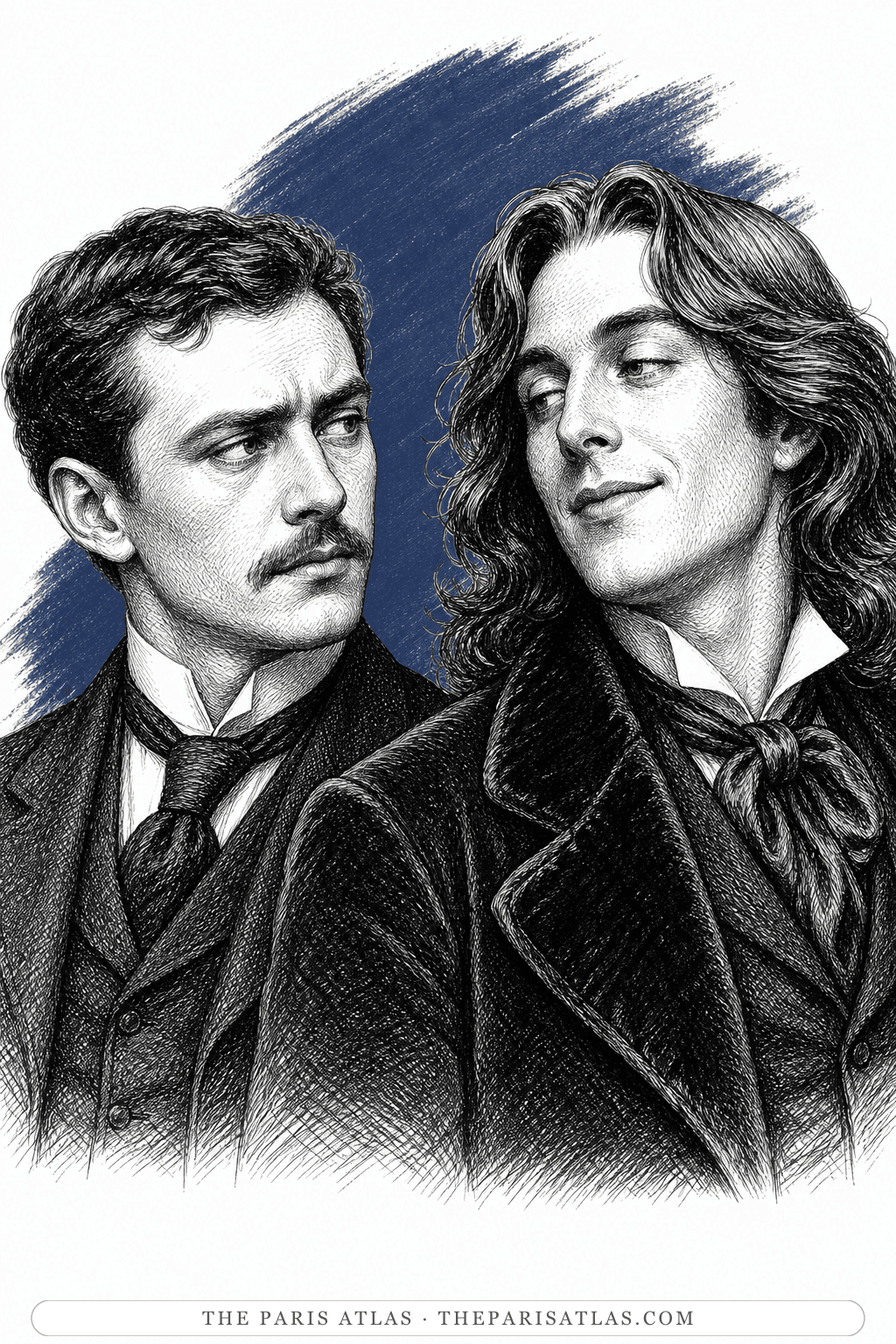
The two speakers in Wilde's opening dialogue — set in the library of a country house in Nottinghamshire. Cyril is the interlocutor who defends realism and nature; Vivian is Wilde's mouthpiece for the extreme position that life imitates art. Cyril and Vivian were also the names of Wilde's two young sons (born 1885 and 1886), a private tribute inside the book.
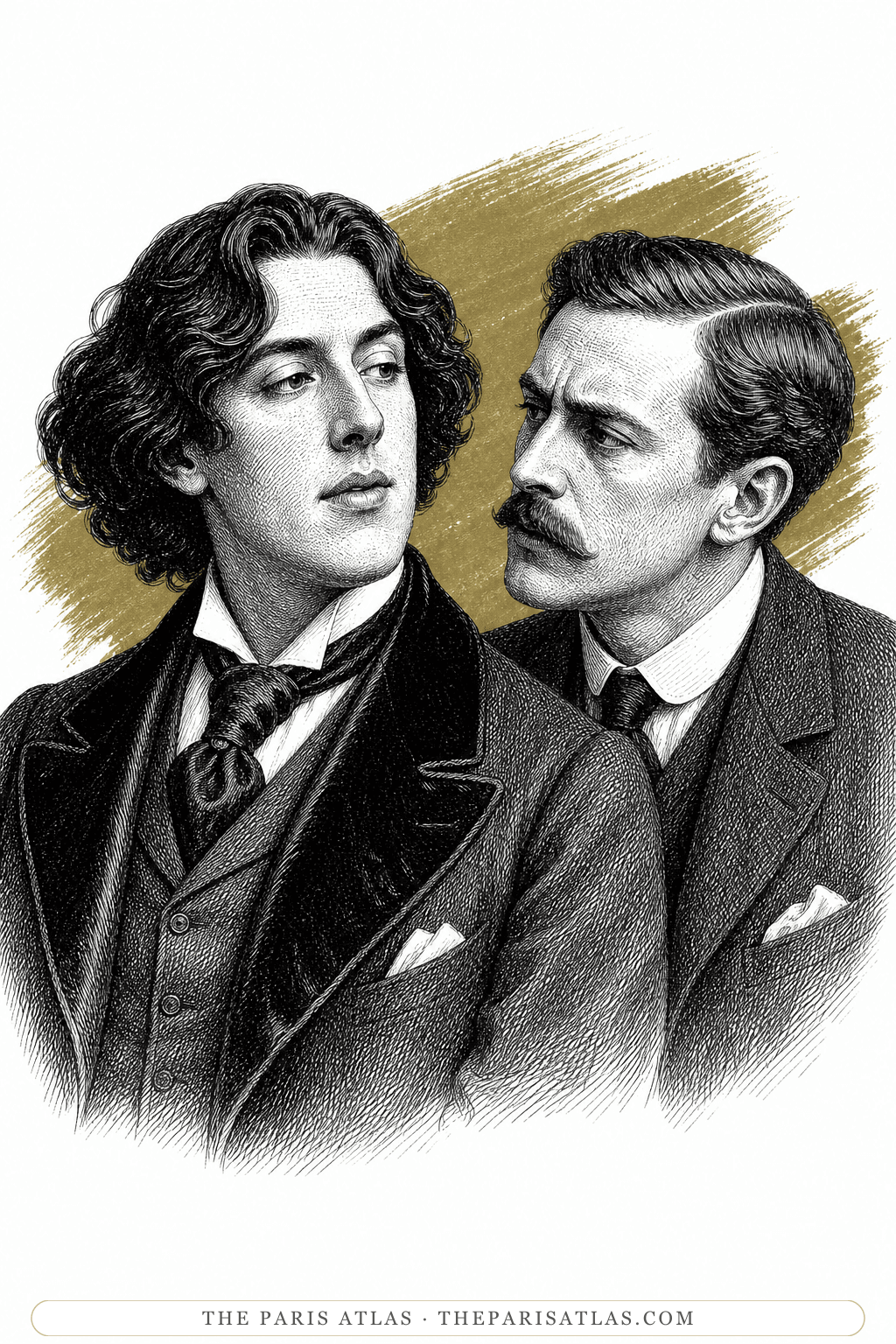
The two speakers in the second and longest dialogue. Gilbert is the aesthetic critic making Wilde's case; Ernest is the sceptical listener whose objections Wilde uses to build the argument. The essay was published in two parts (Nineteenth Century, July and September 1890) and heavily revised for Intentions.
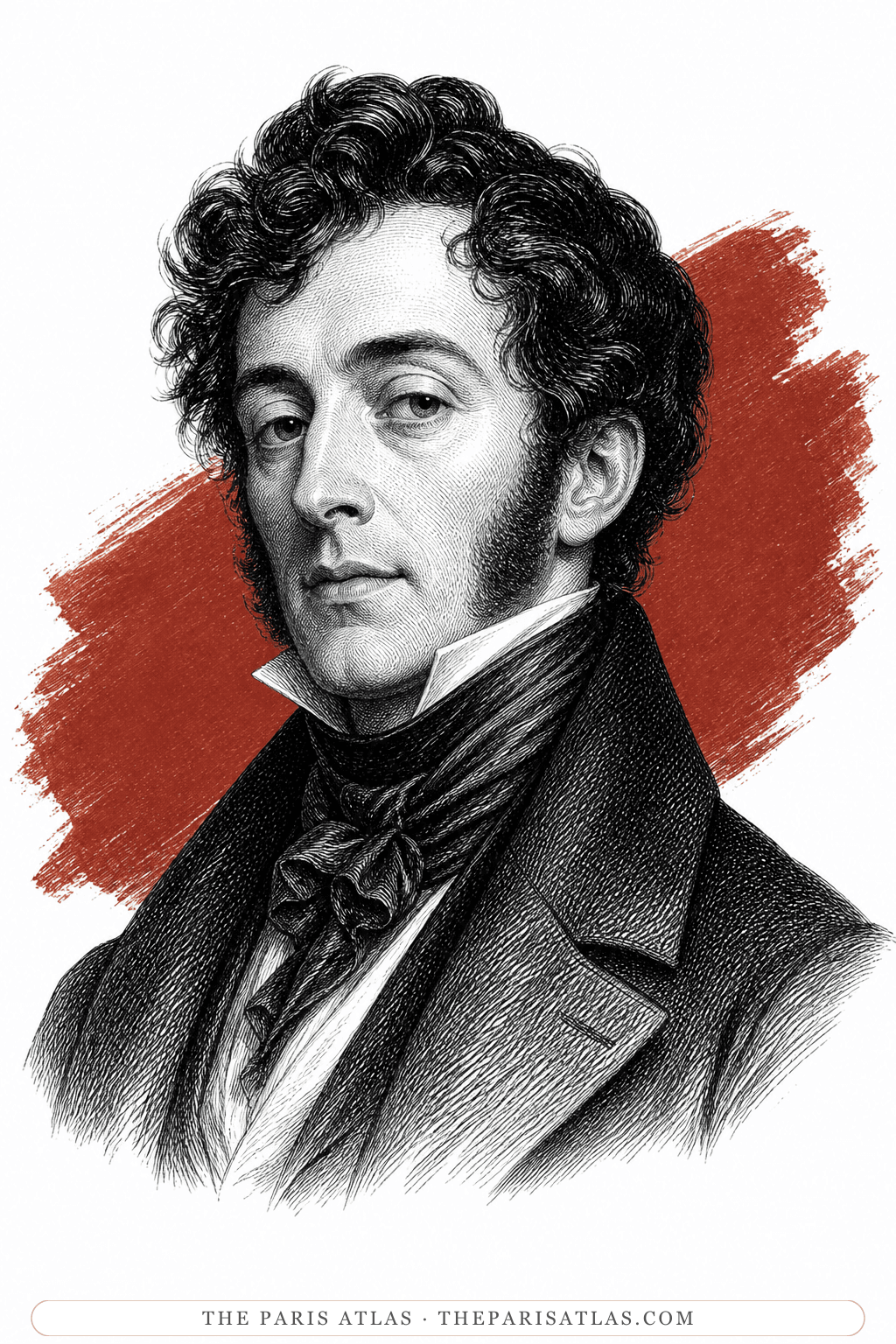
The English painter, essayist, art critic, and convicted forger and poisoner (1794–1847), the subject of 'Pen, Pencil and Poison.' Wainewright poisoned at least three people — his uncle George Griffiths, his mother-in-law Mrs Abercromby, and his sister-in-law Helen Abercromby — for life insurance payouts. He was transported to Van Diemen's Land in 1837 and died there. Wilde read his case as an early instance of the modern separation between the aesthetic and the moral.
January 1889
'The Decay of Lying' appears in Nineteenth Century.
1889
'Pen, Pencil and Poison' appears in The Fortnightly Review.
May 1889
'The Truth of Masks' appears in Nineteenth Century.
July + September 1890
'The Critic as Artist' runs in Nineteenth Century as a two-part dialogue.
May 1891
James R. Osgood, McIlvaine and Company publish Intentions in London; Dodd, Mead publish the New York edition. Wilde has substantially revised all four essays for the collection.
1892–1895
The four society comedies Wilde would write during the next four years (Lady Windermere's Fan, A Woman of No Importance, An Ideal Husband, The Importance of Being Earnest) put Intentions's argument into practice.
1895
The trial and imprisonment of Wilde end the aesthetic public argument the book had opened.
Oscar Wilde's only novel: a beautiful young man stays unchanged while his hidden portrait records age, cruelty, and guilt.
Read our take
An essay arguing that poverty should be ended by changing property relations, not managed through charity, so each person can develop freely.
Read our takeIntentions is a collection of four essays and dialogues about aesthetics, criticism, and morality — 'The Decay of Lying,' 'Pen, Pencil and Poison,' 'The Critic as Artist,' and 'The Truth of Masks.' Wilde uses paradox and dialogue to argue that art creates the terms through which life becomes visible, that criticism at its highest is itself creative work, and that a work of art should not be reduced to a moral lesson.
The London edition appeared from James R. Osgood, McIlvaine and Company in May 1891, with a New York edition from Dodd, Mead the same month. Wilde had published the four essays separately in Nineteenth Century and The Fortnightly Review between January 1889 and September 1890, and revised them substantially — especially 'The Critic as Artist' — for the book.
That art does not imitate life; life imitates art. Vivian argues that nature and history become visible to human observers only after artists have taught them what to see. The essay's most quoted line — 'Life imitates Art far more than Art imitates Life' — was Wilde's deliberate reversal of the ancient defence of imitation as the ground of aesthetic truth.
The essay defends criticism as a form of creative activity in its own right. Gilbert argues that a critic at his highest makes new works out of the works he discusses, that criticism is a form of autobiography, and that the merely accurate transcription of a work's content is the least interesting critical mode. Wilde put the argument in dialogue so Gilbert's extreme positions could be tested against Ernest's scepticism.
Wilde read Wainewright's case as an early modern instance of the separation between aesthetic judgement and moral judgement. Wainewright was a serious painter and essayist who was also a forger and poisoner. Wilde used the case to test whether the two spheres could be separated — a question that would return in the courtroom drama of Wilde's own life four years after the book's publication.
The Picture of Dorian Gray was published serially in Lippincott's Monthly Magazine in June 1890 and as a book in April 1891, one month before Intentions. Wilde revised both texts in the same period. Intentions gives the theoretical position that the novel had already staged: that a work of art should not be reduced to a moral, that the moral of a work of art is contained in the fact that it is a work of art, and that the artist is not answerable to the ordinary judgement passed on the artist's characters.
Explore authors with a similar voice, perspective, and influence.
Both writers use style, performance, and social comedy to examine the roles assigned to women, artists, and people whose private lives do not fit public rules.
View author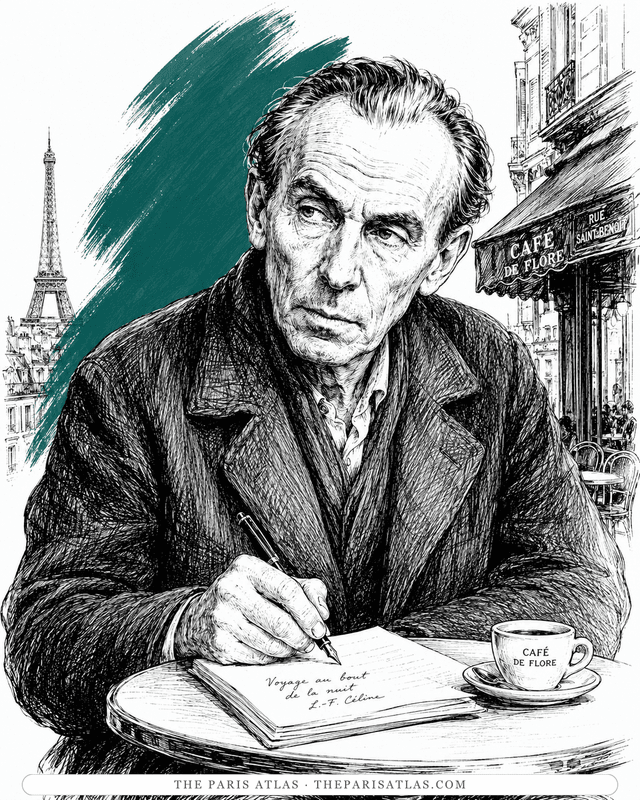
The doctor of the Paris slums who wrote the century's blackest, funniest novel — and changed the sound of French prose.
View author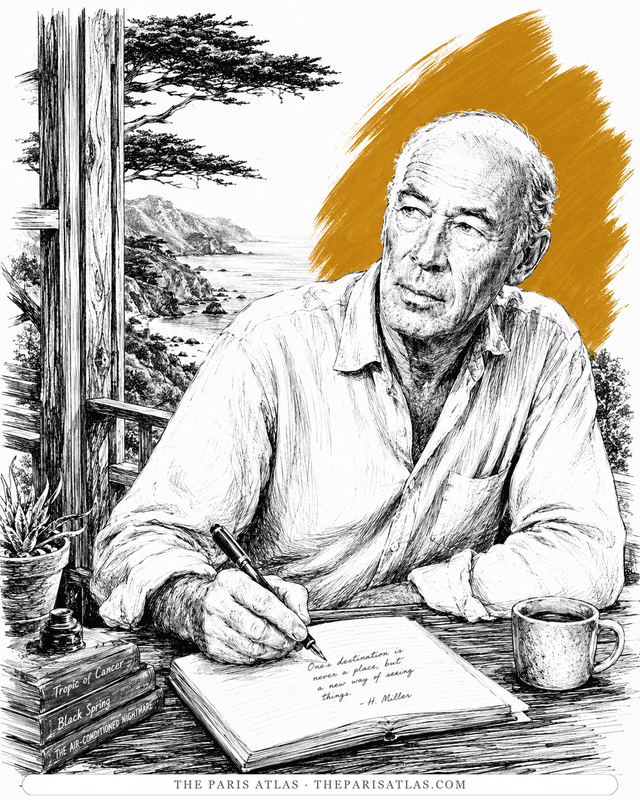
The Brooklyn dropout who arrived in Paris broke at thirty-eight and wrote the exuberant, banned books that ended American censorship.
View authorThe sources below include the primary text, editions, scholarship, archival materials, and other records that informed this page. They document Intentions, its publication, and its place in literary history.

The primary text represented by this page, used for descriptions of the work’s contents and for any quoted passages shown here.
The opening dialogue and selected costume passages, including the conclusion; no full-volume or magazine collation.

Used to place Intentions within Oscar Wilde's published work and verify its bibliographic context.
Used for independent biographical, archival, or historical context surrounding Oscar Wilde's career and the period in which Intentions appeared.
Used to cross-check authorship, chronology, and the work's place in Oscar Wilde's wider catalogue.
Used to verify Oscar Wilde's bibliography and place Intentions within the broader chronology of Oscar Wilde's career.
The primary text is the baseline reference for every book page. Additional references document publication history, interpretation, and historical context where that evidence is available.
 Explore more resources