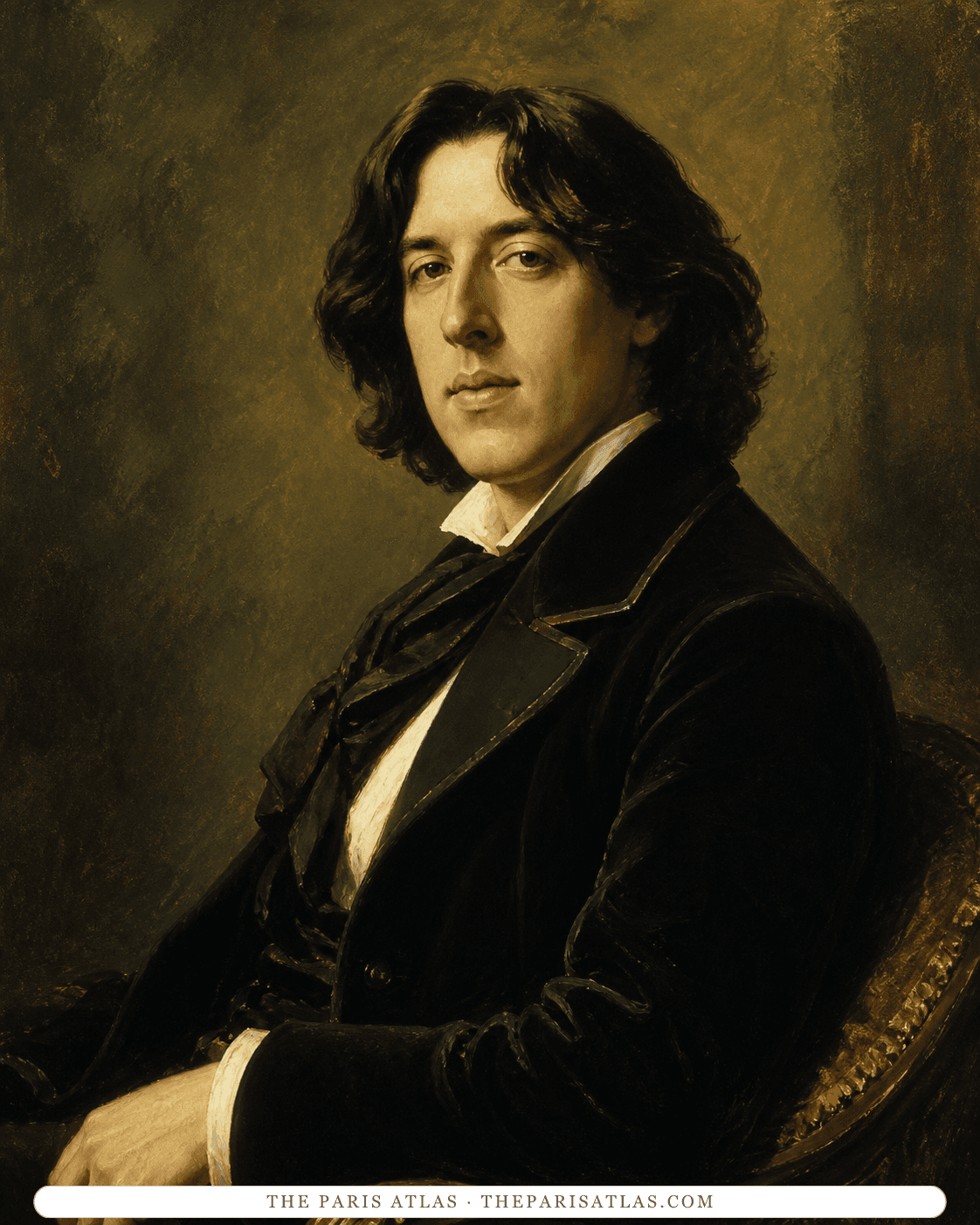

A Woman of No Importance
A country-house comedy that turns, in its second act, into an unsparing indictment of the double standard that punished the woman and promoted the man.
Read our take
by Oscar Wilde
A society comedy in which a young wife suspects her husband, an excluded woman returns, and a fan becomes evidence that tells the wrong story.
Lady Windermere's Fan follows Lady Windermere, who believes her husband is paying Mrs Erlynne because they are having an affair. Mrs Erlynne is actually Lady Windermere's mother, a woman who abandoned her family twenty years earlier and now wants to return to society. The play uses a missing fan, a private room, and several false conclusions to question easy divisions between good and bad women. It was Wilde's first stage success and the play that made his four West End years possible.
Wilde wrote the play in the autumn of 1891 and offered it to George Alexander at the St James's Theatre for the 1891–92 season. Alexander accepted on 24 January 1892; the play opened on 20 February 1892 in a first production directed by Alexander and starring Marion Terry as Mrs Erlynne, Lily Hanbury as Lady Windermere, and Alexander himself as Lord Windermere. The run of 156 performances was Wilde's first sustained commercial success.
The premiere is remembered for Wilde's curtain speech on opening night. He came onto the stage smoking a cigarette and said (Times, 22 February 1892): 'Ladies and gentlemen. I have enjoyed this evening immensely. The actors have given us a charming rendering of a delightful play, and your appreciation has been most intelligent. I congratulate you on the great success of your performance, which persuades me that you think almost as highly of the play as I do myself.' The speech irritated critics (the Times review the next day called it 'in bad taste') but the play sold out.
Wilde revised the fourth act after the first three nights. The original opening night had Mrs Erlynne's identity as Lady Windermere's mother withheld from the audience until nearly the end; audience feedback and Alexander's counsel persuaded Wilde to move the revelation earlier so the audience knows before Lady Windermere does. The play's suspense turns on dramatic irony from Act II onwards in the revised text — which is the text every subsequent production has used.
Act I is Lady Windermere's twenty-first birthday. She discovers a bank book in her husband's desk that shows regular payments to a Mrs Erlynne, a woman with a scandalous past, and jumps to the conclusion that Lord Windermere is having an affair. She warns him that if he invites Mrs Erlynne to her birthday ball that evening she will strike Mrs Erlynne across the face with the birthday-present fan Lord Windermere has given her.
Act II is the ball itself. Mrs Erlynne arrives; Lady Windermere does not strike her. Instead, believing her husband unfaithful, Lady Windermere writes a note to Lord Darlington and slips out of the ball to go to his flat. Mrs Erlynne — who knows what Lady Windermere is about to do and knows because she once did the same thing herself — follows her.
Act III is Lord Darlington's flat. Mrs Erlynne persuades Lady Windermere to go home before Darlington returns with a party of male friends including Lord Windermere. Lady Windermere leaves; Mrs Erlynne stays behind and is discovered by the men when Lady Windermere's fan is found in the room. Act IV is the next morning, and Mrs Erlynne's decision not to reveal Lady Windermere's identity as her daughter, or to reveal Lady Windermere's near-mistake to Lord Windermere, is the moral centre of the play.
Mrs Erlynne's entrance makes social acceptance visible as a sequence of gestures. Lord Augustus treats the invitation as proof of respectability before she even arrives; a card can settle what gossip cannot. Lady Windermere's dropped fan interrupts her threatened public punishment, while the contrasting bows let hostility and charm occupy the same polite exchange. Mrs Erlynne understands that admission requires introductions and allies. The ball tests not only personal feeling but who can authorize someone else's place in the room.
Cecil Graham first reads the fan as an entertaining contradiction of Darlington's romantic talk. Lord Windermere recognizes it and turns the joke into an accusation. The object is genuine evidence, but it cannot explain why either woman is there. Mrs Erlynne supplies a false account that allows Lady Windermere to escape while the men's attention turns toward her. The audience watches reputation being manufactured from a possession, a plausible story and a carefully timed entrance, rather than from complete knowledge.
We are all in the gutter, but some of us are looking at the stars.
I can resist everything except temptation.
A man who knows the price of everything and the value of nothing.
It is the first mature society comedy and introduces Wilde's method of using scandal to overturn moral labels.
Read it before A Woman of No Importance and An Ideal Husband to see the form grow more political.
Lady Windermere's Fan opened at the St James's Theatre on 20 February 1892 and made Wilde financially independent for the first time — the four West End years that followed, and then ended, all begin here.

The play's centre, celebrating her twenty-first birthday. She believes her husband is having an affair with Mrs Erlynne and does not know Mrs Erlynne is her mother — the mother she has always been told died in her infancy. Her moral confidence at Act I is what the rest of the play tests.
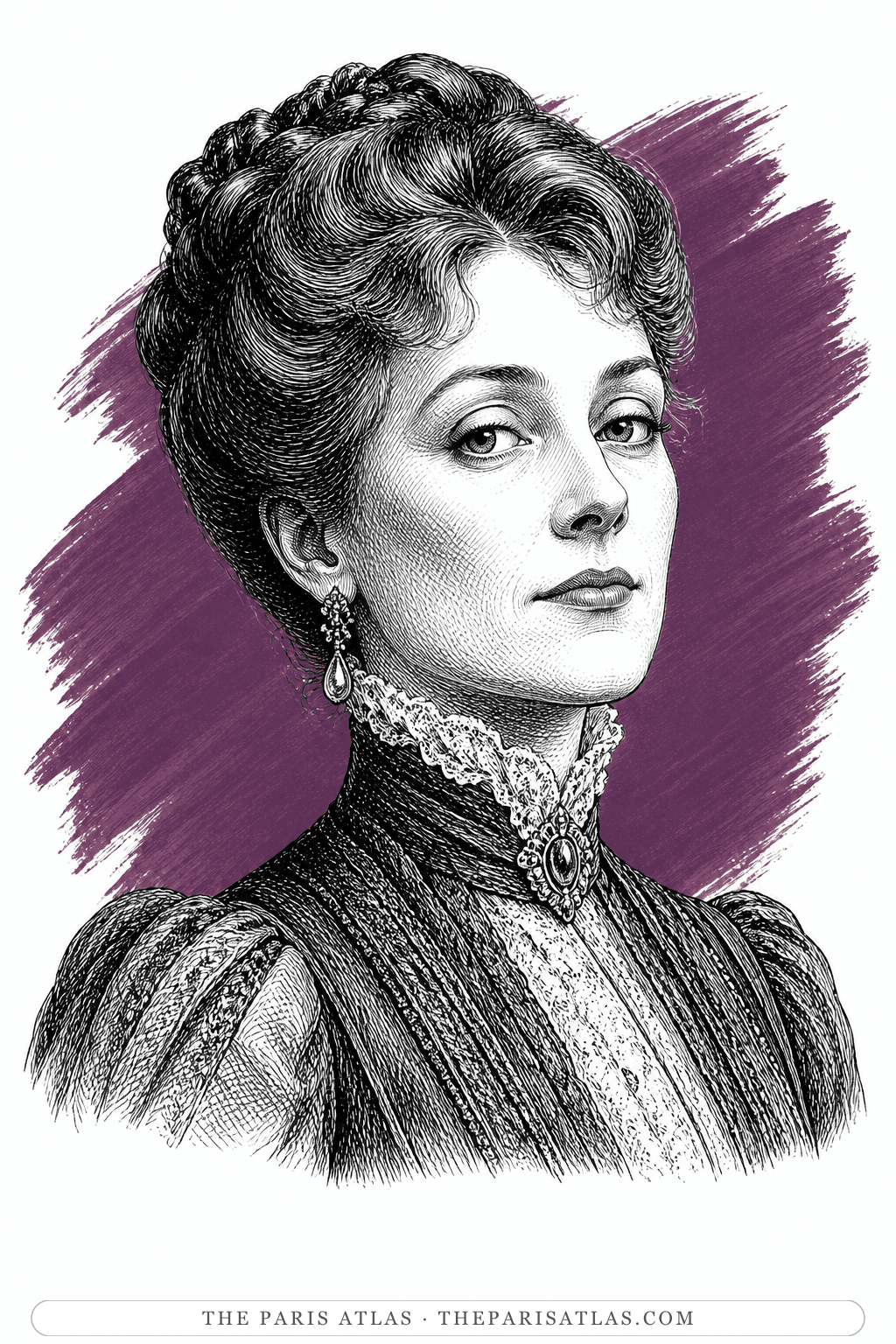
The play's most interesting character — a woman with a scandalous past who left her husband and infant daughter twenty years earlier to run away with another man, has been paid off by Lord Windermere to keep her identity secret, and now returns to London wanting readmission to society. She saves her daughter from repeating her own mistake without ever telling her she is her mother.

Lady Windermere's husband, paying Mrs Erlynne to protect his wife from learning that her mother is alive. His refusal to explain the payments — combined with his insistence that Mrs Erlynne be invited to the birthday ball — is what sets the plot in motion.

A witty bachelor who has been openly courting Lady Windermere and offers her his flat and his name if she will leave her husband. He is not the play's villain — Wilde gives him some of the play's best lines, including 'I can resist everything except temptation' — but his offer is the trap Lady Windermere nearly walks into.
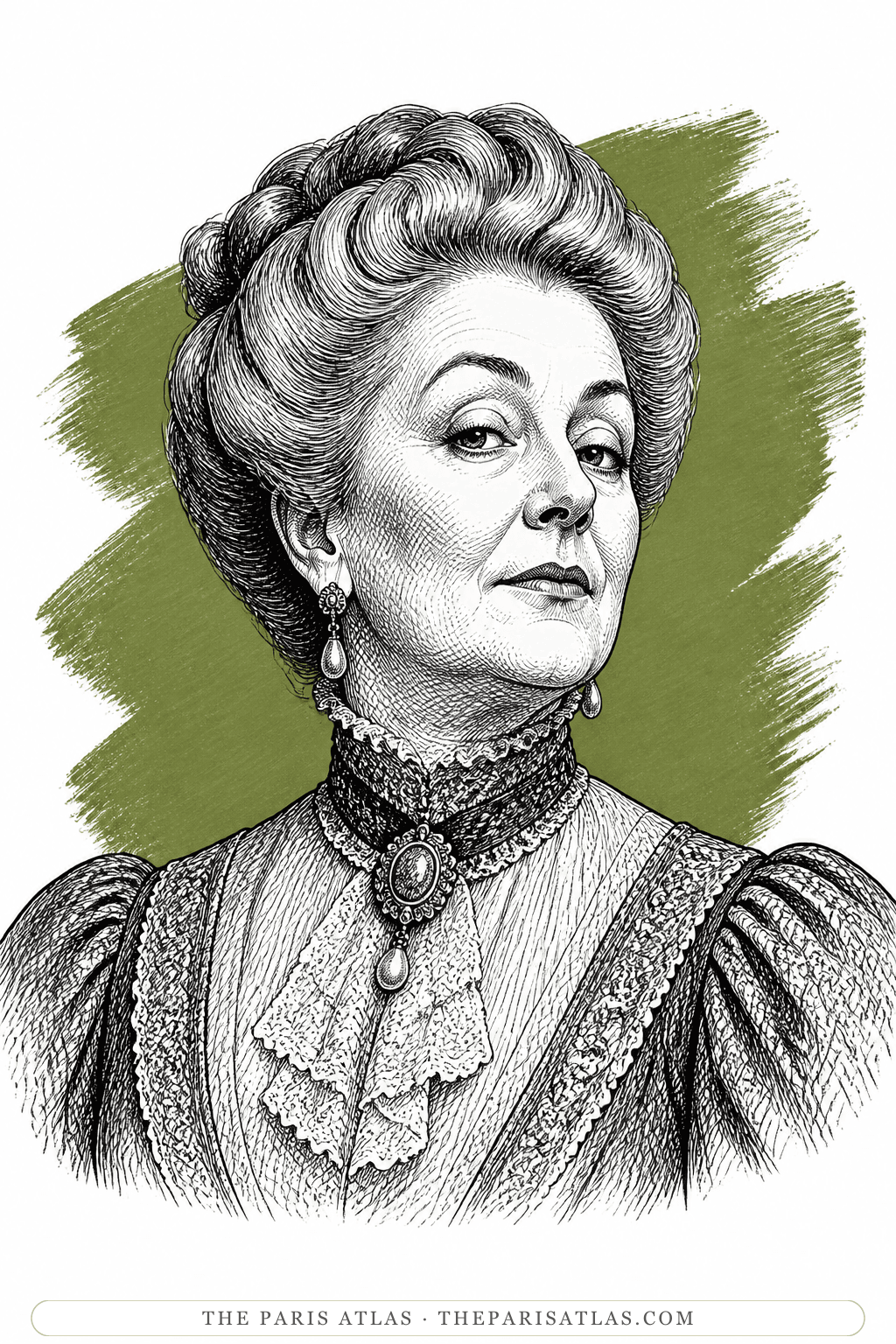
The society matron who tells Lady Windermere about the Mrs Erlynne rumours in Act I — the mechanism by which the plot's engine is started. She is Wilde's most complete study of the aristocratic gossip whose social position depends on the accuracy of her information.
Autumn 1891
Wilde writes the play; it is his first full-length society comedy.
24 January 1892
George Alexander accepts the play for the St James's Theatre.
20 February 1892
Lady Windermere's Fan opens at the St James's Theatre. Wilde delivers his notorious curtain speech from the stage, cigarette in hand.
22 February 1892
Wilde revises Act IV. The original opening-night structure (Mrs Erlynne's identity as Lady Windermere's mother withheld to near the end) is replaced by the earlier-revelation version that every subsequent production uses.
March 1892
The play's Provincial tour begins under the same management.
1893
Elkin Mathews and John Lane publish the first book edition in London.
1893–1895
Wilde writes A Woman of No Importance, An Ideal Husband, and The Importance of Being Earnest — the four-play sequence that made his West End years.
A country-house comedy that turns, in its second act, into an unsparing indictment of the double standard that punished the woman and promoted the man.
Read our take
A political comedy about blackmail, a fortune built on a secret, and the damage caused by demanding moral perfection from another person.
Read our takeIt is a society comedy about a young wife who believes her husband is having an affair with a Mrs Erlynne, and about the woman herself — who is actually the wife's long-lost mother, a woman with a scandalous past trying to buy her way back into London society. The play uses a birthday fan, a private flat, and several false conclusions to test the audience's assumptions about which of the two women is virtuous.
It opened at the St James's Theatre in London on 20 February 1892 in a production directed by George Alexander, who also played Lord Windermere. Marion Terry played Mrs Erlynne; Lily Hanbury played Lady Windermere. The first run went to 156 performances and was Wilde's first sustained commercial success.
Wilde came onto the stage smoking a cigarette after the final curtain and said: 'Ladies and gentlemen. I have enjoyed this evening immensely. The actors have given us a charming rendering of a delightful play, and your appreciation has been most intelligent. I congratulate you on the great success of your performance, which persuades me that you think almost as highly of the play as I do myself.' The Times called the speech 'in bad taste'; the audience loved it; and the story became one of the founding anecdotes of Wilde as public personality.
In the original opening-night text, Mrs Erlynne's identity as Lady Windermere's mother was withheld from the audience until nearly the end of the play. Audience response and George Alexander's counsel persuaded Wilde to move the revelation earlier — so the audience knows before Lady Windermere does — which turns the play's suspense onto dramatic irony from Act II onwards. Every production since the third night uses the revised text.
It is a birthday gift from Lord Windermere to his wife. She threatens in Act I to strike Mrs Erlynne across the face with it if Mrs Erlynne appears at the ball. It travels to Lord Darlington's flat with Lady Windermere in Act II, is left behind when Mrs Erlynne makes her leave, and is discovered by the men when they return — but the men assume it is Mrs Erlynne's, not Lady Windermere's, and that mistake is what Mrs Erlynne uses to save Lady Windermere.
It is the first of the four Wilde society comedies of 1892–1895 (Lady Windermere's Fan, A Woman of No Importance, An Ideal Husband, The Importance of Being Earnest). Each pairs a witty leading-man philosopher with a scandal from the past that the play forces into the open. Windermere is the founding text of the type; The Importance of Being Earnest is where Wilde turned the machinery into pure comedy.
Explore authors with a similar voice, perspective, and influence.

Both writers use style, performance, and social comedy to examine the roles assigned to women, artists, and people whose private lives do not fit public rules.
View author
The doctor of the Paris slums who wrote the century's blackest, funniest novel — and changed the sound of French prose.
View author
The Brooklyn dropout who arrived in Paris broke at thirty-eight and wrote the exuberant, banned books that ended American censorship.
View authorThe sources below include the primary text, editions, scholarship, archival materials, and other records that informed this page. They document Lady Windermere's Fan, its publication, and its place in literary history.


The primary text represented by this page, used for descriptions of the work’s contents and for any quoted passages shown here.
Selected passages in acts II–III of the 1917 text; no acting-version comparison.

Used to place Lady Windermere's Fan within Oscar Wilde's published work and verify its bibliographic context.
Used for independent biographical, archival, or historical context surrounding Oscar Wilde's career and the period in which Lady Windermere's Fan appeared.
Used to cross-check authorship, chronology, and the work's place in Oscar Wilde's wider catalogue.
Used to verify Oscar Wilde's bibliography and place Lady Windermere's Fan within the broader chronology of Oscar Wilde's career.
The primary text is the baseline reference for every book page. Additional references document publication history, interpretation, and historical context where that evidence is available.
 Explore more resources