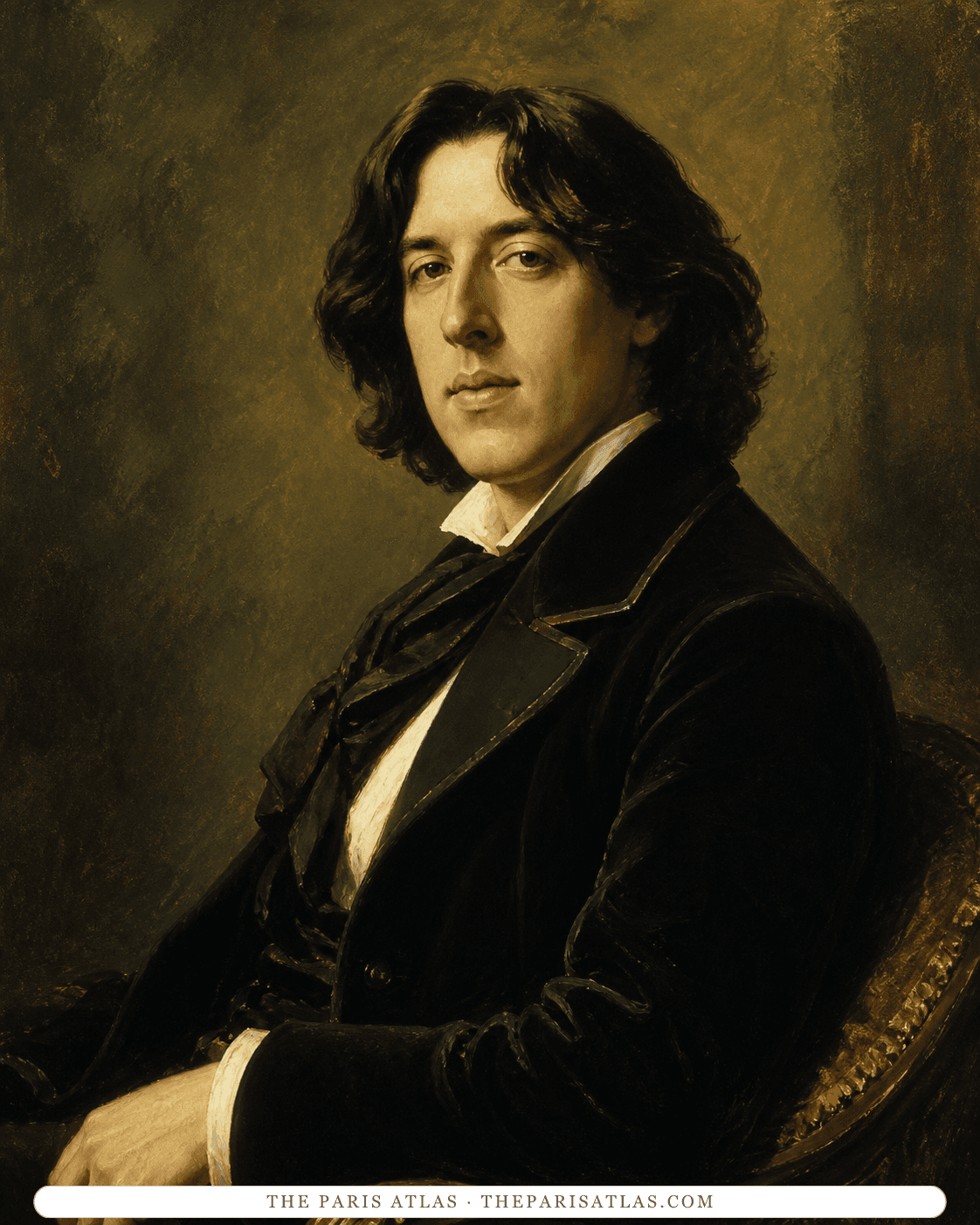

Poems
Oscar Wilde's first commercial book, a decorated collection shaped by classical myth, Catholic imagery, travel, love, and the Aesthetic movement.
Read our take
by Oscar Wilde
A long, highly decorated poem in which a speaker questions a sphinx about imagined lovers, gods, monsters, and ancient history.
The Sphinx is Oscar Wilde's long Decadent poem, built from exotic names, jewelled colours, ancient religions, erotic fantasy, and abrupt religious recoil. Its speaker addresses a sphinx he imagines in his room and invents a history of her desires. The original limited edition was designed by Charles Ricketts and Charles Shannon as an elaborate art book — one of the finest small-press books of the English 1890s — and the poem is best read in a facsimile of that edition, where the visual and verbal work are inseparable.
Wilde worked on versions of the poem for years before its 1894 publication. He had begun a draft during his Magdalen College years at Oxford in 1874 and continued to revise it through his American lecture tour of 1882 and his early London career. The finished text runs to a hundred and seventy-four lines and is composed of eighty-seven long-line couplets. The poem is meant to overwhelm through sound and accumulation rather than tell a clean historical story — reading it aloud is how its rhythm and diction do their work.
The 1894 edition was published in London by Elkin Mathews and John Lane at the Bodley Head, in a limited edition of 200 copies plus 25 signed copies for the American market, at Wilde's own request for an unusually rich book. Charles Ricketts designed the volume: title page, cover, initial letters, and ten full-page illustrations by Ricketts himself. Charles Shannon (Ricketts's partner in life and work) contributed as well. The book is one of the great Aesthetic-movement art objects.
Its imagined Egypt and Near East belong to a European tradition of Orientalism: the poem's catalogue of ancient names, gods, and monsters reveals late-Victorian fantasy about the East, not dependable knowledge of the cultures being named. That is worth stating plainly. The poem's method — accumulation of exotic proper nouns, ekphrastic vocabulary, incantatory couplets — is inseparable from that Orientalist context. Read the poem for what it is: an Aesthetic-movement performance, not a document about the ancient world.
The poem opens in a study, at night. The speaker addresses a small sphinx statue on his desk — 'A beautiful and silent Sphinx has watched me through the shifting gloom' — and begins to interrogate her about the men and gods she loved.
The middle of the poem is the long catalogue: the sphinx's imagined lovers across Egyptian, Assyrian, Greek, and Christian mythology (Anubis, Adon, Ashtaroth, Amenalk, Osiris, Aphrodite, the Great Sphinx of Giza itself). The catalogue moves through the ancient world for the sake of the catalogue — each name is chosen for its sound and its jewelled decoration rather than for historical or theological accuracy.
The final section turns. The speaker recoils from what he has just imagined, orders the sphinx away — 'Get hence, you loathsome mystery! Hideous animal, get hence!' — and turns toward a wooden crucifix on the wall behind him. The poem's structure is Wilde's characteristic Aesthetic-movement gesture: a long unbroken indulgence in decorated fantasy, followed by an abrupt religious recoil. The recoil is not the poem's argument; it is the poem's final image.
The Sphinx's stillness gives the speaker room to invent her history, but does not make her obedient. His invitations quickly become commands to approach, submit to touch and recount memories. Descriptions mix the softness of a pet with the strangeness of a monumental creature, making her difficult to place securely in either category. She never answers him. The opening establishes an unequal conversation in which his increasingly elaborate language tries to master a presence that remains silent and watchful.
The account of Ammon moves from costly materials and ceremonial abundance to a temple inhabited by animals and broken by vegetation. The giant hand retains the shape of force but cannot exercise it. Yet the speaker does not simply accept this ruin: he commands the Sphinx to collect the fragments and restore her lover. That impossible repair exposes the work his fantasy performs. Language can assemble a magnificent past and demand its return, without making the scattered stone live again.
It is the fullest example of Wilde's Decadent poetic style and of book design as part of the work.
Read it after Poems and before the prison ballad to understand the scale of Wilde's late change in voice.
A single long poem of a hundred and seventy-four lines, worked at across a full decade, printed in 1894 in the Ricketts and Shannon edition that is one of the finest small-press books of the 1890s.
1874
Wilde begins a draft of The Sphinx as an undergraduate at Magdalen College, Oxford.
1881
Poems, Wilde's first commercial book, appears from David Bogue. The Sphinx is not included.
1882
Wilde continues to revise the poem during his year-long lecture tour of the United States and Canada.
1894
The Sphinx is published in London by Elkin Mathews and John Lane at the Bodley Head, designed and illustrated by Charles Ricketts with contributions from Charles Shannon. Edition of 200 copies plus 25 signed for America.
1898
The Ballad of Reading Gaol, Wilde's other major stand-alone poem, is published — a stripped ballad-metre voice as unlike The Sphinx as any poem can be.
Oscar Wilde's first commercial book, a decorated collection shaped by classical myth, Catholic imagery, travel, love, and the Aesthetic movement.
Read our take
A long poem about a prisoner's execution and the institution that makes every person inside share the waiting, fear, shame, and isolation.
Read our takeA long Decadent poem of 174 lines in 87 long-line couplets, in which a speaker addresses a sphinx statue on his desk and invents a history of her imagined lovers among the gods and monsters of the ancient Egyptian, Assyrian, and Greek pantheons. The poem ends with the speaker recoiling from what he has imagined and turning toward a crucifix.
Wilde began a draft as a Magdalen College undergraduate in 1874 and worked on the poem across his American lecture tour of 1882 and his early London career. The finished text was published in London in 1894 by Elkin Mathews and John Lane at the Bodley Head, in a limited edition of 200 copies plus 25 signed for America.
Charles Ricketts designed the book — title page, cover, initial letters, and ten full-page illustrations — with Charles Shannon contributing. The finished volume is one of the great English Aesthetic-movement art objects of the 1890s, and the poem is inseparable from the way Ricketts arranged its text on the page.
A small sphinx statue on his desk — the poem is not addressed to the Great Sphinx of Giza. The speaker is alone at night in his study, questioning a decorative object about the sexual and religious history it silently represents. That framing — the private nighttime address to an inanimate object — is central to the poem's Aesthetic-movement premise.
No, and Wilde did not intend it to be. The poem's catalogue of ancient gods and monsters is a Victorian European fantasy of the East — an Orientalist performance, chosen for the exotic sound of its proper nouns. The poem should be read for what it is (an Aesthetic-movement performance in verse) rather than as a source about ancient Egyptian or Near Eastern religion.
It is Wilde's most sustained experiment in the Decadent long poem, and the most decorated of his verse works. Read alongside the 1881 Poems (his first commercial book) and The Ballad of Reading Gaol (his prison-and-after volume of 1898), it marks Wilde's most extreme point on the Aesthetic-movement side of his poetic career — the point his prison writing would later react against.
Explore authors with a similar voice, perspective, and influence.
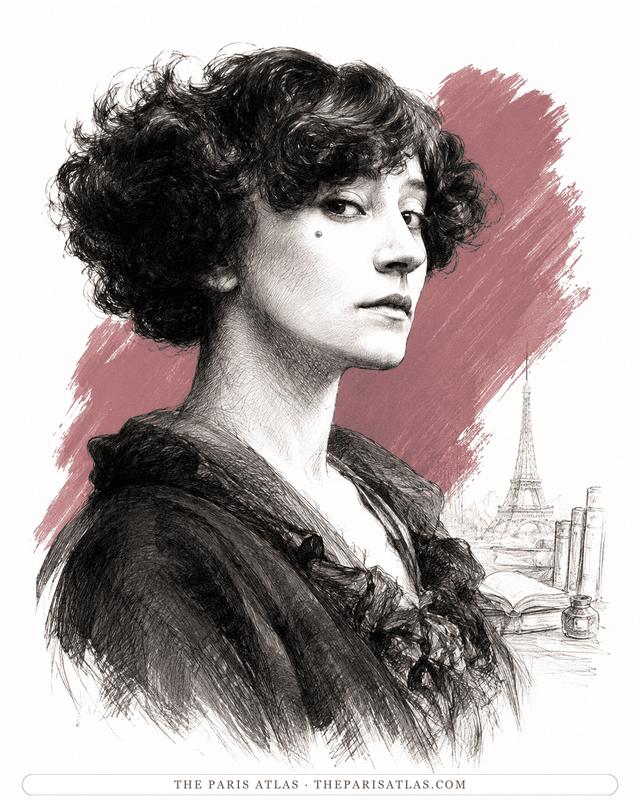
Both writers use style, performance, and social comedy to examine the roles assigned to women, artists, and people whose private lives do not fit public rules.
View author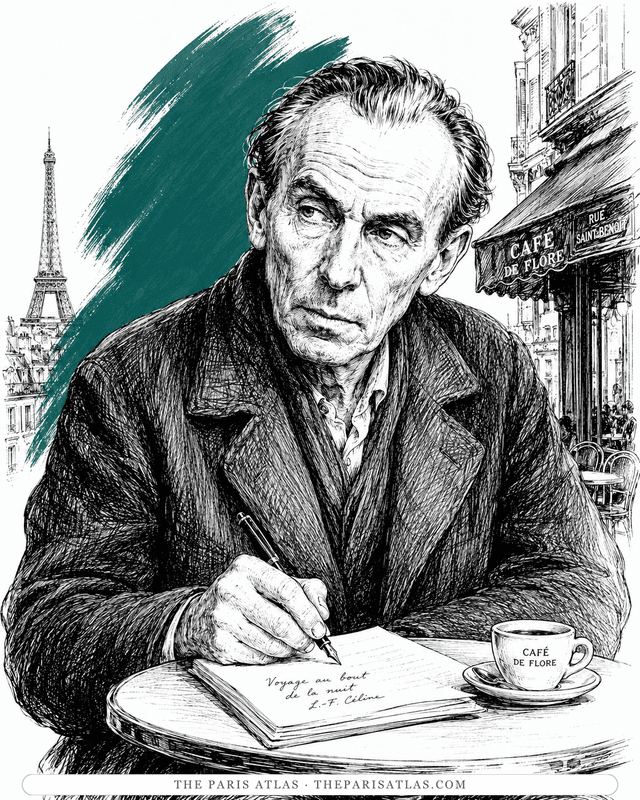
The doctor of the Paris slums who wrote the century's blackest, funniest novel — and changed the sound of French prose.
View author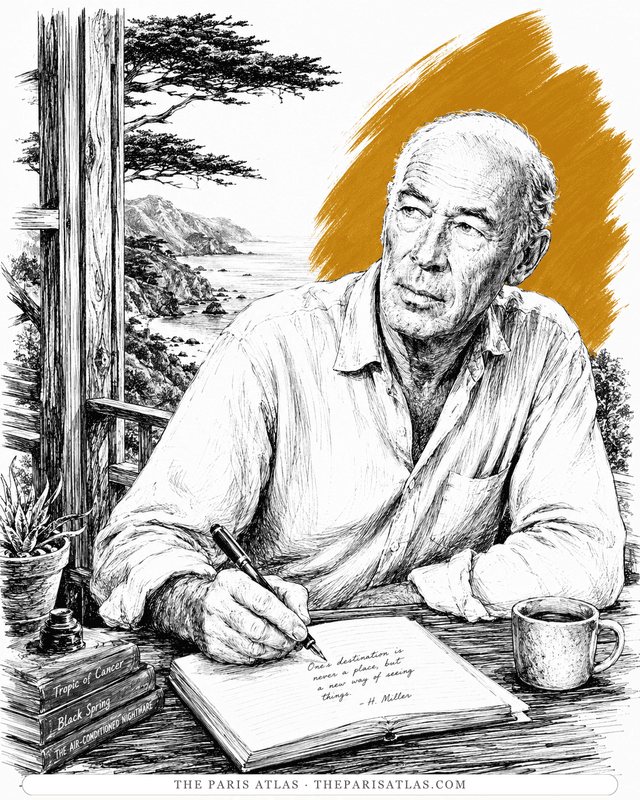
The Brooklyn dropout who arrived in Paris broke at thirty-eight and wrote the exuberant, banned books that ended American censorship.
View authorThe sources below include the primary text, editions, scholarship, archival materials, and other records that informed this page. They document The Sphinx, its publication, and its place in literary history.


The primary text represented by this page, used for descriptions of the work’s contents and for any quoted passages shown here.
Complete poem in the Musson collected-text transcription; not an inspection of the original Ricketts edition or artwork.

Used to place The Sphinx within Oscar Wilde's published work and verify its bibliographic context.
Used for independent biographical, archival, or historical context surrounding Oscar Wilde's career and the period in which The Sphinx appeared.
Used to cross-check authorship, chronology, and the work's place in Oscar Wilde's wider catalogue.
Used to verify Oscar Wilde's bibliography and place The Sphinx within the broader chronology of Oscar Wilde's career.
The primary text is the baseline reference for every book page. Additional references document publication history, interpretation, and historical context where that evidence is available.
 Explore more resources