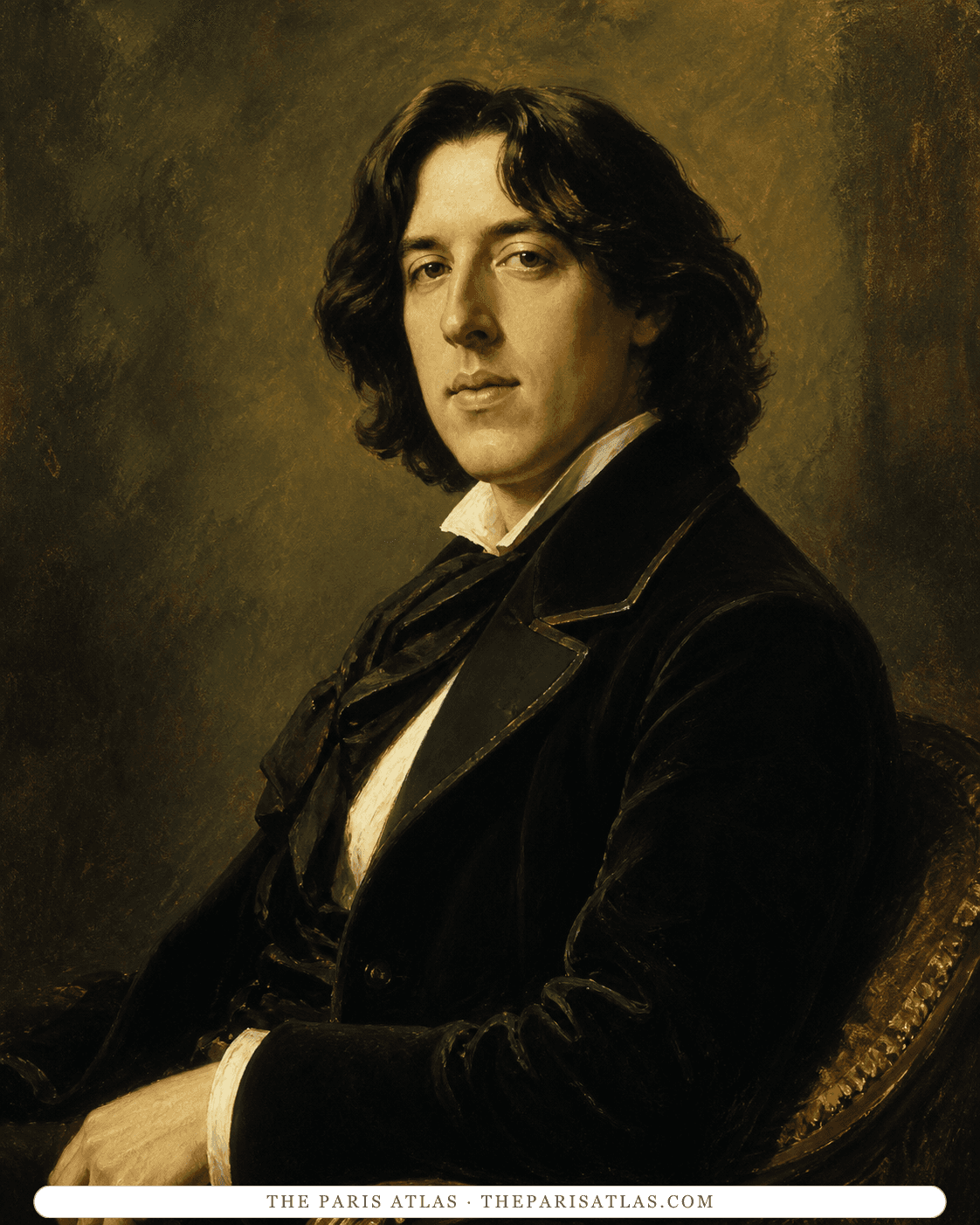
Oscar Wilde
Sontag dedicated "Notes on 'Camp'" (Partisan Review, 1964) to Oscar Wilde and quoted him throughout it, so the essay that made her famous reads as an argument conducted with a writer dead sixty-four years.
American essayist and critic who won a fellowship to Oxford in 1957, hated it, moved to Paris by Christmas, and spent the year that turned a philosophy graduate student into a writer. She came home in 1958, asked her husband for a divorce at the airport, and within six years had written "Notes on 'Camp'".
Susan Sontag was the essayist who taught American readers to take seriously the things their critics ignored: photographs, camp taste, science-fiction films, the language people use about their own diseases. Her first collection, Against Interpretation, appeared in 1966; On Photography followed in 1977 and Illness as Metaphor in 1978, and she stayed a public argument for the next four decades.
The turn happened in Paris. In 1957 she was a married philosophy student at Harvard with a five-year-old son when she won a fellowship to Oxford. She disliked Oxford's treatment of women, and by Christmas she had moved to the Left Bank, where she rejoined an old lover, went to the cinema and to French lectures, and filled the notebooks later published as Reborn. She returned to the United States in 1958 and ended her marriage the day she landed. She is buried in Paris, and a street in the 19th arrondissement carries her name.
She was born Susan Rosenblatt in New York City on 16 January 1933, the daughter of a fur trader who died when she was five. Her mother Mildred took the family to Miami and then to Tucson, and on to Los Angeles in 1945, where she married a decorated serviceman called Nathan Sontag; Susan was never formally adopted but took his name. She spent a semester at the University of California, Berkeley, and in 1949, at sixteen, was admitted to the University of Chicago.[1]
At Chicago she walked late into a class on Kafka taught by a young sociologist named Philip Rieff. He asked her name at the end of the hour, and they married ten days later. Their son David was born in 1952. She took a master's degree in philosophy at Harvard, and in 1957 won a fellowship to spend a year at St Anne's College, Oxford, where she sat in on a seminar by the philosopher J. L. Austin and found the university's attitude to women intolerable. By Christmas she had gone to Paris instead.[1]
Paris was cheap in 1957, and it held a large American colony. Sontag fell in with the writers around the Paris Review, the literary quarterly founded in the city five years earlier. Through them she met the writer Alfred Chester, who introduced her to Robert Silvers; five years later Silvers helped launch the New York Review of Books and gave her the platform that carried her essays for the rest of her life.[2]
The reason she stayed was Harriet Sohmers. They had met at the Berkeley campus book exchange in 1949, when Sohmers was several years older and knew a city Sontag had only read about: she took the sixteen-year-old across to the lesbian bars of San Francisco and became her first lover. Sohmers was now living in Paris, and the affair started again. It occupies more pages of the Paris notebooks than anything else in them.[3]
The rest of the year went into looking and listening. She heard Simone de Beauvoir speak at the Sorbonne and was put off by her high voice. She called on the American poet Allen Ginsberg and his partner Peter Orlovsky at their hotel on the rue Gît-le-Cœur, the cheap Latin Quarter lodging house the Beat writers had taken over. She went to her first Paris party at the home of the philosopher Jean Wahl. Above all she went to the cinema, and to French philosophy and fiction, with the seriousness of someone laying in supplies: the taste for European film that runs through all her later criticism was assembled here.[2]
An aristocracy of sensibility as well as an aristocracy of intellect. Don't like at all, at all being treated as a plebeian![2]
The affair broke down when Sontag wanted Sohmers more than Sohmers wanted her, and the money ran out. She sailed for America in 1958. Philip Rieff met her at the airport, and she told him before they got into the car that she wanted a divorce.[3]
She recovered custody of David after a fight, refused alimony and child support, took an editorial job at the magazine Commentary, moved into a small Manhattan apartment and started writing. Her first novel, The Benefactor, came out in 1963. The Paris notebooks stop in late 1963, on the edge of the essay that made her famous.
"Notes on 'Camp'" appeared in the autumn of 1964 in Partisan Review, then the most serious literary magazine in America. Written as a run of numbered notes rather than an argument, it described a way of enjoying things that were extravagant, artificial and slightly absurd — a sensibility, Sontag wrote, whose bearers were mainly homosexuals, at a point when that could not be said neutrally in a general magazine. She dedicated it to Oscar Wilde and quoted him all the way through. Time magazine picked it up, and Sontag became a public figure at thirty-one.[4]
The books that followed set the pattern of taking a subject nobody thought needed an argument and giving it one:[4]
Sontag was diagnosed with metastatic breast cancer in the 1970s and went back to Paris for experimental treatment. Illness as Metaphor (1978) was written under that diagnosis. Its argument is a plain one made at length: tuberculosis and cancer have been loaded with meanings about the patient's character, the passionate temperament or the repressed one, and those meanings punish the sick a second time, on top of the disease. AIDS and Its Metaphors (1989) did the same work for a new epidemic.
She survived that cancer and a second one, and in 1998 was diagnosed with a rare uterine cancer, which killed her on 28 December 2004, at seventy-one. Her son David Rieff published her Paris-era journals four years later as Reborn.
In April 1993 Sontag visited Sarajevo, a city under siege. She decided that visiting was not enough, went back in July, and put on a play at the Youth Theatre: Samuel Beckett's Waiting for Godot, the tragicomedy about two men waiting by a road for someone who never comes, which had premiered in Paris in 1953.
The city's electricity had been cut off. Rehearsals ran by candle and flashlight, with actors who arrived exhausted from queuing for water and crossing streets covered by snipers. Sontag used Act I only and tripled the two leads, so that three pairs of Vladimir and Estragon, Beckett's two waiting men, were on stage at once; the production opened on 17 August 1993 and played two afternoon performances a day. She wrote her own account of it that October for the New York Review of Books.
She died in New York, and she is buried in Paris. "My mother lies buried in the Montparnasse Cemetery in Paris," David Rieff wrote in the first line of the epilogue to his 2008 memoir about her illness and death, which puts her a short walk from the quarter she had come to as a graduate student fifty years earlier.
The city added a street to the record in 2014. By a municipal deliberation of 17 June that year, a seventy-eight-metre way in the 19th arrondissement, running from the rue Cesária Évora to number 189 boulevard Macdonald in the Pont-de-Flandre quarter, was named the passage Susan Sontag. The city's register describes her, in the flat register of official French, as an American essayist and novelist, New York 1933 to New York 2004.
Born Susan Rosenblatt in New York City on 16 January.
Meets Harriet Sohmers at the Berkeley campus book exchange; enters the University of Chicago the same year, at sixteen.
Marries the sociologist Philip Rieff ten days after walking into his class on Kafka. Their son David is born in 1952.
Wins a fellowship to St Anne's College, Oxford. She sits in on J. L. Austin's seminar, dislikes the place, and leaves for Paris by Christmas.
The Left Bank year: Harriet Sohmers, the Paris Review circle, Beauvoir at the Sorbonne, Ginsberg on the rue Gît-le-Cœur, and the cinema. She sails home and asks Philip Rieff for a divorce at the airport.
Her first novel, The Benefactor, is published. Robert Silvers, whom she met through the Paris circle, launches the New York Review of Books the same year.
"Notes on 'Camp'" appears in Partisan Review, dedicated to Oscar Wilde, and makes her famous.
Against Interpretation collects the essays of the early 1960s.
On Photography, six essays on the camera, published without a photograph in it.
Illness as Metaphor, written under a diagnosis of metastatic breast cancer for which she sought experimental treatment in Paris.
Directs Act I of Beckett's Waiting for Godot at the Youth Theatre in besieged Sarajevo; it opens on 17 August and plays two afternoon performances a day.
Dies in New York on 28 December of a uterine cancer diagnosed in 1998, and is buried in the Montparnasse cemetery in Paris.
David Rieff publishes his mother's journals of 1947–1963 as Reborn, which is where the Paris year survives in her own words.
Paris names the passage Susan Sontag in the 19th arrondissement, by municipal deliberation of 17 June.
Sontag dedicated "Notes on 'Camp'" (Partisan Review, 1964) to Oscar Wilde and quoted him throughout it, so the essay that made her famous reads as an argument conducted with a writer dead sixty-four years.

In July 1993 Sontag went into besieged Sarajevo and directed Beckett's Waiting for Godot at the Youth Theatre, rehearsing by candle and flashlight in a city whose electricity had been cut off. She staged Act I only, with three pairs of Vladimir and Estragon, and wrote her own account of it for The New York Review of Books that October. The play was her answer to the question of what a writer could usefully do in a city under fire.
An American essayist, critic and novelist, born in New York in 1933 and died there in 2004. She is best known for "Notes on 'Camp'" (1964), the essay collection Against Interpretation (1966), On Photography (1977) and Illness as Metaphor (1978), and for public positions taken over four decades, including directing a play in besieged Sarajevo in 1993.
From around Christmas 1957 until 1958. She had won a fellowship to St Anne's College, Oxford, disliked the university's treatment of women, and moved to the Left Bank instead, staying until her money ran out. She came back repeatedly afterwards, including in the 1970s for experimental cancer treatment.
She rejoined Harriet Sohmers, her first lover, and the affair takes up more of her Paris notebooks than anything else. She fell in with the American writers around the Paris Review, met Alfred Chester and through him Robert Silvers, later the founding editor of the New York Review of Books, heard Simone de Beauvoir lecture at the Sorbonne, called on Allen Ginsberg at his hotel on the rue Gît-le-Cœur, and spent her time on French cinema, philosophy and fiction. The European film taste that runs through her criticism was formed there.
An American writer several years older than Sontag, who met her at the University of California, Berkeley book exchange in 1949, took the sixteen-year-old into the lesbian bars of San Francisco, and became her first lover. Sohmers was living in Paris when Sontag arrived in 1957 and they resumed the relationship; it ended when Sontag wanted it more than Sohmers did.
Reborn: Journals and Notebooks, 1947–1963 is the first volume of Sontag's diaries, published in 2008 and edited by her son David Rieff. It covers her adolescence, the marriage to Philip Rieff, the Berkeley and San Francisco discoveries of 1949, and the Paris year in her own words, and it stops in late 1963, just before "Notes on 'Camp'".
It is a description, written as a run of numbered notes rather than a continuous essay, of a particular taste for the extravagant, the artificial and the failed-serious — the enjoyment of things precisely because they go too far. Sontag published it in Partisan Review in the autumn of 1964, dedicated it to Oscar Wilde, quoted him throughout, and said outright that the sensibility belonged mainly to homosexuals. It made her a public figure almost immediately.
She had visited the besieged city in April 1993 and decided that witnessing it was not enough. She went back in July and staged Samuel Beckett's play at the Youth Theatre, rehearsing by candlelight in a city whose electricity had been cut off. She used Act I only, with three pairs of Vladimir and Estragon, and it opened on 17 August 1993, playing two afternoon performances a day.
She died of a rare uterine cancer, diagnosed in 1998, on 28 December 2004 in New York, aged seventy-one, having already survived metastatic breast cancer in the 1970s and a second cancer after that. She is buried in Paris: her son David Rieff opens the epilogue of his 2008 memoir Swimming in a Sea of Death with the sentence "My mother lies buried in the Montparnasse Cemetery in Paris." The city also named a short street after her in 2014, the passage Susan Sontag, off the boulevard Macdonald in the 19th arrondissement.
Influenced by
Sontag dedicated "Notes on 'Camp'" (Partisan Review, 1964) to Oscar Wilde and quoted him throughout it, so the essay that made her famous reads as an argument conducted with a writer dead sixty-four years.
Influenced by · 1993
In July 1993 Sontag went into besieged Sarajevo and directed Beckett's Waiting for Godot at the Youth Theatre, rehearsing by candle and flashlight in a city whose electricity had been cut off. She staged Act I only, with three pairs of Vladimir and Estragon, and wrote her own account of it for The New York Review of Books that October. The play was her answer to the question of what a writer could usefully do in a city under fire.
The sources below include biographies, scholarly essays, interviews, and primary materials that informed this page. They reflect both the historical record and ongoing critical conversations about Susan Sontag and their work.


Sontag's own account of directing Waiting for Godot under siege, published two months after the opening.

Her son's memoir of her last illness, which opens its epilogue at her grave in the Montparnasse cemetery.
The City of Paris street register, for the passage Susan Sontag in the 19th arrondissement and the 2014 deliberation that named it.

Scholarly account of the Paris years of three American women, Sontag among them; further reading rather than a source for any single line here.
These references anchor the page in the documented record and in the scholarly conversations around Susan Sontag. Every claim on this page traces back to one or more of the works listed here.
 Explore more resources