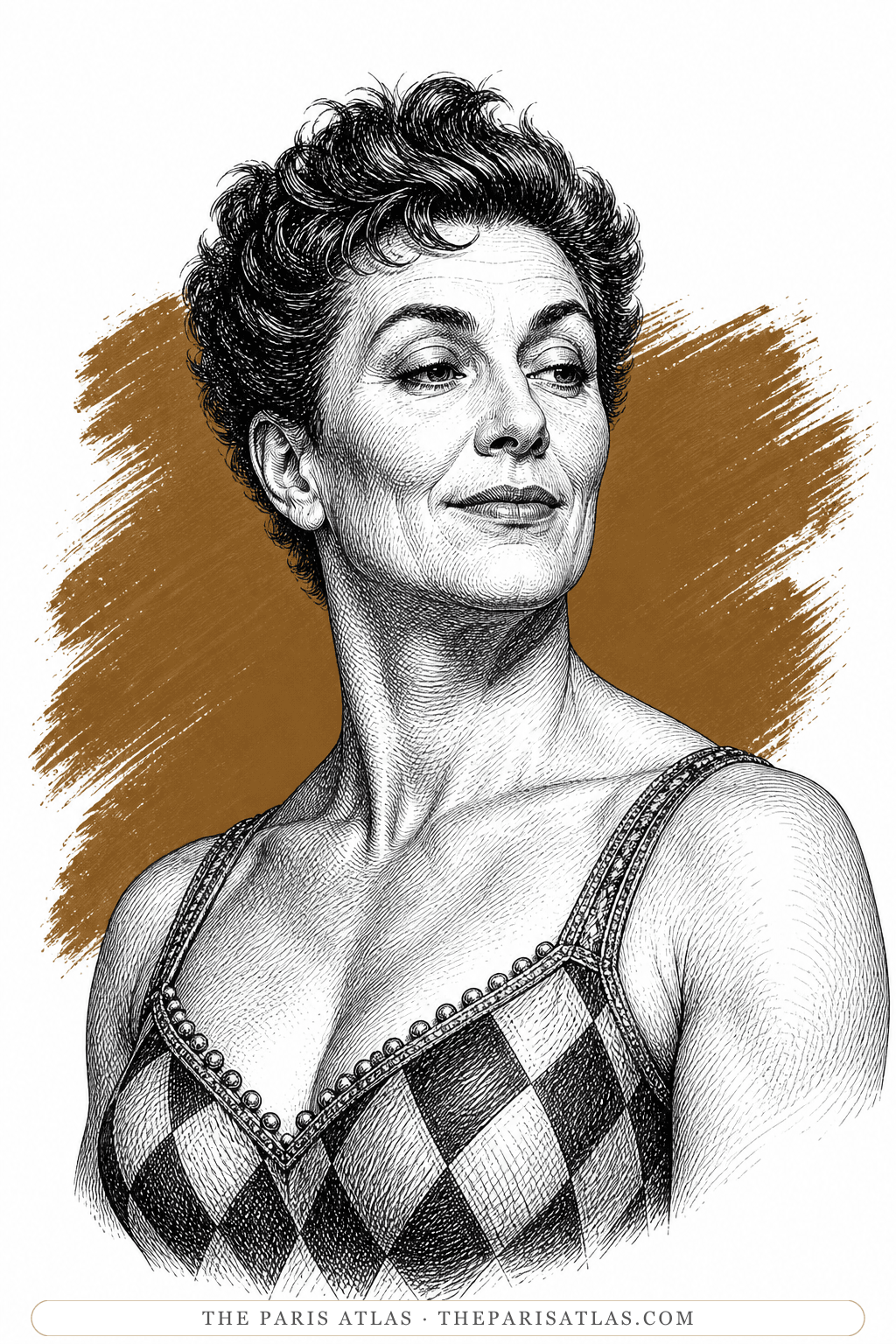
Frau Mann
A trapeze artist billed as the Duchess of Broadback, who gives Felix Volkbein his first invitation into titled company.
An evening out at somebody else's expense. Her line to Felix in Berlin is that they are going to be amused, that the count is something that must be seen, and that they will have dinner and champagne.
The book

At a glance
- The trapeze artist of the first chapter, back briefly in Vienna at the end of Felix's story
- The Duchess of Broadback
- The trapeze, three performances a day
- Berlin when Felix meets her; Vienna when he sees her last
Who they are in the book
Spoiler-freeFrau Mann performs on the trapeze under the stage title Duchess of Broadback, and she is the first person in Nightwood, the 1936 novel by the American writer Djuna Barnes, to do Felix Volkbein a favour. Felix collects titles, real or invented, and Frau Mann's is one of the invented ones. She is in Berlin when he meets her, and she offers to take him to the house of a count she says was somewhat mixed up with her in the past.
Barnes describes her almost entirely through her body and her costume, and the description is one of the passages the novel is best known for. Her work has reshaped her: the bar is in her wrists, the tan bark is in her walk, and her tights have stopped being a covering and become her skin. She turns up again years later in Vienna, drinking beside Felix and holding a rug for his son's feet.
How Frau Mann Is Portrayed
- What the trapeze has made of herThree shows a day, and the work has gone into the body: the specialised tension of aerial workers in her legs, something of the bar in her wrists, the tan bark in her walk. Barnes's costume description runs into the same point: a bodice of red and yellow lozenges, red tights, laced boots, faded with the reek of the day's third performance, the pattern running through her the way the design runs through hard holiday candies. The tights have stopped being a covering and become her flesh, so that she is as unsexed as a doll.
- The introduction she arrangesAn audience with Count Onatorio Altamonte, an Italian she says is related to every nation, which she thinks should please Felix. The count arrives late, looks his guests over through a magnifying glass, throws out the girl he came in with and then throws out everybody else.
- What she says about titlesAsked in the cab afterwards whether the count is really a count, she puts the question back to Felix. Is she what she says she is, is he, is the doctor? Then she puts her hand on his knee.
- How the doctor leaves herIn a Berlin café at the end of the first chapter. She has asked him to listen to the music, he has talked instead until she falls asleep, and then he tiptoes to the door, tells the waiter in bad German that the lady will pay, and goes out into the night.
- Vienna, years laterOpulent and gay in the seat opposite Felix and his son, holding a rug for the boy's feet on the ride into the city, and no bad second to Felix in the matter of drink, gripping her beer mug, laughing and talking loudly while his coins roll under the musicians' feet.
If you like Nightwood


If you like Djuna Barnes
Explore authors with a similar voice, perspective, and influence.

Henry Miller
The Brooklyn dropout who arrived in Paris broke at thirty-eight and wrote the exuberant, banned books that ended American censorship.
View author
Louis-Ferdinand Céline
The doctor of the Paris slums who wrote the century's blackest, funniest novel — and changed the sound of French prose.
View author
Martha Gellhorn
War correspondent who covered the Spanish Civil War, D-Day, and conflicts across five more decades; Hemingway's third wife, 1940–1945.
View author