
Claudine at School
The first novel — the Burgundy schoolgirl Claudine was before the city.
Read our take
by Colette
Claudine leaves Burgundy for the capital, and the schoolgirl's sharp eye is turned on Parisian society and her own heart.
The second Claudine novel moves the heroine from the village to Paris, where she and her father settle after leaving Montigny. Ill at first, then recovering, Claudine navigates the manners, flirtations, and social theater of the capital, and meets Renaud, the older man she will marry. Published in 1901 under Willy's name, it turns Claudine from a provincial diarist into a commentator on urban life. (The full plot is below.)
Claudine in Paris takes the voice that made the first book famous and gives it a new subject: the city. Where Claudine at School was rooted in one village year, the sequel is about displacement — a sharp country girl set down in Paris and learning to read a more consciously performed society. The move mirrors Colette's own transplanting from Burgundy to the capital after her marriage.
The novel keeps the quick, satirical first-person energy of its predecessor while widening its social field. Claudine observes her relatives, the young men and women of Renaud's circle, and the codes of Parisian sociability, calibrating her independence against them. It is the volume in which the series turns decisively from schoolgirl scandal toward the adult questions of desire and marriage the later books pursue.
Its fame spread quickly beyond the page. A stage adaptation reached the Paris theater in 1902, with the actress Polaire as Claudine — cropped hair, white collar, schoolgirl look — an image Willy merchandised into a phenomenon.
Claudine and her father, the slug-obsessed scholar, leave Montigny for an apartment in Paris. Uprooted and unwell, Claudine spends the early part of the book recovering and adjusting to a city that is nothing like her Burgundy village. As her health returns, so does her curiosity, and she begins to explore the social world around her with the same satirical attention she once trained on the school.
Through her relatives she enters the orbit of Renaud, a worldly, indulgent older man, and his son Marcel, a young dandy whose tastes run to other young men. Claudine flirts, observes, and measures the seductions of modern Parisian life against her own strong sense of herself. Renaud becomes the center of the book's romantic interest, and the courtship moves toward the marriage that the next novel will examine.
The novel ends with Claudine engaged to Renaud, and the book is franker about how that happens than a summary usually is. She refuses to marry him and offers to be his mistress instead, so that nobody can say she was after his money. He tells her it is his wife or nothing, walks past her into her father's study to ask for her while she begs him not to, and that settles it. She had already written, the morning after he first kissed her, that what she had been looking for without knowing it was a master. The disillusionments of that choice are the subject of Claudine Married.
Recovery first appears as renewed attention to small things: morning light, food, furniture and sounds from the courtyard. Claudine’s curiosity reaches toward Paris before she is ready to move freely through it. The violets complicate that outward movement. Their scent and touch abruptly recover Montigny, including the schoolroom’s stale air as well as the woods. Home is therefore more than a pretty landscape contrasted with an ugly city. It is a dense store of familiar sensations, capable of making the recovering narrator feel displaced all over again.
At the concert, Claudine’s unfamiliarity gives familiar rituals a fresh awkwardness: the audience makes noise, the room smells unpleasant, and the music moves her more deeply than she wants to reveal. Renaud offers a guide to the social spectacle, but his commentary also puts him in charge of what she is shown. Claudine does not surrender her judgment; she has already formed an opinion of Maugis’s writing. Yet the men can still amuse themselves by treating her as a child. Her initiation combines discovery with an unequal distribution of authority.
The schoolgirl's satirical voice widens to take in Parisian society, flirtation, and social theater — the series growing up in real time.
Claudine's meeting with Renaud and their engagement launch the marriage plot the next novel dissects.
A country girl reading the capital's codes gives Colette a fresh, unsentimental view of the city she had recently joined.

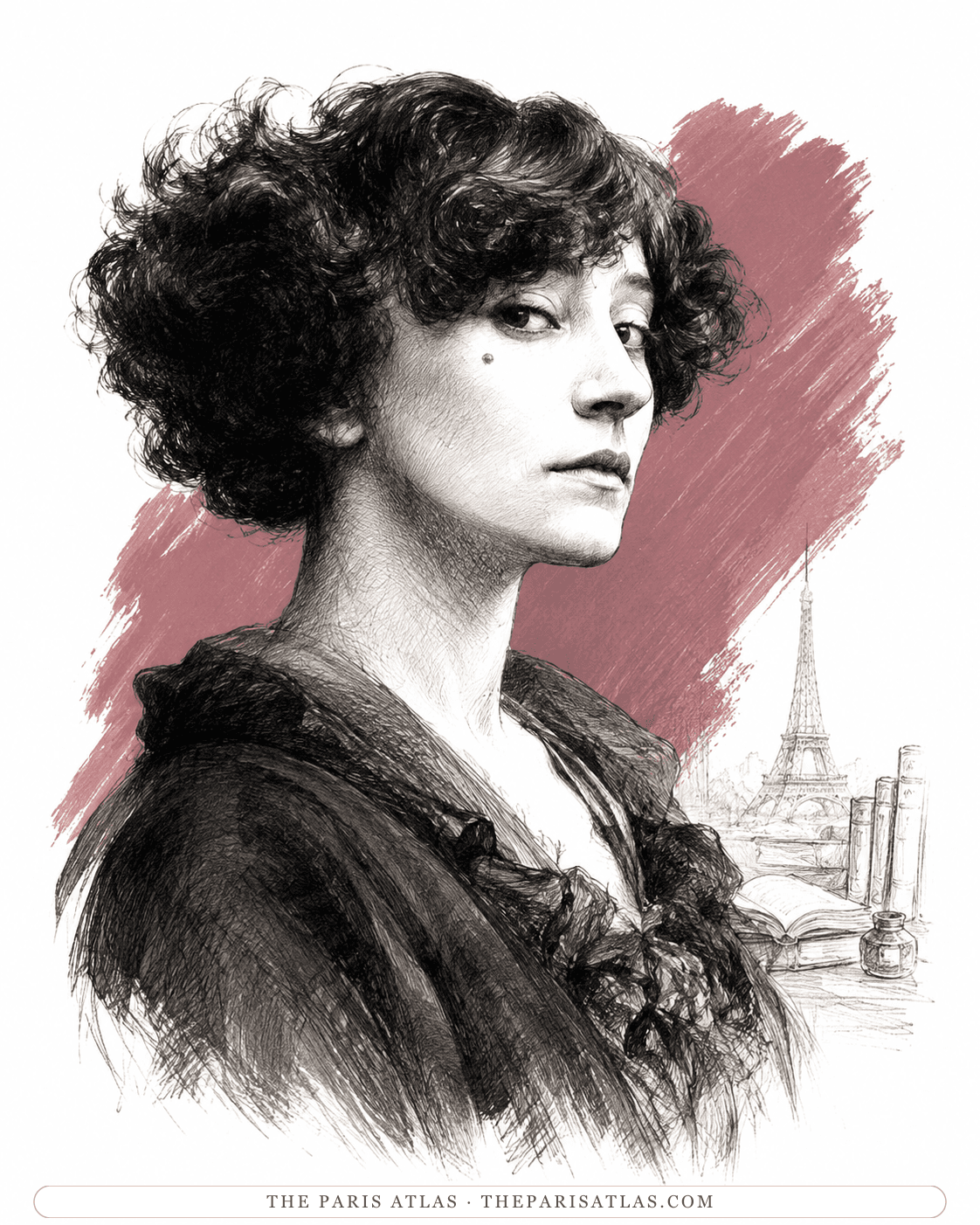
The Burgundy schoolgirl transplanted to Paris at seventeen: bored, watchful, and engaged by the end of the book to a man of forty who is also, by marriage, her uncle.
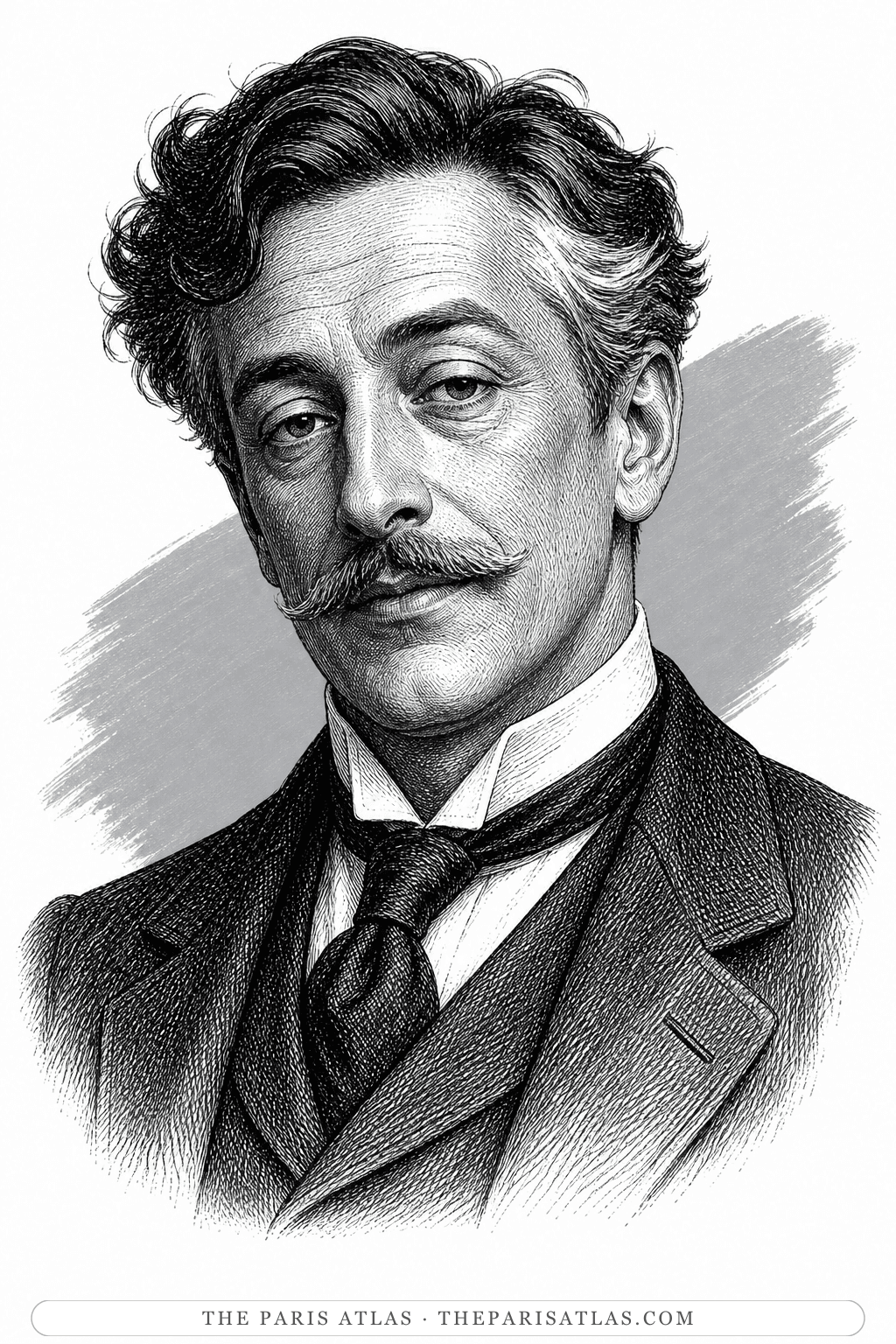
The worldly, indulgent older man Claudine meets and agrees to marry — the center of the book's romantic turn.
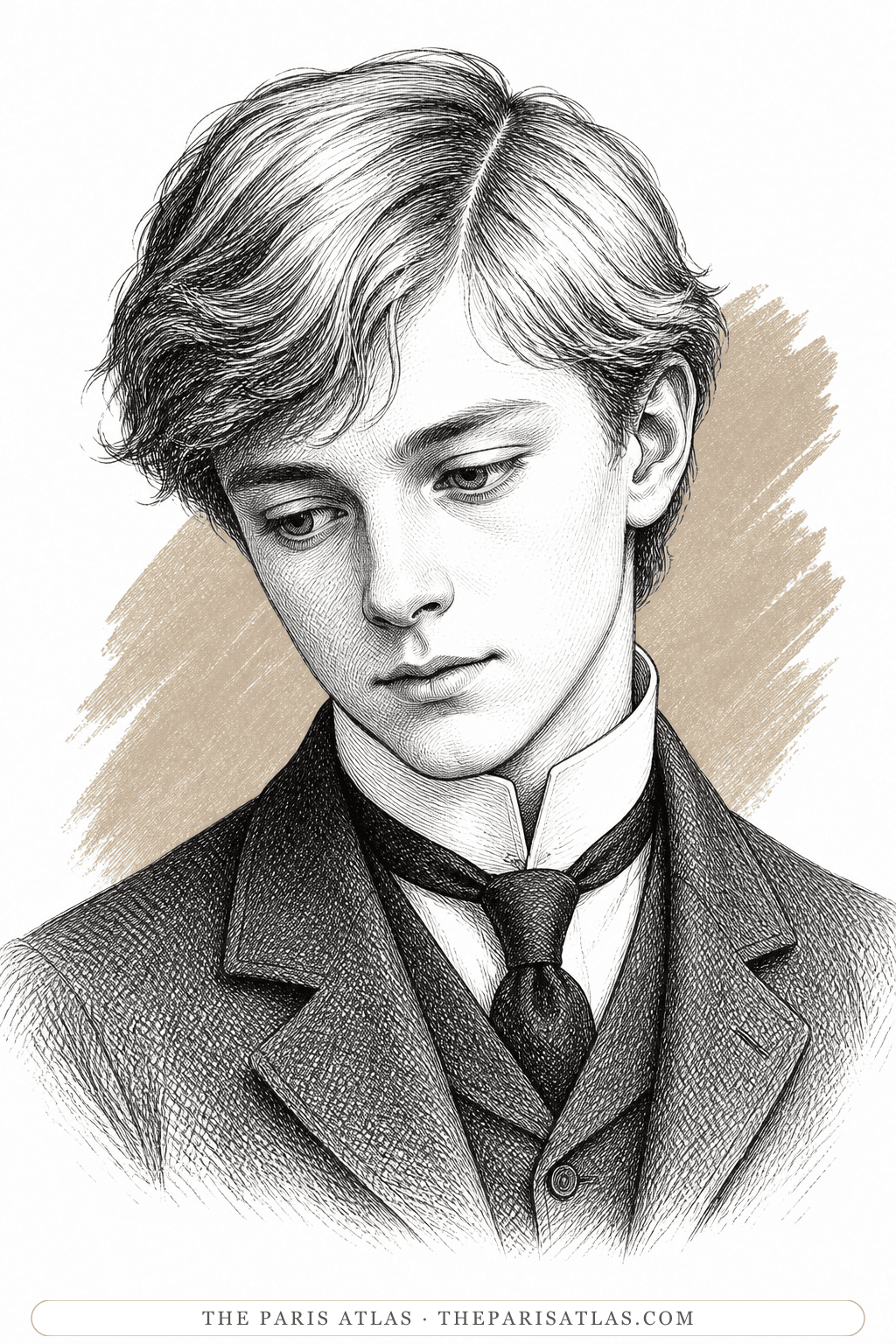
Renaud's son, a young dandy whose tastes run to other young men — Claudine's ambiguous new companion in the city.
1900
Claudine at School establishes the narrator and provincial world that the Paris sequel leaves behind.
1901
Claudine in Paris is published under Willy's name, continuing the series.
1902
A stage adaptation opens in Paris with Polaire as Claudine, fuelling the Claudine craze.
The first novel — the Burgundy schoolgirl Claudine was before the city.
Read our take

Another young woman navigating Parisian society and the men who would arrange her future.
Read our takeColette. Like the first Claudine novel, it was published in 1901 under her husband Willy's name, but Colette is its author.
Claudine and her father move from their Burgundy village to Paris, where Claudine adjusts to city life, observes Parisian society, and meets Renaud, the older man she agrees to marry.
It is the second of the four Claudine novels, after Claudine at School and before Claudine Married and Claudine and Annie.
It helps, since the sequel continues Claudine's story and voice, but Claudine in Paris can be read on its own as the volume where she comes to the city.
Yes. A 1902 stage version starred the actress Polaire as Claudine, whose cropped hair and schoolgirl collar became part of the character's merchandised image.
Explore authors with a similar voice, perspective, and influence.

The Brooklyn dropout who arrived in Paris broke at thirty-eight and wrote the exuberant, banned books that ended American censorship.
View author
The doctor of the Paris slums who wrote the century's blackest, funniest novel — and changed the sound of French prose.
View author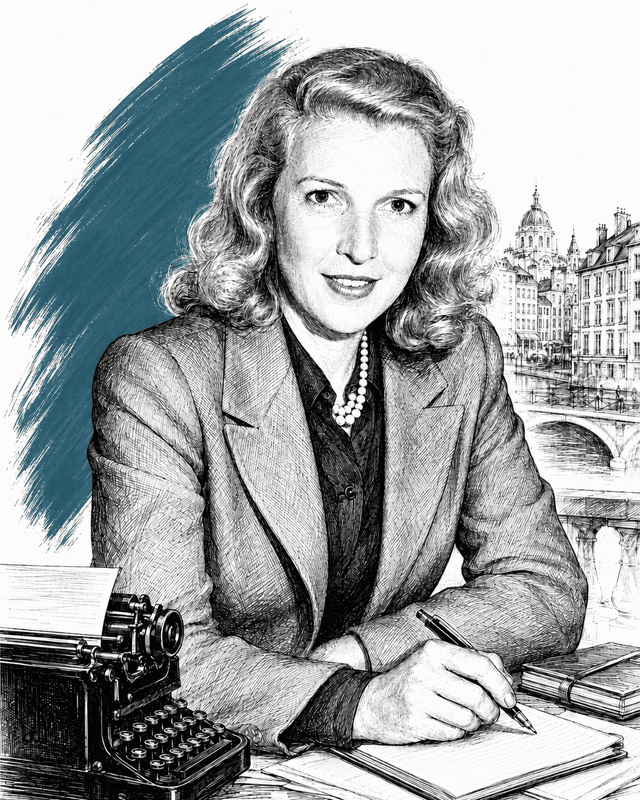
War correspondent who covered the Spanish Civil War, D-Day, and conflicts across five more decades; Hemingway's third wife, 1940–1945.
View authorThe sources below include the primary text, editions, scholarship, archival materials, and other records that informed this page. They document Claudine in Paris, its publication, and its place in literary history.


The primary text represented by this page, used for descriptions of the work’s contents and for any quoted passages shown here.
Primary French text for the convalescence passage in Chapter II and the Châtelet concert and interval in Chapter XI. Wikisource identifies the Ollendorff 1903, 92nd edition; the new analysis does not claim to compare the 1901 first edition or Antonia White’s English translation, or to document actual events in Colette’s life.
Used to place Claudine in Paris within Colette's published work and verify its bibliographic context.

Used for independent biographical, archival, or historical context surrounding Colette's career and the period in which Claudine in Paris appeared.
Used to cross-check authorship, chronology, and the work's place in Colette's wider catalogue.
Used to verify Colette's bibliography and place Claudine in Paris within the broader chronology of Colette's career.
The primary text is the baseline reference for every book page. Additional references document publication history, interpretation, and historical context where that evidence is available.
 Explore more resources