Film · 1949
Gigi
The first screen version of Colette's 1944 novella, adapted by Pierre Laroche and directed by Jacqueline Audry, with Danièle Delorme in the title role.

by Colette
The girl raised to be a rich man's mistress, and the man who changes the terms himself — Colette's most adapted story.
A short novel Colette wrote in occupied Paris and first published in Switzerland in 1944. Gilberte — Gigi — is a Belle Époque adolescent being trained by her grandmother and great-aunt, both retired courtesans, for the family trade: how to choose cigars and jewels, hold a fork, and be kept in style by a wealthy man. The wealthy man in question is Gaston Lachaille, a sugar heir and old family friend. What Gigi does with the arrangement made for her is the whole point of the book. Better known abroad through its adaptations than in Colette's own prose, it is one of her rare stories of requited love. (A novella; the full plot is below.)
Colette wrote Gigi in 1942, at the height of the German occupation, and wartime paper shortages sent it abroad to be printed: the first edition appeared in Lausanne in 1944, from La Guilde du Livre, in a small run. The first Paris edition followed in 1945. In France it arrived among other stories — the collection Gigi et autres nouvelles gathered it with L'Enfant malade, La Dame du photographe, and Flore et Pomone — and English readers later met it in an omnibus with two other Colette novels, translated by Roger Senhouse in the early 1950s.
The story's later fame came almost entirely from the stage and screen. A French film directed by Jacqueline Audry, with Danièle Delorme in the title role, appeared in 1949. Then, in 1951, Anita Loos adapted it for Broadway — and Colette, watching filming on the Riviera, picked the unknown Audrey Hepburn for the lead, a role that introduced Hepburn to American audiences. The 1958 MGM musical, directed by Vincente Minnelli with Leslie Caron, Louis Jourdan, and Maurice Chevalier, won all nine of its Academy Award nominations, including Best Picture, and made Gigi Colette's most familiar title outside France.
That fame carries a hazard worth naming. The songs, the narrator Honoré, and the number 'Thank Heaven for Little Girls' belong to the 1958 film, not to Colette's book. The novella is shorter, has no music, and turns on a single quiet reversal that the musical keeps but surrounds with spectacle.
The setting is Paris around 1900. Gigi lives with her grandmother, Madame Alvarez, a former courtesan who is raising her in the family profession, and is sent regularly to her great-aunt Alicia, a more successful retired courtesan who teaches the finer points: how to eat ortolans and lobster, tell a first-water diamond from a flawed one, and manage the men who would pay for such things. Gigi is bright, unpolished, and mostly bored by the lessons.
Into the household comes Gaston Lachaille, heir to a sugar fortune, a family friend who is rich, restless, and tired of the public affairs the newspapers track. He is fond of Gigi as a child is fond — cards, games, teasing — until he is not. The women recognize the opening and begin negotiating the terms under which Gigi would become his mistress: the settlement, the arrangement, the discreet economy their whole training exists to serve.
Gigi refuses the arrangement first. Told what is expected of her, she rejects the role the family has spent years preparing her for and will not be handed to Gaston as a kept mistress on negotiated terms. Then, the next afternoon, she gives in — she tells him she would rather be unhappy with him than without him, and offers him her cheek. Marriage is never her idea and she never asks for it. It is only after that kiss that Gaston turns to her grandmother and asks for her hand, changing the terms himself. The book closes on the engagement.
Alicia teaches Gigi to see fine distinctions while limiting what she may do with that knowledge. Their shared admiration for an emerald allows genuine pleasure in beauty, but Gigi's preference for opals must yield to a performance calculated for men. Even an invented superstition is preferable, in Alicia's scheme, to independent taste. The lesson therefore joins expertise to dependence: knowing the value of a gift does not mean choosing the conditions under which it is offered. Gigi is being trained to judge objects more freely than her own future.
Gigi's refusal turns the household's lessons back against the arrangement they were meant to prepare. Knowledge of Gaston's public affairs lets her imagine the gossip and abandonment that the adults leave out of their promises. She distinguishes enjoying his company from accepting the future he offers. Her later decision to risk unhappiness with him complicates any simple victory: she changes her answer without asking for marriage. Gaston's final proposal is his initiative, not proof that her earlier resistance was a bargaining tactic or that the unequal choices were harmless.
Film · 1949
The first screen version of Colette's 1944 novella, adapted by Pierre Laroche and directed by Jacqueline Audry, with Danièle Delorme in the title role.
Play · 1951
Anita Loos's stage adaptation of the novella, opened on Broadway in November 1951 with Audrey Hepburn in the title role.
Film · 1958
The MGM musical from the novella, with Alan Jay Lerner's screenplay and lyrics, Frederick Loewe's score, and Leslie Caron as Gigi; directed by Vincente Minnelli.
The novella the 1958 film and the Broadway play were built on — tighter, wittier, and without the songs.
Most of Colette's fiction ends in loss or compromise. Gigi is the one where a young woman refuses the arrangement and wins on her own terms.
This is the story that put Audrey Hepburn on a Broadway stage, chosen by Colette herself.

The adolescent heroine, raised for the family trade and unimpressed by it — until she decides its terms are not hers to accept.
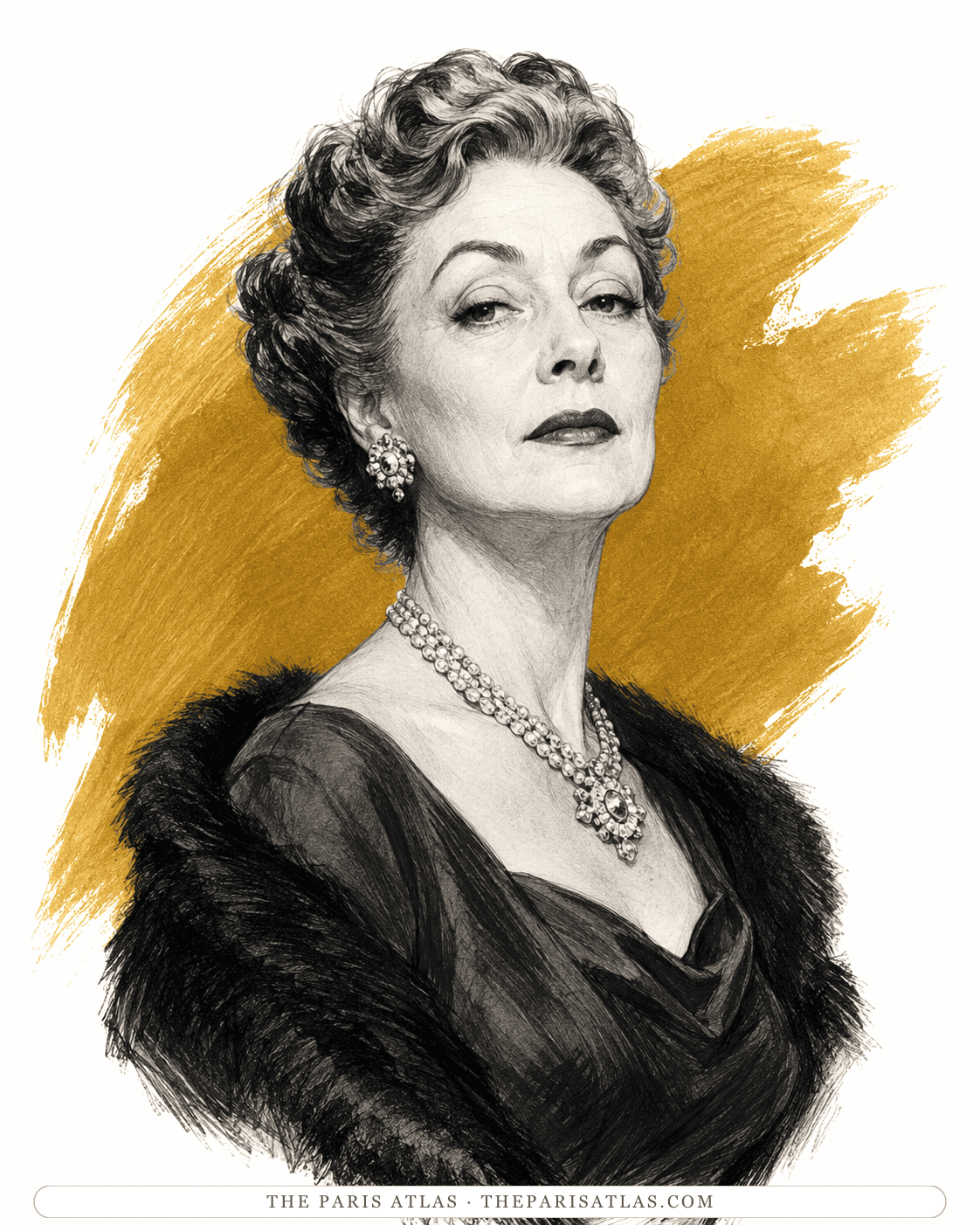
Gigi's grandmother, a retired courtesan managing the household and her granddaughter's education.
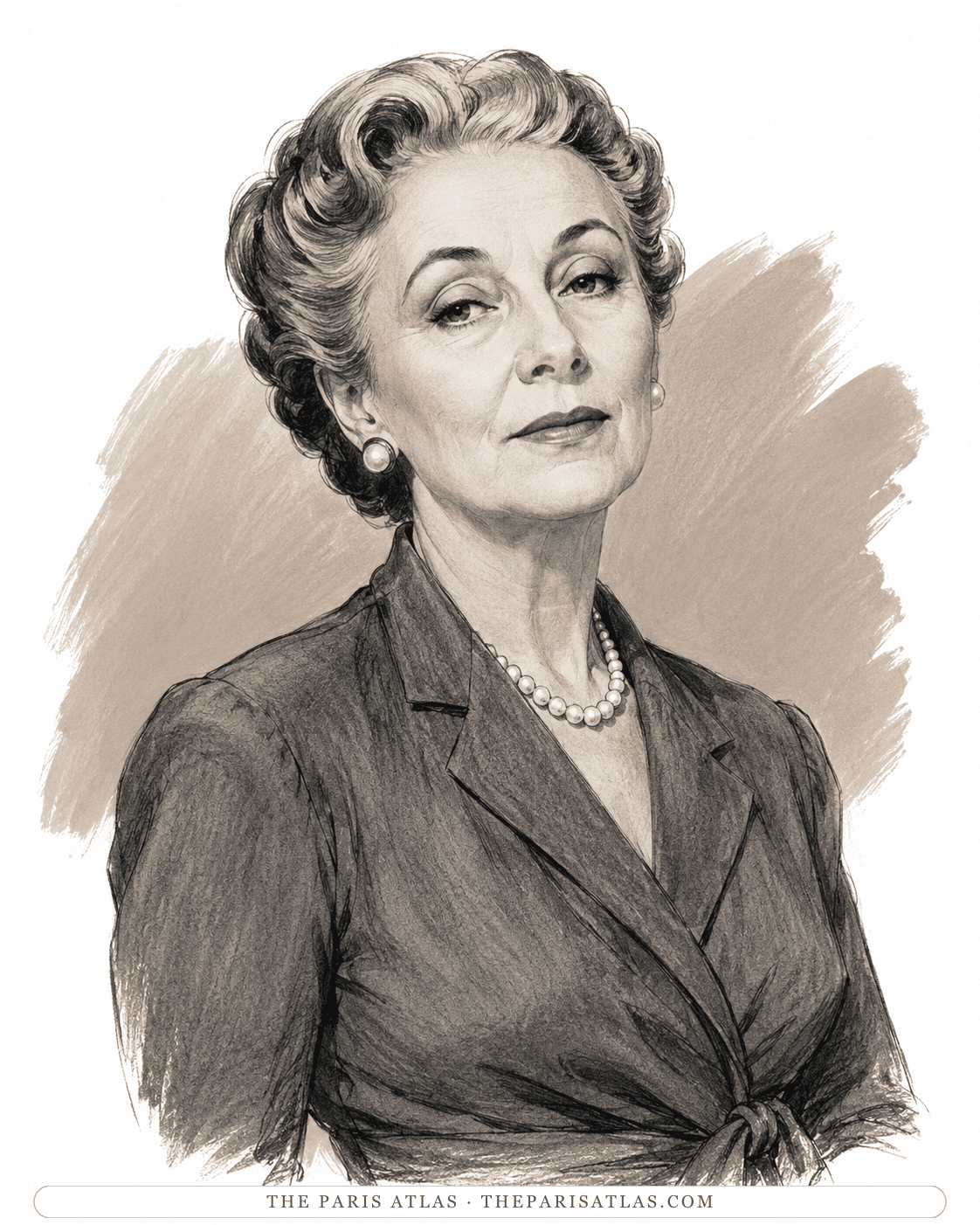
Gigi's great-aunt, the most successful courtesan of the family, who instructs her in jewels, food, and comportment.

A sugar-fortune heir and family friend, expected to take Gigi as his mistress — who proposes marriage instead.
1942
Colette writes Gigi in occupied Paris.
1944
First edition published in Lausanne by La Guilde du Livre, printed in Switzerland during the occupation.
1945
First Paris edition, from J. Ferenczi et fils.
1949
A French film adaptation, directed by Jacqueline Audry with Danièle Delorme, is released.
1951
Anita Loos's Broadway adaptation opens; Colette had chosen the unknown Audrey Hepburn for the title role.
1958
The MGM musical directed by Vincente Minnelli wins all nine of its Academy Award nominations, including Best Picture.

The same Belle Époque demi-monde, told as elegy instead of comedy — the courtesan world Gigi is being trained to enter.
Read our take
A grown woman who already refused the arrangement made for her, choosing independence over being kept.
Read our take
Late Colette turning away from the economy of desire that Gigi is only entering.
Read our take
Another young person crossing into the adult world of desire, on harsher terms.
Read our take
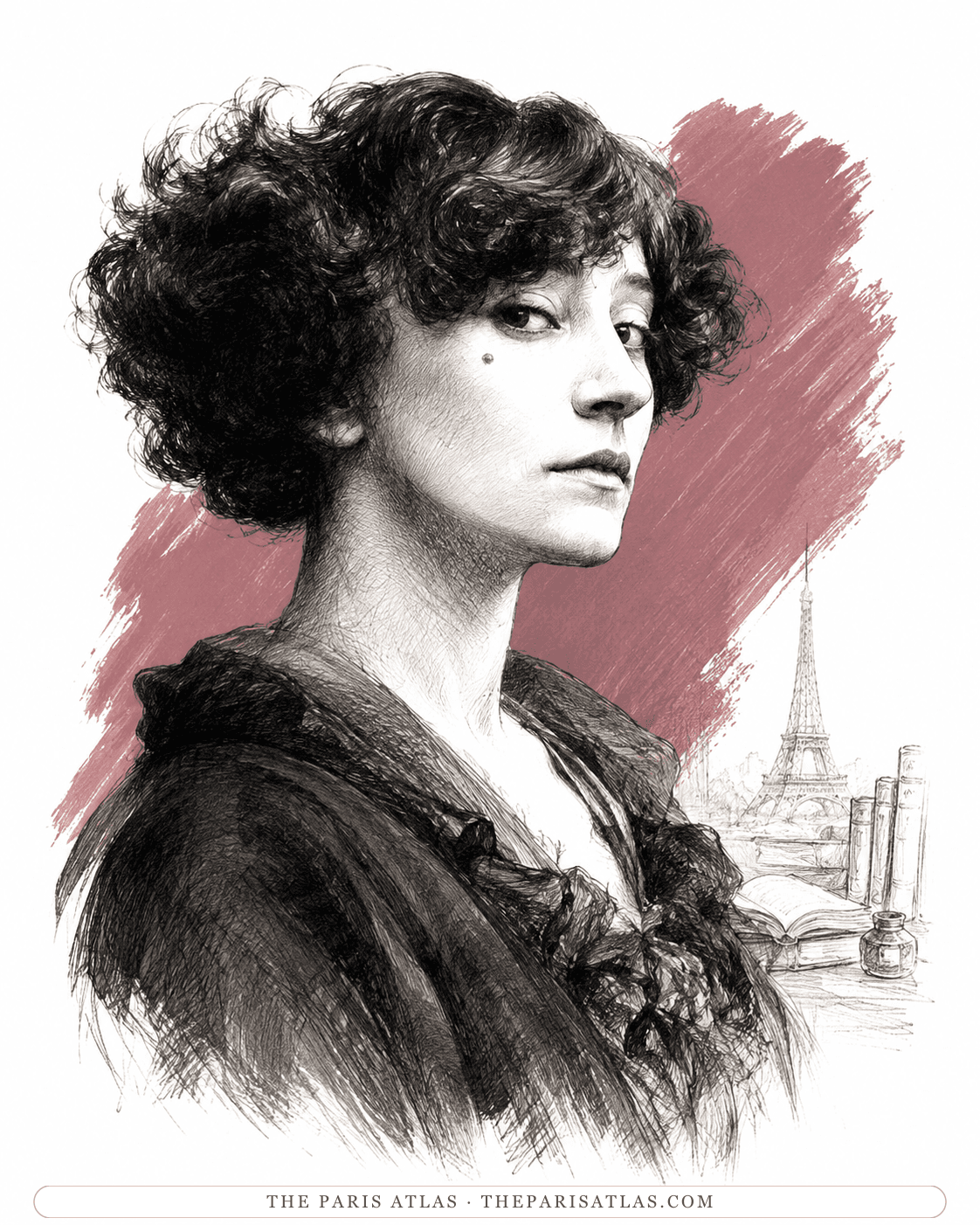
The French novelist Colette, in 1942. It was first published in 1944.
The first edition appeared in Lausanne in 1944, printed in Switzerland because of wartime paper shortages in France. The first Paris edition followed in 1945.
A girl in Belle Époque Paris is trained by her grandmother and great-aunt, both former courtesans, to become a wealthy man's mistress. She refuses the arrangement, and the man proposes marriage instead.
No. The 1958 MGM musical with Leslie Caron adds songs, the narrator Honoré, and set pieces that are not in Colette's text. The novella is shorter and has no music. There was also an earlier French film in 1949.
Yes. Colette chose the then-unknown Audrey Hepburn for the title role in the 1951 Broadway adaptation, which was Hepburn's first leading part and introduced her to American audiences.
Explore authors with a similar voice, perspective, and influence.

The Brooklyn dropout who arrived in Paris broke at thirty-eight and wrote the exuberant, banned books that ended American censorship.
View author
The doctor of the Paris slums who wrote the century's blackest, funniest novel — and changed the sound of French prose.
View author
War correspondent who covered the Spanish Civil War, D-Day, and conflicts across five more decades; Hemingway's third wife, 1940–1945.
View authorThe sources below include the primary text, editions, scholarship, archival materials, and other records that informed this page. They document Gigi, its publication, and its place in literary history.


The primary text represented by this page, used for descriptions of the work’s contents and for any quoted passages shown here.
French novella: the jewel lesson and closing refusal-to-proposal sequence support the added readings; not the musical adaptation.
Web source consulted for documented facts and historical context presented on the Gigi page.
Web source consulted for documented facts and historical context presented on the Gigi page.

Archival evidence used to document the historical record connected to Gigi.
Web source consulted for documented facts and historical context presented on the Gigi page.
The primary text is the baseline reference for every book page. Additional references document publication history, interpretation, and historical context where that evidence is available.
 Explore more resources