

Minne's Misadventures
The direct sequel, following Minne's 'strayings' deeper into experience.
Read our take
by Colette
A sheltered Paris girl feeds on romantic fantasy until it pulls her out into the night — the first of the Minne novels.
Between the Claudine books and her mature fiction, Colette wrote Minne: the portrait of a sheltered, imaginative Parisian girl whose head is full of romance and danger. Fed on newspaper tales of the city's street gangs, Minne dreams of a life beyond her comfortable, watched-over existence, and the gap between that fantasy and reality drives the book. Published in 1904 under Willy's name, it was later reworked, with its sequel, into the 1909 novel The Innocent Libertine. (The full plot, including the ending, is below.)
Minne belongs to the transition in Colette's early career — still close to the Willy years, but already moving toward the subtler account of female desire and self-deception that her later novels perfect. Its heroine is a girl of the sheltered Paris bourgeoisie whose imagination has been shaped by sensational reading, and the novel watches what happens when a protected child's fantasies meet the actual city.
The most important fact about the book is bibliographic: Minne and its 1905 sequel, Les Égarements de Minne, were a two-part design that Colette later dismantled and rebuilt. In 1909 she reworked the material into a single revised novel, The Innocent Libertine, removing or rewriting what belonged to Willy. Minne is best read as the first, unreconstructed version — useful for seeing exactly what she chose to change.
What can be said securely is that Minne introduces a heroine at the very start of her sentimental education: cherished, inexperienced, imaginative, and increasingly exposed to the distance between romantic fantasy and adult emotional reality.
Minne is a young girl of comfortable, protected Paris — watched over, indulged, and largely kept apart from the world. Her imagination, fed on newspaper stories of the city's street gangs and their glamorous danger, runs far ahead of her sheltered life. She weaves elaborate romantic fantasies around a life of adventure and a dreamed-of hero drawn from those lurid reports, and grows restless inside the safe household that cannot match them.
Driven by that fantasy, Minne is drawn out toward the nighttime city she has only imagined, testing the gap between the romance in her head and the reality of the streets. The novel traces the collision of a sheltered girl's invented world with an actual one that does not follow her script — the beginning of an education in how far fantasy and life diverge.
Minne's pursuit of her imagined adventure brings her up against a reality that refuses to match it, and the fantasy that drew her out into the city fails her. The novel ends on disillusion rather than fulfillment: the sheltered girl has begun her sentimental education, and its first lesson is the distance between what she dreamed and what the world actually offers. The sequel, Les Égarements de Minne, and the later revision, The Innocent Libertine, carry that education forward.
In the opening chapter, the history exercise conceals more than a newspaper: it conceals a different reader from the child her mother thinks she knows. Minne studies the crime report carefully, then disposes of her official lesson with a hurried sentence. The mother's attention to her daughter's apparent fragility misses this intense imaginative activity. Meanwhile, the small sounds of embroidery, the lamp and passing trams keep the household physically present. The imagined dangerous city grows inside that protected room, through reading and imitation, rather than arriving as an entirely separate world.
At the railway fence in chapter XLIII, Minne passes the limit of her familiar walks without leaving her assumptions behind. A distant shape becomes the man she seeks, then turns out to be a tree; another stranger remains an unreadable face. The narration repeatedly separates what she sees from what she confidently concludes. Smoke, fatigue and muddy slippers interrupt the imagined flight of a heroine. Even beneath the bridge, she assigns strangers places in her invented kingdom. Her education begins in these failed acts of recognition, before she can surrender the story organizing them.
Minne shows the writer moving past the Claudine formula toward the subtler study of female desire her later novels perfect.
Read beside the 1909 revision, Minne reveals exactly what Colette chose to prune and rewrite when she reclaimed the material from Willy.
A sheltered girl's imagined Paris collides with the actual one — an early version of Colette's lifelong subject, self-deception in matters of desire.
1904
Minne is published under Willy's name — the first of the two Minne novels.
1905
Les Égarements de Minne continues the heroine’s story in a second novel.
1909
Colette combines and rewrites Minne and its sequel into the revised novel The Innocent Libertine.
The direct sequel, following Minne's 'strayings' deeper into experience.
Read our take
The 1909 revision that combined and rewrote both Minne novels — the version most readers meet.
Read our take
The other early heroine of Colette's Willy years, sharper and more knowing than the dreaming Minne.
Read our take
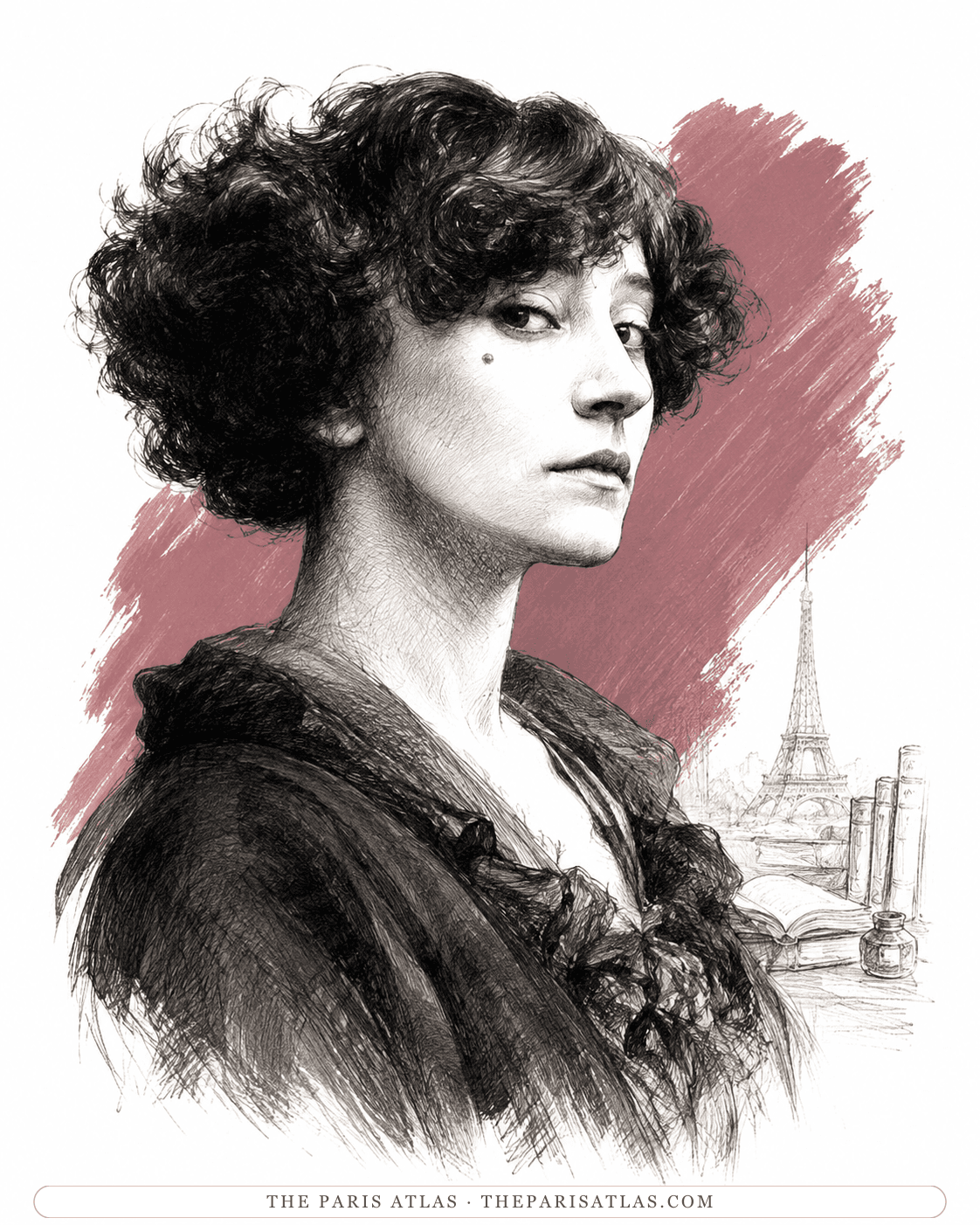
Colette. The 1904 first edition was published under her husband Willy's name.
A sheltered Paris girl whose imagination, fed on newspaper stories of the city's street gangs, runs to romantic fantasy — until the pursuit of that fantasy pulls her out into a real city that refuses to match it.
Minne (1904) and its sequel, Les Égarements de Minne (1905), were later combined and rewritten by Colette into a single revised novel, The Innocent Libertine (1909). That revision is the version most readers encounter.
For the textual history and to see what Colette changed, read Minne. For the mature, authorially consequential version of the story, read The Innocent Libertine.
The original Minne is not widely translated on its own; English readers usually meet the material through The Innocent Libertine.
Explore authors with a similar voice, perspective, and influence.

The Brooklyn dropout who arrived in Paris broke at thirty-eight and wrote the exuberant, banned books that ended American censorship.
View author
The doctor of the Paris slums who wrote the century's blackest, funniest novel — and changed the sound of French prose.
View author
War correspondent who covered the Spanish Civil War, D-Day, and conflicts across five more decades; Hemingway's third wife, 1940–1945.
View authorThe sources below include the primary text, editions, scholarship, archival materials, and other records that informed this page. They document Minne, its publication, and its place in literary history.


The primary text represented by this page, used for descriptions of the work’s contents and for any quoted passages shown here.
Primary French transcription of the 1904 Ollendorff text, published under Willy's name. Chapter I and chapters XLII–XLIV were read in the complete-text page for these two scene readings; no whole-novel reading or collation with the revised 1909 L’Ingénue libertine is claimed.
Used to place Minne within Colette's published work and verify its bibliographic context.

Used for independent biographical, archival, or historical context surrounding Colette's career and the period in which Minne appeared.
Used to cross-check authorship, chronology, and the work's place in Colette's wider catalogue.
Used to verify Colette's bibliography and place Minne within the broader chronology of Colette's career.
The primary text is the baseline reference for every book page. Additional references document publication history, interpretation, and historical context where that evidence is available.
 Explore more resources