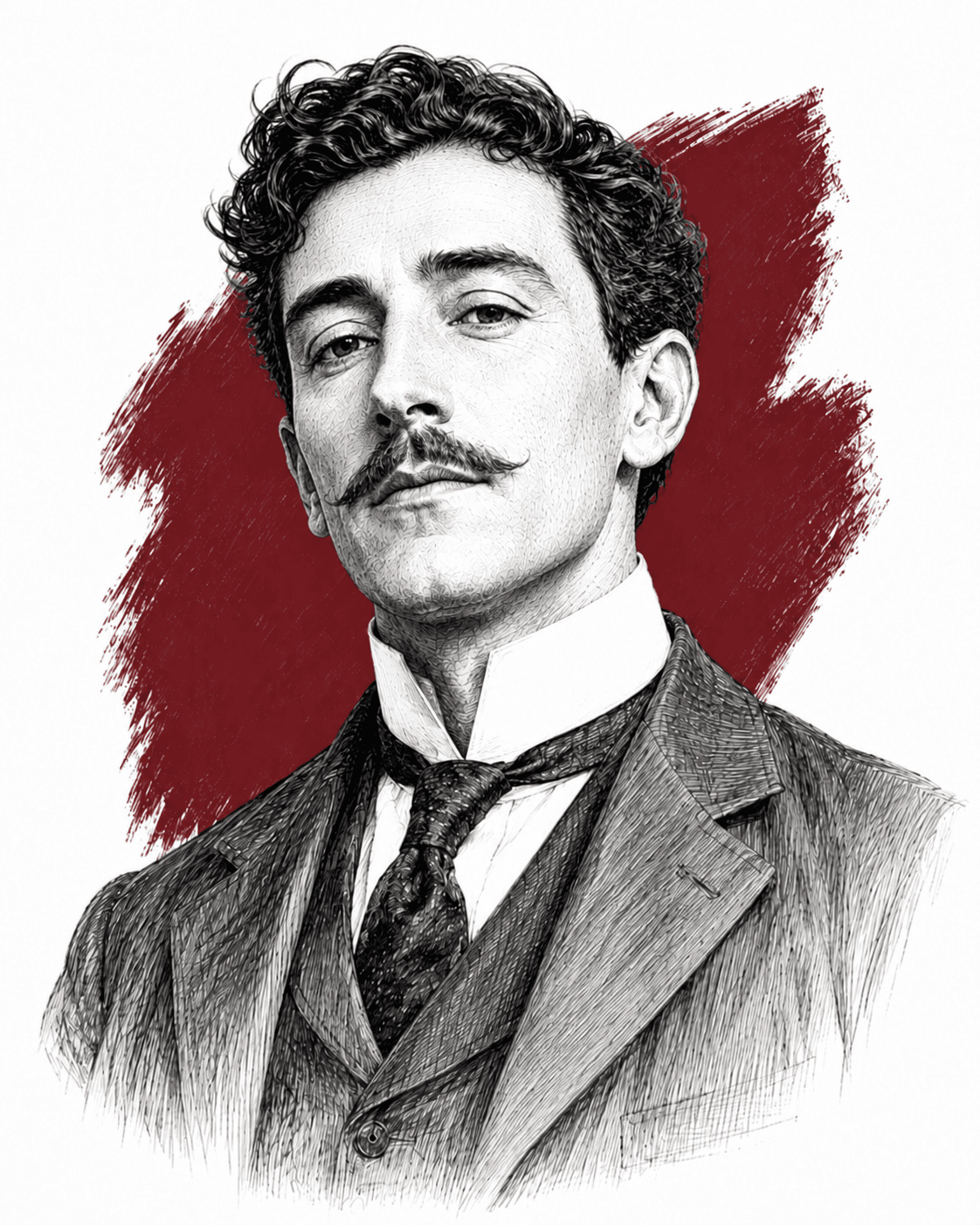
Antoine
Minne's cousin, three years older, who proposes marriage to her at seventeen and spends the book rebuilding his idea of her every time she lies to him.
To marry Minne. He asks her outright in the last weeks of the summer holiday, having worked out in advance that a long engagement between a boy of seventeen and a girl of fifteen is not the most ridiculous thing anyone has ever proposed.
The book

At a glance
- Seventeen, two years older than Minne
- Only son of Paul, a doctor and the brother of Minne's mother; no mother of his own appears, and his father has stripped their home of curtains and ornaments as germ traps
- Sunday lunches at Minne's house on the boulevard Berthier, and the long summer at his father's country house, which the district calls the Maison Sèche, the Dry House, because its timbers crack all day in the heat
- A Paris lycée, in a blue uniform with gold buttons; the book mentions his Latin translation, his third-year arithmetic book and a schoolfriend called Bouquetet
- He means to become a doctor like his father, and admits to himself that he would drop it, and his friends with it, to stay near Minne
Who they are in the book
Spoiler-freeAntoine is Minne's cousin, and the only person she tells anything to. He is seventeen when the novel opens, two years older than she is, and the son of Paul, a doctor who is her mother's brother. There is no woman in his father's household. He goes to school in Paris in a blue uniform with small gold buttons, which he wears the way a servant wears a livery he did not choose.
The book is unusually exact about what seventeen is like for him. He has a long nose, spots on his chin that he has scratched raw, and dark down on his lip and cheeks that leaves a stranger unsure whether he is bearded or merely unwashed. The narration says he will probably make a good-looking man, but that for the moment he is an unattractive schoolboy, and his father makes remarks about his complexion at table in front of everyone.
He is in love with Minne and has no equipment for it. He builds up to proposing to her, rehearses it for two days, and is stopped on the day by her telling him that his tie is crooked. He asks anyway, a little later, and is refused in one word. After that he writes a love letter to her supposed fiancé at her dictation, because she asks him to and because being trusted is the only thing he has of her.
He believes her, then decides she is inventing it, then believes her again. The novel keeps him wrong throughout.
How Antoine Is Portrayed
- What he looks like at seventeenTall, with a long nose and well-set eyes, and going through what the book calls an ungrateful adolescence. The dark down on his face and the spots on his chin are described at length, along with his own view that his school uniform is a humiliation. He is at the stage where his arms crack at the shoulder when he stretches, and he falls over like a horse rather than a boy.
- His father at the tableHe would like a second helping of ham and salad and does not dare take it, because his father will make the remark he always makes about salted meat and spots. When Antoine announces that he is going to go and eat mirabelle plums, his father says from behind the newspaper that plums are a laxative. Antoine goes scarlet and leaves the room.
- The butterfly under glassHe collects butterflies and shows Minne a white admiral he chased through a wood and was sure he had ruined catching. She asks why he killed it. He says he could hardly have kept it alive in a cage. She tells him he should not have done it, that animals are free, and that people do not matter.
- Who he thinks about before sleepingEvery night he picks a new favourite out of an imaginary harem. The list Colette gives is the housemaid Célénie, a music-hall actress, a woman who was once queen of a public washhouse in Paris, and Dido, queen of Carthage.
- The night of the stormLightning wakes him and he decides Minne must be dying of fright, and that he will run to her room and carry her out. Then he catches sight of his own long bare legs in the lightning and reflects that nobody has ever pictured a hero in a nightshirt. By the time he has finished weighing it up the thunder has moved off, the rain has started, and he gets back into bed and imagines her asleep instead.
- The afternoon in the shuttered dining roomIn the heat Minne pinches up the hem of her dress to show him how little she has on under it, then turns her back and offers it so he can feel that there is only a chemise under her blouse. He touches her, she leaps away shrieking with laughter and tells him never to touch her under the arms. He comes at her anyway, pins her wrists against the door and presses himself against her until she says she will tell her mother. Her mother comes in a minute later carrying two plates of plums and scolds them for squabbling in the heat.
- He proposesHe asks her whether she loves him, then whether she would love him enough to marry him. She says no, in one word, and permits him to ask why. Her answer is that she is engaged. He gets nothing further out of her about it for the rest of the book.
- He writes the letter to his rivalMinne, in bed with a fever, asks him to write a letter for her, because if her mother caught her writing she could demand to see it. He agrees, privately intending to learn the man's name and kill him. She dictates a love letter beginning Mon bien-aimé, my beloved, and he copies it down fast and straight, the way a clerk copies out something he is not supposed to understand.
- The song on the trainGoing back to Paris in October he asks what her lover does for a living. She tells him the man is a murderer. Antoine bursts out laughing and slaps his thighs, and for the rest of the journey a music-hall refrain runs round his head with new words fitted to it: it is all rubbish, I very nearly fell for it, she would have taken me in.
Minne is carried in unconscious at dawn after a night in the streets, filthy, without a hat, one slipper missing its heel. Antoine hears the servant downstairs telling his father that the girl must have been abducted and assaulted and brought back for dead. He is instantly certain it is all true, because he is the only person who knows what she had told him about her nights out and her lover.
His father examines her and reports that she has not been touched. Antoine is in the room to hear it. Minne wakes, sees him standing there crying without a handkerchief, and calls out to him that it was not true, that none of it was ever true. He shakes his head and says no, no. He is not agreeing with her. He has decided she was used and ruined, by one man or several, and the novel's last sentence, «Il le croira toute sa vie…», says that he will believe it for the rest of his life.
If you like Minne


If you like Colette
Explore authors with a similar voice, perspective, and influence.
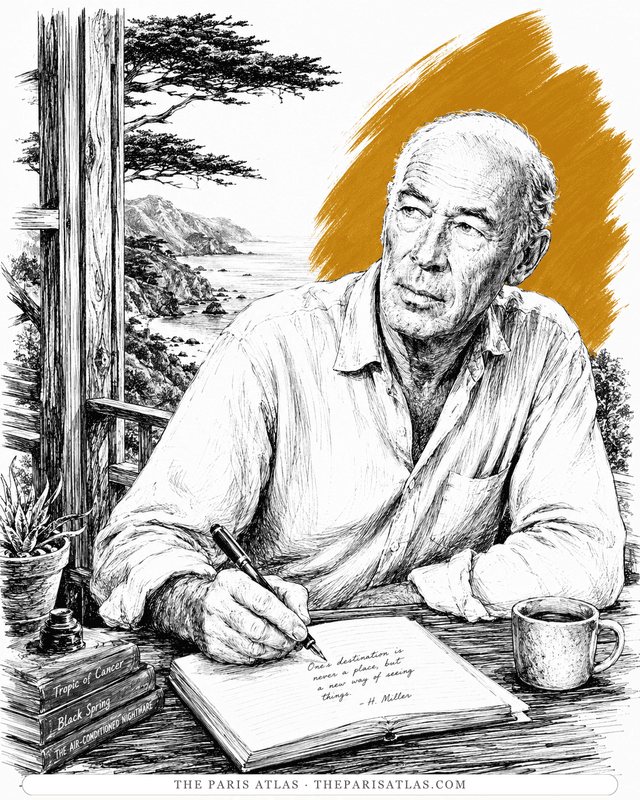
Henry Miller
The Brooklyn dropout who arrived in Paris broke at thirty-eight and wrote the exuberant, banned books that ended American censorship.
View author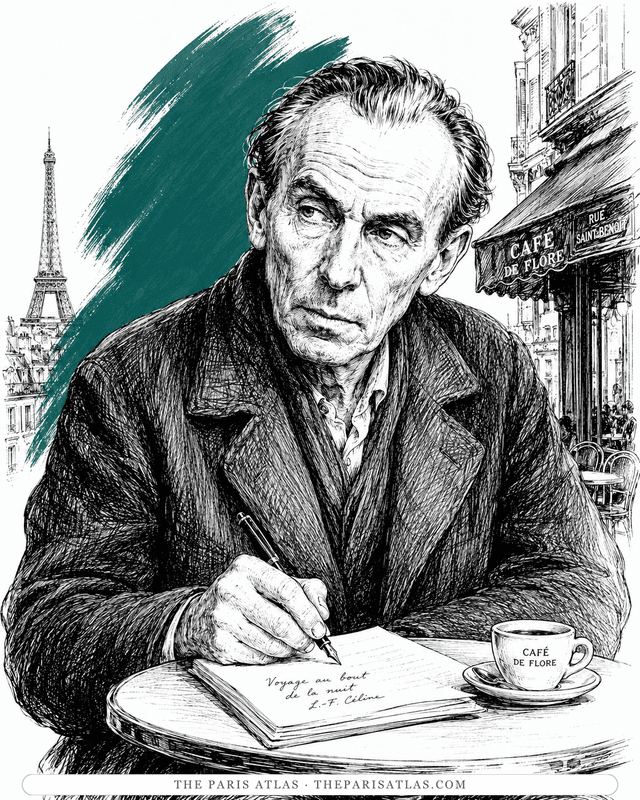
Louis-Ferdinand Céline
The doctor of the Paris slums who wrote the century's blackest, funniest novel — and changed the sound of French prose.
View author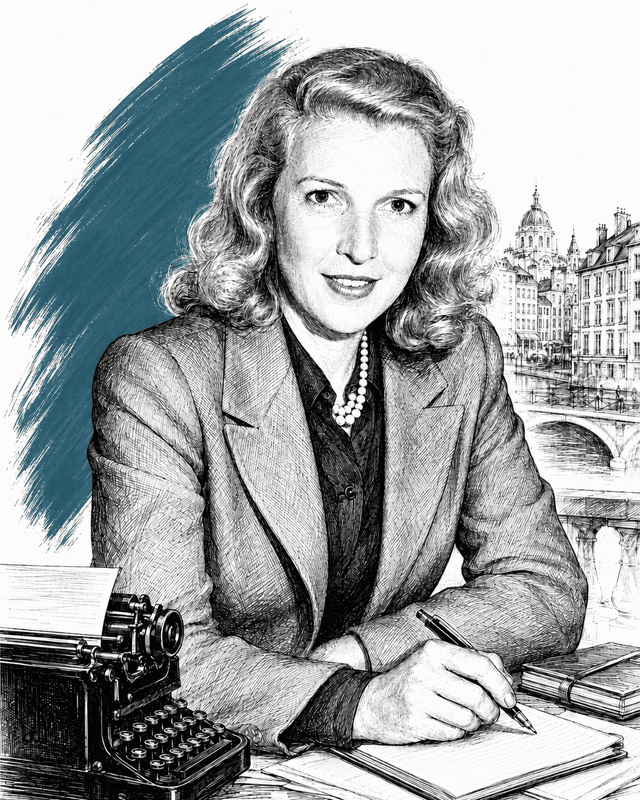
Martha Gellhorn
War correspondent who covered the Spanish Civil War, D-Day, and conflicts across five more decades; Hemingway's third wife, 1940–1945.
View author