
The Vagabond
The music-hall world again, from a performer's point of view — Renée's independence, Mitsou's education.
Read our take
by Colette
A music-hall performer and a young officer conduct a wartime romance by letter, and the wit the title promises turns out to be hard-won.
Set in Paris during the First World War, Mitsou follows a music-hall performer who begins a correspondence with an army officer she meets briefly backstage. He signs his first letter the Blue Lieutenant, after the colour of his uniform, and that is what she calls him for most of the book; his first name, Robert, reaches her only near the end. Through the letters that pass between the front and the theater, Mitsou acquires the wit and self-knowledge the ironic subtitle promises, and discovers the distance between theatrical charm and durable love. Published in 1919, it is Colette's wartime sentimental education. (The full plot, including the ending, is below.)
Mitsou belongs to Colette's wartime writing, and it takes the music-hall world she knew and sets it against the pressure of a war going on just out of frame. Its heroine is a performer — pretty, good-natured, not especially educated — and the novella is the story of how a real feeling, conducted mostly on paper, teaches her to think and to see herself.[1]
The book's form is partly epistolary: much of it is the correspondence between Mitsou and the Lieutenant Bleu, the young officer she meets when he and a comrade take refuge in her dressing room. The subtitle's promise — how wit, or 'l'esprit,' comes to girls — is gently ironic. What comes to Mitsou is not cleverness but lucidity, and it arrives through disappointment as much as through love.[1]
Colette was writing frequently for the press in these years, and Mitsou reflects that world of quick, serialized fiction while transcending it. It was later adapted for the screen by Jacqueline Audry in 1956.[1]
Mitsou is a performer at a Paris music hall during the First World War — cheerful, kept comfortably by an older protector, and largely unbothered by ideas. One evening two young officers on leave hide in her dressing room, and she is struck by one of them, whom she comes to call the Lieutenant Bleu. When he returns to the front, the two begin to write to each other.[1]
The correspondence becomes the heart of the book. On paper, Mitsou reaches past her stage persona toward something more thoughtful, and the letters draw out an intelligence and feeling her comfortable life had never asked of her. The Lieutenant is charmed, then more than charmed, and the war keeps their romance suspended at the distance of the post — vivid, idealized, and untested by ordinary presence.[1]
They spend his leave together, and the disappointment is entirely his and entirely private. At five in the morning he works out that he has stopped being in love, says goodbye to her under his breath while she sleeps, and then wakes her cheerfully and gives nothing away. Mitsou never finds out. The last words of the book are her letter to him, saying she loves him, offering to give up the music hall for him, and asking for one more night. Colette prints no reply. The wit the title promises is real — Mitsou writes far better at the end than at the start — but she is still holding the illusion on the final page.
The cupboard episode makes the dressing room a second stage, with entrances, interruptions and an audience eager to misread what it sees. Mitsou's work requires changes of costume, but she does not supply the flirtatious performance that the visitors and Petite-Chose expect. Her plain explanation to her protector is both true and socially improbable. Colette lets the comedy expose a distinction between theatrical skill and social invention: Mitsou can play her scheduled roles while remaining awkward within the unwritten roles that other people assign her.
Mitsou begins her final reply by refusing the haste her correspondent prescribes: reading, feeling and reasoning take time. Her imperfect spelling coexists with a precise distinction between his departure for duty and his withdrawal from her. She recognizes the politeness that softens his disappointment, yet continues to hope and offers to change herself. The letter's force lies in that unresolved combination. Writing gives her room to interpret him and state her own terms without guaranteeing equal power, returned affection or freedom from the wish to become what he wants.
The letters between a performer and a soldier at the front give the novella its warmth and its ache, and let Mitsou become more than her stage self.
Colette returns to the backstage world she knew, now shadowed by a war that keeps love at the distance of the post.
What Mitsou gains is lucidity rather than love — Colette refuses the easy reunion and is truer for it.
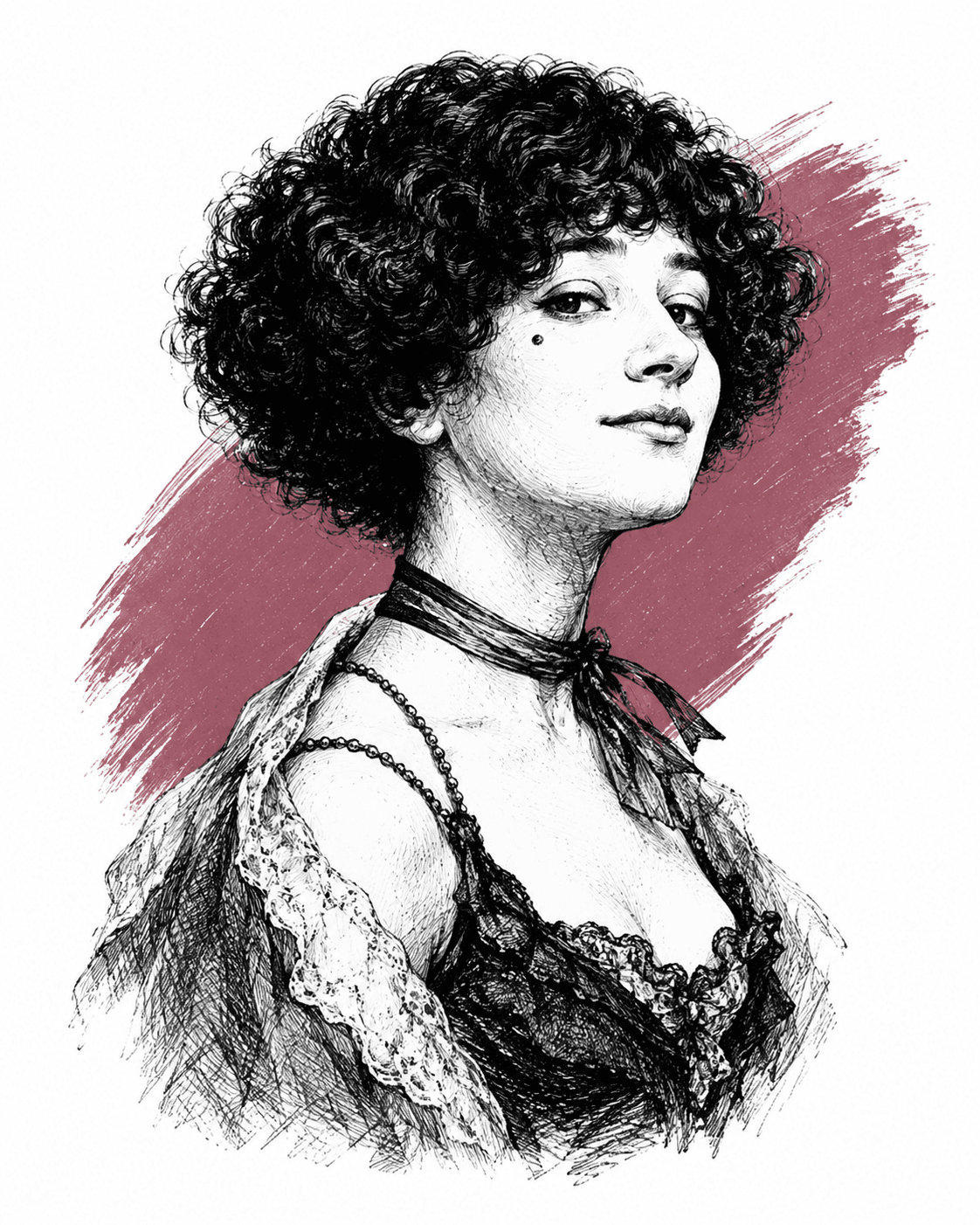
A Paris music-hall performer whose wartime correspondence draws out an intelligence and feeling her comfortable life never asked of her.

The army officer Mitsou meets backstage and falls for by letter. He names himself the Blue Lieutenant in his first letter, and he is the one who decides, on the last night of his leave, that the affair was a mistake.
1919
Mitsou is published, a novella of the music hall and the First World War.
1930
Boni publishes Jane Terry’s English translation as Mitsou: Or, How Girls Grow Wise.
1956
Jacqueline Audry directs a film adaptation.

The music-hall world again, from a performer's point of view — Renée's independence, Mitsou's education.
Read our take

Another young woman learning, on her own terms, what she is worth to the men around her.
Read our takeThe French novelist Colette. Mitsou was published in 1919.
A Paris music-hall performer during the First World War begins a correspondence with a young officer who signs himself the Blue Lieutenant, after the colour of his uniform. Through their letters she grows in wit and self-knowledge, and learns the distance between charm and lasting love.
The French title is Mitsou, ou Comment l'esprit vient aux filles — 'Mitsou, or How Wit Comes to Girls.' It is gently ironic: what Mitsou gains is lucidity earned through disappointment, not cleverness.
Partly. Much of the novella is told through the wartime letters between Mitsou and her officer, framed by scenes in the theater and the city.
Yes. Jacqueline Audry directed a film adaptation in 1956.
Explore authors with a similar voice, perspective, and influence.

The Brooklyn dropout who arrived in Paris broke at thirty-eight and wrote the exuberant, banned books that ended American censorship.
View author
The doctor of the Paris slums who wrote the century's blackest, funniest novel — and changed the sound of French prose.
View author
War correspondent who covered the Spanish Civil War, D-Day, and conflicts across five more decades; Hemingway's third wife, 1940–1945.
View authorThe sources below include the primary text, editions, scholarship, archival materials, and other records that informed this page. They document Mitsou, its publication, and its place in literary history.


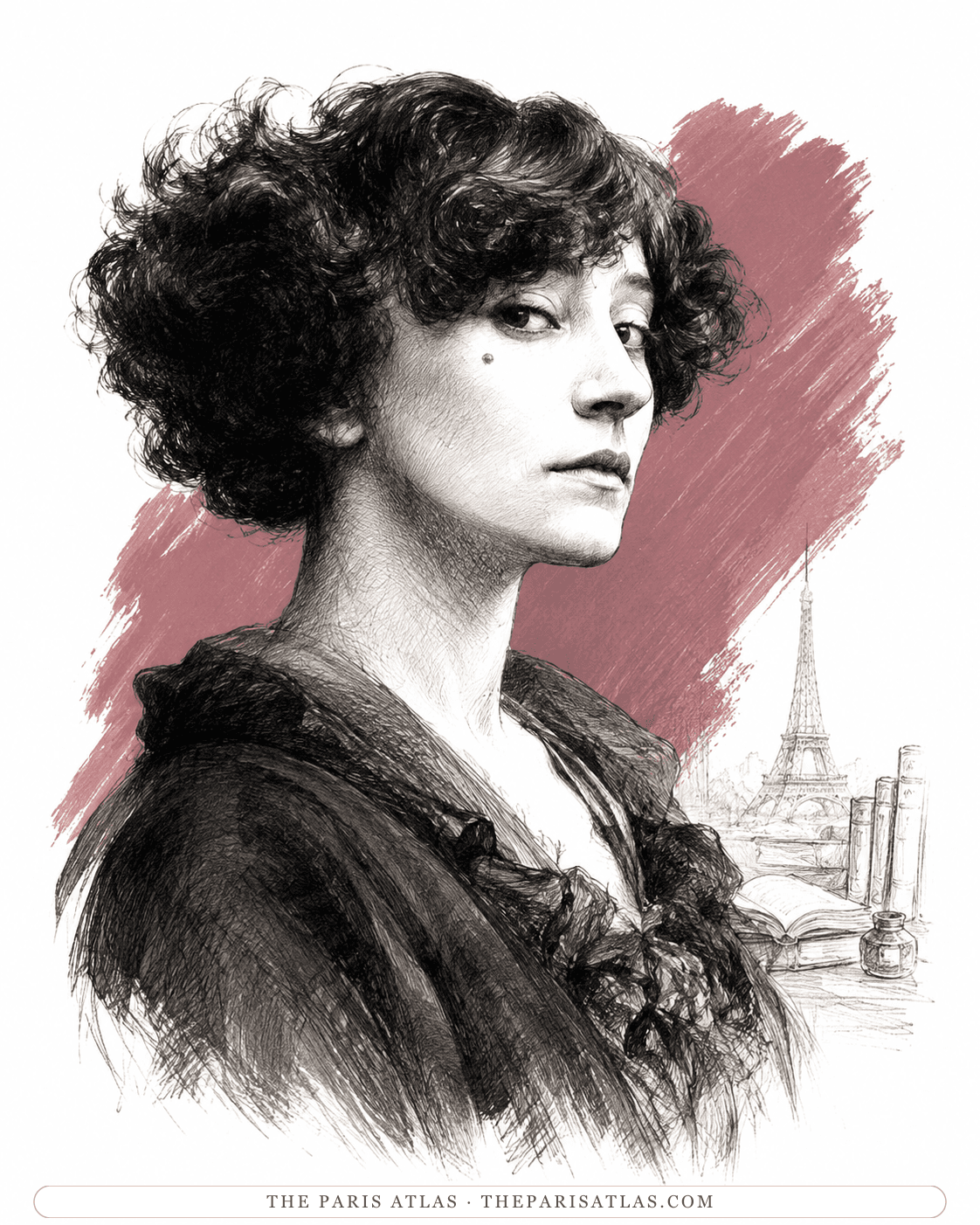
French primary text used for the dressing-room opening and the final exchange of letters. The new analysis reads Mitsou's awareness and continuing hope together; no comparison with the listed English translations is claimed. Colette's likeness in the existing illustrations is an artistic character reference.

The New York Review of Books identifies Raymond Postgate and Anne-Marie Callimachi as the respective translators of Mitsou and Music Hall Sidelights.
A work-specific source used for Mitsou's publication history, textual context, or critical reception.
Used for independent biographical, archival, or historical context surrounding Colette's career and the period in which Mitsou appeared.
Used to cross-check authorship, chronology, and the work's place in Colette's wider catalogue.
Used to verify Colette's bibliography and place Mitsou within the broader chronology of Colette's career.
The primary text is the baseline reference for every book page. Additional references document publication history, interpretation, and historical context where that evidence is available.
 Explore more resources