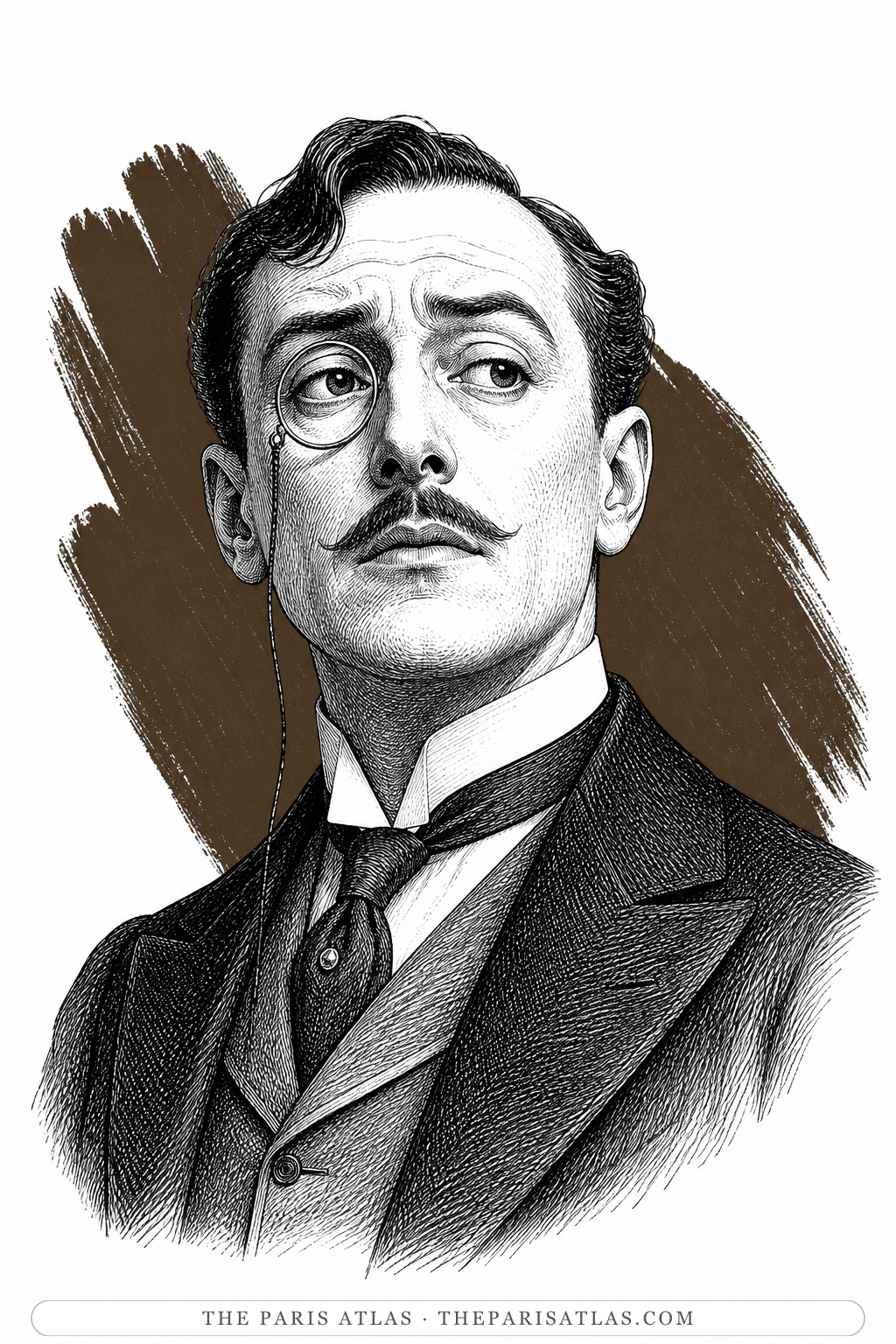
Baron Felix Volkbein
A Viennese-born clerk at a Paris bank, carrying a title his father invented, who marries Robin Vote because he wants a son who will honour the past.
A son who will honour the past he has invented for himself. He states it to the doctor as a principle: "To pay homage to our past is the only gesture that also includes the future."
The book

At a glance
- The subject of the first chapter and of "Where the Tree Falls"
- Vienna, 1880; his mother died the same hour and his father six months earlier
- The Crédit Lyonnais, at two thousand five hundred francs a week; later a little dealing in old masters
- Seven
- His blind eye kept him out of it; he was in Paris by 1920
- Married to Robin Vote, briefly; father of Guido
Who they are in the book
Spoiler-freeFelix Volkbein opens Nightwood, the 1936 novel by the American writer Djuna Barnes, and holds the first chapter on his own. He was born in Vienna in 1880 to Hedvig Volkbein, who named him, pushed him away and died within the hour. His father, Guido Volkbein, a Jew of Italian descent who had made money in household goods, old masters and money-changing, had died six months earlier. Guido had spent his life pretending to a barony he had no right to: he adopted the sign of the cross, produced a coat of arms and a list of ancestors who had never existed, and hung two portraits in the house that he said were his parents. They were pictures of a pair of long-dead actors, bought in a dusty corner when he needed an alibi.
Felix inherits the portraits, the pretence and nothing else. He calls himself Baron Volkbein as his father did. He speaks seven languages, works at the Crédit Lyonnais for two thousand five hundred francs a week, and moves through Europe in clothes tailored half for day and half for evening, so that he is correct whatever happens. In restaurants he bows to anyone who looks like somebody, so slightly that the person assumes he is adjusting his stomach. His rooms in Paris were taken because a Bourbon had once been carried out of them dead.
The other place he is at home is the circus, where performers call themselves Princess Nadja, King Buffo and the Duchess of Broadback, and where an invented title is simply part of the job. It is a trapeze artist who introduces him to his first "gentleman of quality", and the doctor he meets at that party who takes him, months later, to the hotel room where Robin Vote is lying unconscious. He marries her because he wants a son.
How Baron Felix Volkbein Is Portrayed
- The titleNot real. His father assembled it out of a bought coat of arms, invented Christian names and two portraits of ancient actors, one of which has a head stuck on at three-quarters and a strong resemblance to Guido himself. Felix keeps all of it, and the book calls his hunt for his own disqualification the work of a fanatic.
- How he dresses and movesSpatted, in a cutaway, with a monocle in the heavier of his two lids, tailored partly for the evening and partly for the day because he cannot know in advance which he will need. He is usually seen walking or driving alone.
- The householdHe keeps a valet because the man looks like Louis the Fourteenth and a cook because she resembles Queen Victoria — Victoria, Barnes writes, in another cheaper material, cut to the poor man's purse.
- The circusHe haunts the dressing rooms of acrobats, sword-swallowers and the more amiable actresses of Prague, Vienna and Budapest, where he has neither to be capable nor foreign. Barnes's line is that the circus was a loved thing he could never touch and therefore never know.
- Choosing a mother for the sonThe doctor asks him, with feigned indifference, what nation he would pick. "The American," the Baron answered instantly. "With an American anything can be done." The doctor brings his fist down on the table and drinks to Robin Vote.
- The honeymoon in ViennaTen days of the Imperial Palace, the Kammergarten and the Gloriette, with Felix moving her from bench to bench so as not to miss an angle. He talks to her about Francis Joseph in the hotel that night and looks up to find her asleep with her head thrown back.
- The letter to the PopeAfter Robin leaves and his son turns out to be frail, Felix reads litanies, examines chasubles, inquires into the state of monasteries and finally writes the Pope a long disquisition on the difference between Roman and French priests. He receives no answer and expected none.
- Vienna, afterwardsHe drinks now, and has grown a forked beard to hide the colour in his cheeks. He sits in cafés with his son and the retired trapeze artist Frau Mann, calling for military music and for Wagner, tapping the two end notes of an octave on the table while his coins roll away across the floor.
If you like Nightwood


If you like Djuna Barnes
Explore authors with a similar voice, perspective, and influence.
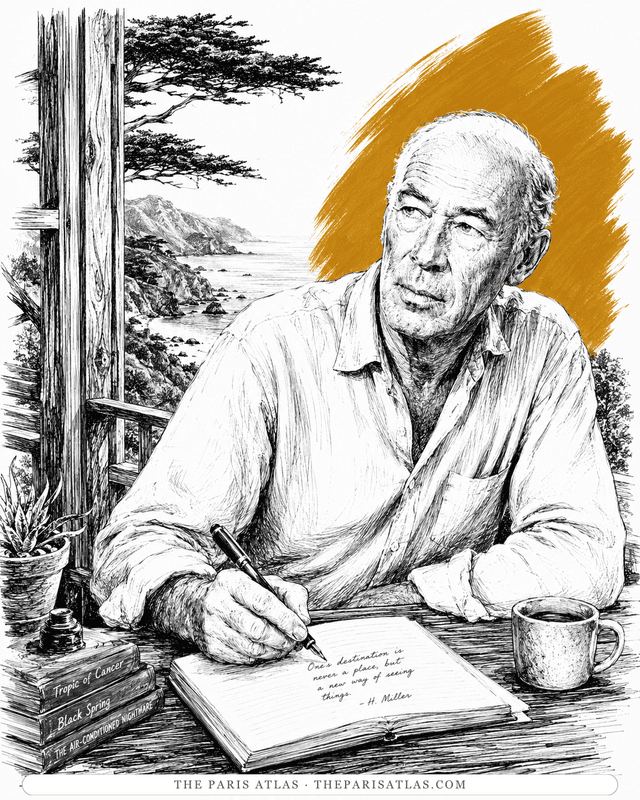
Henry Miller
The Brooklyn dropout who arrived in Paris broke at thirty-eight and wrote the exuberant, banned books that ended American censorship.
View author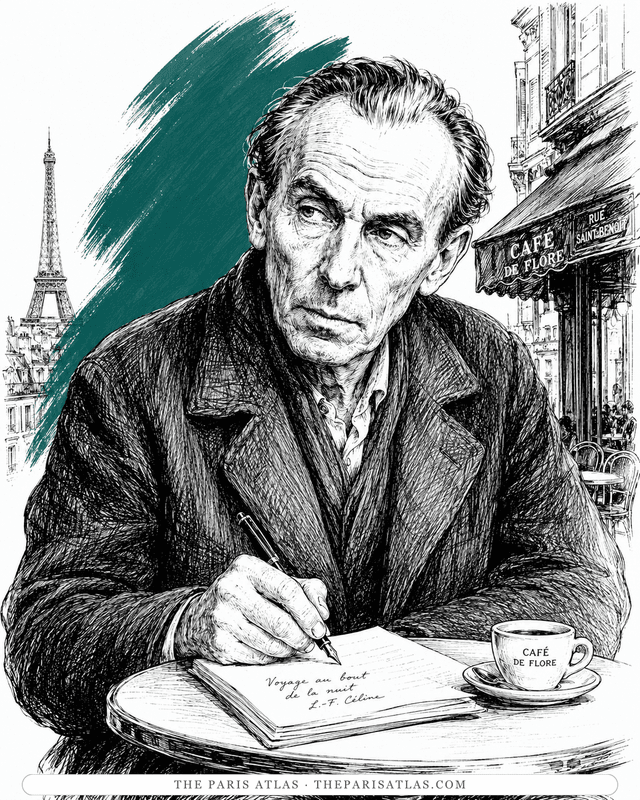
Louis-Ferdinand Céline
The doctor of the Paris slums who wrote the century's blackest, funniest novel — and changed the sound of French prose.
View author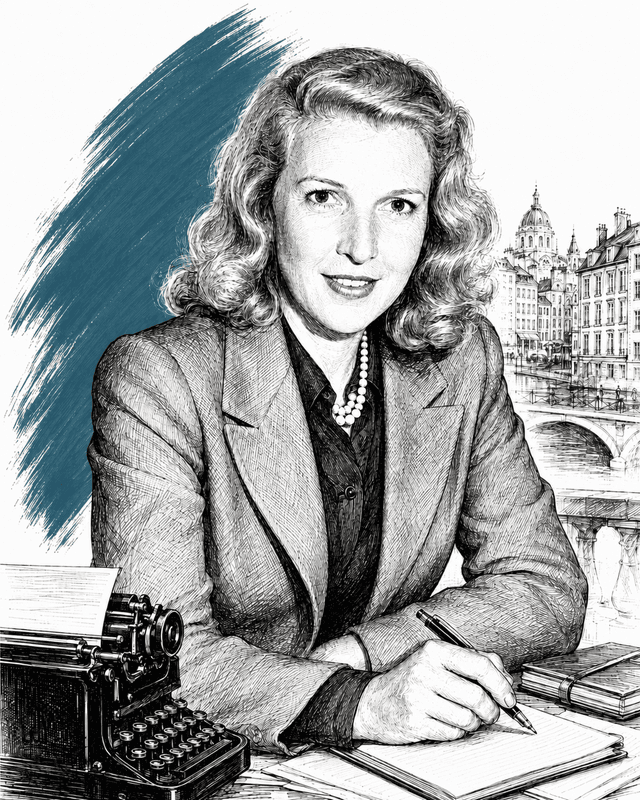
Martha Gellhorn
War correspondent who covered the Spanish Civil War, D-Day, and conflicts across five more decades; Hemingway's third wife, 1940–1945.
View author