Metamorphosis of Narcissus
Salvador Dalí turned the crouching Narcissus into a stone hand holding an egg and flower. This guide explains the double image, the Greek myth, the companion poem, and the painting's documented journey from Edward James to Sigmund Freud and Tate.
- 1937
- Oil on canvas
About Salvador Dalí
A route through Dalí's work
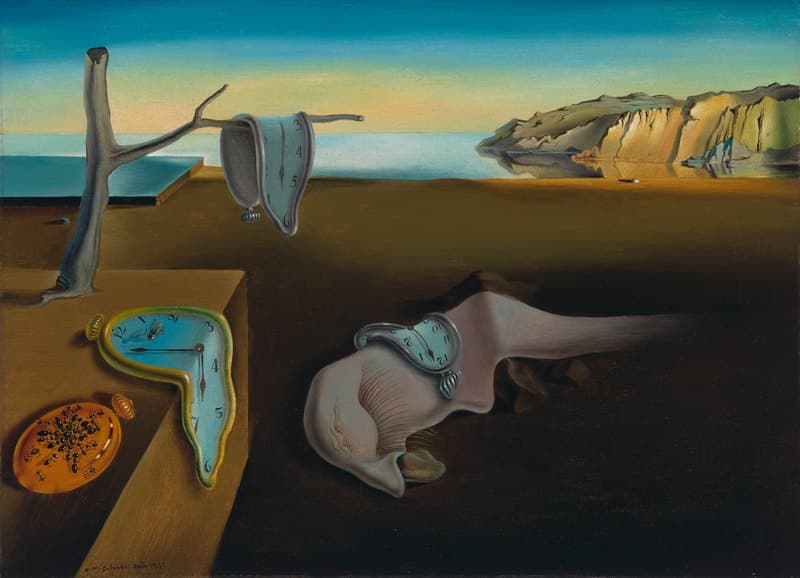
Dalí painted this six years after The Persistence of Memory. The earlier canvas makes watches change physical state; Metamorphosis of Narcissus develops the double image, making one form become another through sustained looking.
What the painting shows
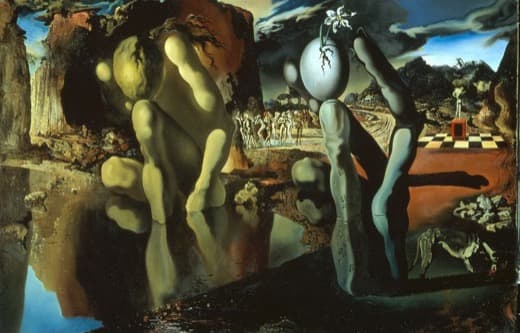
Two large forms dominate the foreground. On the left, Narcissus crouches beside a pool with his head resting on one knee. His body is warm brown and partly reflected in the water. On the right, a pale stone hand rises from the ground and holds a cracked egg. A narcissus flower grows from the egg.[1]
The pair stands in a wide rocky landscape. A group of people gathers in the middle distance, a dog tears at something on the right, and another upright figure appears farther back. Snowy mountains close the horizon. These details matter, but the painting's central event is the visual match between the crouching body and the hand.
How to see the transformation
Start with Narcissus on the left. His bowed head is a rounded shape at the top. His torso and bent leg form a thick vertical mass. His knee projects near the centre, while his lower leg continues down toward the water.
Now move to the right. The egg occupies the same place as the head. The hand repeats the body and bent leg. The thumb repeats the knee, and the fingers continue the lines of the lower body. The two forms have nearly the same outline even though one is human and the other is an object.
Dalí placed the images side by side instead of hiding one inside the other. The viewer performs the metamorphosis by comparing them: flesh becomes stone, the head becomes an egg, and the egg opens into a flower.
Reading the picture, detail by detail
The painting is small — 51 by 78 centimetres, roughly the size of an open magazine — but Dalí worked at a miniature scale that rewards close reading. The passages below carry the picture's argument about metamorphosis, and each depends on details a casual look tends to miss.
The crouching Narcissus on the left is painted in warm browns and reds, with the flesh tones and shadow patterns of a live body. His head rests on one knee and his skin catches the low afternoon light. His reflection in the pool is fully visible below him: he is looking at himself. Dalí used the classical crouching-figure pose from Greek and Roman sculpture — the same posture as the Hellenistic Crouching Aphrodite in the Louvre — so that the figure reads as a body, not as an invented shape.
The pool at Narcissus's feet reflects him back — the reason for the myth. Dalí painted the reflection as a full inverted image of the crouching body: the same warm brown flesh, the same bowed head, the same bent knee, held under the water on a plane opposite the figure above. Ovid's Narcissus dies because he cannot possess the reflected figure he loves. Dalí kept the reflection close enough to the face that the two heads almost touch, making the impossibility of the myth a physical fact in the picture.
The stone hand on the right is the same outline as the crouching body, painted in pale grey and cream instead of warm flesh tones. The hand is holding a cracked egg between thumb and forefinger, and a narcissus flower is growing out of the crack. Dalí painted the hand with the surface of weathered limestone — pitted, cracked, streaked with rust-coloured mineral stain — so it reads as a piece of a much older sculpture. The living body on the left has become an object on the right.
The correspondences between the two forms are exact. Narcissus's bowed head sits where the egg sits. His shoulder and back curve into the same shape as the back of the hand. His bent knee and thumb occupy the same position. His lower leg and the hand's fingers descend at the same angle. Dalí drew both forms from the same preliminary sketch and then separated them in the finished canvas, so the viewer performs the metamorphosis by looking from one side to the other.
The knee-and-thumb pairing is the middle of the transformation. Narcissus's bent knee juts out at the same angle as the stone hand's thumb. Both forms bend at the same joint position, and Dalí painted them at almost the same scale — one of his most exact painterly matches.
The group of small figures in the middle distance are the people from the Ovid version of the myth whose love Narcissus refused — the young men and women whose desire he rejected before his own reflection replaced them. Dalí painted them tiny, on a stone platform, with none of the anatomical care he gave to Narcissus himself. In his companion poem for the painting, these figures are named as 'the heterosexual group,' watching what Narcissus does at the pool.
The upright figure in the middle distance, standing on a small red pedestal above a checkered floor, is painted much smaller and stiffer than the crouching Narcissus at the left. Dalí gave him the pose of a museum sculpture on a plinth, so the eye reads him as sculpted rather than alive. Between the crouching living body at the left and the stone hand at the right, this small distant figure is a third figure of Narcissus in the picture.
The dog on the right, tearing at a bloody shape on the ground, is the reminder that Narcissus's death is a real death. Ovid's Narcissus dies of longing and his body turns into the flower. Dalí added the dog and the flesh it is eating so the transformation into the flower and egg reads against a specific alternative — the body decomposing rather than transfiguring — and so the sequence stone-hand-flower is not sentimental.
The mountains on the horizon are the Austrian Alps Dalí painted from in the spring of 1937, snow still on the peaks. The Freud Museum's exhibition notes point out that the snowy rounded summit at the centre-back echoes the shape of Narcissus's head and the shape of the egg — a third repetition of the same form at landscape scale. The scale is doing what Dalí wanted: the metamorphosis is not local to two figures, it is written into the whole picture.
The signature at the lower right reads 'Gala Salvador Dali 1937.' Dalí signed most of his paintings from 1932 onward with his wife's name joined to his own — Gala Dalí is the person to whom Dalí's own companion poem for the painting is addressed, and to whom the poem's closing lines identify as his 'new Narcissus.' The signature is not a decoration; it names the person Dalí thought the picture was about.
The Greek myth, in plain language
Narcissus is a beautiful young hunter who rejects the people who love him. He eventually sees his reflection in a pool and falls in love with it, not understanding at first that he is looking at himself. He cannot possess the reflected figure and wastes away. A narcissus flower appears where he dies.
Dalí compresses that story into one comparison. The crouching figure shows Narcissus fixed before the water. The hand, egg, and flower show the body after death and transformation. The painting does not require prior knowledge of every version of the myth; its title and repeated shapes establish the before-and-after sequence.
The painting came with a poem
Dalí published a poem with the same title in 1937 and intended the text and painting to be encountered together. The poem describes Narcissus becoming invisible, his head changing into an egg, and the flower emerging. It also identifies the distant group of people and ends by connecting the new Narcissus to Gala Dalí.
The poem is not a later critic's solution to the painting. It is Dalí's own companion work and one of the strongest sources for the imagery. It does not remove every ambiguity, however. The poem mixes myth, landscape, sexuality, decay, and personal references in language that remains deliberately unstable.
Catalonia and the Austrian Alps share the landscape
The Freud Museum explains that Dalí combined rocky terrain familiar from his Catalan home with the Austrian mountains where he painted in spring 1937. Narcissi were beginning to bloom there. The snowy form behind the mountains echoes the rounded head and egg in the foreground.
This is a direct geographic connection rather than a claim that the scene records one exact place. The foreground resembles Dalí's hard Catalan landscapes, while the distant snow belongs to the season and setting in which he worked.
What Dalí meant by the paranoiac-critical method
Dalí used the term paranoiac-critical method for a deliberate way of making one set of forms support more than one reading. The Freud Museum describes the method as a systematic visual misreading: the painter constructs an image precisely enough that the viewer can move between alternatives.
In preliminary drawings for Metamorphosis of Narcissus, the body and hand were combined into a single motif. In the finished canvas Dalí separated them. The viewer must bring them back together with the eye. The method is therefore visible and testable here; it does not depend on diagnosing Dalí or the viewer.
Edward James owned the painting
Edward James, the English poet and collector who financed much of Dalí's work in the later 1930s, is the first owner listed in the Fundació Gala-Salvador Dalí catalogue. The next owner is the Edward James Foundation at West Dean.[2]
James's role is more than a provenance detail. He accompanied Dalí when the artist took the painting to meet Sigmund Freud, and the Tate later bought the canvas from James's foundation. Patronage, intellectual history, and museum ownership all run through the same documented relationship.[2]
Dalí carried it to meet Sigmund Freud
On 19 July 1938, Salvador Dalí met Sigmund Freud at Freud's home in London. The writer Stefan Zweig arranged the visit, and Edward James came with Dalí. They brought Metamorphosis of Narcissus so Dalí could demonstrate his ideas about paranoia, double images, and narcissism to the psychoanalyst he had admired for years.[3]
Dalí drew Freud during the visit. Freud wrote to Zweig the next day that Dalí's technical mastery had made him reconsider his low opinion of the Surrealists. The evidence supports a meaningful encounter, not a claim that Freud approved Dalí's method or became his collaborator.[4]
How the painting reached Tate
The painting first appeared in a Dalí exhibition at the Galerie Renou et Colle in Paris in July 1937 and travelled to the Carnegie International in Pittsburgh later that year. It subsequently appeared in major Dalí and Surrealism exhibitions in Tokyo, New York, Rotterdam, Paris, London, Liverpool, Madrid, and Figueres.[2]
Tate purchased it from the Edward James Foundation in 1979. Its Tate reference is T02343. The work belongs to Tate's collection, but collection ownership does not guarantee that it will be on public display on a particular day; visitors should check Tate's live object page before planning a visit around it.[1]
Size, signature, and technique
Metamorphosis of Narcissus measures 51.1 by 78.1 centimetres, about 20.1 by 30.7 inches. It is an oil painting on canvas. Dalí signed and dated the lower-right corner “Gala Salvador Dali 1937.” The joined name reflects his established public identification with Gala Dalí; the catalogue attributes the painting to Salvador Dalí.[1]
Tate describes Dalí's meticulous illusionism as a form of “hand-painted colour photography.” The phrase helps explain the crisp rocks, body, hand, egg, and flower. Their detailed surfaces make an impossible transformation feel optically persuasive.[1]
What the painting means—and what remains interpretation
The most secure meaning is transformation. A person absorbed by his own image becomes an inert hand, while an egg opens into new plant life. Dalí's poem explicitly links the new Narcissus to Gala Dalí, so love and personal renewal belong to his own account of the work.[1]
Other readings can emphasize sexuality, death, self-absorption, psychoanalysis, or artistic rebirth. Those interpretations may be useful, but they should not be confused with the visible double image, the classical story, or the documentary record. The page keeps those levels separate so a first-time reader can understand the painting before choosing among theories.
Timeline
Early 1920s
Dalí reads Sigmund Freud's The Interpretation of Dreams while studying in Madrid and begins years of intense interest in psychoanalysis.
Spring 1937
Dalí paints Metamorphosis of Narcissus while working in the Austrian Alps, combining that mountain setting with forms associated with Catalonia.
July 1937
The painting is exhibited at Galerie Renou et Colle in Paris. Dalí also publishes the companion poem Metamorphosis of Narcissus through Éditions Surréalistes.
October–December 1937
Shown as catalogue number 278 in the Carnegie International exhibition in Pittsburgh.
19 July 1938
Dalí, Edward James, and Stefan Zweig bring the painting to Sigmund Freud's London home for Dalí's only meeting with Freud.
20 July 1938
Freud writes to Stefan Zweig that Dalí's technical mastery has made him reconsider his opinion of the Surrealists.
1979
Tate purchases Metamorphosis of Narcissus from the Edward James Foundation. Its collection reference is T02343.
1979–1980
Included in the major Salvador Dalí retrospective at the Centre Pompidou in Paris and then at Tate in London.
2008–2009
Temporarily reunited with the manuscript of Dalí's poem at the Dalí Theatre-Museum in Figueres.
2018–2019
Loaned to the Freud Museum London for an exhibition about Dalí, Freud, and the painting.
Where to see it
Tate, London
Tate has several galleries. A specific viewing address has not been confirmed here; check which venue, if any, is displaying this work before travelling.
Plan your visit on the museum’s official website (opens in a new tab)Frequently asked questions
Who painted Metamorphosis of Narcissus?
Salvador Dalí painted it in 1937. The Fundació Gala-Salvador Dalí lists it as catalogue raisonné number P 455.
What is happening in Metamorphosis of Narcissus?
A crouching Narcissus stares into water on the left. On the right, the same outline becomes a stone hand holding an egg from which a narcissus flower grows. The paired forms show his death and transformation.
How does the double image work?
Narcissus's head corresponds to the egg, his body and bent leg correspond to the hand, and his knee corresponds to the thumb. The subjects are separate, but their outlines are nearly identical.
What is the myth of Narcissus?
Narcissus is a beautiful hunter who rejects his admirers, falls in love with his own reflection, and dies because he cannot possess it. A narcissus flower appears where he dies.
Did Dalí write a poem about the painting?
Yes. He published a companion poem with the same title in 1937 and intended it to explain and extend the painting. It ends by identifying Gala Dalí as his new Narcissus.
What is the paranoiac-critical method?
It was Dalí's deliberate method for constructing images that support more than one coherent reading. Here one contour can be read as a crouching body or as a hand holding an egg.
Why is Sigmund Freud connected to the painting?
Dalí brought the painting to his only meeting with Freud, in London on 19 July 1938. He hoped it would demonstrate his ideas about paranoia and narcissism.
Who owned Metamorphosis of Narcissus before Tate?
Edward James was its first recorded owner. It then belonged to the Edward James Foundation, from which Tate purchased it in 1979.
Where is Metamorphosis of Narcissus now?
It belongs to Tate and has collection reference T02343. Because collection displays change, check Tate's current object page before expecting to see it during a visit.
How big is Metamorphosis of Narcissus?
It measures 51.1 by 78.1 centimetres, approximately 20.1 by 30.7 inches. It is oil paint on canvas.
Why is there an egg and flower in the painting?
The egg replaces Narcissus's head and cracks open to produce a narcissus flower. It turns the myth's death into a visible sequence of transformation and new growth.
What does the group of people in the background mean?
Dalí's poem identifies them as people whose advances Narcissus rejected. Their clearest function is to contrast social and sexual attention with Narcissus's absorption in his own reflection.
More by Salvador Dalí
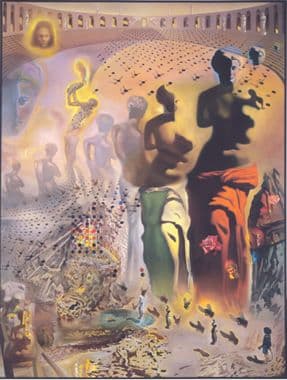
If you like Salvador Dalí
Explore painters from the same movements and circles.
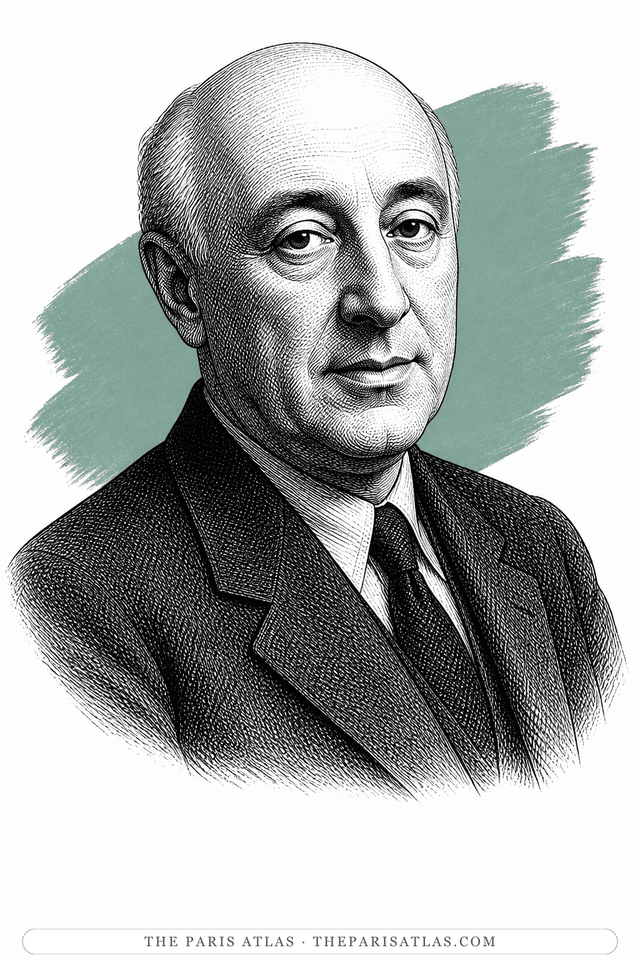
Jean Arp
Strasbourg-born sculptor and poet — Hans in German, Jean in French, both all his life — who co-founded Dada at the Cabaret Voltaire in 1916, composed collages by dropping torn paper 'according to the laws of chance', and settled at Meudon outside Paris in a house his wife Sophie Taeuber-Arp designed.
View artist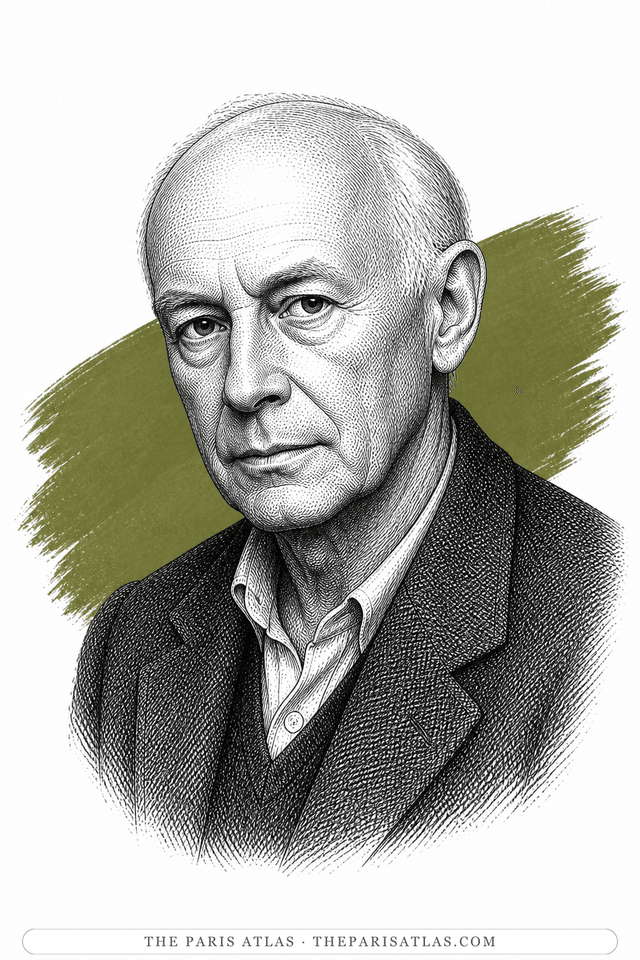
Henri Cartier-Bresson
French photographer who turned a pocket-sized 35mm camera into an instrument of split-second composition — the idea the world knows as 'the decisive moment'. He trained as a painter, was taken prisoner in 1940 and escaped on his third try, photographed the Liberation of Paris in August 1944, co-founded the photographer-owned agency Magnum Photos in 1947, gave up reporting for drawing in the 1970s, and left Paris a foundation in the Marais that deliberately hangs no permanent display of his own pictures.
View artist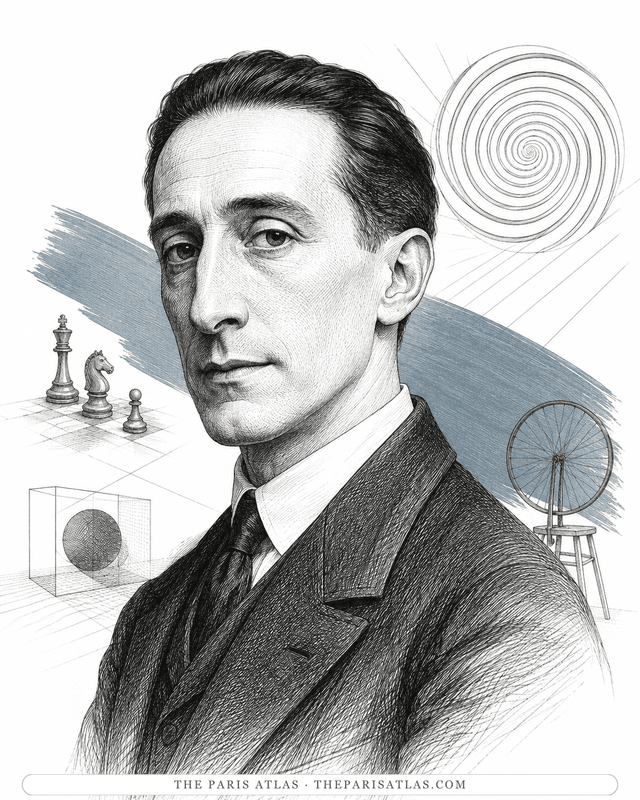
Marcel Duchamp
The century's quietest revolutionary — readymades, the abandonment of painting, chess on a Paris rooftop in Entr'acte, and one anemic film of spinning puns signed Rrose Sélavy.
View artist
In images
References
The sources below include collection records, catalogues, scholarly research, and primary materials that informed this page. They document Metamorphosis of Narcissus, its making, and its place in cultural history.


3↑Freud Museum London — Freud, Dalí and the Metamorphosis of Narcissus
WebsiteUsed forWeb source consulted for documented facts and historical context presented on the Metamorphosis of Narcissus page.
4↑Freud, Dalí and the Metamorphosis of Narcissus — online exhibition
WebsiteFreud Museum LondonUsed forWeb source consulted for documented facts and historical context presented on the Metamorphosis of Narcissus page.
These references provide the documented foundation for this work's history and interpretation. Claim-level citations remain attached to the specific claims they support.
 Explore more resources