Galatea in Creation
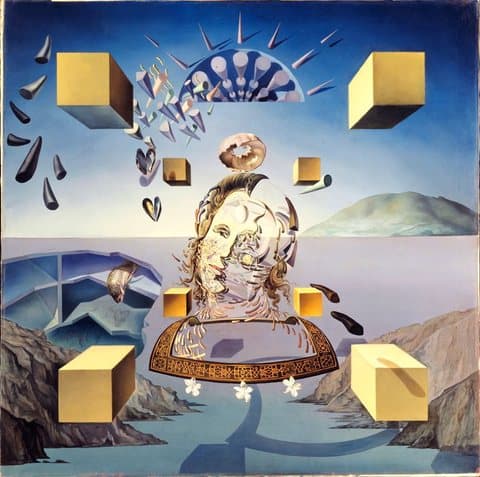
A classical female bust forms and dissolves among floating cubes, shells, flowers, and rhinoceros-horn spirals over the Catalan coast. Painted around 1954, it joins ancient sculptural form to the atomic and mathematical imagery of Dalí's nuclear mysticism.
- c. 1954
- Oil on canvas
About Salvador Dalí
A route through Dalí's work
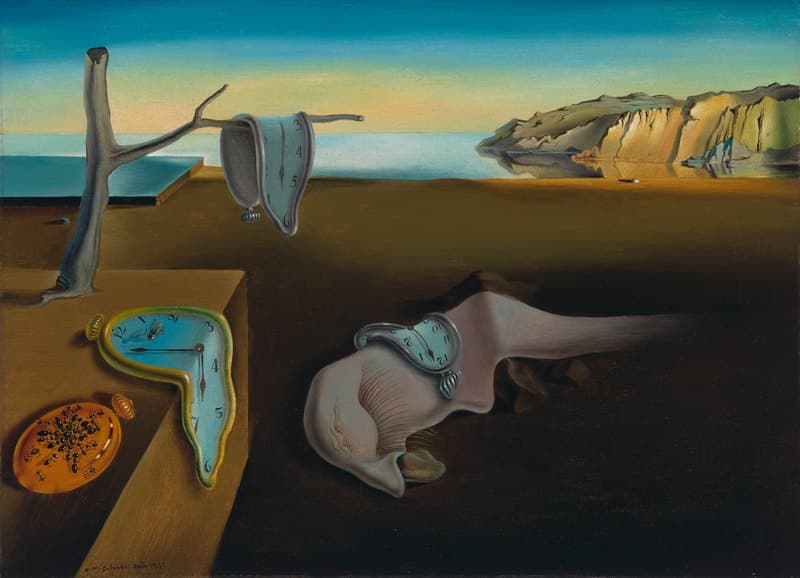
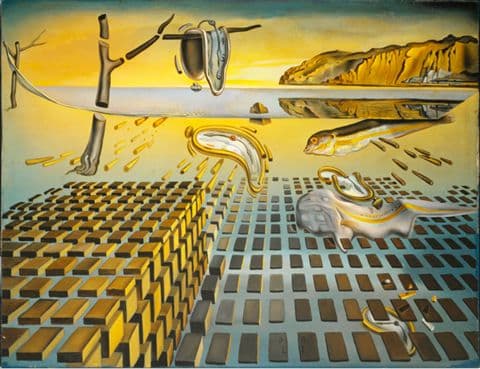
This late atomic image is easier to place beside The Persistence of Memory. The 1931 painting makes solid objects soft; Galatea in Creation instead rebuilds a figure from separate particles and geometric units.
What the painting shows
At the center, a classical female bust stands on an ornamented pedestal. Its profile remains legible, but forehead, hair, neck, and shoulders break into curved fragments. The head appears to be forming and dissolving at the same time.[1]
Gold cubes hover at several depths. Above the bust, segmented blue-and-white forms open like a shell or fan, while dark curved horns and small heart shapes cross the upper field. White star-shaped flowers gather near the pedestal. Behind them are calm water and rocky headlands associated with Cap de Creus and Port Lligat.[1]
A classical object made unstable
The pedestal and idealized profile identify the central form as a work of classical sculpture rather than a living sitter observed in a room. Dalí uses that familiar museum type as a stable reference before interrupting its continuity.
Fragments retain precise edges and shadows, so the dissolution does not become painterly blur. The eye can still reconstruct the bust across gaps. Creation in this picture is therefore an act of perception as well as a depicted event.
Cubes, horns, and nuclear mysticism
The picture belongs to the period Dalí called nuclear mysticism, when he combined Catholic imagery, classical art, geometry, and his reading of atomic physics. Matter in these works often appears discontinuous, built from units suspended in space rather than from one solid surface.[2]
Here cubes establish rational, hard-edged intervals while the bust breaks into organic curves. The surrounding void becomes active: empty space is part of how the figure is constructed rather than a neutral background.
Why rhinoceros horns appear
Dalí became preoccupied with rhinoceros horns in the 1950s because he associated their growth with a logarithmic spiral. The Fundació's science study records his claim that the horn offered a naturally occurring form of mathematical perfection.[2]
The claim belongs to Dalí's symbolic system, not to a precise scientific explanation of the painting. In Galatea in Creation, the horn shapes set curved growth against the cubes' rectilinear order and repeat the bust's shell-like fragments.
What the title does and does not establish
The title invites comparison with Galatea, the sculpted woman brought to life in the Pygmalion story. A classical bust “in creation” makes that association reasonable. The Fundació catalogue lists the title but does not explain it, so the myth should be treated as an interpretation rather than a documented key.[1]
The name also invites comparison with Gala, whose face and name recur throughout Dalí's work. The painting does not document the bust as her portrait, and the catalogue does not describe “Galatea” as Dalí's private name for her. The related title Galatea of the Spheres strengthens the association but does not settle identity.[1]
Related atomic figures
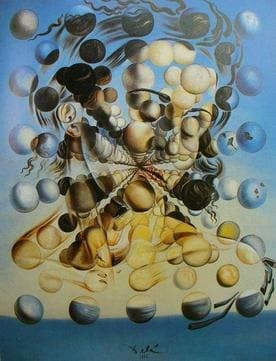
Two years earlier, Galatea of the Spheres organized Gala's face as a constellation of suspended spheres. In Galatea in Creation, the central object is a sculptural bust and the units are more varied: cubes, horn spirals, shell-like fragments, and flowers.
The comparison shows Dalí revising a problem rather than repeating an image. Both works ask how a recognizable figure can emerge from separated matter, but one remains a portrait while the other stages a classical object between formation and collapse.
After the Surrealist group
Dalí was no longer a member of André Breton's Surrealist group in 1954. Galatea in Creation therefore belongs historically to his later nuclear-mysticism program, not to the organized Surrealism of the 1920s and 1930s.[3]
It still uses a Surrealist inheritance: impossible suspension, incompatible scales, and a real landscape made psychologically unstable. Movement labels describe its context, but they do not divide his career into sealed visual languages.
Where it has been
The painting was shown in Rome in 1954 at the Sale dell'Aurora Pallavicini and then in New York at Carstairs Gallery. It later passed through the Morris and Gwendolyn Cafritz Foundation and Christie's sales in 2000 and 2006.[1]
Later exhibitions included Gagosian Gallery in 2004 and the High Museum of Art's Salvador Dalí: The Late Work in 2010–11. The catalogue raisonné identifies the current holder as Anne Vanommeslaghe and records the work as P 688.[1]
Why Galatea in Creation matters
The painting brings several strands of late Dalí into one controlled image: classical art, atomic discontinuity, mathematical growth, the Catalan coast, and the recurring orbit of Gala's name. None functions as a complete explanation on its own.
It also shows the value of looking beyond his most famous 1930s symbols. The work is less immediately recognizable than the melting watches of The Persistence of Memory, but it gives a precise account of how Dalí rebuilt his visual language around matter, geometry, and art history after the Second World War.
Close reading
Reading the work, detail by detail
The later Dalí rebuilds Gala from repeated particles instead of presenting a continuous body. These details show the portrait hovering between recognizable likeness and a system still assembling itself.
1.A face appears before it fully joins together
Eyes, mouth, and cheek remain legible even where their surfaces are interrupted. Recognition leaps across the gaps. Dalí makes the viewer perform the act named by the title: creating Galatea from separated parts.
2.The particles keep their own shadows
Each element is modeled as a tiny solid with light and shadow, not as a flat dot. The portrait therefore looks less like an image breaking apart than matter being organized in space.
3.Empty intervals are active material
The gaps do not erase the body; they make its construction visible. Blue passes through the figure so that portrait and surrounding atmosphere occupy the same field. Solidity becomes a temporary agreement among parts.
4.The upper forms spread outward in a fan
Pale shapes extend outward from the dark blue fan, with pointed pieces continuing the movement into the surrounding sky. This radiating pattern contrasts with the straight edges of the nearby cubes. The painting's upper area organizes different solids through changes of direction as much as through changes of color.
5.A patterned band gives the head a base
The broad curved band beneath the head is covered in small, repeated marks. Its comparatively continuous edge gives the scattered forms above something like the base of a portrait bust. Pale shapes hang below it, interrupting that stability before the eye reaches the open water farther down.
6.The cube and its shadow pull in different directions
The cube presents bright golden faces while a broad dark curve travels across the water below. The cube floats above the water with no visible support. Its straight edges contrast with the curved shadow that sweeps between the rocky shores.
Timeline
c. 1954
Dalí painted it — a classical bust breaking apart amid floating gold cubes and rhinoceros horns over Cap de Creus (Fundació catalogue raisonné no. P 688).
1954
Shown in Rome at the Sale dell'Aurora Pallavicini and in New York at Carstairs Gallery.
2000
Sold at Christie's.
2006
Sold again at Christie's. It remains in a private collection.
Where to see it
Private collection
No public viewing address is listed for this private collection.
Frequently asked questions
What is Galatea in Creation?
A painting of about 1954 by Salvador Dalí showing a classical female bust breaking apart on a pedestal, surrounded by floating gold cubes and rhinoceros horns over the bay at Cap de Creus. It comes from his religious and nuclear-mysticism years.
Why is it full of gold cubes?
They make matter appear discontinuous, with separated units occupying active space. They also provide a hard-edged mathematical order against the bust's curved fragments.
What are the horn shapes?
Rhinoceros horns. Dalí associated their growth with the logarithmic spiral and treated the form as a natural model of mathematical order. That was part of his personal symbolic system, not a scientific key that fully explains the picture.
Who is Galatea — is it Gala?
The title reasonably invites the Pygmalion myth and comparison with Gala, but the catalogue does not explain the title or identify the bust as Gala. Both connections should be treated as interpretations rather than settled facts.
Is it a Surrealist painting?
It belongs to Dalí's later nuclear-mysticism period, after his break with Breton's group. It still carries Surrealist methods of impossible suspension and unstable perception, so the answer depends on whether “Surrealist” means group membership or a continuing visual inheritance.
How does it relate to Galatea of the Spheres?
Both explore a recognizable figure made from separated units. Galatea of the Spheres is a portrait of Gala built from spheres. Galatea in Creation uses a classical bust, cubes, horn spirals, shell-like fragments, and flowers.
Why does the landscape matter?
The water and rocky headlands connect the impossible event to the real coast around Cap de Creus and Port Lligat. Dalí repeatedly used that familiar geography as the stage for psychological, religious, and scientific imagery.
Where is it now?
In a private collection. It is catalogued by the Fundació Gala-Salvador Dalí as catalogue raisonné number P 688, and has been shown at the Gagosian Gallery (2004) and the High Museum of Art, Atlanta (2010–11).
More by Salvador Dalí
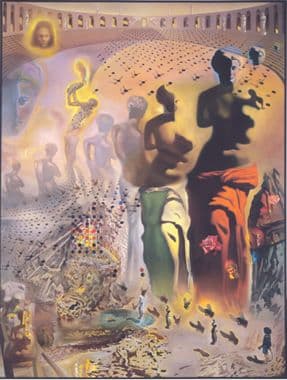
If you like Salvador Dalí
Explore painters from the same movements and circles.
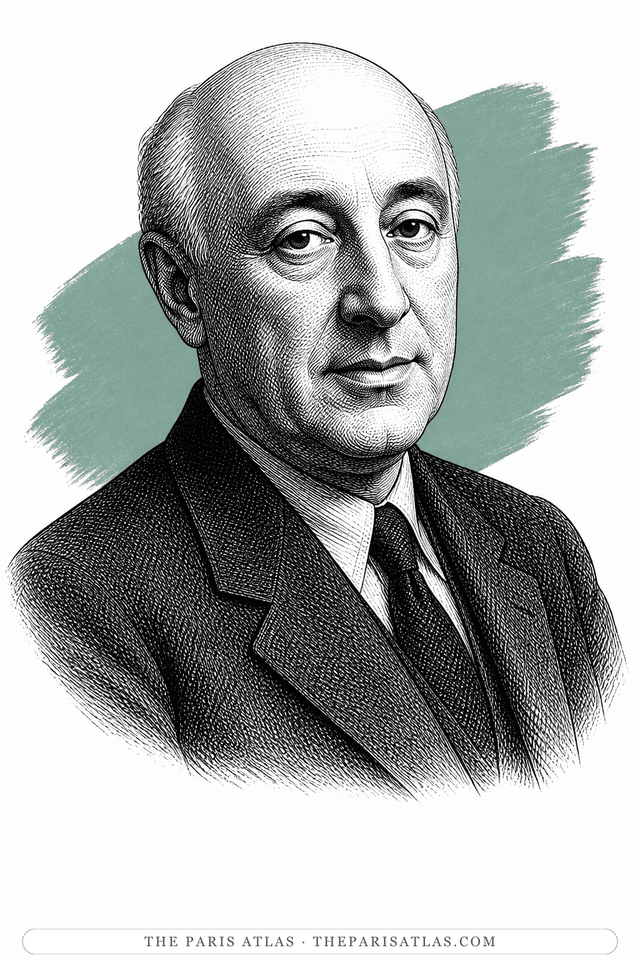
Jean Arp
Strasbourg-born sculptor and poet — Hans in German, Jean in French, both all his life — who co-founded Dada at the Cabaret Voltaire in 1916, composed collages by dropping torn paper 'according to the laws of chance', and settled at Meudon outside Paris in a house his wife Sophie Taeuber-Arp designed.
View artist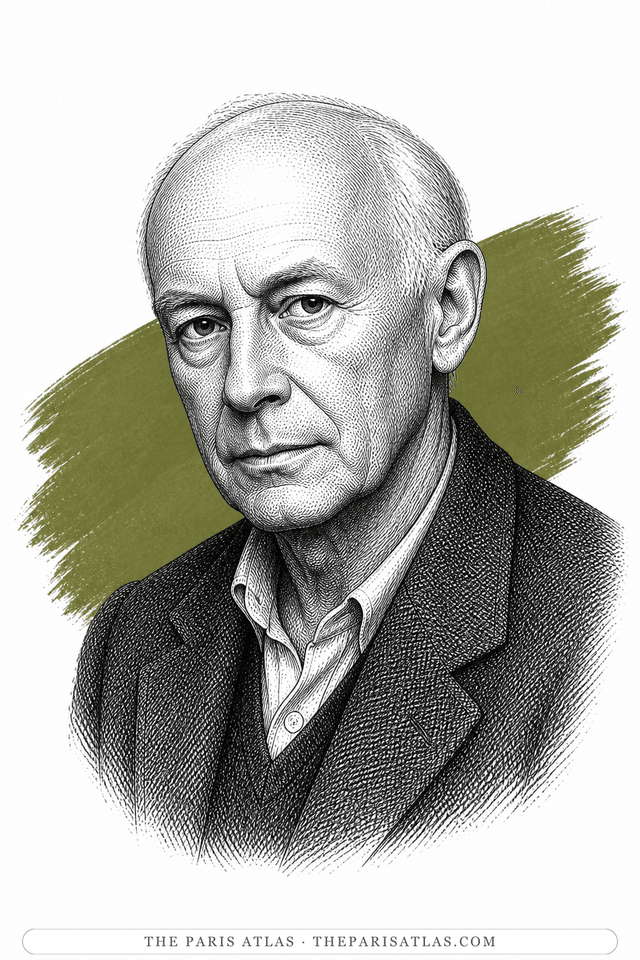
Henri Cartier-Bresson
French photographer who turned a pocket-sized 35mm camera into an instrument of split-second composition — the idea the world knows as 'the decisive moment'. He trained as a painter, was taken prisoner in 1940 and escaped on his third try, photographed the Liberation of Paris in August 1944, co-founded the photographer-owned agency Magnum Photos in 1947, gave up reporting for drawing in the 1970s, and left Paris a foundation in the Marais that deliberately hangs no permanent display of his own pictures.
View artist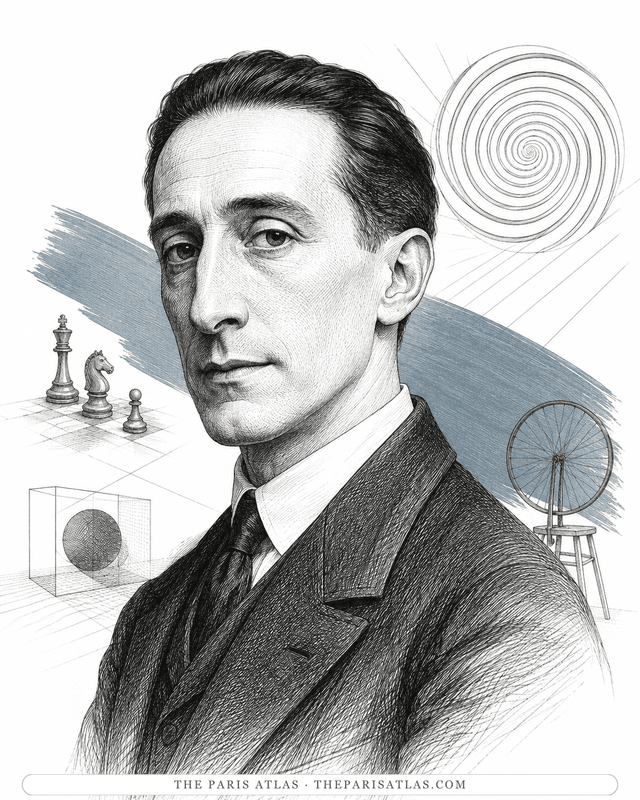
Marcel Duchamp
The century's quietest revolutionary — readymades, the abandonment of painting, chess on a Paris rooftop in Entr'acte, and one anemic film of spinning puns signed Rrose Sélavy.
View artist
References
The sources below include collection records, catalogues, scholarly research, and primary materials that informed this page. They document Galatea in Creation, its making, and its place in cultural history.


3↑Dual timeline — Salvador Dalí biography
WebsiteFundació Gala-Salvador DalíUsed forThe Fundació Gala-Salvador Dalí chronology anchors the painting within Dalí's nuclear-mystical period.
4Salvador Dalí
WebsiteArt Institute of ChicagoUsed forThe Art Institute of Chicago's artist record provides independent museum context for Dalí's postwar career.
These references provide the documented foundation for this work's history and interpretation. Claim-level citations remain attached to the specific claims they support.
 Explore more resources