The Paris AtlasCharting the artists, works, and places worth returning to.
  • Painter
· Belgian · 1898–1967

René Magritte

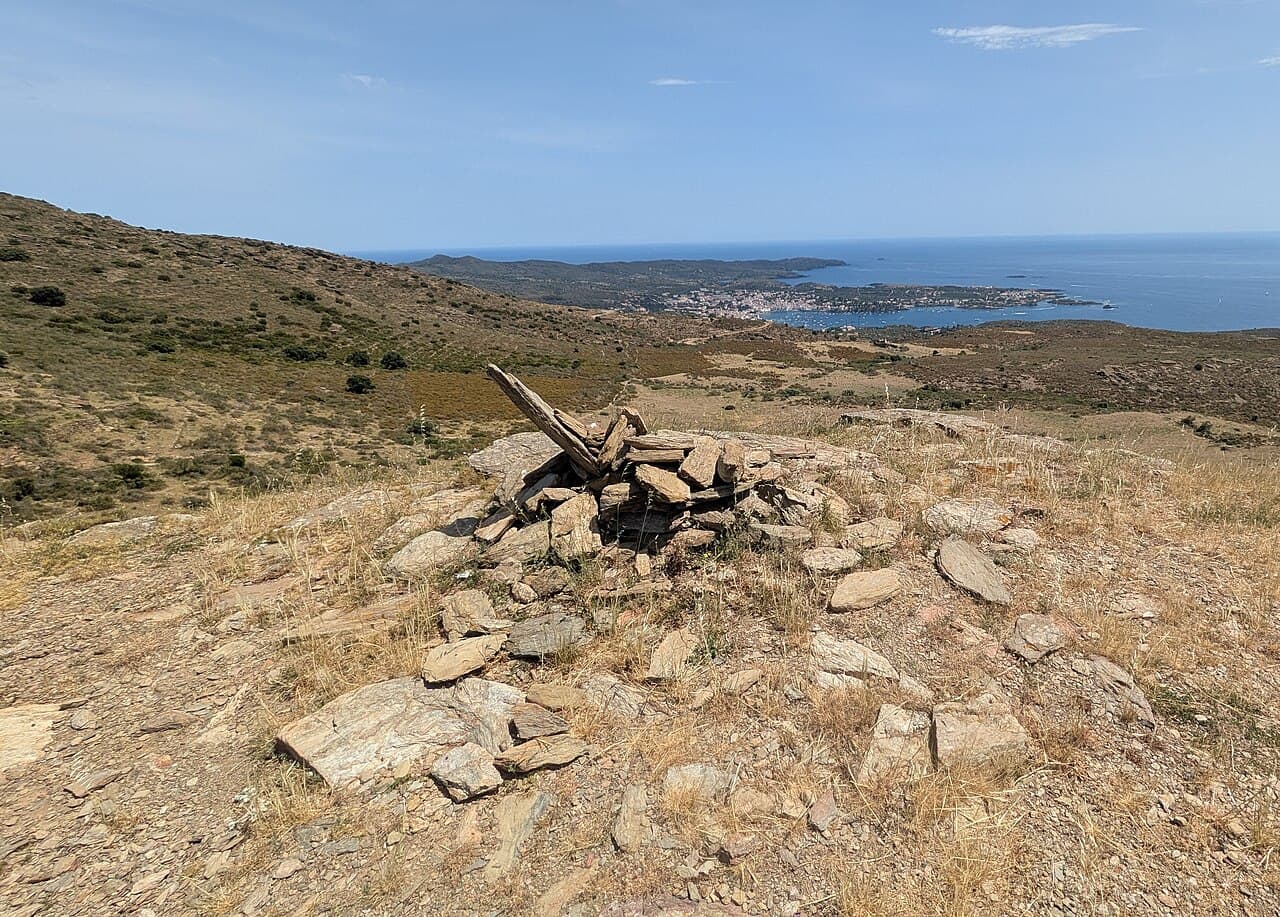
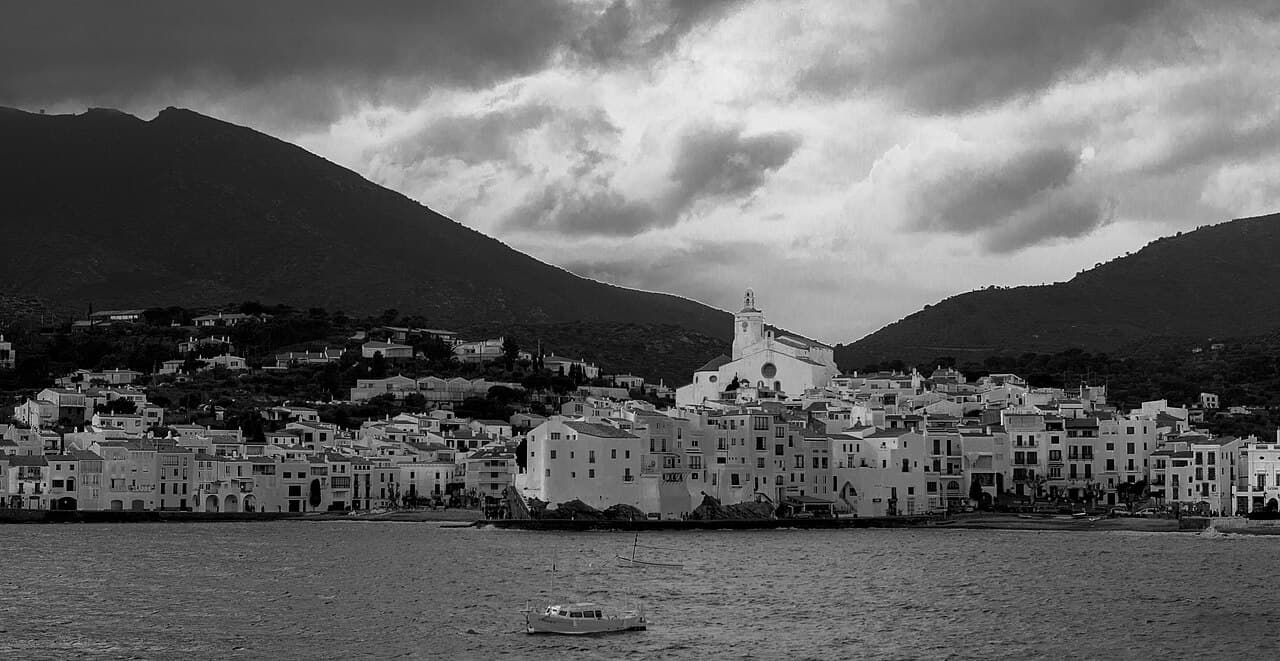
Belgian Surrealist, in Paris from 1927, who painted ordinary objects in impossible arrangements and made the picture itself the subject. He met Salvador Dalí in Paris in the spring of 1929 and spent that August with him at Cadaqués.

In images

Details

Lived
1898–1967
Born
1898
Died
1967
Nationality
Belgian
Roles
Painter

About René Magritte

Magritte was born at Lessines in Hainaut on 21 November 1898 and trained in Brussels. He moved to the outskirts of Paris in 1927, joined the Surrealist circle around André Breton and Paul Éluard, and went back to Brussels in 1930, where he stayed for the rest of his life. He worked in a suit, in his dining room, and produced the images most people now picture when they hear the word Surrealism: the bowler hat, the pipe that is not a pipe, the room filling with an apple.

He belongs in these pages for the summer of 1929. He and Dalí met in Paris that spring, and in August Magritte travelled to Cadaqués with his wife Georgette at Dalí's invitation. The Royal Museums of Fine Arts of Belgium, who exhibited the two painters together, call that summer decisive for both. It is also the summer Gala stayed behind when the Éluards went home.

Selected works

Cataloged from the holding institutions' records. Reproductions appear only where the rights are verified.

Paintings

A single enormous eye fills the canvas, cropped by all four edges, with no lashes and no brow. The lids are smooth bands of warm brown and grey-brown, and a pale wedge of the white of the eye shows on each side. The iris is a flat mid-blue sky filled with white cumulus clouds, ending in a clean circular edge, and at its centre sits a matte black disc with no highlight. The inner corner at the left is a small pink-brown pocket with a wet highlight

Artwork reproduction

Painting

The False Mirror

Paris 1929 · Oil on canvas

One enormous eye fills the canvas, its iris a blue sky with white clouds and its pupil a flat black disc. René Magritte painted it in Paris in 1929, and the Belgian writer Paul Nougé supplied the title. Man Ray owned it from 1933 to 1936, and the Museum of Modern Art has held it since December 1937 as object number 133.1936.

The Museum of Modern Art

René Magritte, The False Mirror, Paris 1929. The Museum of Modern Art. Image © the rights holder, shown under fair use.

Two people kiss with their heads wrapped in pale grey cloth that follows the skull and jaw and gathers in folds at the neck, the cloths meeting where the mouths would be. The figure at the left is bare-shouldered in a dusty rose sleeveless top with a pale piped neckline. The figure at the right wears a dark jacket, a white collar and a dark tie, with the loose end of the cloth crossing the chest like a scarf. Behind them a grey-blue wall runs under a moulded cornice, a fluted column head sits in the upper right corner, and a panel of rust brown closes the right edge

Artwork reproduction

Painting

The Lovers

Paris 1928 · Oil on canvas

Two people kiss with their heads wrapped in pale grey cloth, so that the cloth touches where the mouths would. René Magritte painted it in Paris in 1928, in the first full year of the three he spent in France. The Museum of Modern Art has held it since 1998 as object number 530.1998, and a second canvas of the same title and year belongs to the National Gallery of Australia.

The Museum of Modern Art

René Magritte, The Lovers, Paris 1928. The Museum of Modern Art. Image © the rights holder, shown under fair use.

A pale room with bare board floors and a dark grey rail round its grey-white walls. A naked woman lies on her back on a low couch at the left, on a red-brown cover over pale carved wood. Blood runs from her mouth, a red band sits on her head and a white cloth is bunched at her shoulder. A young man in a dark suit stands in the middle of the room, beside a gramophone whose large pale yellow-green horn turns up and to the left. A black overcoat and a hat lie on a grey chair, with a tan suitcase on the floor. Two men in bowler hats and dark overcoats wait at the edges of the doorway, one holding a grey-green club, the other an open-meshed brown net. Three near-identical men look in over an ornamental grey railing at the back, against a snow-capped mountain under a blue sky

Artwork reproduction

Painting

The Menaced Assassin

Brussels 1927 · Oil on canvas

A woman lies dead on a couch while a young man in a suit stands listening to a gramophone, two men wait at the doorway with a club and a net, and three more watch from a balcony. René Magritte painted it in Brussels in 1927, the year he moved to France. It is one of his largest canvases and has belonged to the Museum of Modern Art since 1966, as object number 247.1966.

The Museum of Modern Art

René Magritte, The Menaced Assassin, Brussels 1927. The Museum of Modern Art. Image © the rights holder, shown under fair use.

Two thick cream-white frames with bevelled inner edges lean side by side against an olive-brown wall divided into flat panels by thin dark mouldings. Each is cut to the same irregular seven-sided outline, vertical at the sides and angled in at the top and bottom corners. The left frame holds a pale blue sky; the right frame holds a flat grey field carrying the word ciel in black, written in a formal round hand with thick downstrokes and hairline upstrokes. Both lean back slightly on bare olive-brown floorboards and cast soft grey shadows up and to the right

Artwork reproduction

Painting

The Palace of Curtains, III

Paris 1928–29 · Oil on canvas

Two irregular frames lean side by side against a panelled wall. The left one holds a pale blue sky; the right one holds the word ciel, written in black on grey. René Magritte painted it in Paris across 1928 and 1929. The Museum of Modern Art has held it since 1967 as object number 631.1967, in the Sidney and Harriet Janis Collection.

The Museum of Modern Art

René Magritte, The Palace of Curtains, III, Paris 1928–29. The Museum of Modern Art. Image © the rights holder, shown under fair use.

A brown smoking pipe floats against an even pale cream ground. The bowl is at the left, with a dark oval opening and a broad highlight down its front, and the shank curves right to a narrow ivory band and a black tapering mouthpiece. Below it, in joined black cursive, runs the line Ceci n'est pas une pipe, ending in a full stop. The signature Magritte is small and dark at the lower right

Artwork reproduction

Painting

The Treachery of Images (This is Not a Pipe)

1929 · Oil on canvas

A brown pipe floats on a pale cream ground, and under it, in joined cursive, runs the line Ceci n'est pas une pipe. René Magritte painted it in 1929, during the three years he was living in France. The Los Angeles County Museum of Art bought it at auction in 1978 and shows it as accession number 78.7.

Los Angeles County Museum of Art

René Magritte, The Treachery of Images (This is Not a Pipe), 1929. Los Angeles County Museum of Art. Image © the rights holder, shown under fair use.

People René Magritte Knew

Relationships with other people, with sources for each connection.

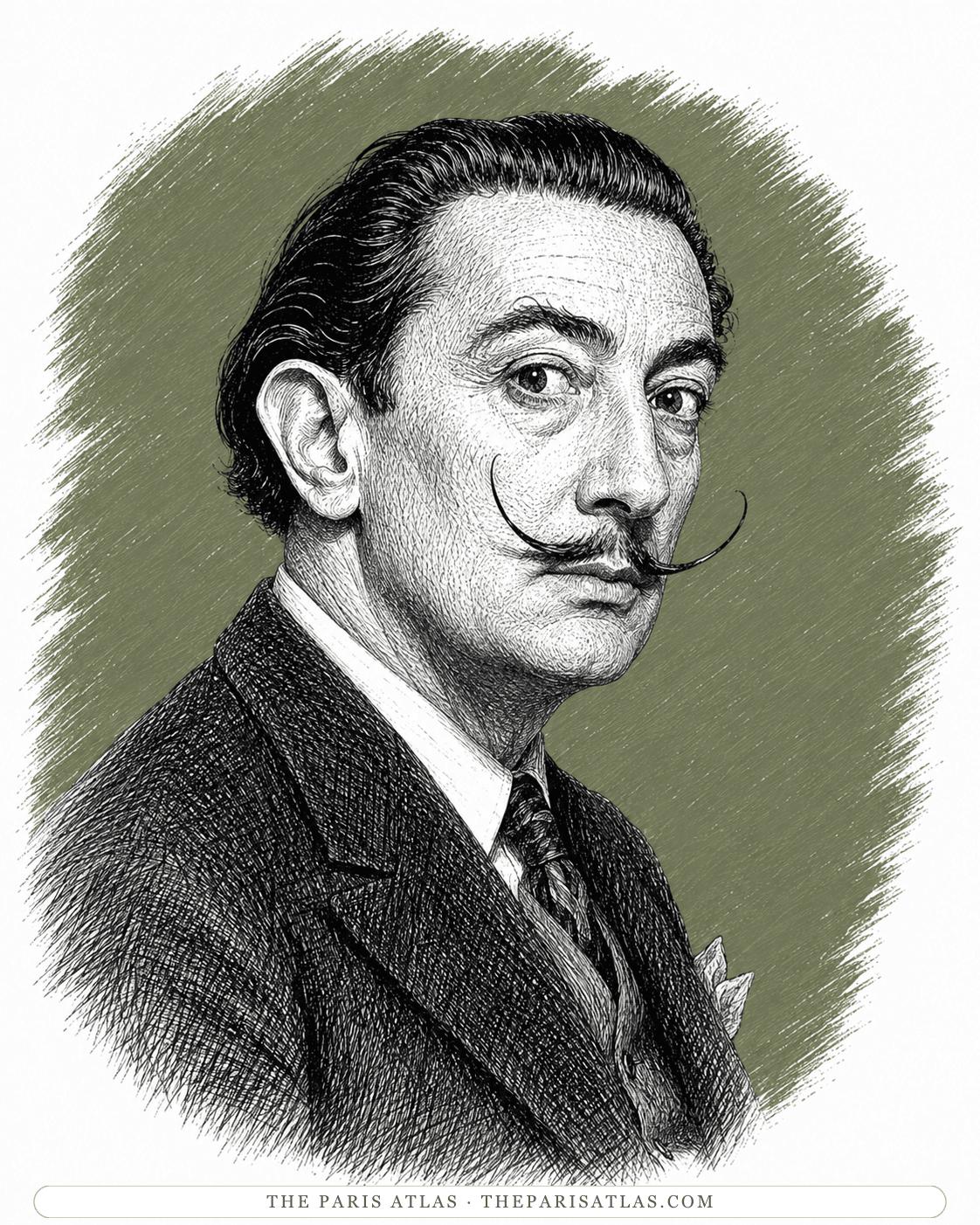
Illustrated portrait of Salvador Dalí

Salvador Dalí

  • Painter
  • Filmmaker
  • Sculptor

Met · 1929

They met in Paris in the spring of 1929, and that August Magritte travelled to Cadaqués with his wife Georgette at Dalí's invitation. The Royal Museums of Fine Arts of Belgium, who showed the two painters together, call the visit decisive.

— Royal Museums of Fine Arts of Belgium — Dalí & Magritte exhibition

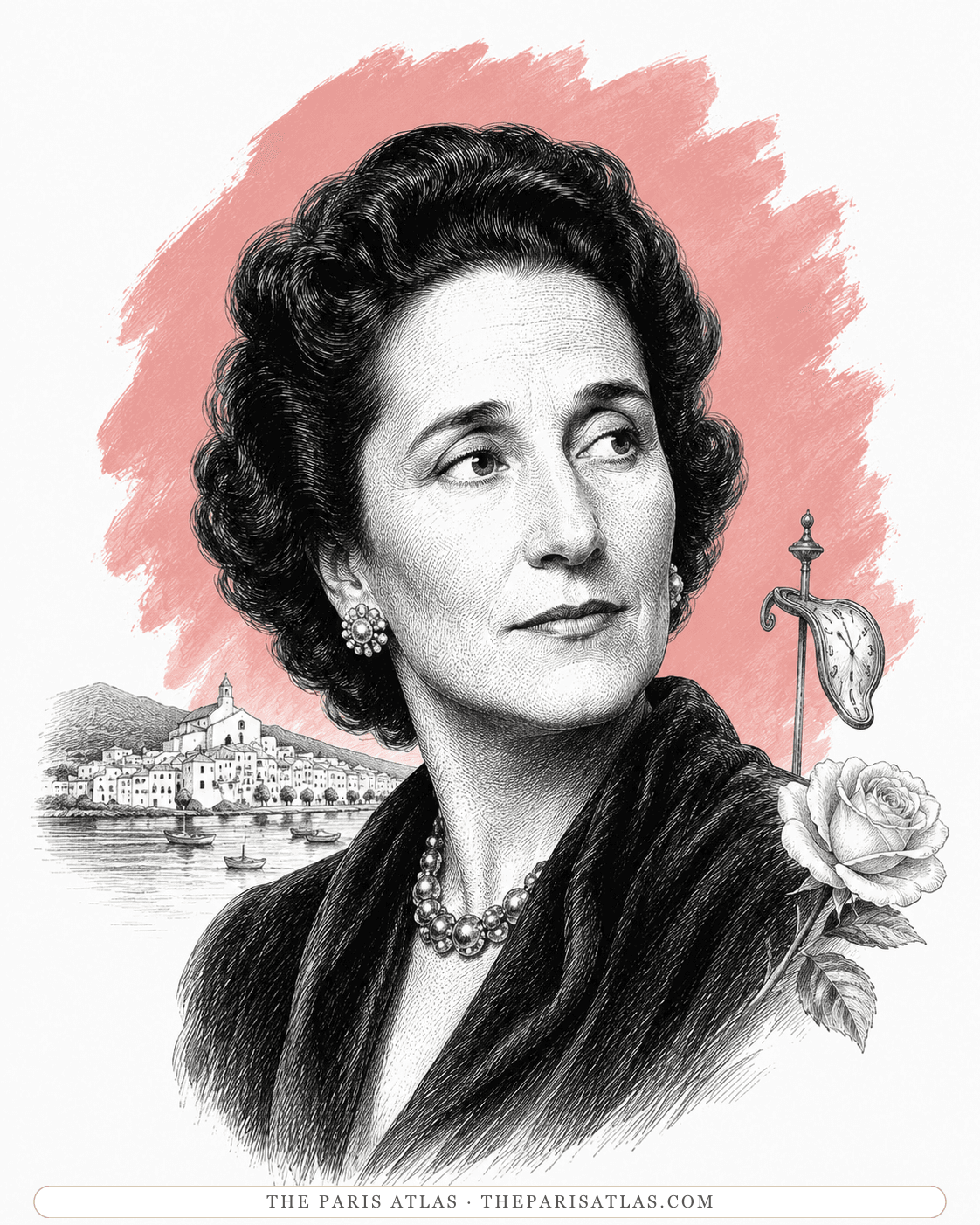
Illustrated portrait of Gala Dalí

Gala Dalí

  • Artists' model
  • Muse
  • Agent

Met · 1929

René and Georgette Magritte travelled with Gala, Paul Éluard, Cécile and Camille Goemans to visit Salvador Dalí at Cadaqués in August 1929.

— The Dalí Museum, St. Petersburg — Gala Dalí, 1929

Who Inspired René Magritte

People whose work inspired René Magritte. They did not necessarily meet or know one another.

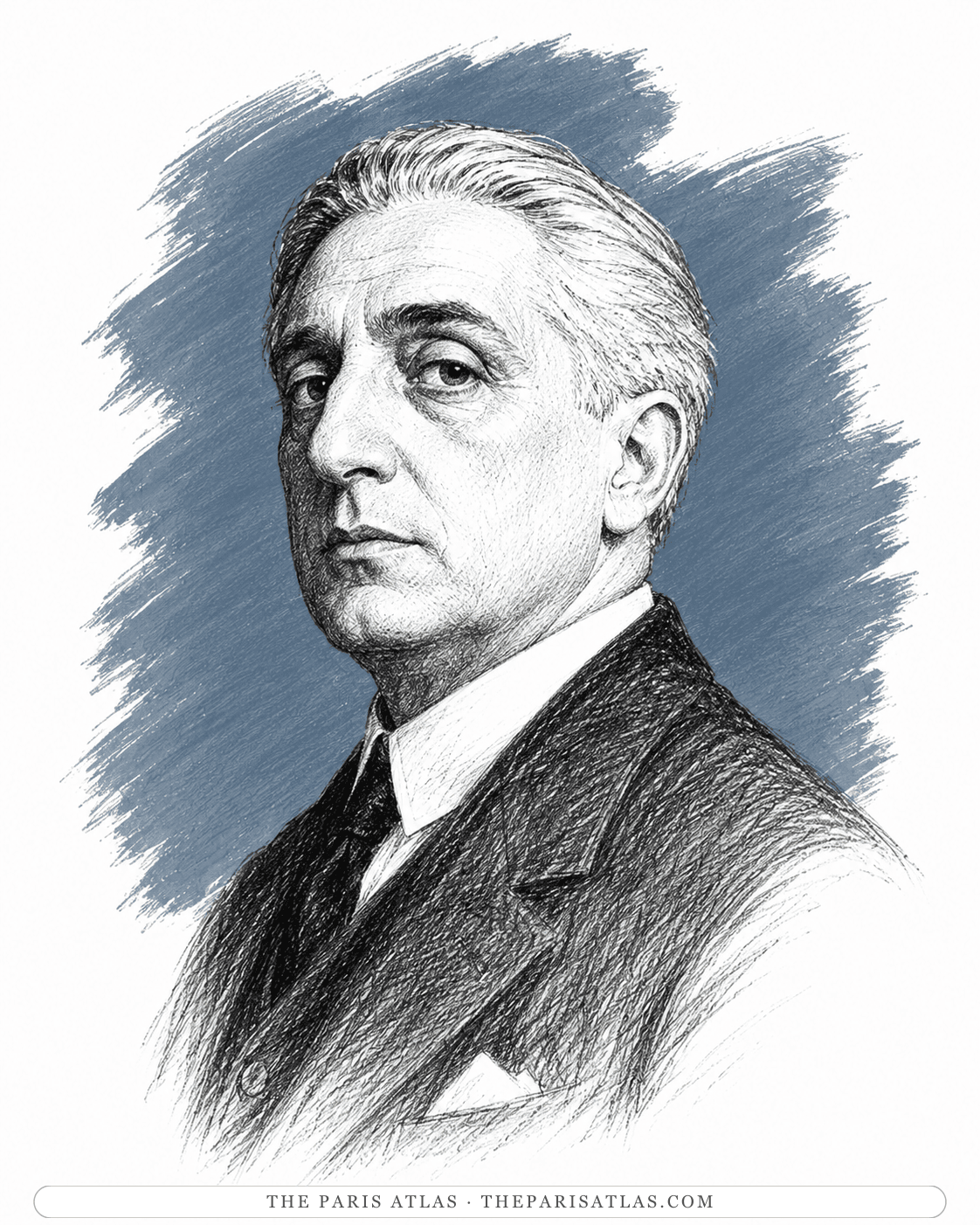
Illustrated portrait of Giorgio de Chirico

Giorgio de Chirico

René Magritte dated his turn to Surrealist painting to his first sight of de Chirico's The Song of Love, which he called one of the most moving moments of his life: his eyes, he said, saw thought for the first time. The uncanny stillness of the mature Magritte descends directly from de Chirico's metaphysical squares.

— Giorgio de Chirico

Movements

The artistic and literary currents this life ran through.

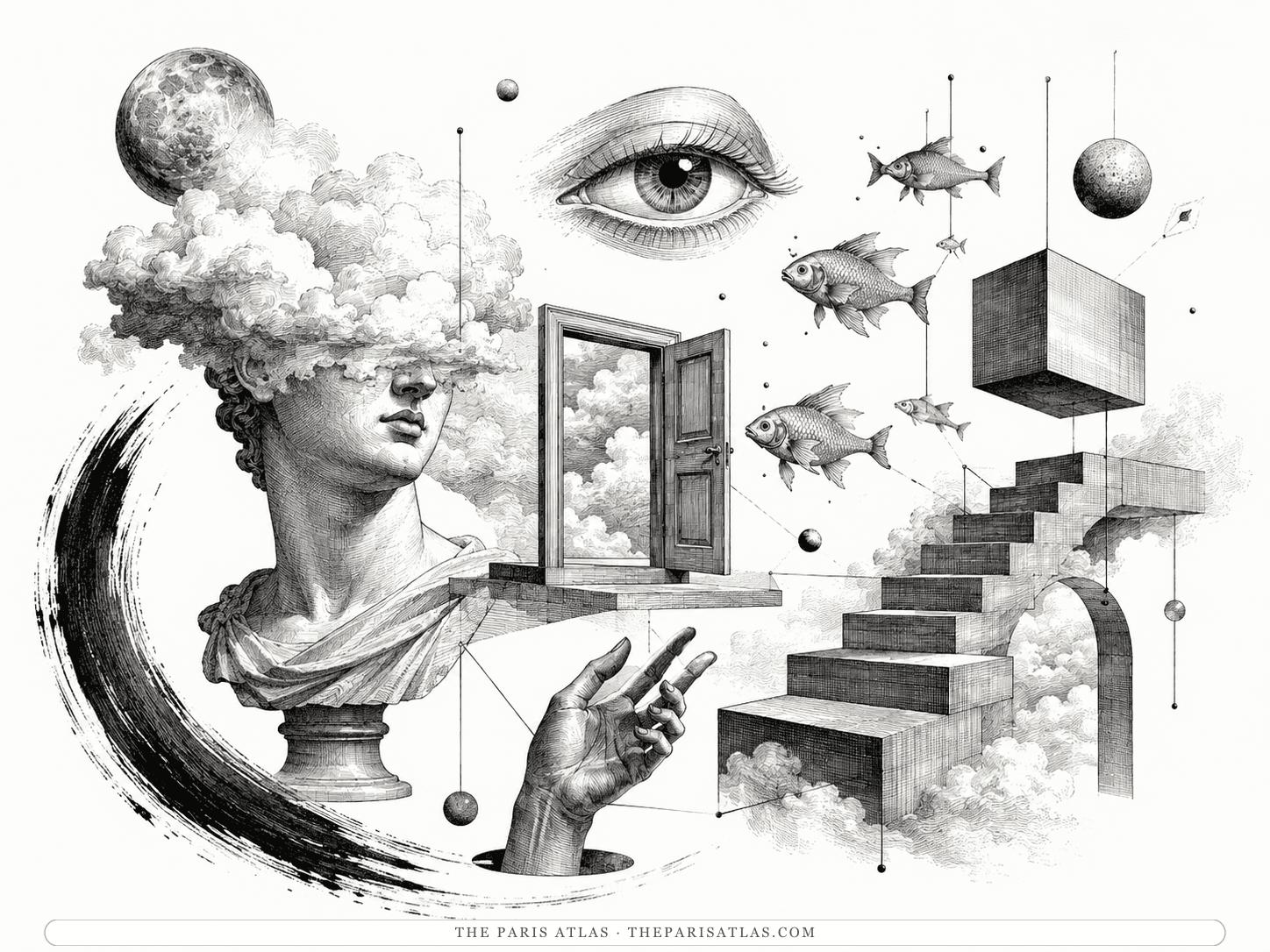
Pen-and-ink dream collage — a classical bust with clouds for eyes, a floating eye, a door opening onto sky, fish swimming through air, and an impossible staircase

Art & literary movement · 1924–1966

Surrealism

He moved to the outskirts of Paris in 1927 and worked alongside the group around André Breton until 1930, then took Surrealism back to Brussels and painted it there for the rest of his life.

— Musée Magritte Museum, Brussels — biography; Royal Museums of Fine Arts of Belgium — Dalí & Magritte exhibition

René Magritte’s Places

The cataloged places connected to René Magritte — through the books, and through the documented record.

Places you can enter today appear first, followed by addresses to see from outside and sites that have vanished.

Connections and Sources

René Magritte’s connections to people, places, and works, with the sources behind each one.

Associated with · 1927

Surrealism

He moved to the outskirts of Paris in 1927 and worked alongside the group around André Breton until 1930, then took Surrealism back to Brussels and painted it there for the rest of his life.

— Musée Magritte Museum, Brussels — biography; Royal Museums of Fine Arts of Belgium — Dalí & Magritte exhibition

Met · 1929

Salvador Dalí

They met in Paris in the spring of 1929, and that August Magritte travelled to Cadaqués with his wife Georgette at Dalí's invitation. The Royal Museums of Fine Arts of Belgium, who showed the two painters together, call the visit decisive.

— Royal Museums of Fine Arts of Belgium — Dalí & Magritte exhibition

Visited · 1929

Cadaqués

René Magritte travelled to Cadaqués at Salvador Dalí's invitation in August 1929 and painted The Threatening Weather during the stay.

— Royal Museums of Fine Arts of Belgium — Dalí & Magritte exhibition

Met · 1929

Gala Dalí

René and Georgette Magritte travelled with Gala, Paul Éluard, Cécile and Camille Goemans to visit Salvador Dalí at Cadaqués in August 1929.

— The Dalí Museum, St. Petersburg — Gala Dalí, 1929

Influenced by

Giorgio de Chirico

René Magritte dated his turn to Surrealist painting to his first sight of de Chirico's The Song of Love, which he called one of the most moving moments of his life: his eyes, he said, saw thought for the first time. The uncanny stillness of the mature Magritte descends directly from de Chirico's metaphysical squares.

— Giorgio de Chirico

References

References

The sources below include biographies, scholarly essays, interviews, and primary materials that informed this page. They reflect both the historical record and ongoing critical conversations about René Magritte and their work.

  1. 1Musée Magritte Museum, Brussels — biography

    Website
    Used for

    Web source consulted for documented facts and historical context presented on the René Magritte page.

    View source
  2. 2Royal Museums of Fine Arts of Belgium — Dalí & Magritte exhibition

    Website
    Used for

    Web source consulted for documented facts and historical context presented on the René Magritte page.

    View source
  1. 3The Dalí Museum, St. Petersburg — Gala Dalí

    Website
    Used for

    Web source consulted for documented facts and historical context presented on the René Magritte page.

    View source
  2. 4René Magritte

    Website
    The Museum of Modern Art
    Used for

    Web source consulted for documented facts and historical context presented on the René Magritte page.

    View source
i
Why these sources are here

These references anchor the page in the documented record and in the scholarly conversations around René Magritte. Every claim on this page traces back to one or more of the works listed here.

Explore more resources