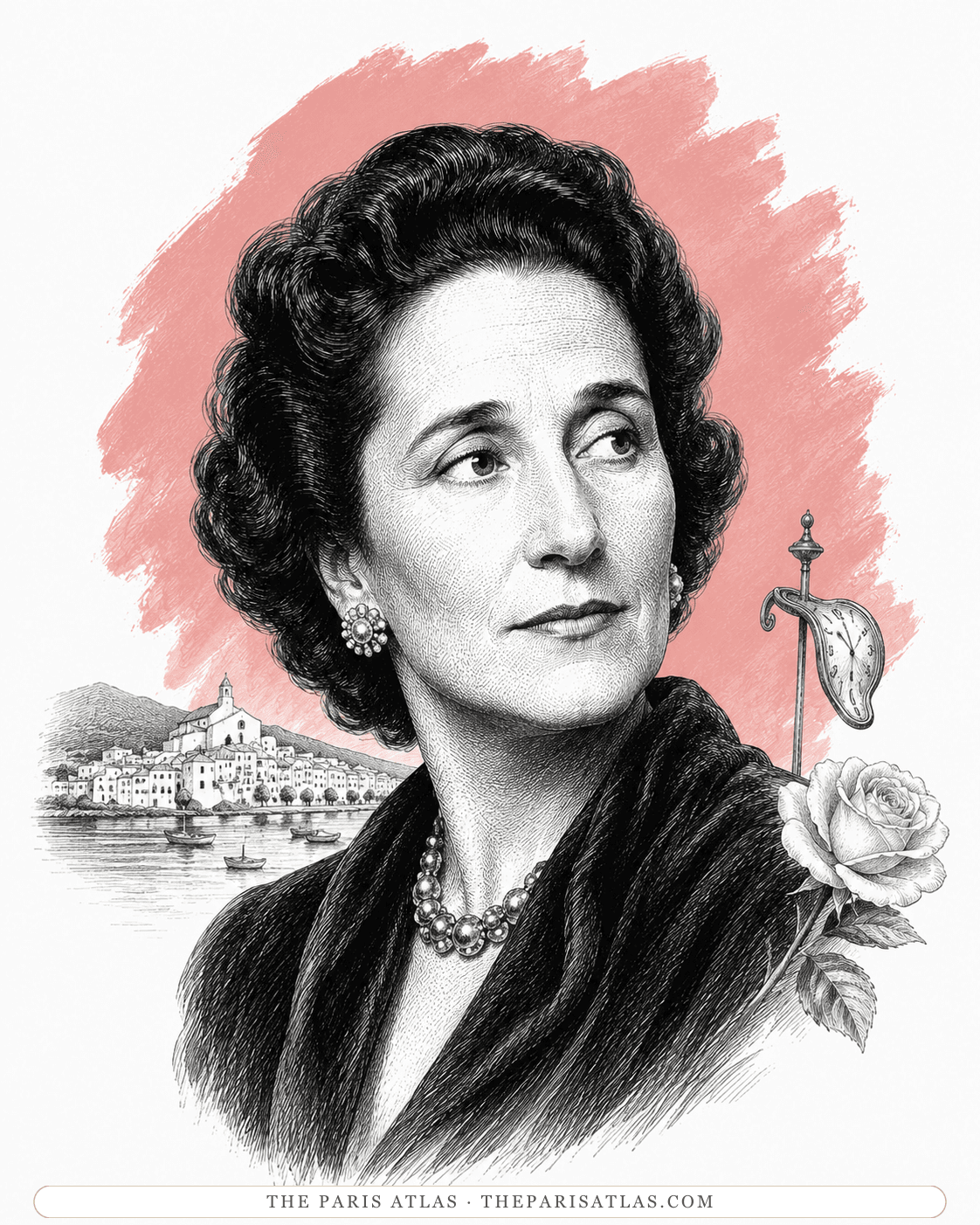
Gala Dalí
- Artists' model
- Muse
- Agent
Met
The MNAC's 2018 exhibition records that de Chirico valued Gala's practical intelligence and asked her to act as his agent.
Italian painter whose metaphysical cityscapes helped shape Surrealism. The MNAC's 2018 Gala exhibition records that he valued her practical intelligence and asked her to act as his agent.
Giorgio de Chirico was a Greek-born Italian painter and writer, born in Volos, Greece, on 10 July 1888. Before the First World War he invented metaphysical painting, the scuola metafisica: empty Italian squares, long shadows, Roman arcades, distant trains and faceless mannequins, arranged in an uneasy, dreamlike stillness. Those pictures, made between about 1909 and 1919, became the single most important source for Surrealism.
Then he turned against everything they stood for. After 1919 de Chirico renounced modern art, called for a return to craftsmanship and the old masters, and spent the rest of a very long life painting in classical and neo-Baroque manners the critics never forgave. He fell out bitterly with André Breton's Surrealists, who worshipped his early work and despised his new work. He took revenge by forging his own early paintings, backdating fresh canvases and, in the same breath, denouncing genuine ones in museums as fakes.
He settled in Rome in 1944, in a house by the Spanish Steps that is now his museum, was elected to the French Académie des Beaux-Arts in 1974, and died in Rome on 20 November 1978, aged 90. The metaphysical paintings are among the most influential images of the twentieth century.
Giuseppe Maria Alberto Giorgio de Chirico was born on 10 July 1888 in Volos, Greece, where his Italian father, an engineer from a family of Sicilian origin, was building the Thessaly railway, including the line up Mount Pelion. Trains and railway architecture entered his imagination as a child and never left the paintings. His younger brother became the writer, painter and composer Alberto Savinio. De Chirico studied drawing at the Athens Polytechnic, and after his father's death in 1905 the family moved to Germany.[1]
At the Academy of Fine Arts in Munich he trained under academic painters, absorbed the brooding Symbolism of Arnold Böcklin and Max Klinger, and read the philosophers who shaped his whole outlook: Nietzsche, Schopenhauer and Otto Weininger. It was Nietzsche's sense of hidden meaning beneath ordinary surfaces, and Böcklin's mythic stillness, that he would translate into paint.
Back in Italy in 1909, de Chirico began the pictures that made him. In Florence in 1910, after what he described as a revelation in the Piazza Santa Croce, he painted the first Metaphysical Town Square, The Enigma of an Autumn Afternoon. Turin's arcades and empty piazzas deepened the vision. Between 1909 and 1919 he built a fixed repertoire of motifs, empty arcades, towers, elongated shadows, mannequins, trains, and steep illogical perspectives, into images of nostalgia, dread and estrangement. On a 1911 self-portrait he inscribed the question that is their key: what shall I love if not the enigma?[2]
He moved to Paris in July 1911 to join his brother, showed at the Salon d'Automne and the Salon des Indépendants, and was noticed by Pablo Picasso and Guillaume Apollinaire, who became his champion. Through Apollinaire he met the dealer Paul Guillaume, who put him under contract in 1914. The war took him back to Italy, where he was posted to a hospital at Ferrara; there he met the painter Carlo Carrà, and together they named the movement, pittura metafisica.[3]
In November 1919 de Chirico published an article, The Return of Craftsmanship. It called for a return to traditional method and to the old masters, Raphael and Signorelli among them, and made him an outspoken enemy of modern art. The timing was extraordinary. At that very moment André Breton discovered a de Chirico in Paul Guillaume's Paris gallery and was electrified. The young painters who felt the same, Max Ernst, Yves Tanguy, René Magritte and Salvador Dalí, formed the core of the Surrealist group around him.[1]
They loved the man for a body of work he had already disowned. When de Chirico visited Paris in 1924 the Surrealists took him in, then attacked his new classicising paintings without mercy; by 1926 he called them cretinous and hostile, and the two sides parted in acrimony. He married the Russian ballerina Raissa Gurievich in 1930, and in 1929 published the Surrealist novel Hebdomeros and designed for Diaghilev's Ballets Russes.
In 1930 de Chirico met Isabella Pakszwer Far, his companion for the rest of his life; they married in 1946. After years in Paris, Italy and the United States, the couple settled in Rome in 1944, and in 1948 bought the house by the Spanish Steps that is now his museum. From 1939 he painted in a neo-Baroque manner drawn from Rubens, Titian and Renoir, studying and rediscovering the old masters' techniques, in what is called his Baroque season.
The critics never came round, and de Chirico's revenge was singular. Convinced his late work was his best, and resentful that only the early paintings were prized, he produced backdated forgeries of his own metaphysical pictures, both to profit from their fame and to spite the market. At the same time he denounced genuine early works in museums and private collections as fakes. The result is a catalogue permanently unstable, exactly as he wished. He stayed prolific into his nineties, was elected to the French Académie des Beaux-Arts in 1974, and died in Rome on 20 November 1978, aged 90; in 1992 his remains were moved to the church of San Francesco a Ripa.
The metaphysical pictures work by disturbance, not depiction. De Chirico set ordinary things, an arcade, a tower, a train, a mannequin, a plaster head, a bunch of bananas, into raking late light and contradictory perspectives, so that a familiar square becomes ominous and unreadable. The critic Sanford Schwartz noted that the railway engineer's son painted cities the way you see them flashing past a train window, known intimately and yet from outside. His nearest kin, oddly, is the American realist Edward Hopper: the same low sun, the same irrational shadow, the same portentous emptiness.
The late work reverses the method: instead of estranging the ordinary, it borrows the grandeur and finish of the old masters, gladiators, horses, Baroque self-portraits, painted with deliberately anti-modern craft. De Chirico insisted this too was metaphysical, art reaching beyond reality, but the historical verdict has stayed with the silent squares of 1909 to 1919.
Few painters have seeded a movement so completely. Surrealism grew from de Chirico's metaphysical images. René Magritte said his first sight of The Song of Love was one of the most moving moments of his life, when his eyes saw thought for the first time. Yves Tanguy became a painter on the spot after seeing a de Chirico in a dealer's window. Max Ernst, Dalí, Paul Delvaux and many others acknowledged the same debt, and the filmmaker Michelangelo Antonioni carried the empty, waiting cityscape into cinema.[2]
The paradox of his reputation is that the man outlived his moment by sixty years and spent them fighting it. The critical world fixed on the decade before 1920 and dismissed the rest; de Chirico answered with forgeries and denunciations that muddied his own record for good. The metaphysical paintings hang in the Museum of Modern Art, the Tate and the Peggy Guggenheim Collection, and continue to feed painters, poets and directors a century on.
Born in Volos, Greece, on 10 July, the son of an Italian railway engineer.
After his father's death, the family moves to Germany; he enters the Academy of Fine Arts in Munich.
In Florence, paints the first metaphysical town square, The Enigma of an Autumn Afternoon.
Moves to Paris, exhibits at the Salons, and is noticed by Picasso and Apollinaire.
Returns to wartime Italy; posted to a hospital at Ferrara, he founds pittura metafisica with Carlo Carrà.
Publishes The Return of Craftsmanship, renouncing modern art, just as Breton discovers his metaphysical work in Paris.
Visits Paris and is taken up, then attacked, by the Surrealists over his new classical painting.
Publishes the Surrealist novel Hebdomeros and designs for Diaghilev's Ballets Russes.
Settles in Rome, and in 1948 buys the house by the Spanish Steps that is now his museum.
Elected to the French Académie des Beaux-Arts.
Dies in Rome on 20 November, aged 90; his remains are moved to San Francesco a Ripa in 1992.
Met
The MNAC's 2018 exhibition records that de Chirico valued Gala's practical intelligence and asked her to act as his agent.
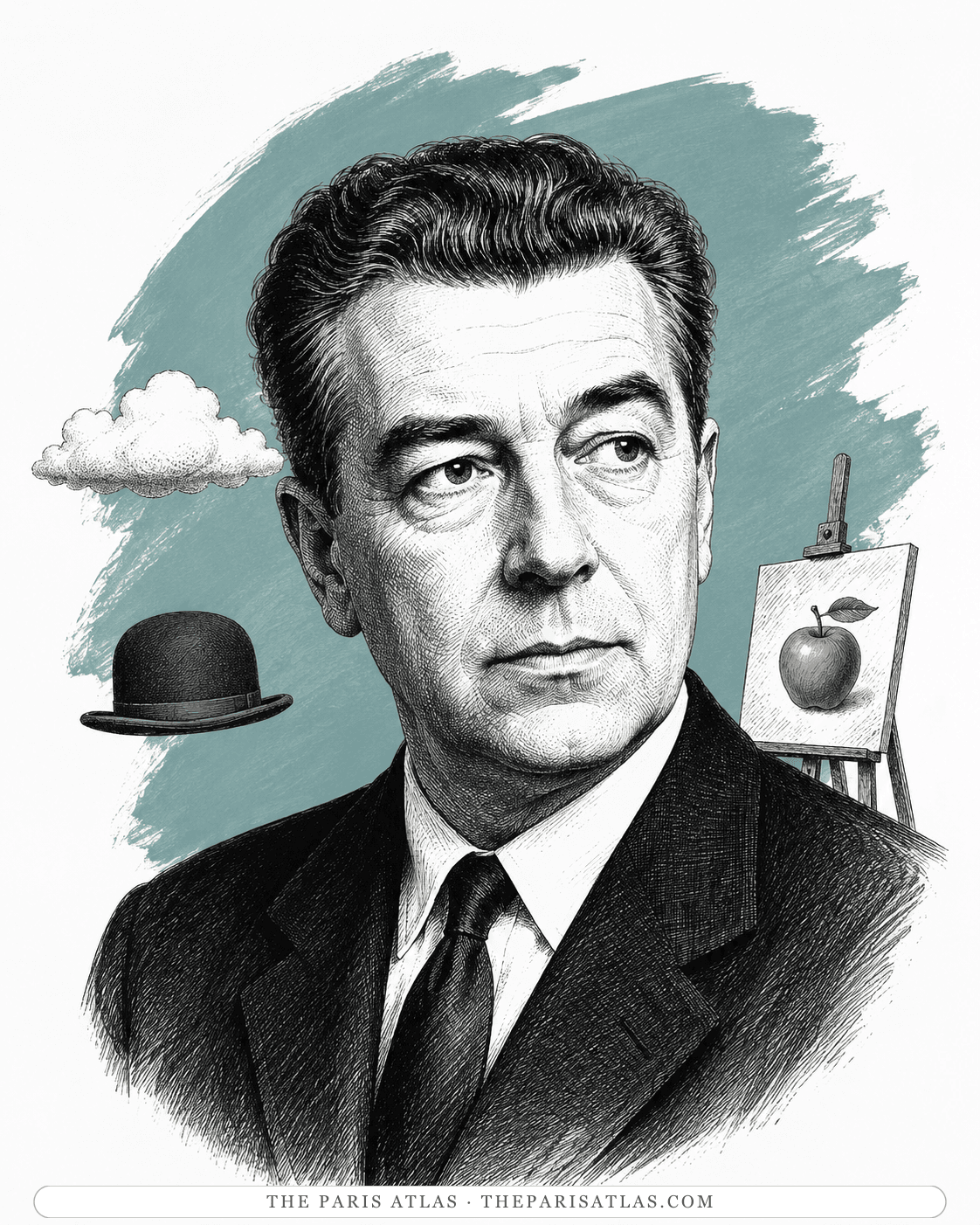
René Magritte dated his turn to Surrealist painting to his first sight of de Chirico's The Song of Love, which he called one of the most moving moments of his life: his eyes, he said, saw thought for the first time. The uncanny stillness of the mature Magritte descends directly from de Chirico's metaphysical squares.
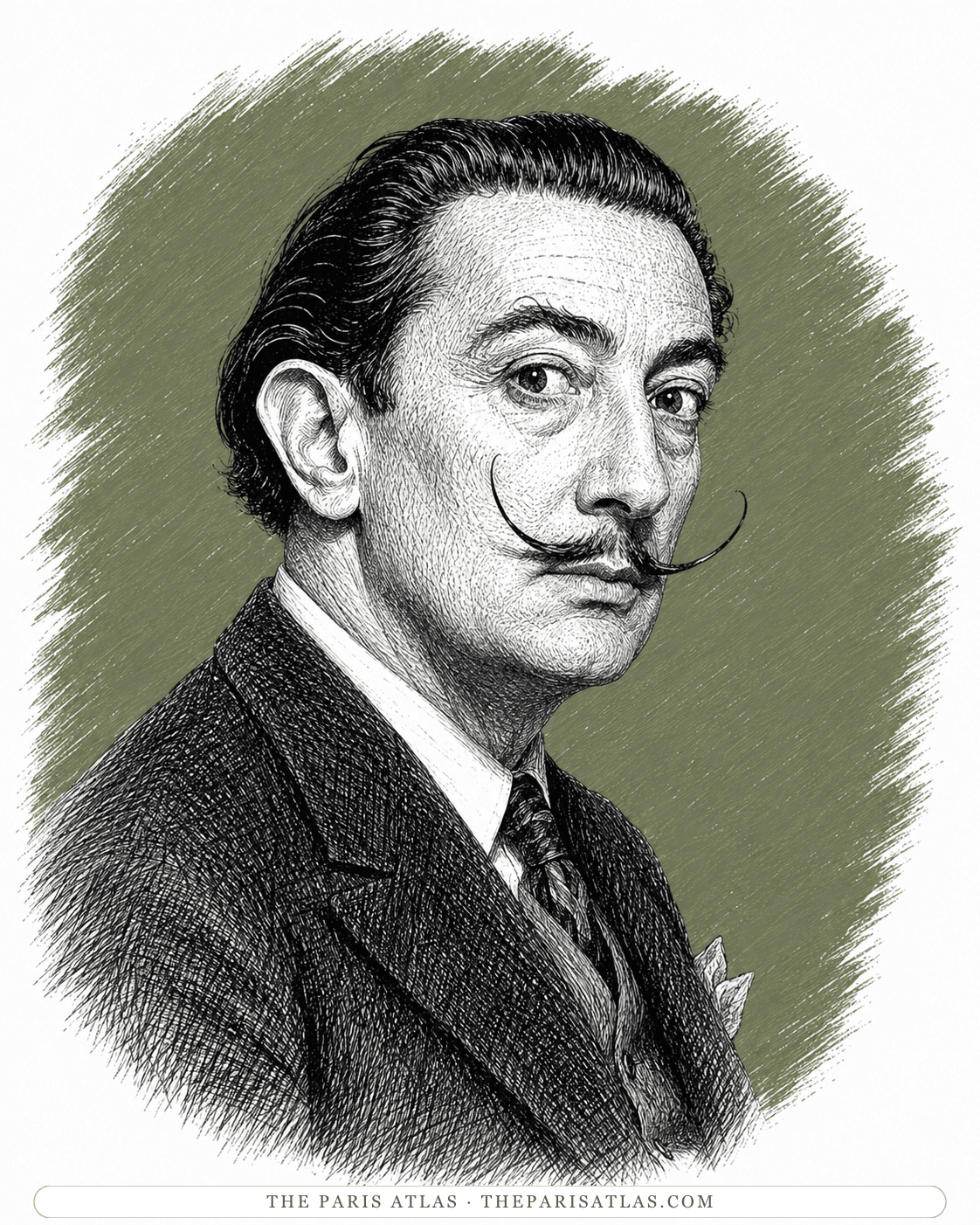
De Chirico's metaphysical cityscapes of 1909–1919, with their long shadows, empty arcades and mannequins, were the direct visual source the Surrealists built on. Salvador Dalí is named among the painters who acknowledged the debt, alongside Max Ernst, René Magritte and Yves Tanguy, whose whole vocation began on seeing a de Chirico in a dealer's window.
Giorgio de Chirico (1888–1978) was a Greek-born Italian painter and writer, the inventor of metaphysical painting and the single most important forerunner of Surrealism. His pictures of about 1909 to 1919, empty Italian squares under long shadows, Roman arcades, distant trains and faceless mannequins, created a dreamlike unease that the Surrealists took as their founding vision. He later renounced modern art for a classical and neo-Baroque manner, and died in Rome at 90.
The style de Chirico invented and, with Carlo Carrà, named pittura metafisica. It sets everyday objects and townscapes, an arcade, a tower, a mannequin, a train, into raking light and contradictory perspective, so that the familiar becomes ominous and charged with hidden meaning. Rooted in his reading of Nietzsche and Schopenhauer and the mythic stillness of Böcklin, it aimed at moods of nostalgia, tense expectation and estrangement, and it gave the Surrealists their central visual language.
Almost single-handedly, through his early work. André Breton discovered a de Chirico painting in a Paris gallery around 1919 and built the Surrealist group partly around it. René Magritte said his first sight of The Song of Love was the moment his eyes saw thought. Yves Tanguy decided to become a painter on seeing a de Chirico in a dealer's window, and Max Ernst and Salvador Dalí acknowledged the same debt. The irony is that by the time they canonised him, de Chirico had already abandoned the style and come to despise them.
Out of resentment and revenge. Critics prized only his metaphysical decade and dismissed the classical and Baroque work he made for the rest of his life, which he believed was better. In response he painted new versions of his early pictures and backdated them, both to profit from their fame and to spite a market that valued the old work over the new. At the same time he denounced genuine early paintings in collections as fakes, leaving his own catalogue permanently uncertain.
The metaphysical works of 1909 to 1919. The Enigma of an Autumn Afternoon (1910) was the first of the empty squares; The Song of Love (1914) converted Magritte. Others include The Uncertainty of the Poet (1913), Mystery and Melancholy of a Street (1914), with its rolling hoop and long shadow, and The Seer (1915). Several hang in the Museum of Modern Art in New York, with others in the Tate and the Peggy Guggenheim Collection.
He died in Rome on 20 November 1978, at the age of 90, after remaining prolific almost to the end and being elected to the French Académie des Beaux-Arts four years earlier. He had lived since 1944 in Rome, in the house near the Spanish Steps that is now the Giorgio de Chirico House Museum. In 1992 his remains were moved to the Roman church of San Francesco a Ripa.
Influenced
René Magritte dated his turn to Surrealist painting to his first sight of de Chirico's The Song of Love, which he called one of the most moving moments of his life: his eyes, he said, saw thought for the first time. The uncanny stillness of the mature Magritte descends directly from de Chirico's metaphysical squares.
Influenced
De Chirico's metaphysical cityscapes of 1909–1919, with their long shadows, empty arcades and mannequins, were the direct visual source the Surrealists built on. Salvador Dalí is named among the painters who acknowledged the debt, alongside Max Ernst, René Magritte and Yves Tanguy, whose whole vocation began on seeing a de Chirico in a dealer's window.
Met
The MNAC's 2018 exhibition records that de Chirico valued Gala's practical intelligence and asked her to act as his agent.
The sources below include biographies, scholarly essays, interviews, and primary materials that informed this page. They reflect both the historical record and ongoing critical conversations about Giorgio de Chirico and their work.

Reference article cross-checked for the chronology, the metaphysical period, the break with the Surrealists, the self-forgeries, and the death.
The foundation that holds the estate publishes a year-by-year chronology, used here for Volos and the Thessaly railway, the Munich years, the arrival in Paris on 14 July 1911, the Salon showings, Apollinaire and Paul Guillaume, Ferrara and Carlo Carrà, the election to the Académie in November 1974, and the death on 20 November 1978.
The foundation's account of the apartment-studio at 31 Piazza di Spagna, where de Chirico worked from 1948 until his death, opened to the public in 1998 under Isabella Pakszwer Far's bequest.

The Académie des beaux-arts' own member record, which gives the 1974 election as a foreign associate to the seat left by Jacques Lipchitz.
Tate's catalogue entry for The Uncertainty of the Poet, 1913, one of the metaphysical paintings in a public collection.
The Museum of Modern Art's de Chirico exhibition catalogue.
These references anchor the page in the documented record and in the scholarly conversations around Giorgio de Chirico. Every claim on this page traces back to one or more of the works listed here.
 Explore more resources