Made here
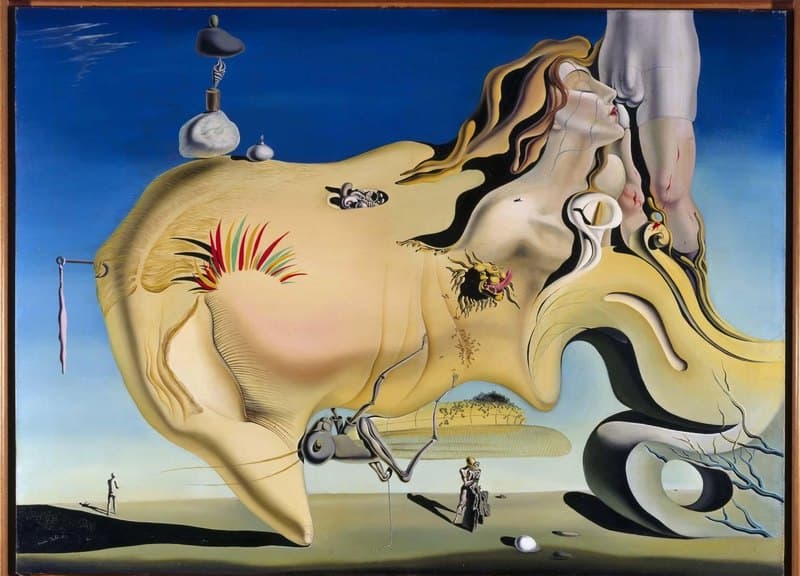
The Great Masturbator
Salvador Dalí painted The Great Masturbator at Cadaqués at the end of the summer of 1929, after Gala decided to stay with him.
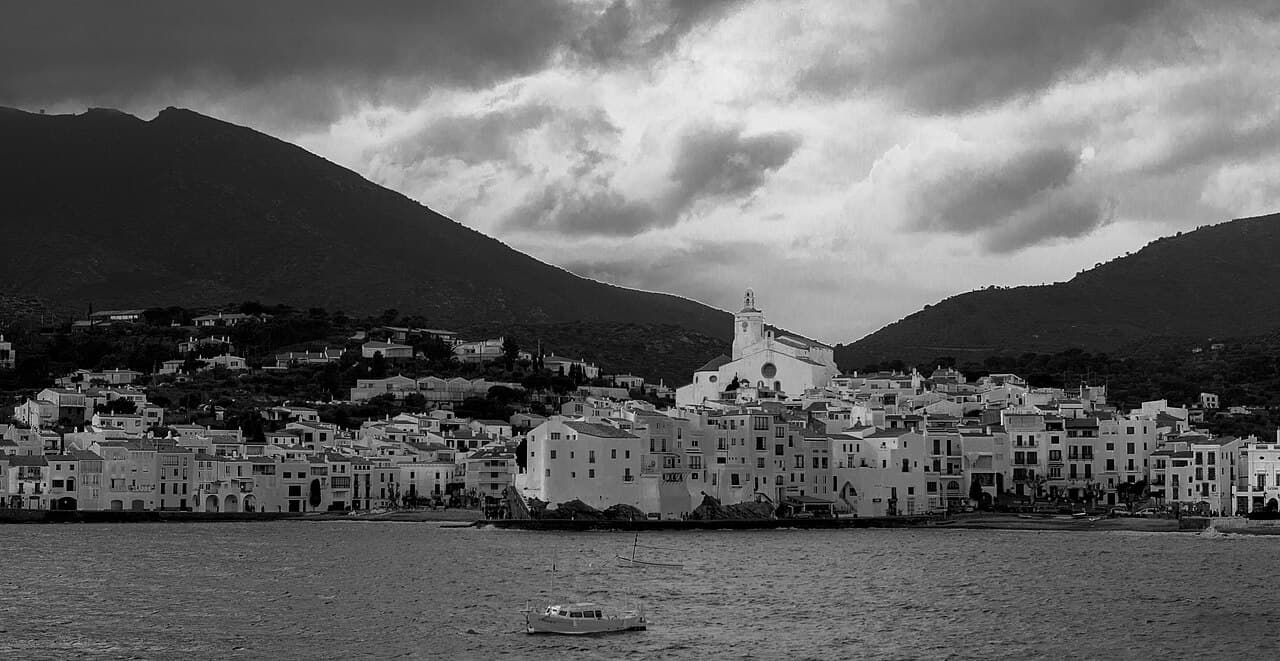
A white coastal town in northeastern Catalonia where a medieval centre, a sheltered bay, Portlligat, and the rocks of Cap de Creus meet the documented lives and work of Salvador Dalí and his circle.
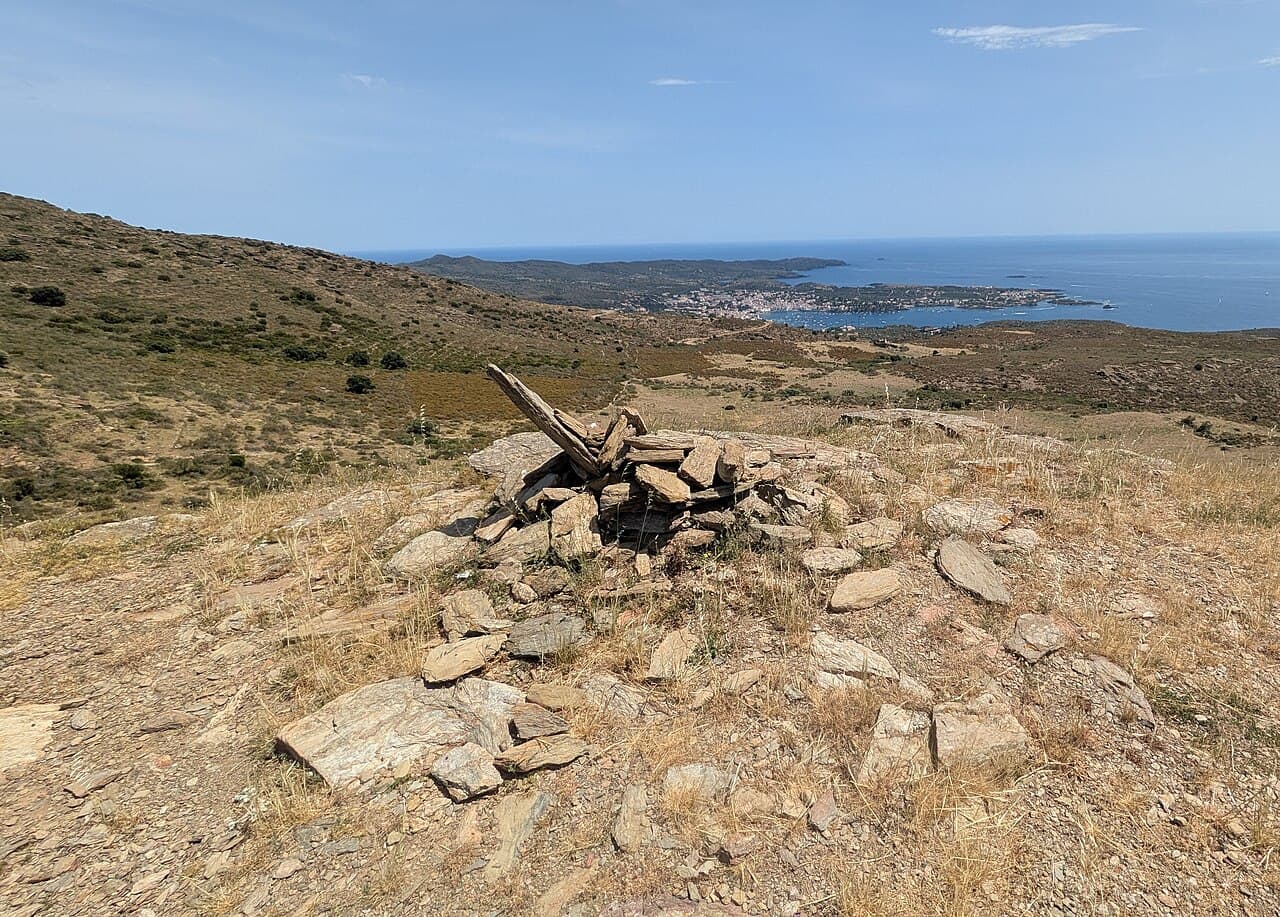
Cadaqués is a small Mediterranean town in northeastern Catalonia, close to the French border but separated from the rest of Alt Empordà by the mountains of the Cap de Creus peninsula. It is about 33 kilometres by road from Figueres and 18 kilometres from Roses. The final approach is a winding road rather than a coastal railway.[1]
That geography explains the first impression. White houses gather around a protected bay. The Church of Santa Maria stands above them. Behind the town, low mountains hide the plains around Figueres; beyond it, the Cap de Creus peninsula continues east through exposed rock, scrub, coves, and strong tramuntana wind.[2]
For a first-time reader, four names must stay separate. Cadaqués is the town and municipality. Portlligat is a small bay and settlement roughly 1.5 kilometres away. The Salvador Dalí House-Museum is one building at Portlligat. Cap de Creus is the much larger protected peninsula and natural park around them.
Begin on the waterfront rather than with a checklist. From the bay, the layout is easy to read: boats in the protected water, a line of white buildings at sea level, and the old town rising toward Santa Maria. Walking the waterfront also shows why Cadaqués was historically turned toward the sea even while the Pení mountains made travel inland difficult.
Then climb into the old town. Cadaqués's tourist office describes the centre as medieval and once enclosed by walls. Parts of the older defensive fabric survive, and many lanes retain rastell: paving made from stones gathered at the shore and set into patterned surfaces. The climb is steep and uneven in places, so shoes with grip are more useful than dress shoes.[2]
At the top, the Church of Santa Maria is the visual anchor. The current church was built mainly in the sixteenth and seventeenth centuries after an earlier church was destroyed during pirate attacks. Its large Baroque altarpiece belongs to a history much older than the twentieth-century artists who later made the town famous.[2]
Portlligat is not another name for Cadaqués. It is a small bay and settlement within the municipality, reached from the town by road or on foot. The official parking page places it about 1.5 kilometres from the central roundabout. Allow roughly half an hour on foot in each direction, depending on pace and heat.[3]
Salvador Dalí bought a small fisherman's hut there in 1930. He and Gala Dalí expanded it room by room for decades into the white, irregular house that survives today. The Fundació Gala-Salvador Dalí divides a visit into private rooms, the studio, and outdoor spaces including the olive grove and courtyards.[3]
The practical rule is simple: reserve in advance. The museum has limited capacity and states that advance booking is always required. Hours, closing periods, and prices change seasonally, so use the museum's current page rather than an old timetable copied into a travel article.[3]
Advance booking is required.
Salvador Dalí did not discover this coast as an adult celebrity. His family came from Figueres and spent summers at Es Llaner in Cadaqués while he was growing up. He used an early studio in the town and knew the bays, paths, fishing boats, dry-stone walls, and geological forms before Surrealism gave him a public language for them.[4]
This matters because the empty coasts in Dalí's pictures are not generic dream deserts. The hard light, low horizons, eroded profiles, isolated rocks, and distant water repeatedly come from Cadaqués, Portlligat, and Cap de Creus. The clearest case is The Persistence of Memory, the 1931 painting of melting watches: the golden cliffs behind them are the tip of Cap de Creus. Recognizing the real landscape does not solve every symbol, but it corrects the idea that the setting was invented from nothing.
One direct example is The Great Masturbator. Dalí painted it at Cadaqués at the end of the summer of 1929. Its strange central profile draws on a rock formation from Cap de Creus, while its emotional setting belongs to the same weeks in which Gala decided to remain with him.[5]
The strongest cultural links are dated events, not a list of famous names. Federico García Lorca first visited Cadaqués during Holy Week in 1925, during his close friendship and artistic exchange with Dalí. The Fundació Gala-Salvador Dalí connects that visit directly to work made in the period.[6]
August 1929 brought a different group. René Magritte, Paul Éluard, Gala, and the dealer Camille Goemans came at Dalí's invitation; Luis Buñuel also joined the summer gathering. Magritte painted The Threatening Weather during his stay, using the rocky Cadaqués coast but translating it into his own visual language.[7]
The same visit changed several lives. Gala arrived as Paul Éluard's wife and stayed with Dalí after Éluard returned to Paris. That is a documented event, not romantic folklore added later: both the Museo Reina Sofía and Dalí Foundation place it in the making of Dalí's late-1929 work and the beginning of the couple's life together.[7]
Cap de Creus begins around Cadaqués but should not be reduced to a viewpoint outside town. It is a protected land-and-sea landscape shaped by exposed geology, salt, fire, and the tramuntana. The natural park describes its rock structures and wind erosion as exceptional, and requires walkers in the most protected reserve to remain on marked routes.[8]
The official coastal route from Cadaqués to the cape is 9.2 kilometres and estimated at 3 hours 15 minutes one way; the inland route is 11.2 kilometres and estimated at four hours. These are real hikes, not short strolls from the harbour. Carry water, sun protection, and footwear suited to rock and loose ground.[8]
Motor access to the point is seasonally restricted. In 2026 the park lists restrictions on many spring dates and daily through July and August, with shuttle service from the Corral d'en Morell car park in Cadaqués. Because dates change, check the park's access page shortly before travelling.[8]
Distances, difficulty, route files, and reserve rules.
Seasonal restrictions and shuttle information.
The first written reference identified by the municipal history predates 814. Documents from 974 and 1030 describe lands around Cap de Creus and a working landscape of fishers, vineyards, ports, coves, and beaches. The sea connected Cadaqués to trade, but it also exposed the town to attack.[9]
A municipal document records that twenty-two galleys burned the town in 1444. Later attacks led to defensive walls, and Barbarossa's forces were remembered for sacking the town and burning its church. The rebuilt Santa Maria and the old defensive fabric belong to this history.[9]
Fishing and cultivation remained basic to local survival. Nineteenth-century industry included preserved fish, olive oil, spirits, vinegar, cork, soap, and other goods. When agriculture declined and poverty increased, many residents emigrated to Cuba, Haiti, Argentina, Uruguay, Mexico, New York, and elsewhere in the Americas. Some returned and built larger houses that still stand out from the older local fabric.[9]
Tourism became the dominant economy in the 1960s. That shift preserved some trades and displaced others. A useful visit therefore looks beyond the famous studio: at the harbour, church, street paving, indiano houses, and dry-stone landscape that existed before the artists arrived.[9]
Without a car, take a train to Figueres and continue by bus. Cadaqués has no railway station. The tourist office estimates the Figueres–Cadaqués bus at about one hour, but service frequency changes by season; check the operator before committing to a same-day return.[1]
By car, the usual approach is from the AP-7 toward Figueres and Roses, then the GI-614. The tourist office estimates about fifty minutes from the motorway turnoff. Parking at the town entrance avoids driving into the tight central streets. Portlligat and Cap de Creus have separate access considerations.[1]
Road, rail connection, bus, and distance information.
The earliest written reference identified by the municipal history predates 814.
Documents concerning Cap de Creus record fishing grounds, vineyards, ports, coves, and beaches.
A municipal record says twenty-two galleys burned Cadaqués and destroyed its archive.
The present Church of Santa Maria is built after the older church is destroyed in pirate attacks.
Economic decline sends many residents to the Americas; some later return and build conspicuous houses.
Federico García Lorca makes his first documented visit during Holy Week.
René Magritte, Paul Éluard, Gala, Luis Buñuel, and others join Salvador Dalí for the decisive Surrealist summer.
Salvador Dalí buys the first small fisherman's hut at Portlligat and begins building his long-term home and studio.
Mass tourism becomes the town's principal economic force as fishing and cultivation sharply decline.
After Gala Dalí's death, Salvador Dalí leaves Portlligat and moves to Púbol Castle.
Cadaqués is on the eastern side of the Cap de Creus peninsula in Girona province, Catalonia, Spain. It is about 33 kilometres by road from Figueres and 18 kilometres from Roses, near the French border but reached by a winding mountain road.
Yes if you want a compact historic town, a walkable bay, the Salvador Dalí landscape, and access to Portlligat or Cap de Creus. The town itself fills an unhurried day; the house museum and natural park justify more time.
Yes. Trains run to Figueres, where buses continue to Cadaqués. The tourist office estimates the bus journey at about one hour. Check the current operator timetable because service is more frequent in summer and sparse connections can make a day trip difficult.
No. Cadaqués is the town and municipality. Portlligat is a small bay and settlement within the municipality, about 1.5 kilometres from the town centre. Salvador Dalí's house is one specific building at Portlligat.
The Salvador Dalí House-Museum is at Portlligat beach, outside the central bay of Cadaqués. It can be reached by road or on foot. The museum requires advance booking for every visitor.
Allow one full day for the waterfront, old town, church, and Portlligat if you already hold a timed museum reservation. Two days are better if you also want a substantial walk or visit in Cap de Creus.
It is possible but inefficient. The town is about 177 kilometres from Barcelona, and the tourist office estimates the direct bus at roughly three hours each way. An overnight stay leaves enough time for the town without spending most of the day in transit.
Yes, but it is a hike. The natural park lists a 9.2-kilometre coastal route at about 3 hours 15 minutes one way and an 11.2-kilometre inland route at about four hours. Stay on marked routes in the integral reserve and carry water.
Dalí spent childhood summers there, used an early town studio, and made nearby Portlligat his main home and workplace from 1930 until 1982. The local coast and Cap de Creus geology recur throughout his paintings.
Documented visitors include Federico García Lorca in 1925 and René Magritte, Paul Éluard, Gala Dalí, and Luis Buñuel during the summer of 1929. Many other artists passed through, but this page links only the visits supported by a precise source and event.
Yes, though many are small pebble or stone beaches and coves rather than broad sand beaches. The central bay has several accessible waterfront spots; more remote coves lie around the municipality and Cap de Creus.
The municipal tourist office directs arriving drivers to the large paid car park at the town entrance and lists other seasonal options. Parking there is usually simpler than taking a car into the narrow central streets. Check current signs and restrictions when you arrive.
Made here
Salvador Dalí painted The Great Masturbator at Cadaqués at the end of the summer of 1929, after Gala decided to stay with him.
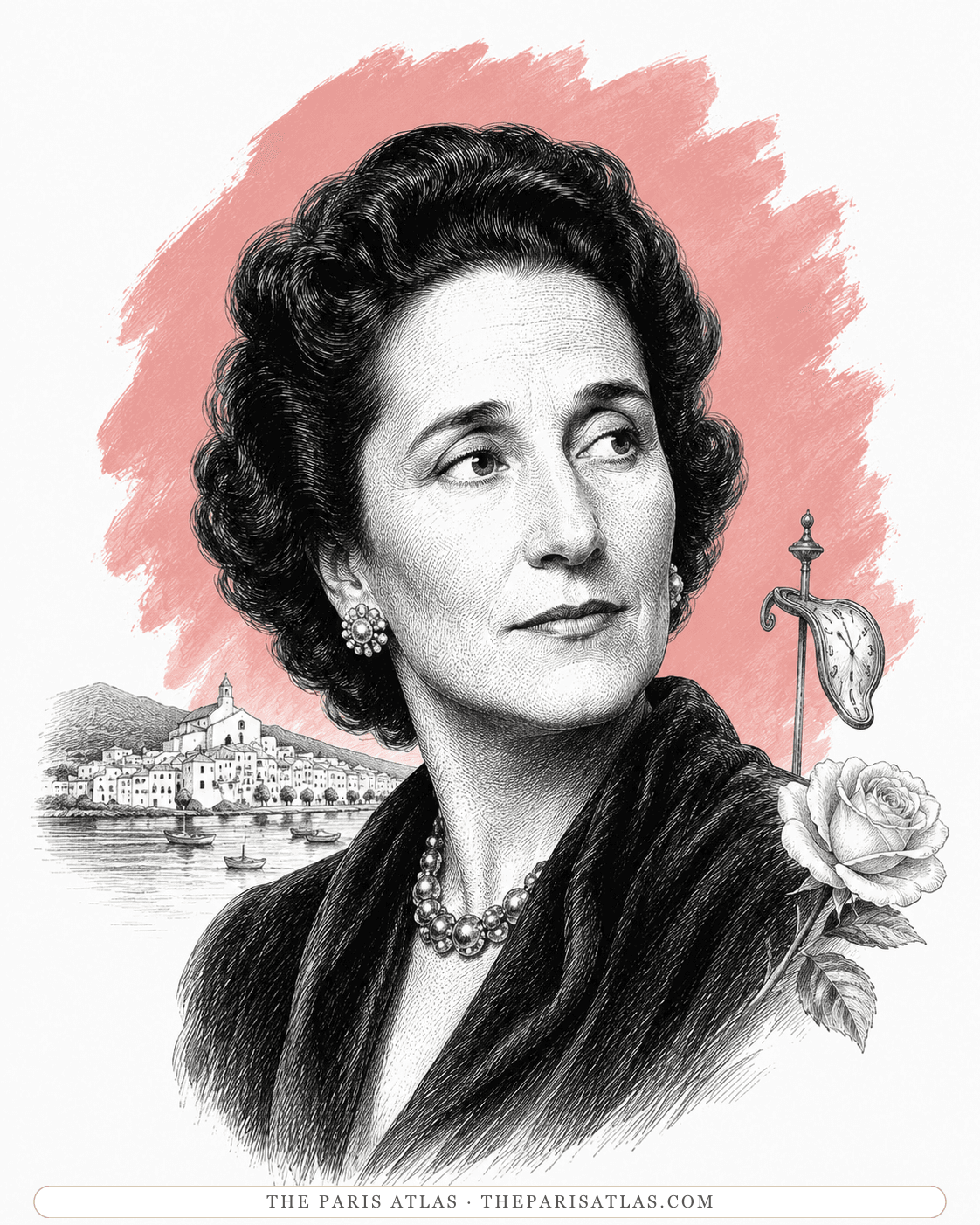
Gala arrived in Cadaqués with Paul Éluard's party in August 1929, stayed with Salvador Dalí, and from 1930 shared the Portlligat house within the municipality as their principal home, apart from the couple's years abroad, until her death in 1982.
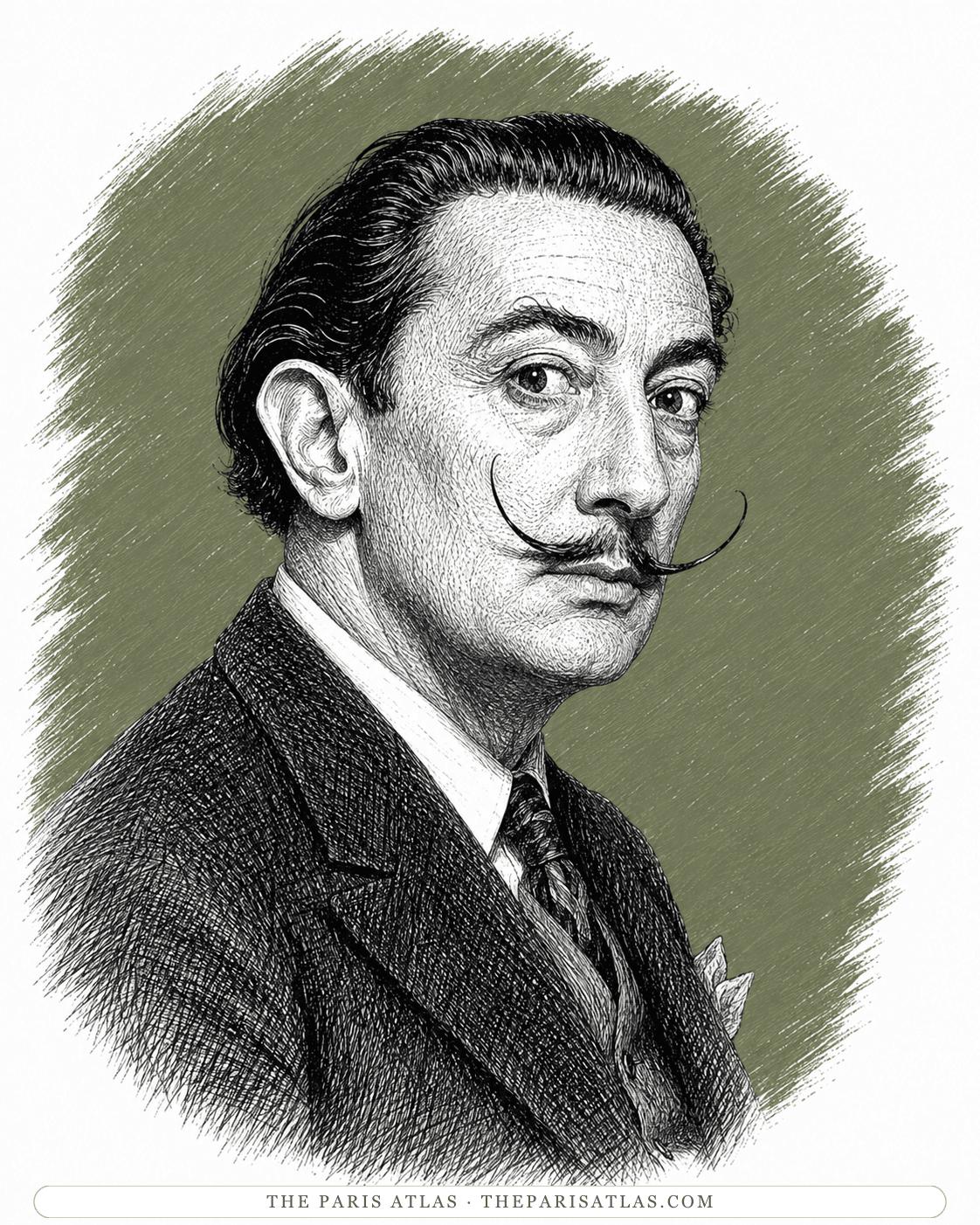
Salvador Dalí spent childhood summers at Es Llaner in Cadaqués, worked in an early town studio, and from 1930 made nearby Portlligat his principal home and studio, apart from the couple's years abroad, until Gala Dalí died in 1982.
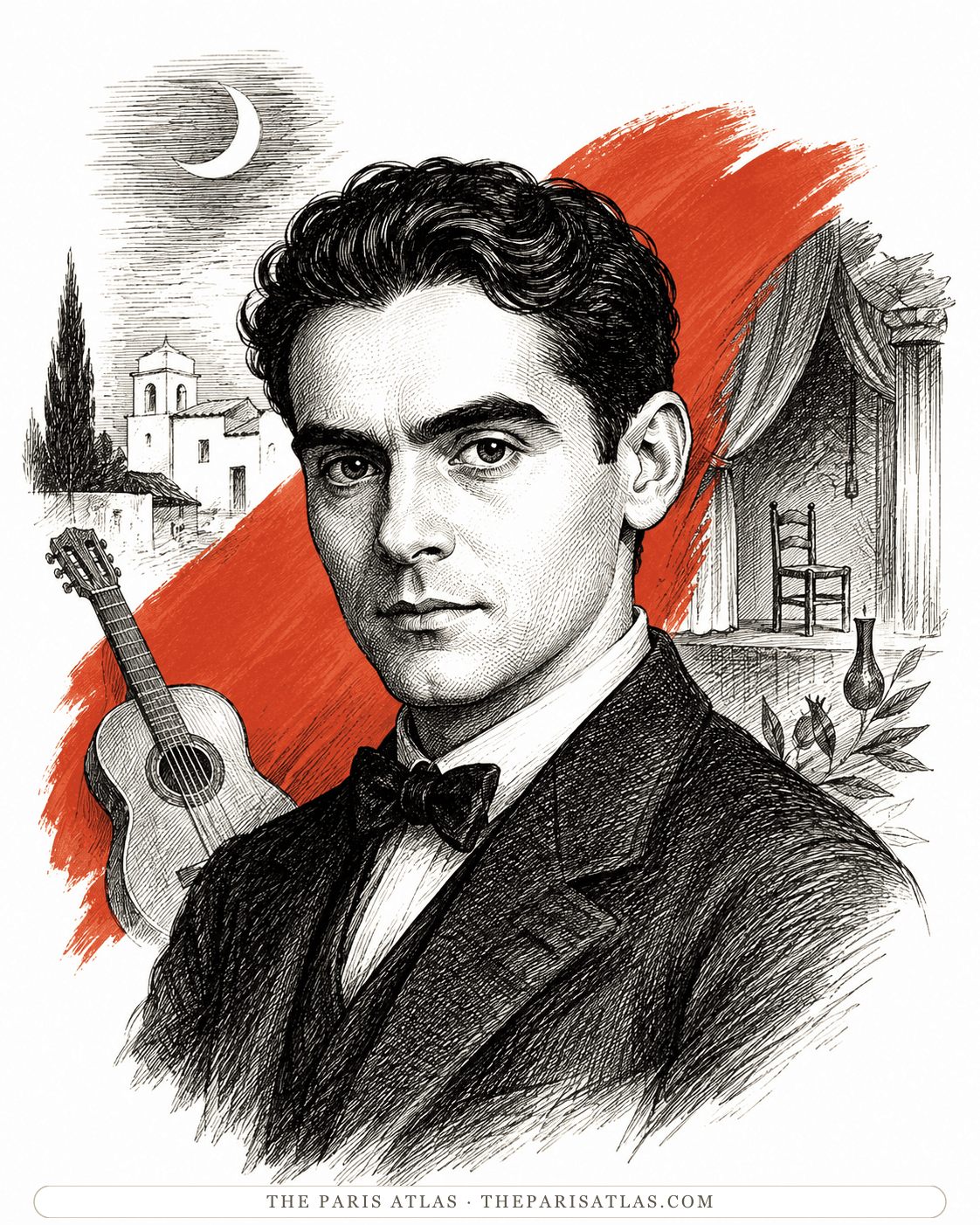
Federico García Lorca made his first visit to Cadaqués during Holy Week in 1925, at the height of his close friendship and artistic exchange with Salvador Dalí.

Luis Buñuel was among the artists who joined Salvador Dalí in Cadaqués during the decisive summer of 1929.

Paul Éluard joined the Surrealist group visit to Cadaqués in August 1929; his wife Gala remained there with Salvador Dalí after he returned to Paris.

René Magritte travelled to Cadaqués at Salvador Dalí's invitation in August 1929 and painted The Threatening Weather during the stay.
The sources below include histories, archival materials, scholarly research, and official records that informed this page. They document Cadaqués, the people connected to it, and its place in Cadaqués, Girona.

Web source consulted for documented facts and historical context presented on the Cadaqués page.
Web source consulted for documented facts and historical context presented on the Cadaqués page.
Web source consulted for documented facts and historical context presented on the Cadaqués page.
These references provide the documented foundation for this page's history and context. Claim-level citations remain attached to the specific claims they support.
 Explore more resources
Newsletter
The cafés, studios, and walk-up flats where the work was made — one story from the map in every letter.