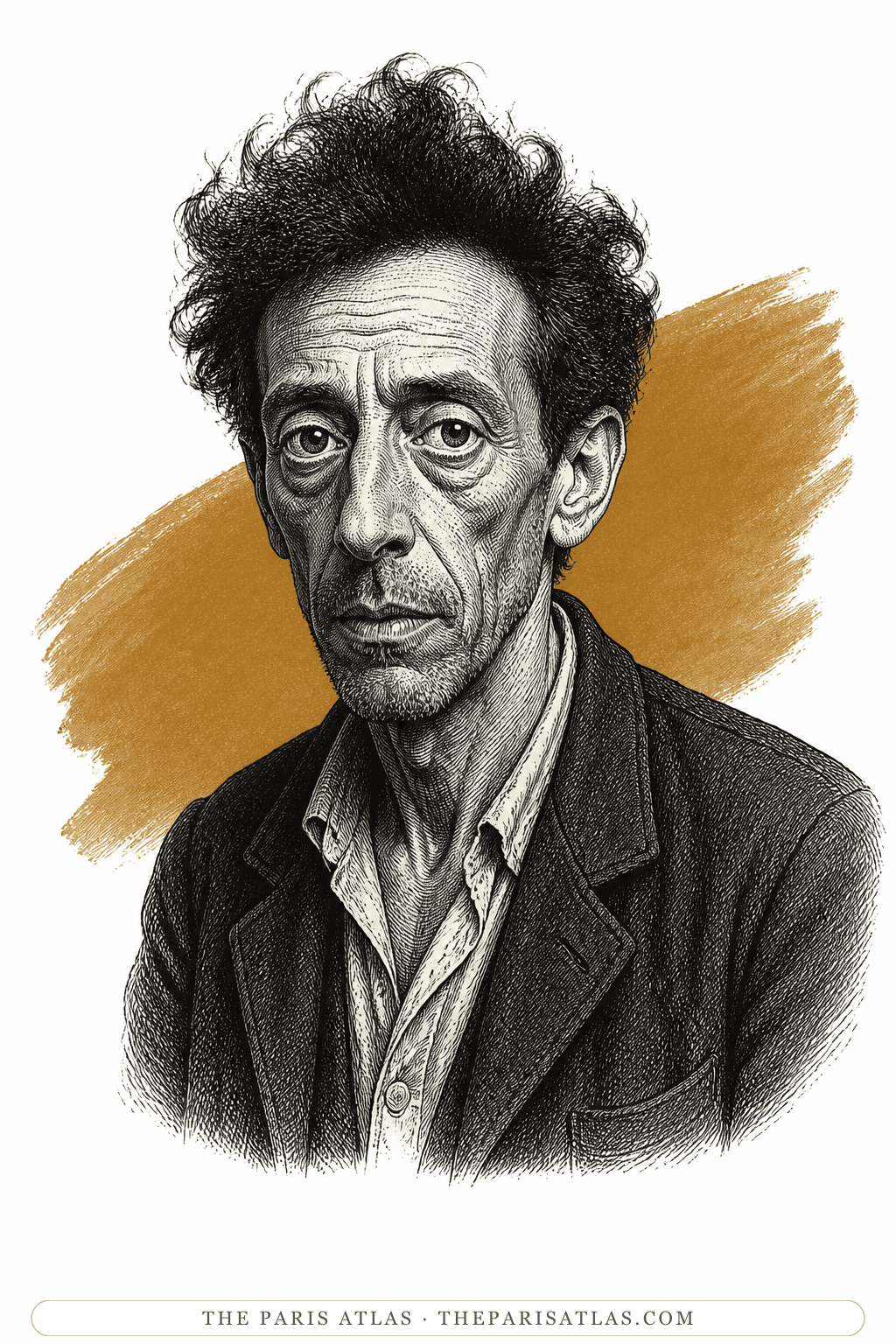
Alberto Giacometti
- Sculptor
- Painter
Met
Balthus and Giacometti belonged to overlapping Paris circles and maintained a friendship across their mature careers.
Paris-born figurative painter whose carefully constructed interiors, street scenes, landscapes, and portraits made him one of the most distinctive—and controversial—European artists of the twentieth century.
Balthus spent his career doing something that should have made him look old-fashioned. While many of the most famous artists around him were breaking figures into Cubist fragments, embracing abstraction, experimenting with chance, or joining Surrealism, Balthus continued to paint recognizable rooms, streets, landscapes, and people.
Yet his paintings rarely feel conventional.
A Balthus room can seem unnaturally still. A Paris street can resemble a stage on which everyone has frozen in the middle of an action. A figure reading a book may appear completely unaware of the viewer. Perspective can be slightly wrong, bodies strangely proportioned, gestures exaggerated and time apparently suspended.
He drew deeply from Renaissance frescoes, Piero della Francesca, Nicolas Poussin and Gustave Courbet, but used those older traditions to construct a private and psychologically unsettling modern world. The Metropolitan Museum of Art has described his work as simultaneously belonging to his own era and to eras long past—a tension that helps explain why he remains difficult to categorize.[1]
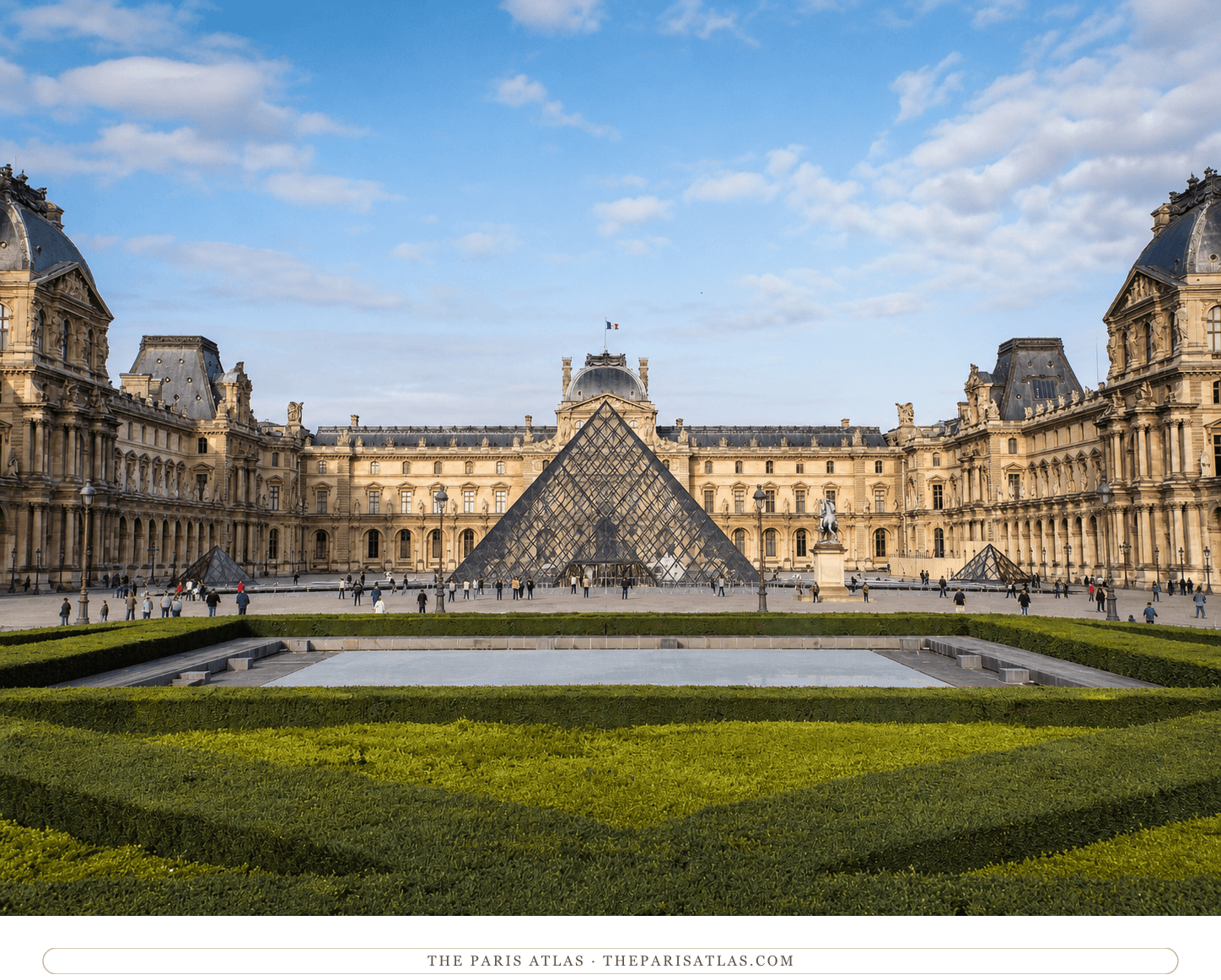
Paris was at the center of that development. Balthus was born there, returned there as a young artist, studied paintings in the Louvre, staged his controversial breakthrough exhibition there, worked in an austere studio near the Odéon, painted some of his most famous subjects from people and streets immediately around him, and formed relationships with writers and artists who shaped twentieth-century culture.
By the time he died in 2001, the Metropolitan Museum described him as the last surviving master of the School of Paris—the loose name given to the extraordinary international community of artists who made Paris one of the world's centers of modern art during the first half of the twentieth century.[2]
Balthus was born Balthasar Klossowski in Paris on 29 February 1908.[2]
Art was not something he discovered later in life. He was born into it.
His father, Erich Klossowski, was an art historian and painter. His mother, Elisabeth Dorothea Spiro, known as Baladine Klossowska, was also a painter. His older brother Pierre Klossowski would become a writer, philosopher and artist. The household belonged to the cosmopolitan intellectual culture of prewar Europe, with connections extending through painting, literature, theater and poetry.[3]
The First World War disrupted that childhood. Because of the family's background and citizenship, the Klossowskis left France, and Balthus spent portions of his youth in Germany and Switzerland. His parents eventually separated.
One of the most important adults to enter his life during this period was the poet Rainer Maria Rilke.
Rilke became close to Baladine and later her lover. For the young Balthus he was also an artistic mentor and, according to the Met, something of a surrogate father.[3]
The connection produced an extraordinary beginning to Balthus's career.
As a child, Balthus had befriended a stray cat he called Mitsou. When the animal disappeared, the eleven-year-old boy made a sequence of forty ink drawings telling the story of finding, living with and finally losing the cat. Rilke was impressed enough to arrange their publication.
In 1921 they appeared as Mitsou, accompanied by a French preface by Rilke.
Balthus was thirteen.
The book also helped establish the name by which he would eventually become famous. He had been using a childhood form of Balthasar, initially spelled “Baltusz.” Rilke encouraged him to continue signing his work with it; the spelling gradually became Balthus.
Cats would remain everywhere in his art. They appear beside children, under tables and at the edges of rooms. In his 1935 Self-Portrait: The King of Cats, Balthus even turned the association into part of his identity.
Unlike many major twentieth-century painters, Balthus never followed a conventional academic route to becoming an artist.
His real school was the museum.
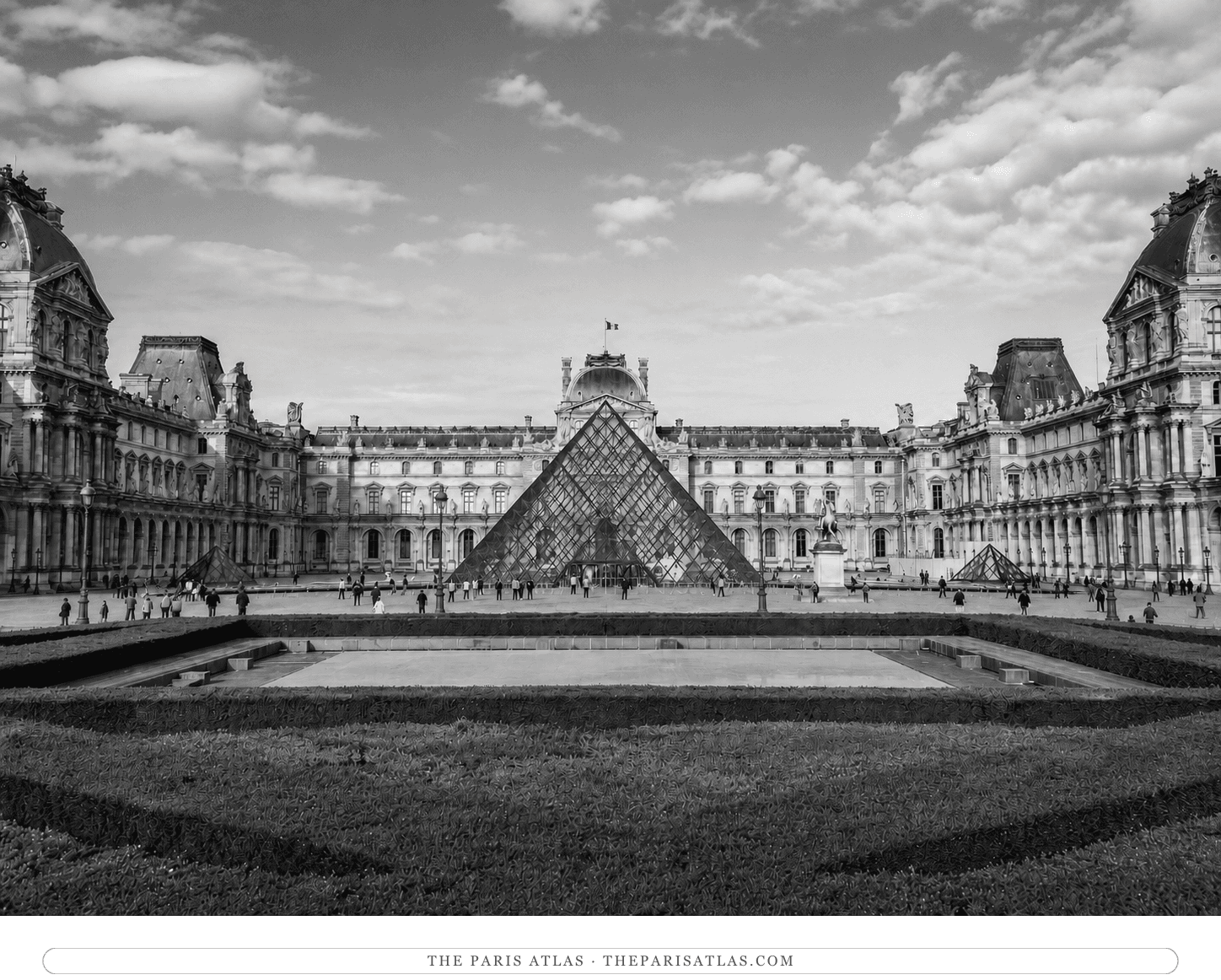
After returning to France in the 1920s, he spent long periods studying and copying Old Master paintings in the Louvre. He was interested not only in what earlier painters represented but in how they constructed a picture: where figures stood, how architecture divided a space, how bodies were balanced against one another, and how a painting could create order.
Then he went to Italy.
A formative trip in 1926 introduced him directly to the frescoes of the Italian Renaissance. Piero della Francesca became especially important, along with Masaccio and Masolino. Balthus studied Piero's great fresco cycle The Legend of the True Cross at Arezzo, and the Musée d'Orsay today holds one of the copies Balthus made from it in 1926.
The influence lasted for the rest of his career.
The calm geometry of Renaissance painting can be felt even in Balthus's strangest pictures. Figures are often arranged almost like actors placed at predetermined points on a stage. Architecture gives the picture an underlying skeleton. Even when something psychologically disturbing is happening, the composition itself can remain exceptionally controlled.
This combination—classical order containing modern unease—became one of his signatures.
Balthus returned permanently to Paris as a young painter and began trying to establish himself professionally.
He did not fit comfortably into any of the movements surrounding him.
Surrealism was flourishing. Picasso remained dominant. Abstraction was spreading. Balthus knew artists associated with the avant-garde and came into contact with Surrealism through the dealer Pierre Loeb, but he resisted being absorbed into André Breton's movement.
He wanted to be a figurative painter.
That did not mean he wanted to paint ordinary reality.
His breakthrough came with a group of enormous paintings created around 1933.
Among them was The Street.
Painted in 1933, The Street is one of Balthus's defining Paris paintings.
The location is based on a real street, the rue Bourbon-le-Château in Saint-Germain-des-Prés, but Balthus transformed it into something resembling a dream or theatrical set.
People cross the street, carry objects, gesture and interact, yet most seem psychologically isolated from one another. They appear frozen in motion. Perspective is convincing enough to create a believable street but strange enough to make that street feel artificial.
At one side, an aggressive encounter takes place while the other inhabitants seem oblivious.
The result is Paris rendered not as bustling modern life but as a disturbing stage.
MoMA notes that the picture combines Balthus's admiration for the spatial organization of Piero della Francesca with elements recalling children's illustrations and the uncanny atmosphere that interested the Surrealists.
Although Balthus rejected easy classification as a Surrealist, The Street explains why the Surrealists were fascinated by him. He could make everyday reality appear as strange as a dream without abandoning figurative painting.
In 1934 Balthus was given his first important solo exhibition in Paris at Galerie Pierre, run by Pierre Loeb.
It became a sensation.
The exhibition included The Street, Alice, La Toilette de Cathy and other paintings that immediately established several themes that would follow Balthus throughout his career: enclosed spaces, psychological unease, sexuality, adolescence, theatrical composition and the uncertain boundary between innocence and experience.
The writer and actor Antonin Artaud, then developing his revolutionary ideas about the Theatre of Cruelty, admired Balthus and wrote about the exhibition.
The relationship soon moved beyond criticism.
In 1935, Balthus designed the sets and costumes for Artaud's Les Cenci at the Folies-Wagram in Paris. The production was one of Artaud's major attempts to put his radical theatrical theories into practice. It was a financial failure and survived only a short run, but Balthus's involvement shows how closely his paintings belonged to the broader cultural world of 1930s Paris.
His pictures already possessed something theatrical: sparse settings, carefully placed bodies and moments that feel suspended just before or after an unexplained event.
Literature was another important part of Balthus's visual world.
During the early 1930s he produced a series of drawings inspired by Emily Brontë's Wuthering Heights. He identified strongly with the novel's obsessive relationship between Heathcliff and Catherine.
The connection was personal.
Balthus had fallen in love with Antoinette de Watteville, a young woman from an aristocratic Swiss family. Their relationship was difficult for years, and at one point she was engaged to another man.
Balthus transformed that frustration into art.
In La Toilette de Cathy of 1933, references to Wuthering Heights mingle with his feelings about Antoinette. The Centre Pompidou notes that Balthus effectively imagined Antoinette as Cathy and himself as Heathcliff.
He eventually succeeded in marrying Antoinette in 1937.
Their marriage produced two sons, Stanislas and Thadée Klossowski de Rola, although the couple would eventually separate and divorce.
One of the most important addresses in Balthus's career was 3 cour de Rohan, a secluded historic courtyard close to the Odéon in the 6th arrondissement.
By 1936 he had established his studio there.
The room was austere—large, worn and sparsely furnished. When the art dealer Pierre Matisse visited Paris in 1938, Balthus painted his portrait there. The Metropolitan Museum describes the studio as forbiddingly severe.
The neighborhood itself began feeding directly into his pictures.
Nearby lived the Blanchard family.
Their children included Thérèse Blanchard and her brother Hubert.
Between 1936 and 1939, Thérèse repeatedly sat for Balthus. The Met identifies a series of ten paintings from these years in which she appears alone, with a cat, or with her brothers.
Among them are Thérèse, Thérèse Dreaming, Thérèse on a Bench Seat and The Children.
In The Children of 1937, Thérèse and Hubert inhabit the same room but seem enclosed in separate psychological worlds. Pablo Picasso acquired the painting for his own collection—an important sign of the esteem Balthus had already gained among other leading artists.
No serious account of Balthus can avoid the most difficult aspect of his reputation.
Again and again, particularly from the 1930s through the 1950s, he painted adolescent girls.
They read, sleep, daydream or sit alone in interiors. Their expressions can be remarkably self-contained, while their poses and the viewpoint chosen by the painter can introduce an unmistakable sexual tension.
Balthus repeatedly rejected interpretations of himself as an erotic painter and emphasized the dreamlike, timeless and spiritual qualities he believed he saw in childhood.
Many viewers and critics have not accepted that explanation as sufficient.
The paintings therefore occupy an uncomfortable position. They are admired for their formal construction, unusual psychology and influence on figurative painting, while simultaneously raising serious questions about looking, power, sexuality and the use of young models.
That debate has intensified rather than disappeared.
In 2017, a petition asked the Metropolitan Museum of Art to remove Thérèse Dreaming from display on the grounds that it sexualized a child. The museum refused, arguing that difficult works of art can provide opportunities for informed discussion rather than requiring removal.
The controversy is now inseparable from Balthus's reception. It does not explain all of his art—he was also an important portraitist and landscape painter—but neither can it reasonably be treated as a minor footnote.
Balthus's paintings were not confined to enclosed rooms.
One of his greatest works is the enormous The Mountain, painted in 1936–37.
Nearly twelve feet wide, it presents an imaginary alpine plateau populated by isolated figures. The landscape draws upon the Swiss Bernese Oberland, which Balthus knew from his youth, but the painting is not a straightforward representation of a real place.
As in The Street, the figures appear simultaneously together and separate.
The picture draws from painters Balthus admired, particularly Poussin and Courbet. Antoinette, whom he married in the year the painting was completed, served as the model for its prominent central woman.
Balthus intended the work as Summer, the first of four paintings representing the seasons.
He never completed the other three.
The Second World War again disrupted Balthus's life.
He was mobilized into the French army in 1939 and was soon demobilized. He and Antoinette subsequently lived away from Paris, first in France and later in Switzerland.
The change in surroundings altered his painting.
The Met has noted that the severe Paris interiors of the 1930s gave way during the Swiss wartime period to somewhat more colorful rooms. Works such as The Living Room of 1942 continue his fascination with people absorbed in private activities—reading, sleeping or dreaming—but the environments are different.
His sons were born during his marriage to Antoinette, but the relationship eventually broke down.
By 1946 Balthus had returned to Paris without his family.
One of Balthus's most ambitious postwar projects took him back to the streets surrounding his old Paris studio.
He began Passage du Commerce-Saint-André in the early 1950s.
The passage lies just beyond the cour de Rohan, close to the cafés, narrow streets and old buildings of Saint-Germain-des-Prés.
The picture returns to an idea he had explored in The Street almost twenty years earlier: the city as an artificial stage.
Again, individual figures perform unrelated actions while architecture holds them together. But the painting is even more deliberate and monumental. Paris has ceased to be simply a modern city. It has become almost timeless.
In 1953, Balthus left Paris for the Château de Chassy in Burgundy, where he completed the painting and began another major phase of his career.
Life at Chassy suited the increasingly private artist.
The large château gave him room to create monumental paintings and landscapes. His surfaces became heavier and more fresco-like, further strengthening the link between his work and the Renaissance painters he had studied as a young man.
His model during these years was frequently Frédérique Tison, who lived at Chassy. She appears in several of the paintings associated with this period. The Met's 2013 exhibition on Balthus concluded with works depicting her.
Balthus was also becoming increasingly famous internationally.
Pierre Matisse had already introduced his work to American audiences with a solo exhibition in New York in 1938. Museum exhibitions and major collectors gradually elevated him from an eccentric Paris painter into an internationally recognized figure.
At Chassy, he also began styling himself Count Klossowski de Rola, another layer in the carefully cultivated identity of “Balthus.”
The artist increasingly presented himself almost as a figure from another century.
In 1961 came one of the most surprising appointments of his life.
France's culture minister André Malraux appointed Balthus director of the French Academy in Rome, housed in the Villa Medici.
He would remain there for sixteen years, until 1977.
Balthus did much more than administer the institution.
He treated the Villa Medici itself almost as an enormous work of art.
Rooms were restored and redecorated. Renaissance frescoes were uncovered. Balthus devised painted wall surfaces with layered, irregular patinas that changed subtly in the Italian light. He chose furniture, designed lamps and worked on the gardens.
The Villa Medici still preserves his interventions today. The institution describes his transformation of the building as radical and notes that his decorative work remains carefully conserved.
His Roman period therefore extended his artistic practice far beyond canvas.
He was effectively composing architecture, furniture, light and color together.
Malraux also sent Balthus to Japan on an official cultural mission in 1962.
There he met Setsuko Ideta, a young Japanese woman studying French who became his model and eventually his second wife.
They married in 1967. Their daughter Harumi Klossowska de Rola was born in 1973.
Japanese art increasingly entered Balthus's visual world during these years.
Setsuko appears in important paintings including The Turkish Room, painted during the 1960s and now held by the Centre Pompidou.
The relationship added another cultural tradition to an artist who had already built his painting from an unusual mixture of Renaissance Italy, French realism, literature, children's illustrations and modern Paris.
When Balthus's directorship of the Villa Medici ended in 1977, he and Setsuko moved with their family to Rossinière, a village in the Swiss Alps.
Their home was the Grand Chalet, an enormous eighteenth-century timber building.
Balthus was approaching seventy, but his career was not over.
He continued painting there into old age, although slowly. His entire painted output was remarkably small for a career lasting more than seven decades: the Villa Medici estimates that only around 300 paintings survive.
His reputation, meanwhile, grew.
A major Tate Gallery retrospective had been held in 1968. In 1983 the Centre Pompidou organized another major retrospective in Paris, which subsequently traveled to the Metropolitan Museum of Art in New York. In 1991 Japan awarded him the Praemium Imperiale for his lifetime achievement.
The painter who had once positioned himself outside the movements of modern art had become one of its institutional masters.
By his later years, separating Balthus the painter from Balthus the persona had become difficult.
He dressed elegantly, surrounded himself with old buildings and furniture, adopted an aristocratic title, cultivated silence and resisted straightforward explanations of his paintings.
Even his autobiography played with this evasiveness.
He disliked conventional biographical interpretation and frequently insisted that the paintings should exist independently of psychological explanations of their maker.
This self-mythology was part of his appeal, but it can also obscure a simpler fact: Balthus was extraordinarily serious about the physical construction of paintings.
His pictures developed slowly.
He planned figures through drawings, adjusted positions repeatedly and built surfaces that could resemble aged frescoes. The apparent quietness of the final picture hides an enormous amount of calculation.
That is why a Balthus painting can feel simultaneously natural and impossible.
Paris was never merely Balthus's birthplace.
It provided the structure of his artistic life.
As a child, he was born into its international artistic culture. As a young man, he educated himself in the Louvre. He returned to the city in the 1920s and 1930s just as Surrealism, abstraction, modern literature and experimental theater were transforming European culture.
He knew that world but refused to paint like it.
Instead he went backward—toward Piero della Francesca, Poussin, Courbet and Renaissance composition—and somehow emerged with pictures that looked unmistakably modern.
Paris itself became one of his subjects.
The Street transformed Saint-Germain into a frozen psychological drama. The cour de Rohan provided the studio and neighbors from which the Thérèse paintings emerged. Passage du Commerce-Saint-André returned decades later to essentially the same tiny pocket of the Left Bank.
A surprisingly large part of Balthus's artistic universe can therefore be traced to a few streets around the Odéon and Saint-Germain-des-Prés.
The city around him was filling with automobiles, advertisements, cinemas and modern architecture.
Balthus largely removed them.
His Paris has almost no specific date.
That was deliberate.
Balthus remains difficult because neither admiration nor condemnation entirely explains him.
His adolescent paintings continue to provoke legitimate ethical questions about the relationship between artist, model and viewer. Those questions have become more prominent with time and are now a major part of how his work is discussed.
At the same time, reducing his career exclusively to those paintings misses the unusual achievement of his street scenes, landscapes, portraits and interiors.
Balthus found a way to be a modern artist without adopting the dominant visual language of modernism.
He did not destroy perspective.
He manipulated it.
He did not abandon the human figure.
He made it strange.
He did not reject the Old Masters.
He used them to produce paintings unlike theirs.
His work can contain Piero della Francesca's geometry, Courbet's physical weight, the artificiality of theater, the dream logic admired by the Surrealists and the psychological isolation of twentieth-century urban life—all within a picture that initially appears completely traditional. The Met has consequently argued that Balthus's deliberate distance from contemporary movements is itself part of what makes his art distinctly twentieth century.
Balthus died at the Grand Chalet in Rossinière on 18 February 2001, eleven days before what would have been his ninety-third birthday. He left his final painting unfinished.
His career had stretched from a children's book encouraged by Rainer Maria Rilke to major retrospectives at the Centre Pompidou and Metropolitan Museum of Art.
And through nearly all of it ran the same strange tension: Balthus looked backward in order to make paintings that could belong to no other century but his own.
Born in Paris as Balthasar Klossowski.
Rainer Maria Rilke arranges publication of the childhood drawing sequence Mitsou.
Holds his first major exhibition in Paris.
Paints the series of portraits of Thérèse Blanchard in Paris.
Marries Setsuko Ideta and spends his final decades with her at the Grand Chalet in Rossinière.
Dies in Rossinière, Switzerland.
Met
Balthus and Giacometti belonged to overlapping Paris circles and maintained a friendship across their mature careers.
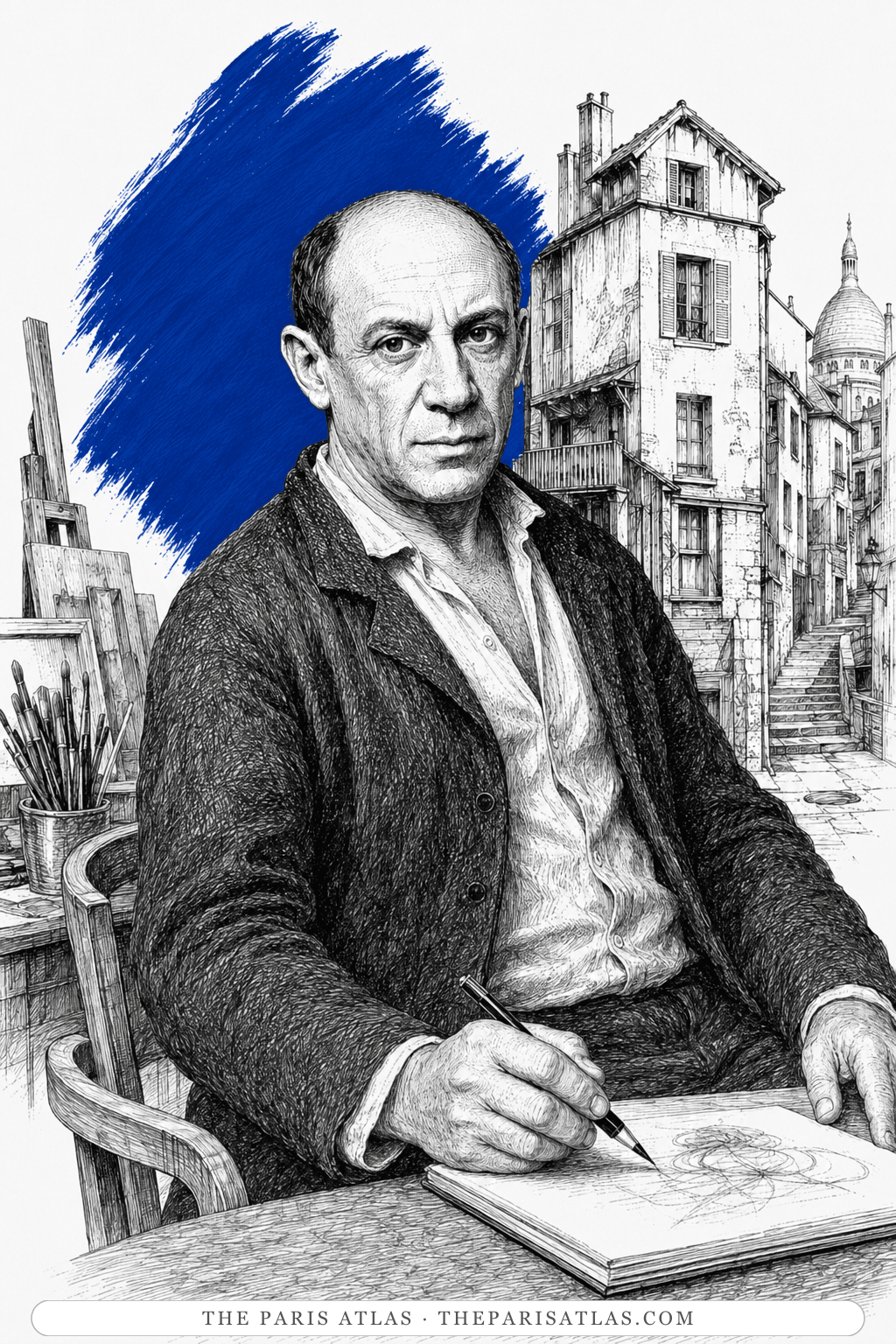
Supported by · 1937
Picasso acquired Balthus's 1937 painting The Children and continued to speak admiringly of the younger painter's work. The painting later entered the Musée Picasso through Picasso's collection.
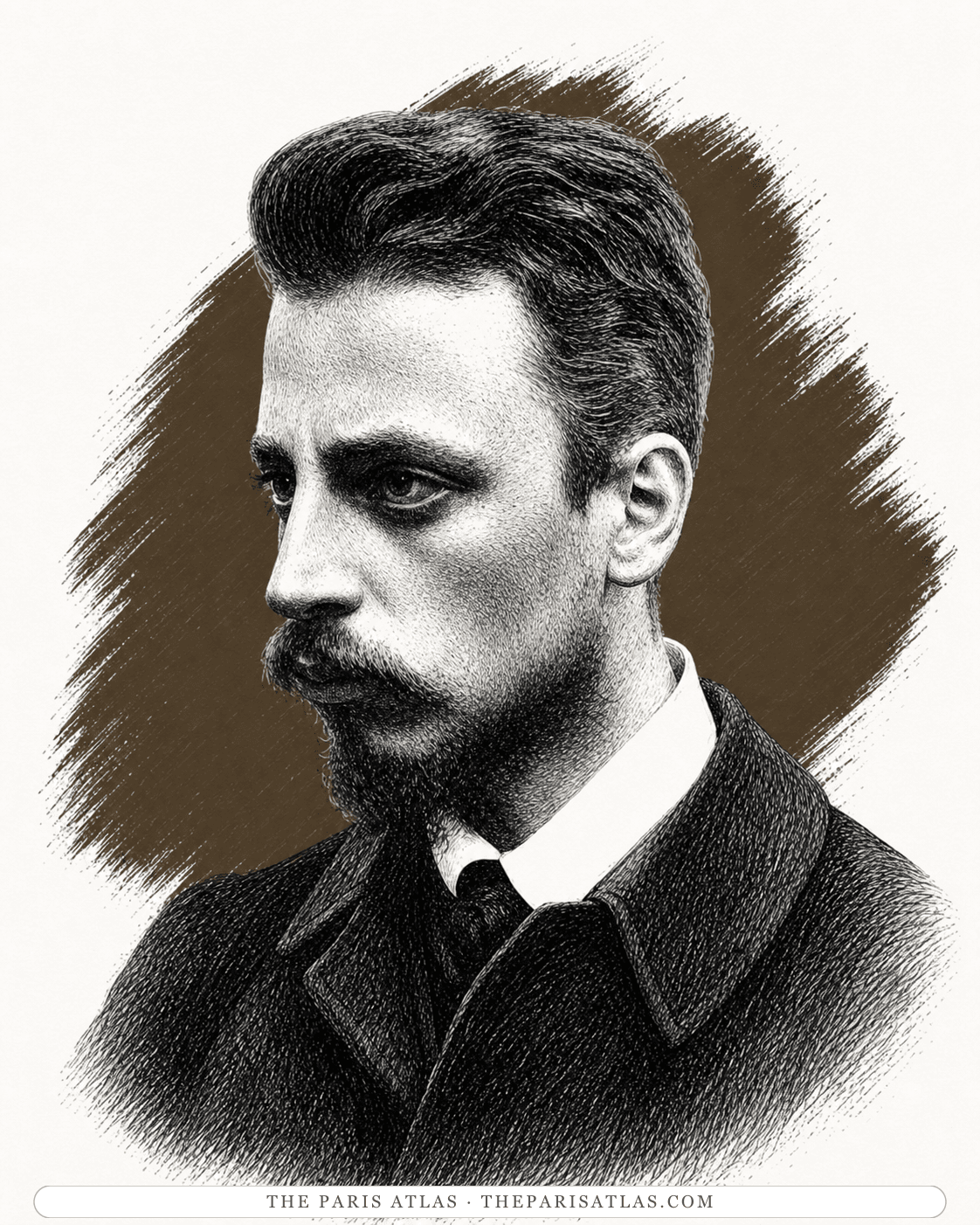
Mentored by · 1920
Rilke encouraged Balthus's childhood drawings and arranged the 1921 publication of Mitsou with his own preface.
Met
Balthus and Giacometti belonged to overlapping Paris circles and maintained a friendship across their mature careers.
Studied at
As a young painter, Balthus studied the Old Masters in the Louvre; the museum training helped form the measured spaces and firm outlines of his mature work.
Supported by · 1937
Picasso acquired Balthus's 1937 painting The Children and continued to speak admiringly of the younger painter's work. The painting later entered the Musée Picasso through Picasso's collection.
Mentored by · 1920
Rilke encouraged Balthus's childhood drawings and arranged the 1921 publication of Mitsou with his own preface.
The sources below include biographies, scholarly essays, interviews, and primary materials that informed this page. They reflect both the historical record and ongoing critical conversations about Balthus and their work.

MoMA's collection record for The Street, including its Paris setting, composition, and relationship to Surrealism and Piero della Francesca.
The Met's exhibition overview of Balthus's 1930s paintings of Thérèse Blanchard and Frédérique Tison.
Institutional press material on the Cats and Girls exhibition, its themes, models, and historical framing.
The Met's collection record for the portrait painted in Balthus's cour de Rohan studio in 1938.
The Met's collection record and curatorial account of The Mountain, its models, landscape sources, and Old Master references.

MoMA's 1956 Balthus catalogue, a period museum source for his biography, works, exhibitions, and artistic development.
The Centre Pompidou's collection record for La Toilette de Cathy and its relationship to Wuthering Heights and Antoinette de Watteville.
The Centre Pompidou's artist record, chronology, bibliography, and collection context for Balthus.
The Musée d'Orsay's artist record, including Balthus's 1926 copy after Piero della Francesca.
The Villa Medici's official biography of Balthus and account of his 1961–1977 directorship of the French Academy in Rome.
Villa Medici exhibition and program material documenting Balthus's paintings and institutional legacy.
The Villa Medici's institutional history, used for the setting and historical context of Balthus's directorship.
The Villa Medici's account of Balthus's restoration, decoration, furniture, lighting, and garden interventions.
Fondation Beyeler's exhibition chronology and biographical material covering Balthus's career from Paris to Rossinière.
A Metropolitan Museum publication documenting The Children and its provenance in Pablo Picasso's collection.
Contemporary reporting on the 2017 petition concerning Thérèse Dreaming and the Met's response.
Musée d'Art Moderne de Paris exhibition material on Balthus's relationships with André Derain and Alberto Giacometti.
These references anchor the page in the documented record and in the scholarly conversations around Balthus. Every claim on this page traces back to one or more of the works listed here.
 Explore more resources