The Paris AtlasCharting the artists, works, and places worth returning to.
  • Fashion designer
· French · 1914–1982

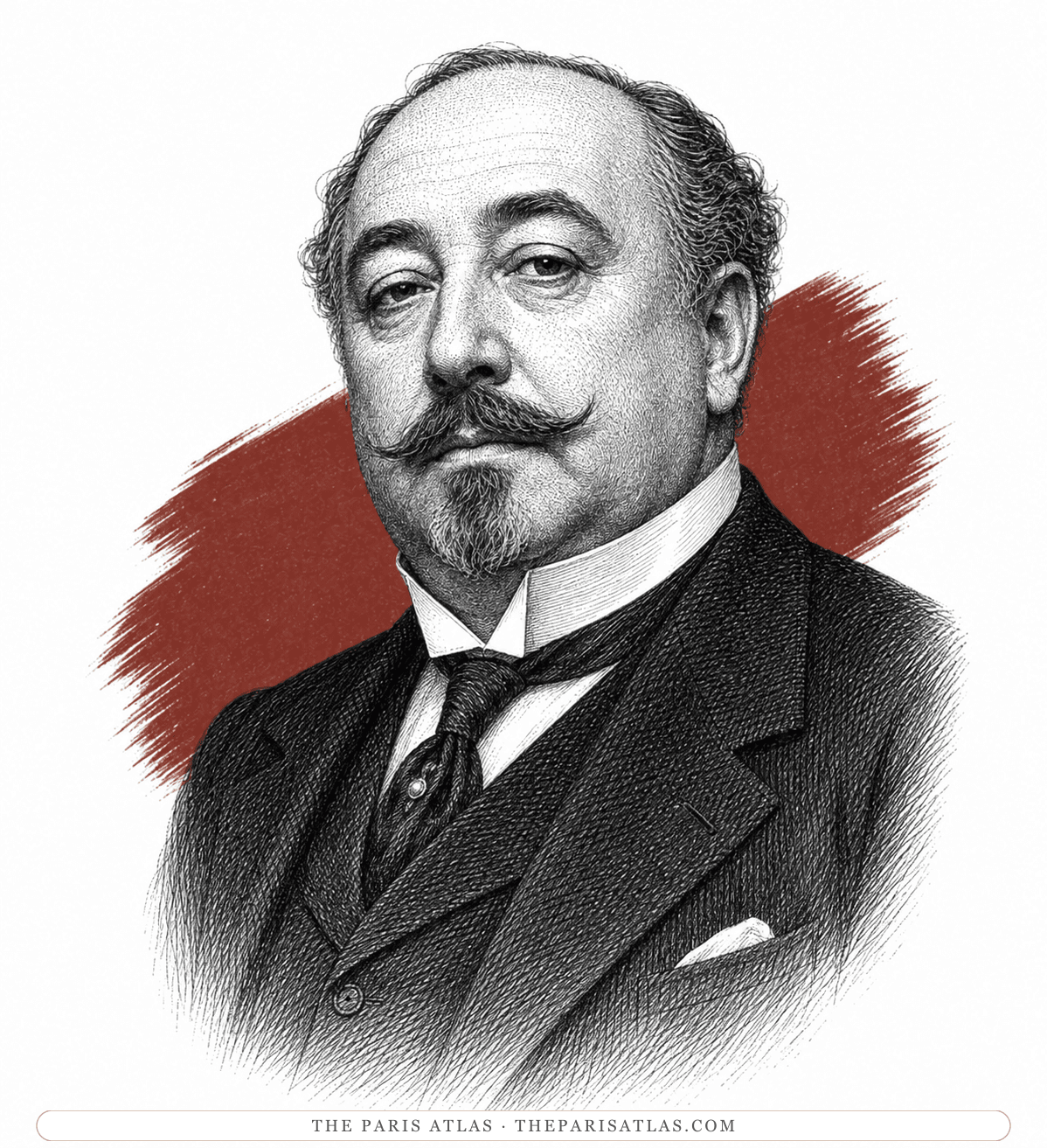
Pierre Balmain

French couturier who worked in Lucien Lelong's Paris design studio before opening his own house in 1945, then built the postwar Jolie Madame style and dressed actresses in eighty-eight films.

Details

Lived
1914–1982
Born
18 May 1914
Birthplace
Saint-Jean-de-Maurienne
Birth name
Pierre Alexandre Claudius Balmain
Died
29 June 1982 · aged 68
Place of death
Neuilly-sur-Seine
Nationality
French
Profession
Couturier and costume designer
Major works
the Jolie Madame line, the six-button tailored suit, Queen Sirikit's 1960 state wardrobe, and costumes for eighty-eight films
Roles
Fashion designer

About Pierre Balmain

French couturier of the Jolie Madame style, one of the big four of 1950s haute couture and Gertrude Stein's closest friend

Pierre Balmain was a French couturier, born in Saint-Jean-de-Maurienne on 18 May 1914, who opened his own house in Paris in 1945. He became one of the four dominant names in 1950s haute couture, alongside Christian Dior, Jacques Fath and Jean Dessès.

His style was named Jolie Madame after his 1953 perfume: long bell skirts from a small waist, a six-button tailored jacket, fur and embroidery, cut to be worn rather than to startle. He described dressmaking as the architecture of movement, which was close to literal — he had gone to Paris in 1933 to study architecture and left the École des Beaux-Arts for fashion.

He also dressed actresses in eighty-eight films, made Audrey Hepburn's wedding dress in 1954, and designed the state wardrobe that gave Thailand a national costume when Queen Sirikit toured Europe and the United States in 1960. His closest friend was the writer Gertrude Stein. He died of liver cancer at the American Hospital in Neuilly-sur-Seine on 29 June 1982, aged 68.

Savoie, Aix-les-Bains, and an abandoned architecture degree, 1914–1934

Pierre Alexandre Claudius Balmain was born on 18 May 1914 in Saint-Jean-de-Maurienne, an alpine town in Savoie, the only child of a drapery owner and a mother who ran a fashion boutique with her sisters. His father died when he was seven. At eleven he won a scholarship to a boarding school at Chambéry.

The education that mattered happened at weekends. An uncle took him to Aix-les-Bains, a spa town half an hour away that in the 1920s was a resort for wealthy Europeans and Americans, with a casino, an international tennis tournament and luxury hotels. Balmain watched what the women there wore through the years when dress was changing fastest, and he later named the designers he formed his eye on: Madame Premet, Paul Poiret, Jean Patou, Coco Chanel and, above all, Jacques Doucet.

In 1933, at nineteen, he moved to Paris to study architecture at the École des Beaux-Arts. He met the designer Robert Piguet, who had just opened his own atelier, and sold him three fashion sketches. That settled it. He left the school and in 1934 took a job with the couturier Edward Molyneux.

Molyneux, the war, and Lucien Lelong, 1934–1945

Molyneux taught him restraint, in a formula Balmain kept: strip away anything unnecessary, and let an ornamental detail stand only if it makes a constructive contribution to the dress. Called up in 1936, Balmain served in the air force, then the Pioneers of the Foreign Legion, and at the outbreak of war with the Chasseurs Alpins in his own Maurienne mountains. France fell in 1940 and he was demobilised.

Back at Aix-les-Bains, where his mother now had a boutique, he met Lucien Lelong, who offered him work in Paris. Lelong taught him the other half of the trade. Lelong did not design clothes himself. He ran a house, and ran it through an occupation, managing supply, quality, staff and marketing. He had launched the first ready-to-wear line by a couture house in 1934, and in 1940 he persuaded the Germans to let the Paris houses stay open.

The designers on Lelong's floor in those years were Balmain, Christian Dior and Hubert de Givenchy, all learning the same lessons at once. Balmain's biggest success there was a plain black dress he called Petit Profit, small profit, and he noted carefully that 360 clients ordered it.

The House of Balmain and Gertrude Stein, 1945–1950

In early 1945 Balmain opened his own house at 44 rue François-Ier, in the luxury quarter known as the Golden Triangle, in a grand building belonging to the family of the Princesse de Broglie. His mother sold her boutique to fund it, which let him hire sixteen seamstresses. The first show, in his own atelier on 12 October 1945, put fifty models into flannel trousers, loose homespun Breton jackets, wool kimonos trimmed with Persian lamb and brocade evening dresses.

The launch was helped enormously by a friendship. Balmain had met Gertrude Stein at Aix-les-Bains in 1939, and she became his closest friend; she liked telling people he had made her clothes during the war. As a collector and salon host she arrived with a list of rich acquaintances, and she got a photograph of one of his dresses into Time. Four clients came out of that first show: Josephine Baker, Helena Rubinstein, Wallis Simpson and Lilian Baels, the wife of the King of Belgium. For the rest of his career Balmain put one outfit in every show in navy and black, the Duchess of Windsor's favourite pairing.

After his 1946 collection, Alice B. Toklas reviewed the show and the piece was published as A New French Style: Eight Models from Pierre Balmain. He went to New York for the first time that year, and took Lelong's line that a French couturier abroad was there to represent French culture. He kept going back for the rest of his life, lecturing to clubs and women's colleges, opened a New York store in 1949, and began designing lines specifically for American buyers.

Jolie Madame

When Dior launched the New Look in 1947, with long bell-shaped skirts falling from a tight waist, Balmain was already making that shape. What he added was a two-piece suit that softened the angular 1940s line with a relaxed skirt and his own six-button tailored jacket, and a willingness to put shift dresses and fur shawls into daywear. The result was named Jolie Madame after his 1953 perfume, and it defined how a certain kind of wealthy woman dressed for a decade.

His own description of the work was the architecture of movement. The aim was opulence that stayed practical and comfortable, which is a narrower target than it sounds and is the reason his clothes were bought by women who had to spend all day in them.

Perfume was in the plan from the beginning. Through Robert Piguet he had met the perfumer Germaine Cellier, and the two worked together for thirty years on Elysées 64-83 in 1946, Vent Vert in 1947, Balmain in 1948 and Jolie Madame in 1953. He sold the fragrance division to Revlon in 1960 but kept creating the scents himself.

Film, the stage, and Queen Sirikit

From 1947 Balmain designed costumes for stage and screen, always for the leading women, and dressed actresses in eighty-eight films. Sometimes it was a single gown; sometimes a full wardrobe, as for Vivien Leigh in The Deep Blue Sea, Brigitte Bardot in And God Created Woman and Carroll Baker in Station Six-Sahara. He made Audrey Hepburn's wedding dress when she married Mel Ferrer in 1954, and Patrice Wymore's when she married Errol Flynn. For the stage he dressed Katharine Hepburn in The Millionairess in 1952 and Josephine Baker's 1964 revue, and won the Drama Desk Award for Happy New Year in 1980.

The largest commission of his career was diplomatic. In 1958 Thailand's King Bhumibol Adulyadej and Queen Sirikit planned a six-month tour of the United States and fifteen European countries, and Thailand had no national costume to travel in. Sirikit devised one, a set of eight gowns drawn from Thai dress and history, and chose Balmain to make them and the rest of her wardrobe. He worked in Thai silks. When the tour ran in 1960 the press printed an estimated thousand photographs of it, and The New York Times wrote that Thailand had found a new language, elegance.

The end of the couture age, 1960–1982

By 1960 the working woman was displacing the woman with time to be fitted, and couture was becoming impractical as a business. Balmain concentrated on keeping the house solvent, using the Revlon sale to finance ready-to-wear and sportswear, and took commercial work that a couturier of the previous generation would not have touched. He designed the delegates' uniforms for the 1968 Winter Olympics at Grenoble, the Singapore Airlines cabin uniform, the uniform for Air France's first woman pilot, Danielle Décuré, and the uniform for women in the French civil service.

The assistants he trained went a long way. Gérard Pipart, John Cavanagh and Karl Lagerfeld all worked for him. In 1977 he sold the House of Balmain to Léo Gros of the knitwear company Montagut and stayed on as creative director.

Balmain kept three homes: an apartment on the boulevard Suchet in Paris, a chateau at Croissy-sur-Seine, and the modernist Villa Balmain on Elba, which he designed himself in 1960 with the architect Leonardo Ricci. In 1947 he had hired a young Danish assistant, Erik Mortensen, who became his partner and collaborator for the rest of his life.

Pierre Balmain died of liver cancer at the American Hospital of Paris in Neuilly-sur-Seine on 29 June 1982, aged 68. Mortensen scattered his ashes in the Maurienne valley he came from, at the foot of the Saint-Sorlin-d'Arves glacier, and took over the house.

Life events

  1. 1914

    Born in Saint-Jean-de-Maurienne in Savoie on 18 May, the only child of a drapery owner.

    Pierre Balmain

  2. 1933

    Moves to Paris to study architecture, then leaves the École des Beaux-Arts for fashion.

    Pierre Balmain

  3. 1934

    Joins Edward Molyneux, who teaches him to strip a design of anything unnecessary.

    Pierre Balmain

  4. 1939

    Meets Gertrude Stein at Aix-les-Bains; she becomes his closest friend.

    Pierre Balmain

  5. 1941

    Joins Lucien Lelong in Paris, working alongside Christian Dior and Hubert de Givenchy.

    Pierre Balmain

  6. 1945

    Opens the House of Balmain at 44 rue François-Ier and shows his first collection on 12 October.

    Pierre Balmain

  7. 1946

    Alice B. Toklas reviews his collection; the piece appears as A New French Style.

    Alice B. Toklas, A New French Style: Eight Models from Pierre Balmain (1946)

  8. 1947

    Begins designing film costumes, and hires Erik Mortensen, who becomes his partner.

    Pierre Balmain

  9. 1953

    Launches the Jolie Madame perfume, which names the style he is identified with.

    Pierre Balmain

  10. 1954

    Makes Audrey Hepburn's wedding dress for her marriage to Mel Ferrer.

    Pierre Balmain

  11. 1955

    Wins the Neiman Marcus Fashion Award; employs 600 seamstresses across twelve ateliers.

    Pierre Balmain

  12. 1960

    Queen Sirikit of Thailand tours Europe and the United States in the wardrobe he designed.

    Pierre Balmain

  13. 1968

    Designs the delegates' uniforms for the Winter Olympics at Grenoble.

    Pierre Balmain

  14. 1977

    Sells the House of Balmain to Léo Gros, staying on as creative director.

    Pierre Balmain

  15. 1982

    Dies of liver cancer at Neuilly-sur-Seine on 29 June, aged 68.

    Pierre Balmain

People they knew

Documented connections — every one carries its source.

Illustrated portrait of Gertrude Stein

Gertrude Stein

  • Author
  • Salon host
  • Patron

Met · 1939

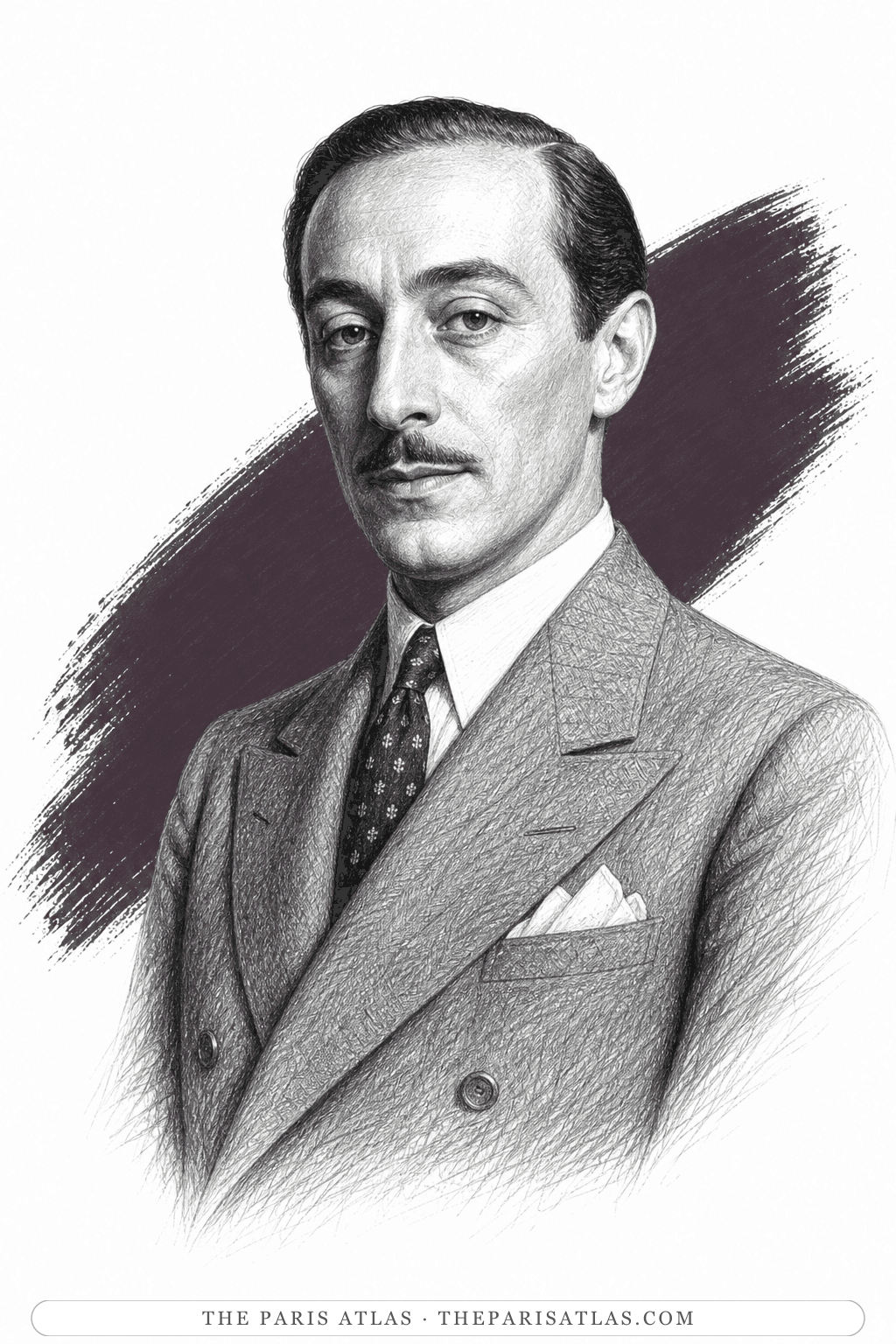
Balmain met Gertrude Stein at Aix-les-Bains in 1939, and she became his closest friend. She told people he had made her clothes during the war, brought her wealthy circle to his first collections, and got a photograph of one of his dresses into Time. Alice B. Toklas reviewed his 1946 show, and the piece was published as A New French Style: Eight Models from Pierre Balmain.
Pierre Balmain; Alice B. Toklas, A New French Style: Eight Models from Pierre Balmain (1946)

Illustrated portrait of Lucien Lelong

Lucien Lelong

  • Fashion designer

Mentored by · 1939–1945

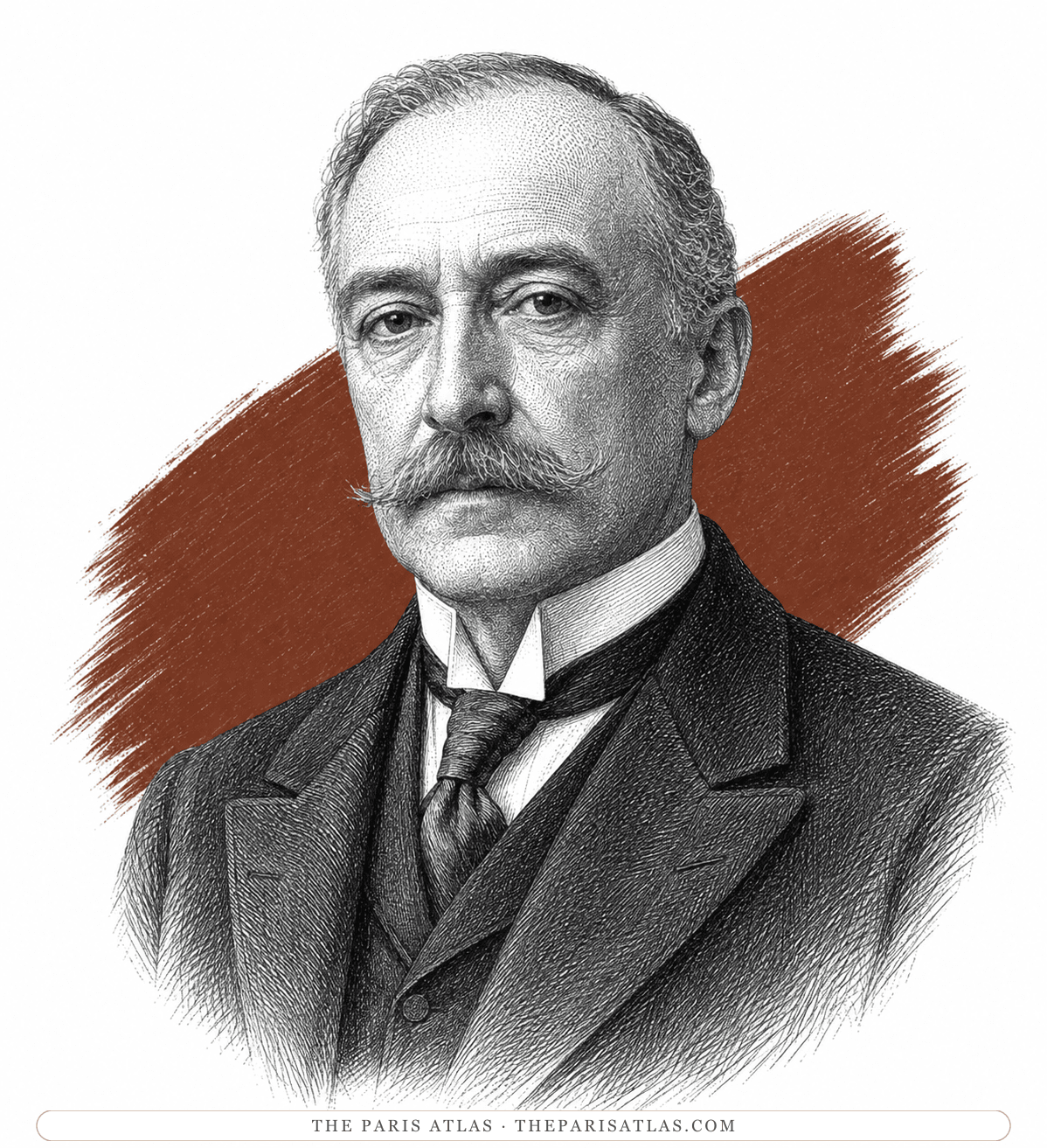
Balmain worked in Lelong's large Paris design studio before opening his own couture house in 1945.

Suit, House of Balmain; Pierre Balmain biography; The 'golden age' of couture

Who they drew from

Influence running inward — the writers and artists whose work fed theirs. Admiration is not acquaintance; these edges claim neither a meeting nor a friendship.

Jacques Doucet

Balmain named the couturiers he had formed his eye on as a boy watching society women at Aix-les-Bains in the 1920s: Madame Premet, Paul Poiret, Jean Patou, Coco Chanel and, above all, Jacques Doucet. What he took from Doucet is visible in the house he built after 1945, where the clothes are luxurious and elaborately made but cut to be worn rather than to shock.

Pierre Balmain

Paul Poiret

Poiret is among the designers Balmain named as his early inspirations, from the fashions he saw on holidaymakers at Aix-les-Bains in the 1920s. Poiret's example survives in Balmain's treatment of a fashion house as a whole world of perfumes, licences and publicity rather than a dressmaking room.

Pierre Balmain

Questions about Pierre Balmain

Who was Pierre Balmain?

Pierre Balmain (1914–1982) was a French couturier who founded the House of Balmain in Paris in 1945. He was one of the four dominant names in 1950s haute couture, with Christian Dior, Jacques Fath and Jean Dessès. He is identified with the Jolie Madame style: long bell skirts from a small waist, a six-button tailored jacket, and luxury cut to be worn comfortably.

What is the Jolie Madame style?

It is the postwar look Balmain built, named after his 1953 perfume. It pairs a long bell-shaped skirt falling from a small waist with a softened two-piece suit and his signature six-button jacket, and it made shift dresses and fur shawls acceptable for daytime. Balmain called dressmaking the architecture of movement, and aimed at opulence that stayed practical.

What was Pierre Balmain's connection to Gertrude Stein?

She was his closest friend. They met at Aix-les-Bains in 1939, and Stein liked to say he had made her clothes during the war. When he opened his own house in 1945 she brought her wealthy circle to his collections and got a photograph of one of his dresses into Time, which helped launch him. Her partner Alice B. Toklas reviewed his 1946 collection in a piece published as A New French Style: Eight Models from Pierre Balmain.

Which films did Pierre Balmain design costumes for?

He dressed actresses in eighty-eight films from 1947 onward, always the leading women. Full wardrobes include Vivien Leigh in The Deep Blue Sea, Brigitte Bardot in And God Created Woman and Carroll Baker in Station Six-Sahara. He also made Audrey Hepburn's 1954 wedding dress, dressed Katharine Hepburn for the stage production of The Millionairess in 1952, and designed Josephine Baker's 1964 revue.

Why did Balmain design for the Queen of Thailand?

Because Thailand needed a national costume and did not have one. Ahead of a six-month royal tour of the United States and fifteen European countries, Queen Sirikit devised a set of eight gowns drawn from Thai dress and history. She chose Balmain to make them, and her whole travelling wardrobe, in Thai silks. The 1960 tour drew an estimated thousand press photographs, and The New York Times wrote that Thailand had found a new language, elegance.

How did Pierre Balmain die?

He died of liver cancer at the American Hospital of Paris in Neuilly-sur-Seine on 29 June 1982, aged 68. His partner of thirty-five years, the Danish designer Erik Mortensen, scattered his ashes in the Maurienne valley where he was born, at the foot of the Saint-Sorlin-d'Arves glacier, and succeeded him at the house.

Sourced claims

Every connection the graph holds for Pierre, with the evidence behind it.

Met · 1939

Gertrude Stein

Balmain met Gertrude Stein at Aix-les-Bains in 1939, and she became his closest friend. She told people he had made her clothes during the war, brought her wealthy circle to his first collections, and got a photograph of one of his dresses into Time. Alice B. Toklas reviewed his 1946 show, and the piece was published as A New French Style: Eight Models from Pierre Balmain.
Pierre Balmain; Alice B. Toklas, A New French Style: Eight Models from Pierre Balmain (1946)

Mentored by · 1939–1945

Lucien Lelong

Balmain worked in Lelong's large Paris design studio before opening his own couture house in 1945.

Suit, House of Balmain; Pierre Balmain biography; The 'golden age' of couture

Influenced by

Jacques Doucet

Balmain named the couturiers he had formed his eye on as a boy watching society women at Aix-les-Bains in the 1920s: Madame Premet, Paul Poiret, Jean Patou, Coco Chanel and, above all, Jacques Doucet. What he took from Doucet is visible in the house he built after 1945, where the clothes are luxurious and elaborately made but cut to be worn rather than to shock.

Pierre Balmain

Influenced by

Paul Poiret

Poiret is among the designers Balmain named as his early inspirations, from the fashions he saw on holidaymakers at Aix-les-Bains in the 1920s. Poiret's example survives in Balmain's treatment of a fashion house as a whole world of perfumes, licences and publicity rather than a dressmaking room.

Pierre Balmain

References

References

The sources below include biographies, scholarly essays, interviews, and primary materials that informed this page. They reflect both the historical record and ongoing critical conversations about Pierre Balmain and their work.

  1. 1Pierre Balmain

    Website
    Wikipedia
    Used for

    Reference article cross-checked for the Savoie childhood, the Molyneux and Lelong years, the 1945 house, the costume work, the Sirikit commission and the death.

    View source
  2. 2Pierre Balmain

    Website
    Encyclopaedia Britannica
    Used for

    Encyclopaedia Britannica's biography, used for dates and the outline of the career.

    View source
  1. 3My Years and Seasons

    Memoir
    Cassell, 1964
    Used for

    Balmain's own memoir, the source of his account of Molyneux's lesson and the early house.

  2. 4A New French Style: Eight Models from Pierre Balmain

    Essays
    Alice B. Toklas, 1946
    Used for

    Alice B. Toklas's review of the 1946 collection, published as a pamphlet.

i
Why these sources are here

These references anchor the page in the documented record and in the scholarly conversations around Pierre Balmain. Every claim on this page traces back to one or more of the works listed here.

Explore more resources