Twenty Love Poems and a Song of Despair
Pablo Neruda
Twenty Love Poems and a Song of Despair
The love poems Pablo Neruda published three years before he left for Asia. Residence on Earth is what came after them.
Read our takeResidence on Earth
Pablo Neruda
by Pablo Neruda
The dark, difficult poems Pablo Neruda wrote alone in Asia in his twenties, and the book that made other poets take him seriously.
Residence on Earth is the book Pablo Neruda wrote as a young, lonely consul in Asia. Most of the first part was written in Rangoon, Colombo and Batavia between 1927 and 1932. Editorial Nascimento printed it in Santiago in 1933, in a signed edition of one hundred copies. An enlarged edition in two volumes followed in Madrid in 1935. The Nobel Prize biography calls these difficult, surrealist poems his literary breakthrough. Chile's National Library says they shaped the Chilean poets of the next generation.[1][2]
In 1927 Neruda took a consular post in Rangoon, the capital of British Burma, because a consular post was the easiest way for a poet without money to travel. He later called what he found there the loneliness of a stranger transplanted into a violent and strange world. Chile's National Library says that writing Residence on Earth was the one thing that kept him going through those years.[3]
Some of the poems are older than the trip. Galope muerto, the poem that opens the book, appeared in the Santiago magazine Claridad in 1925. Two poems printed in the magazine Atenea in 1926 later entered the book under new titles, Madrigal escrito en invierno and Fantasma.[4]
While he was in Asia Neruda wrote often to his friend Héctor Eandi. The letters were published in Buenos Aires in 1980 as Pablo Neruda, Héctor Eandi: correspondencia durante Residencia en la tierra.[3][5]
In 1930, from Batavia in Java, Neruda sent the manuscript to the Spanish poet Rafael Alberti, hoping to have it published in Spain.[3] The book came out in Chile first. On 10 April 1933 Editorial Nascimento published it in a luxury edition of one hundred numbered copies.[5]
The 1933 edition holds poems written between 1925 and 1931, among them Arte poética, whose title means the art of poetry.[1] The poems are long, dense and dark. The Nobel Prize biography calls them esoteric and surrealist, and their American publisher lists loneliness, decay, destruction and silence among their subjects.[2][6]
The 1935 Madrid edition, in two volumes, adds nine poems written between 1931 and 1935.[1] Presenting Neruda's Nobel Prize in 1971, Karl Ragnar Gierow of the Swedish Academy said that in this book the poet is still alone among shifting matter.[7]
A third book, Tercera residencia, followed in 1947 with poems from 1935 to 1945. Tercera residencia includes Spain in Our Hearts, the poems Neruda wrote about the Spanish Civil War.[1][4] The New Directions English edition prints all three books together.[6]
The first edition was small and expensive. Editorial Nascimento printed one hundred copies in Santiago in April 1933, each signed by Neruda. A few months later he left for a new consular post in Buenos Aires, where he met Federico García Lorca that October.
Spain gave the book its wider audience. Neruda became consul in Barcelona in 1934 and in Madrid in February 1935. In April 1935 the Spanish poets published a tribute to him, and on 15 September 1935 the Madrid press Cruz y Raya published Residencia en la tierra in two volumes.
The Spanish Civil War changed Neruda's poetry soon afterwards. The Fundación Pablo Neruda contrasts the withdrawn, dark tone of the two Residencia volumes with the public, militant poems he began writing in 1936.
In 1939 Neruda was in Paris as Chile's consul for Spanish emigration, organizing the voyage of refugees to Chile on the ship Winnipeg. The same year the Paris publisher G.L.M. issued Trois Poèmes, three poems from Residence on Earth in French.
The Spanish scholar Amado Alonso wrote the first major study of Neruda's poetry, published in Buenos Aires in 1940. Its subtitle called the work a hermetic poetry, meaning closed and hard to enter. New Directions quotes his judgement that in Residence on Earth the tornado of fury is identified with Neruda's heart.
Neruda himself had doubts. His American publisher says that at one point he considered disowning the whole book and withdrawing it from circulation.
Later poets disagreed with him. Chile's National Library calls the book a decisive work that influenced Gonzalo Rojas, Enrique Lihn and Jorge Teillier. The same source says the poems mix the local and the far away, the Chilean and the foreign.
The Nobel Prize biography says this book, not the love poems, made Pablo Neruda's reputation as a poet.
Neruda wrote most of it as a young consul in Burma, Ceylon and Java, far from anyone who spoke his language.
Chile's National Library names Gonzalo Rojas, Enrique Lihn and Jorge Teillier among the poets it influenced.
1925
Galope muerto, the poem that later opens the book, appears in the magazine Claridad.
1927
Pablo Neruda leaves Chile for a consular post in Rangoon, Burma, where he begins most of the poems.
1930
From Batavia in Java, Neruda sends the manuscript to Rafael Alberti in Spain.
1933
Editorial Nascimento publishes Residencia en la tierra (1925–1931) on 10 April, in one hundred signed copies.
1935
Cruz y Raya publishes the enlarged edition in two volumes in Madrid on 15 September.
1939
In Paris, the publisher G.L.M. prints three poems from the book in French as Trois Poèmes.
1940
Amado Alonso publishes the first major study of Neruda's poetry.
1946
New Directions publishes Angel Flores's English translation, Residence on Earth and Other Poems.
1947
Editorial Losada publishes Tercera residencia in Buenos Aires.
1973
New Directions publishes Donald D. Walsh's bilingual translation.

Twenty Love Poems and a Song of Despair
Pablo Neruda
The love poems Pablo Neruda published three years before he left for Asia. Residence on Earth is what came after them.
Read our takeCanto General
Pablo Neruda
The public, political poetry Neruda turned to after the Spanish Civil War, and the opposite of this book's private darkness.
Read our takeMemoirs
Pablo Neruda
Neruda's own account of Rangoon, Colombo and Batavia, where most of these poems were written.
Read our takeMostly in Asia, where he was a Chilean consul from 1927 to 1932: Rangoon in Burma, Colombo in Ceylon, and Batavia in Java. A few poems date from Chile before he left, and the later ones from Buenos Aires and Spain.
The first edition came out in Santiago on 10 April 1933, in one hundred signed copies. An enlarged edition in two volumes followed in Madrid on 15 September 1935.
The poems are long and dense, built from dreamlike images rather than clear statements. The Nobel Prize biography calls them esoteric and surrealist, and the first major study of Neruda called his poetry hermetic.
Residence on Earth is the book of 1933 and 1935. Tercera residencia, or Third Residence, is a separate book of 1947 with poems from 1935 to 1945, including the Spanish Civil War poems of Spain in Our Hearts.
Donald D. Walsh's bilingual translation from New Directions, first published in 1973, covers all three Residencia books with the Spanish on facing pages. Angel Flores's earlier translation appeared from New Directions in 1946.
A small one. In 1939, while Neruda was in Paris arranging the rescue of Spanish refugees, the Paris publisher G.L.M. printed three poems from the book in French.
Explore authors with a similar voice, perspective, and influence.
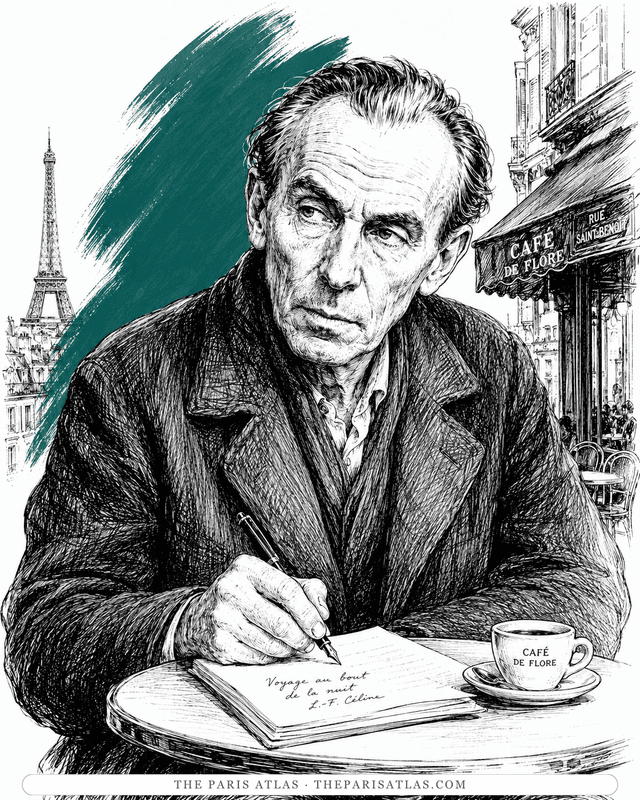
The doctor of the Paris slums who wrote the century's blackest, funniest novel — and changed the sound of French prose.
View author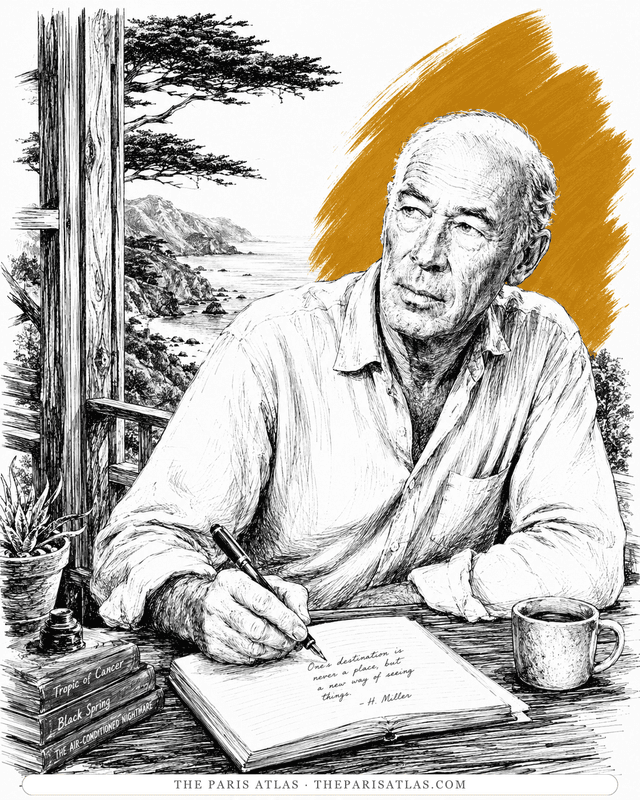
The Brooklyn dropout who arrived in Paris broke at thirty-eight and wrote the exuberant, banned books that ended American censorship.
View author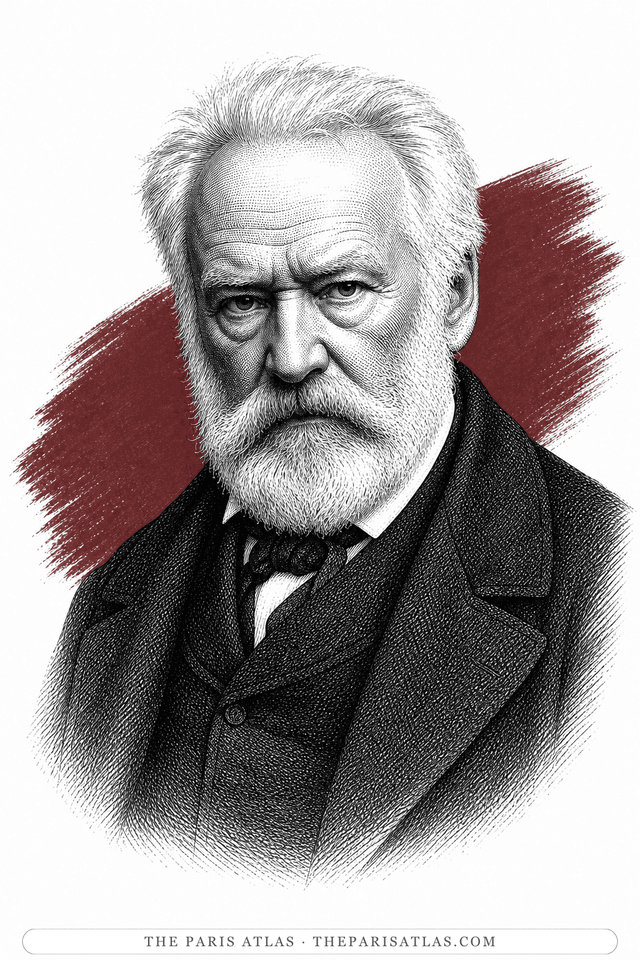
Poet, novelist and playwright who spent sixteen years in an apartment on the Place des Vosges that is now his museum, wrote a novel about Notre-Dame that shamed France into repairing the cathedral, spent nineteen years in exile for opposing the emperor Napoleon III, and was buried in the Panthéon — the Paris monument where France buries its most honoured dead — in 1885 after a funeral that brought roughly two million people into the streets of Paris.
View authorThe sources below include the primary text, editions, scholarship, archival materials, and other records that informed this page. They document Residence on Earth, its publication, and its place in literary history.

Karl Ragnar Gierow's 1971 presentation speech.
The Swedish Academy's bibliography: the Spanish editions and Angel Flores's 1946 translation.
Open Library edition records, used to confirm each ISBN listed.

The primary text represented by this page, used for descriptions of the work’s contents and for any quoted passages shown here.
The primary text is the baseline reference for every book page. Additional references document publication history, interpretation, and historical context where that evidence is available.
 Explore more resources