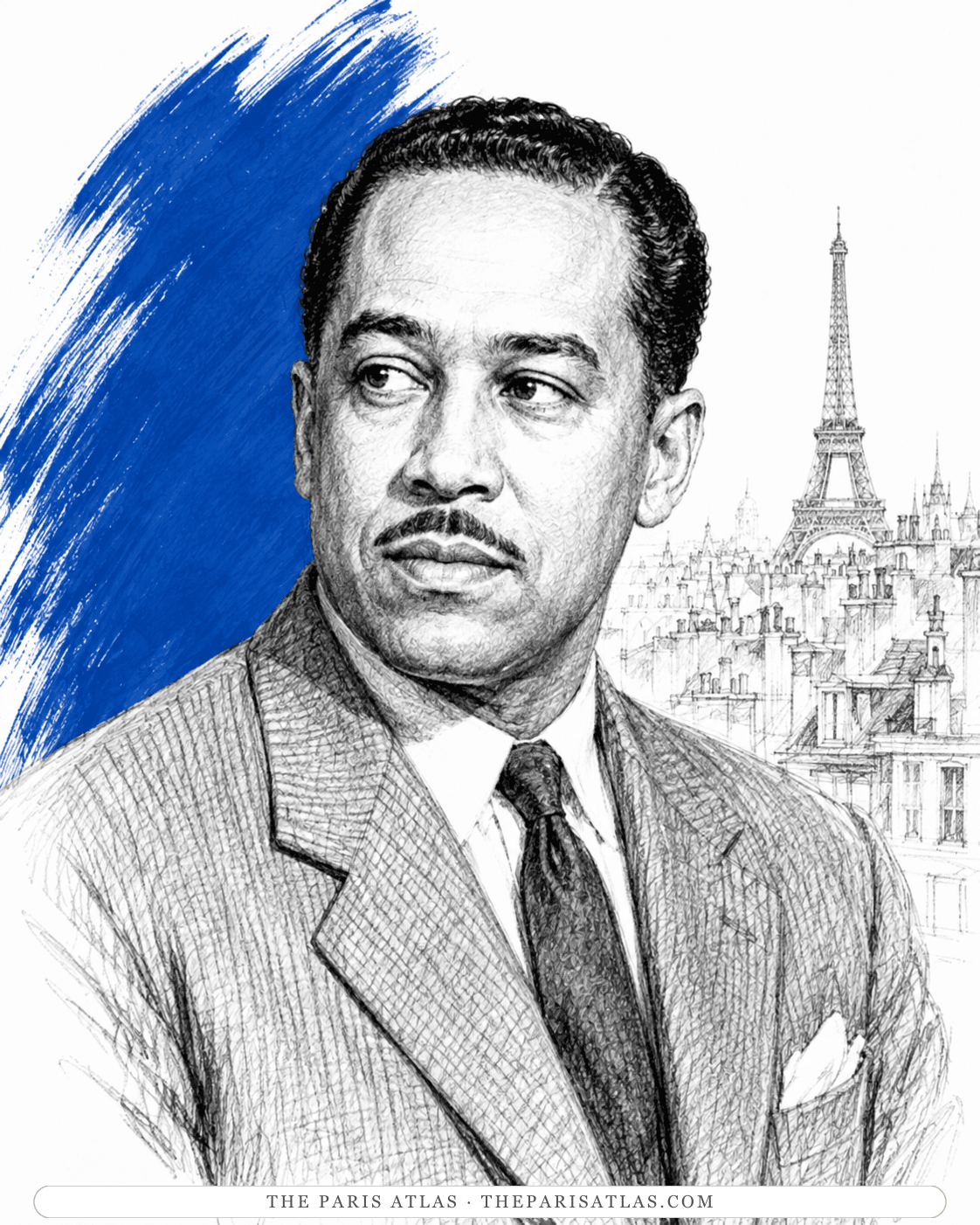


I Wonder as I Wander
The sequel to The Big Sea: Cuba, Haiti, the Soviet Union, and besieged Madrid, ending in Montmartre on New Year's night.
- 1956
- Wry
- Exuberant
- Atmospheric
- autobiographical
- episodic
- reportage
- voice-driven
About Langston Hughes
The story, briefly
Spoiler-freeLangston Hughes's second autobiography, published by Rinehart in 1956 and subtitled An Autobiographical Journey. It begins in 1931, where The Big Sea stops, with Hughes deciding to live entirely by writing — and then keeps moving: Cuba and Haiti, a poetry-reading tour of the Jim Crow South, a year in the Soviet Union after a Moscow film project collapses, Soviet Central Asia, Japan, Shanghai, Mexico City, and finally Spain in 1937 as a correspondent in besieged Madrid. It ends in Paris on New Year's night, back in Montmartre where his first book's adventures happened.
The story, in more detail
The book opens with the aftermath of the patron break that closed The Big Sea: the stock-market crash, his personal crash, and the decision that poetry would have to become bread. Mary McLeod Bethune suggested the remedy — travel the South reading poems — and the 1931–32 reading tour fills the early chapters. In 1932 Hughes sailed for Moscow with twenty-one other young Black Americans to make "Black and White", a Soviet film about American race relations that was never made; the collapse of the project left him in the USSR with time, rubles, and curiosity, and the long middle of the book follows him to Tashkent, Samarkand, and Bukhara in Soviet Central Asia, then home the long way through the Soviet Far East, Japan — where the police questioned him and encouraged him out of the country — and Shanghai.
The final chapter, "World without End", is Spain, 1937. Hughes went in as a war correspondent, traveling with the Cuban poet Nicolás Guillén, and spent months in besieged Madrid under shellfire. The book closes on New Year's night in Montmartre, with Hughes walking the snowy streets where he had washed dishes fourteen years earlier, wondering — the last word of the book echoes its title — whether his world would end.
Rinehart published it in 1956, a quarter century after the events it describes. It has none of the first book's debut glamour and all of its motion; Arnold Rampersad introduces the current Hill and Wang edition.
Themes and analysis
The journey the failed film made possible
The abandoned film leaves Hughes and his companions free to choose another route. Letitia Guran's scholarly introduction reproduces his explanation that they wanted to visit the regions where the Soviet Union's nonwhite citizens lived. Their journey is therefore more than aimless sightseeing: the chosen destination connects travel to questions of race already shaping their lives. Guran also traces Hughes's later rewriting of his Central Asian accounts. That history invites readers to distinguish the encounters themselves from the memoir's retrospective arrangement, rather than treating its apparent spontaneity as an unedited diary.
New Year's night in Montmartre
Vera Kutzinski reads the Montmartre ending as a reopening rather than a secure homecoming. In the passages she reproduces, Seki Sano's account of people unable to return home unsettles Hughes's assurance that America remains available to him. His subsequent repetition of a promise that his world will survive sounds less like settled knowledge than an effort to sustain it. The final uncertainty changes the meaning of the journey: return is not simply a matter of reaching a familiar place when the political world that made belonging possible can itself disappear.
Why we recommend it
The widest-ranging Black American travel memoir of its era
Cuba, Haiti, the Jim Crow South, Moscow, Central Asia, Japan, Shanghai, Mexico, and Spain in one book, all before 1938, all firsthand.
A poet reporting a war
The Madrid chapters are working journalism — Hughes was there as a correspondent, under siege, and writes the shellfire with a reporter's economy.
The other half of the story
The Big Sea makes the poet; this book shows the poet making a living — the reading tours, the fees, the writing sold to stay moving.
What this book explores
Timeline
1931
Cuba and Haiti, then the poetry-reading tour of the South that Mary McLeod Bethune suggested.
1932
Sails for Moscow with the "Black and White" film group; the project collapses and the Soviet year begins.
1933
Central Asia, then home the long way — the Soviet Far East, Japan under police questioning, and Shanghai.
1935
Mexico City after his father's death; California and Cleveland; writing for a living.
1937
Civil War Spain as a correspondent — besieged Madrid, with Nicolás Guillén.
1938
The book ends on New Year's night in Montmartre.
1956
Rinehart publishes the memoir, a quarter century after its opening scenes.
Book editions

- Paperback
- Hill and Wang
- 9780809015504
Hardcover
- Hardcover
- Rinehart & Company
- 1956
Reader reviews
Readers may also like

The Face of War
Martha Gellhorn's war reporting includes the same besieged Madrid of 1937, from the same hotels under the same shells.
Read our take
For Whom the Bell Tolls
The novel of the war Hughes covered as a correspondent — Spain 1937 from the guerrilla side of the lines.
Read our takeI Wonder as I Wander: frequently asked questions
What is I Wonder as I Wander about?
It is Langston Hughes's second autobiography, published in 1956, covering 1931 to New Year 1938. It follows him through Cuba and Haiti, a poetry-reading tour of the American South, a year in the Soviet Union after a Moscow film project collapsed, Central Asia, Japan and Shanghai, Mexico City, and Civil War Spain as a correspondent in besieged Madrid, ending in Paris.
Is I Wonder as I Wander a sequel to The Big Sea?
Yes. The Big Sea (1940) ends in 1931 with the break from Hughes's patron; I Wonder as I Wander opens on that same moment and carries the story forward through the thirties.
Why did Langston Hughes go to the Soviet Union?
To act in a film. In 1932 he sailed with a group of young Black Americans invited to Moscow to make "Black and White", a Soviet picture about American race relations. The film was never made, and Hughes spent the better part of a year traveling the USSR instead, including Soviet Central Asia — Tashkent, Samarkand, and Bukhara.
Was Langston Hughes in the Spanish Civil War?
As a correspondent, yes. He went to Spain in 1937, traveling in with the Cuban poet Nicolás Guillén, and reported from Madrid while the city was under siege, living in a hotel that took shellfire. The Spanish chapters close the book.
Where does I Wonder as I Wander end?
In Paris, on New Year's night, in the snow in Montmartre — the district where Hughes had washed dishes at the Grand Duc nightclub in 1924. The final page circles back to the book's title: he wonders whether his world will end.
If you like Langston Hughes
Explore authors with a similar voice, perspective, and influence.

Louis-Ferdinand Céline
The doctor of the Paris slums who wrote the century's blackest, funniest novel — and changed the sound of French prose.
View author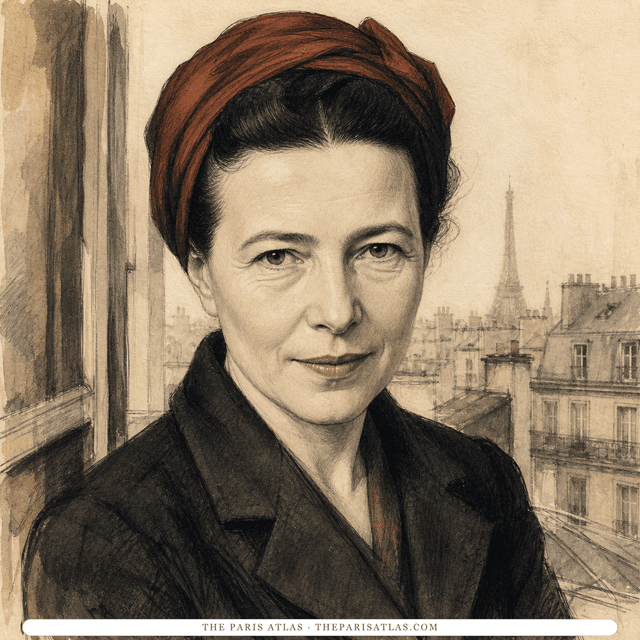
Simone de Beauvoir
French writer and philosopher whose novels, memoirs, and social analysis examined freedom, gender, responsibility, aging, and the material conditions that shape a life.
View author
Henry Miller
The Brooklyn dropout who arrived in Paris broke at thirty-eight and wrote the exuberant, banned books that ended American censorship.
View author
References
References
The sources below include the primary text, editions, scholarship, archival materials, and other records that informed this page. They document I Wonder as I Wander, its publication, and its place in literary history.


1A Reading Guide to Langston Hughes
WebsiteAcademy of American Poets, poets.orgUsed forUsed to place I Wonder as I Wander within Langston Hughes's published work and verify its bibliographic context.
2Langston Hughes
WebsiteAcademy of American Poets, poets.orgUsed forUsed for independent biographical, archival, or historical context surrounding Langston Hughes's career and the period in which I Wonder as I Wander appeared.
3Langston Hughes
WebsiteNational Park ServiceUsed forUsed to cross-check authorship, chronology, and the work's place in Langston Hughes's wider catalogue.
4Researcher Finds Earlier Birth Date for Langston Hughes
WebsiteSmithsonian Magazine, 2018Used forUsed to verify Langston Hughes's bibliography and place I Wonder as I Wander within the broader chronology of Langston Hughes's career.
5Welcome — Walking on the Tightrope of Words: Langston Hughes's Soviet Writings
WebsiteIllinois Open Publishing NetworkUsed forScholarly introduction and its reproduced primary passage; not a complete memoir or archival collation.

6The Worlds of Langston Hughes: Modernism and Translation in the Americas
NonfictionCornell University Press, 2012Used forAttributed interpretation of the ending, printed pp. 40–42 and relevant notes on pp. 267–268; only selected passages inspected.
i
Why these sources are here
The primary text is the baseline reference for every book page. Additional references document publication history, interpretation, and historical context where that evidence is available.
 Explore more resources