
Narrative of the Life of Frederick Douglass, an American Slave
The 1845 account offers a shorter, earlier telling of the childhood and escape whose details Douglass revisits here.
Read our take
Douglass's final autobiography follows his life from slavery into abolition, the Civil War, public office, and diplomacy.
Life and Times of Frederick Douglass is his third autobiography, first published in 1881 and expanded in 1892. It revisits his childhood and escape, then follows his work as an abolitionist, newspaper editor, recruiter, and public official. The revised edition adds later travels and his account of service in Haiti. Douglass describes emancipation as an achievement whose promise of equal citizenship remains contested.
The first part returns to Maryland and the early life familiar from Douglass's previous autobiographies. The second part can disclose something those books withheld: how he escaped in 1838. Borrowed identification from a free Black sailor, maritime knowledge, and carefully timed boarding help him pass inspection. He now tells the story after slavery's abolition has changed the danger of disclosure.[1]
Much of the new material concerns public decisions. Douglass describes his connections with John Brown, arguments about Black military service, meetings with Abraham Lincoln, and the struggle for voting rights. His account is a participant's recollection, with explanations of his own choices and judgments of people he knew. Readers can follow his admiration without treating every remembered exchange as an independently recorded transcript.[1]
The 1892 edition adds a third part. Douglass returns to political disputes he had not expected to narrate again and describes European and Egyptian travel with Helen Douglass. He also defends his conduct during the unsuccessful American effort to obtain a naval coaling station at Haiti's Môle Saint-Nicolas. The new chapters extend the autobiography into questions of national power and sovereignty.[1]
Paris appears in this added travel account. Douglass remembers walking its streets and spending days and weeks in art galleries. This passage does not name the galleries. His separate 1887 travel addresses identify the Louvre, so the more specific connection rests on those addresses rather than on a name absent from this book.[1]
Douglass revisits his childhood on Maryland's Eastern Shore, education in Baltimore, resistance to Edward Covey, and effort to escape. At the beginning of the second part, he describes traveling in sailor's clothing with borrowed identification. After reaching New York, he receives help, marries Anna Murray, and moves to New Bedford. His work as an abolitionist speaker leads to the earlier Narrative and a tour abroad.[1]
Newspaper work and antislavery organizing occupy the years before the Civil War. Douglass explains his relationships with allies, including Garrison and John Brown, without presenting agreement as constant. During the war, he recruits Black men for military service and challenges their unequal treatment. His meetings with Lincoln show him trying to turn access to the president into changes in policy.[1]
After emancipation, Douglass argues for Black citizenship and voting rights while taking part in national politics and holding public office. He looks back on his earlier life from Washington and revisits Maryland. The first version's retrospective conclusion combines pride in achievement with arguments about work still required.[1]
The revised third part continues through later public service, bereavement, remarriage, and travel. Douglass describes France, Italy, Egypt, and other destinations, then returns to American political disputes. The final chapter gives his defense of his work as minister to Haiti and explains why negotiations for an American coaling station failed.[1]
The revised edition ends with Douglass responding to criticism of his diplomacy. He explains the pressures on Haiti and rejects accounts that blame the failed negotiations simply on his conduct. His final words also mention Haiti's appointment of him as its representative at the World's Columbian Exposition. The autobiography closes with ongoing public responsibilities.
Earlier autobiographies withheld the method of Douglass's escape because disclosure could endanger other people. Life and Times explains the borrowed sailor's identification and the journey north after abolition has changed those conditions. The difference makes publication itself part of the history.
A reader should therefore distinguish silence from a failure of memory. Douglass had reasons to protect information he possessed. His later disclosure shows how an autobiographer balances the wish to establish a verifiable account against obligations to people who might be harmed by it. What can responsibly be told changes over time.
The Civil War chapters move from individual escape toward the terms on which Black Americans can belong to the nation. Recruiting soldiers raises questions about pay, protection, and recognition. Service can demonstrate commitment while exposing the government's refusal to treat its defenders equally.
Douglass's meetings with Lincoln belong to that effort to turn access into policy. Admiration does not remove disagreement, and personal courtesy does not settle a question of rights. The reader follows a participant explaining what he asked for, what he believed a meeting accomplished, and what remained beyond his control.
The 1892 revision resumes a life that the first version had already brought to a retrospective close. Public service, travel, and new disputes interrupt the expectation of a completed career. The additional material makes achievement compatible with continuing exposure to prejudice and criticism.
This matters when editions are compared. A first-version reader encounters a different stopping point from a reader of the revised book. The later chapters do more than update dates: they place Douglass's account of American freedom beside experiences abroad and responsibilities that test his public standing again.
In the final chapter of the revised edition, Douglass defends his conduct during negotiations over an American naval station in Haiti. His sympathy for Haiti and his position as a United States representative place him between different interests. A claim about his diplomatic failure becomes a question about what the United States expected Haiti to concede.
The autobiography thus ends with an argument still being contested. Douglass's own progress from enslavement to office does not guarantee that a powerful nation will respect another Black people's independence. His defense asks readers to judge the negotiation and its unequal pressures, rather than measure success solely by whether the United States obtained its demand.
Primary text of the first version: escape, military recruitment, Lincoln meetings, and postwar citizenship.
Revised edition, Part Three, especially the final chapter on service in Haiti.
It will be seen in these pages that I have lived several lives in one.
In his company I was never in any way reminded of my humble origin, or of my unpopular color.
The book follows decades of organizing and public service. It shows why the achievement of personal freedom and the abolition of slavery did not end Douglass's political work.
His recollections of military recruitment and meetings with Lincoln connect speeches and organizing to disputes over policy. The reader can examine the demands he made as well as the access he obtained.
The 1892 travel and Haiti chapters show Douglass comparing societies and defending his diplomatic conduct. They give his final autobiography subjects absent from the earlier books.
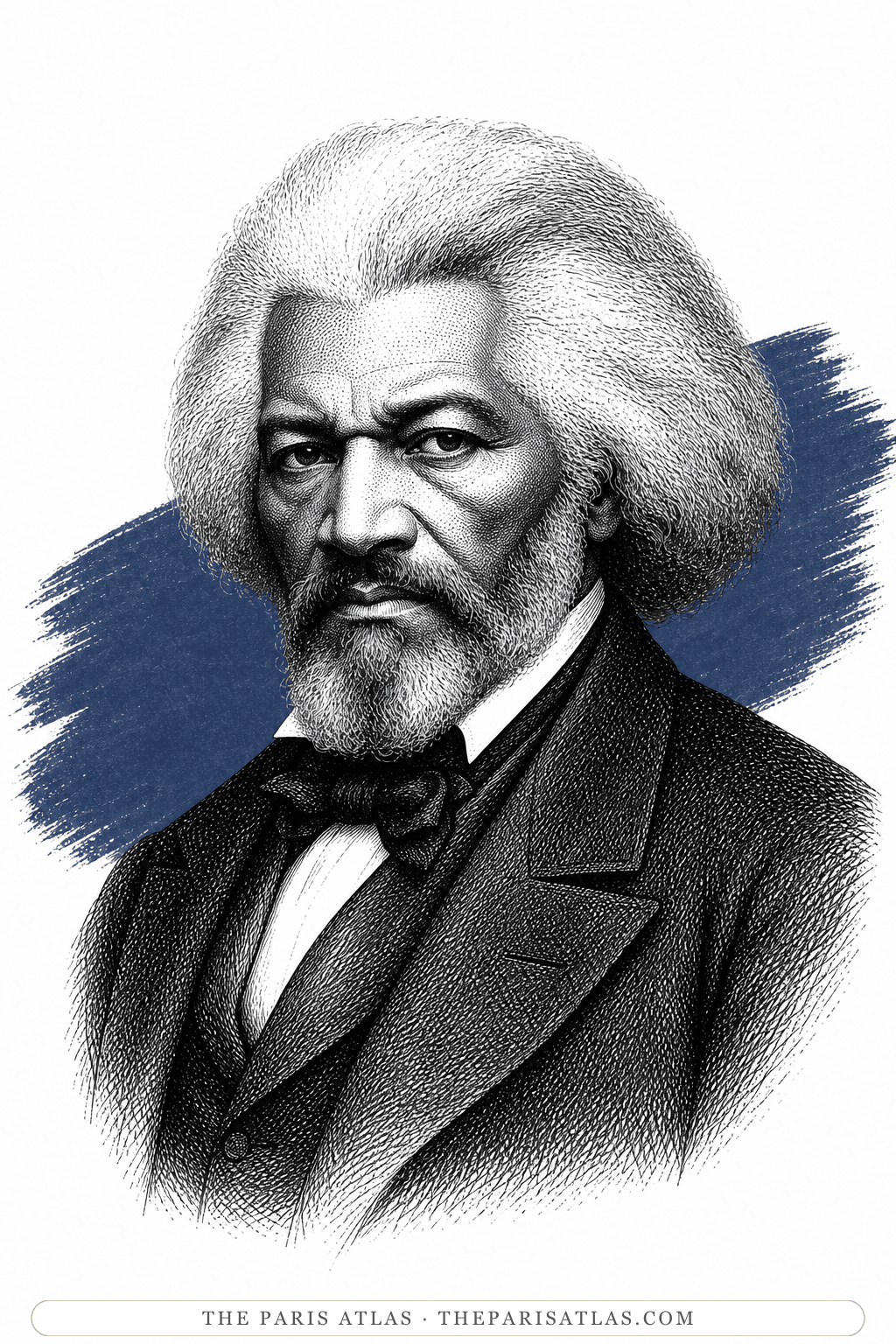
The older Douglass reviews his enslavement, activism, public service, travels, and political decisions.
1881
Park Publishing Co. in Hartford publishes Douglass's third autobiography, with an introduction by George L. Ruffin.
1892
A revised edition adds a third part covering later public life, overseas travel, and Douglass's defense of his diplomacy in Haiti.
2022
Oxford University Press publishes the edition edited by Celeste-Marie Bernier and Andrew Taylor in Oxford World's Classics.

The 1845 account offers a shorter, earlier telling of the childhood and escape whose details Douglass revisits here.
Read our take
The second autobiography develops his education and political independence before the Civil War material added in Life and Times.
Read our take
Hughes's later travel autobiography offers another Black American writer's comparisons between public life abroad and conditions at home.
Read our takeIt was first published in 1881 and expanded in 1892. An 1882 date on a later printing does not change the work's first-publication year.
It adds a third part about Douglass's later life, political activity, travels, and diplomatic service. Readers looking for Paris, Egypt, or the Haiti negotiations should choose the expanded edition.
Yes. The second part describes his use of sailor's clothing and borrowed identification in 1838. His earlier autobiographies had withheld the method to avoid endangering helpers and future escapes.
It does both. Douglass retells his early life, then continues into decades of public work that the earlier autobiographies could not cover. The revised edition extends that account again.
Yes. He recalls meetings with Lincoln and discussions about Black military service and emancipation. These are Douglass's retrospective accounts of exchanges in which he participated.
Paris appears in the travel chapters added to the revised 1892 edition. He describes streets and art galleries without naming those galleries in that passage. His separate 1887 travel addresses identify the Louvre.
Explore authors with a similar voice, perspective, and influence.
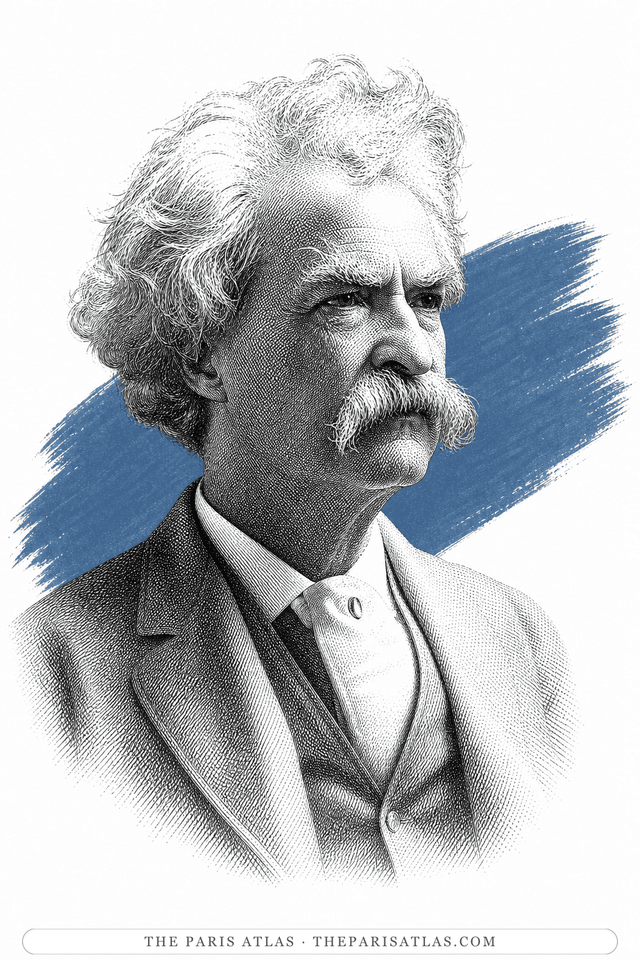
The Missouri newspaperman who became America's most famous writer, and whose first book made its reputation partly out of Paris: in 1867 he arrived with a shipload of American tourists, renamed his guide Ferguson, watched the high-kicking can-can through his fingers and wrote it all down. He kept coming back — and was living in Paris in the mid-1890s, broke, while finishing the novel he considered his best, Personal Recollections of Joan of Arc.
View author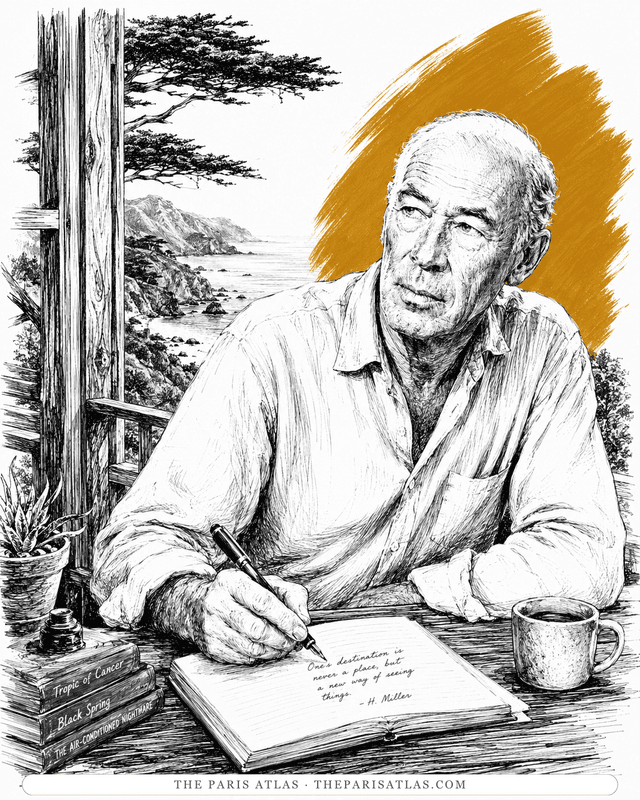
The Brooklyn dropout who arrived in Paris broke at thirty-eight and wrote the exuberant, banned books that ended American censorship.
View author
The doctor of the Paris slums who wrote the century's blackest, funniest novel — and changed the sound of French prose.
View authorThe sources below include the primary text, editions, scholarship, archival materials, and other records that informed this page. They document Life and Times of Frederick Douglass, its publication, and its place in literary history.


Primary text of the expanded edition, including travel and Haiti.

The work's first-publication date and position among the autobiographies.
Editors' institutional bibliography confirms the Oxford edition's date, ISBN, and page count.
Publisher's listing for the selected reading edition.
The separate addresses that explicitly identify the Louvre.
The primary text is the baseline reference for every book page. Additional references document publication history, interpretation, and historical context where that evidence is available.
 Explore more resources