
Brave New World
Huxley's next novel, written three years later on the Mediterranean coast. The satire moves from real London society to an invented world state.
Read our takePoint Counter Point
Aldous Huxley
A crowded London novel of the late 1920s, built like a piece of music, with D. H. Lawrence at its moral centre and a murder near the end.
Aldous Huxley's fourth novel follows about a dozen Londoners through one summer in the late 1920s. Walter Bidlake leaves his pregnant partner for the cold, restless Lucy Tantamount. His sister Elinor is drawn to Everard Webley, the leader of a uniformed political movement. Her husband Philip Quarles, a novelist, fills his notebook with plans for a book that works like music. The painter Mark Rampion, drawn from Huxley's friend D. H. Lawrence, tells them all what is wrong with them. Chatto & Windus published the novel in London in October 1928.
The title is a musical term. Counterpoint is music in which several separate tunes are played at the same time and fit together. Huxley builds the novel the same way. He cuts from one set of people to another, and lets the stories answer each other. Philip Quarles, the novelist inside the novel, explains the plan in his notebook in Chapter XXII. He calls it the musicalization of fiction. A novelist needs enough characters and parallel plots. While one man is murdering his wife, another is pushing a pram in the park.[1]
The book is also a novel about real people under other names, which the French call a roman à clef. The scholar Keith Cushman lists the main models. Mark and Mary Rampion are D. H. Lawrence and his wife Frieda. The editor Denis Burlap is a savage portrait of the critic John Middleton Murry. Lucy Tantamount is drawn from Nancy Cunard, with whom Huxley had a short affair before he wrote the book. Everard Webley seems partly based on Oswald Mosley, and Philip Quarles is partly Huxley himself.[2]
Huxley was working on the novel by January 1927. The novel came out in October 1928, the same month he and his wife Maria moved into a rented house at 3 rue du Bac in Suresnes, just west of Paris.[3] A French translation followed from Plon in Paris in 1930.[4]
Walter Bidlake is a young journalist. He has lived for two years with Marjorie Carling, who left her husband for him and is now pregnant. He no longer loves her. One evening he leaves her at home and goes to a musical party at Tantamount House, the London home of Lord and Lady Edward Tantamount. A flautist plays Bach's Suite in B minor. Upstairs, Lord Edward, an elderly biologist, works in his laboratory with his assistant Illidge on a newt whose tail he has grafted where a leg should be.[1]
At the party Walter looks for Lucy Tantamount, Lord Edward's daughter. She is bored, beautiful and hungry for sensation, and she takes him on to Sbisa's, a restaurant where the talk goes on late. There they meet Spandrell, a clever, bitter man who wastes his life in drink and seduction, and the painter and writer Mark Rampion. Rampion's back story fills Chapter IX. He was a poor young man with a country accent who walked into the park of a rich family in the north of England and married the daughter, Mary.[1]
Walter's sister Elinor is married to Philip Quarles, a novelist who lives in his head. They are travelling home from India and have left their small son, little Phil, with Elinor's parents at Gattenden in the country. Elinor's father is John Bidlake, an old and famous painter. Back in London, Elinor is drawn to Everard Webley. He leads the Brotherhood of British Freemen, a movement of men in green uniforms, and in Chapter XXIX he addresses a thousand of them in Hyde Park from a white horse.[1]
The other stories run alongside. Denis Burlap edits a literary weekly, writes pious articles and uses them to win women. Philip's father Sidney Quarles pretends to write a great book on democracy and gets his typist, Gladys, pregnant. Lucy flies off to Paris and writes Walter letters from the quai Voltaire. Spandrell drinks, seduces young women and despises himself.[1][2]
Elinor agrees to meet Everard Webley at her house one evening at six. That afternoon a telegram calls her to Gattenden, because little Phil is ill. She asks Spandrell to telephone Webley and put him off. Spandrell telephones Illidge instead. The two men wait behind a screen in the empty house, and when Webley arrives they kill him. That night they drive his body away in his own car.
At Gattenden the doctor finds that little Phil has meningitis. The child goes deaf and blind, seems to recover one morning, and dies in convulsions that afternoon. Meanwhile the newspapers make a sensation of the murder, and the Freemen almost double their numbers in a week.
Spandrell writes an anonymous letter to the Freemen telling them where Webley's murderer will be, and that he is armed. The next afternoon he plays the Rampions a gramophone record of the slow movement of Beethoven's String Quartet in A minor, the Heiliger Dankgesang, or holy song of thanksgiving. He goes to answer the door, and three Freemen in green uniform shoot him while the music plays on in the next room. The book ends with Burlap. He has got rid of his assistant Ethel Cobbett, who then gasses herself, and he takes a bath with his new companion, Beatrice Gilray.
Mark Rampion is the only character in the novel whom Huxley plainly admires. He and his wife Mary are the one happy marriage in the book. The critic Keith Cushman calls the Rampions unmistakable portraits of D. H. Lawrence and his wife Frieda. Like Lawrence, Rampion is thin and pale and has a cough. He grew up poor, married above his class, and preaches that modern people have lost touch with their bodies.
Lawrence was dying of tuberculosis when the book came out. He read it on Port-Cros, a small island off the Riviera, and wrote to Huxley on 28 October 1928. He admired the book's courage but hated its violence. He said he would like to smack Lucy across the mouth, and called Rampion "the most boring character in the book—a gas-bag".
In November he told friends that he refused to be Rampioned. On 5 February 1929 he wrote to Lady Ottoline Morrell from Bandol, on the French coast. He thought the novel had come between Aldous and Maria Huxley, because Maria found it hard to forgive the death of the child. He added that he did not like Huxley's books. Huxley later admitted that Rampion was only some of Lawrence's notions on legs.
Music runs through the whole novel. The first party has a Bach suite at Tantamount House, and the last chapter has a Beethoven quartet on Spandrell's gramophone. In between, Philip Quarles writes in his notebook about Beethoven's changes of mood, and about the Diabelli Variations, where a silly little waltz is turned into every kind of feeling.
Philip's notebook also suggests putting a novelist into the novel. Huxley does exactly that, since Philip is planning a book about people very like the people around him. Philip admits his own weakness as he writes. He says the novel of ideas is a made-up affair, because people who talk in neat ideas are slightly monstrous.
The last scene is built like a musical echo. Earlier in the book, Burlap writes a weekly article about his dead wife Susan and calls it "Of such is the Kingdom of Heaven". The novel's final sentence repeats that line, as Burlap splashes in the bath with Beatrice.
Paris is where Lucy Tantamount goes when London bores her. Chapters XXV and XXX are her letters to Walter from the quai Voltaire, on the Left Bank opposite the Louvre. From her window she sees the palace, the river and a green glass sky. She admires herself in the mirrors at Lanvin, the fashion house, and goes drinking in Montparnasse among crowds of foreign artists.
In Chapter XXX she tells Walter why she will not leave Paris. A young Italian followed her along the boulevard Saint-Germain, looking in the bookshop windows. They took a taxi to a small hotel near the Jardin des Plantes that let rooms by the hour. Earlier she complains that since Marcel Proust and André Gide made gay men and lesbians fashionable, she meets nobody else in Paris. The line is hers, and it is meant to shock.
The book reached Paris quickly in French. Plon published Contrepoint in 1930, translated by Jules Castier with a preface by the novelist André Maurois. Plon issued it in two volumes in its series of foreign fiction, Feux croisés. A Plon printing dated 1931 is already marked as the twenty-first edition. The Huxleys were living at Suresnes, on the western edge of Paris, until April 1930.
The musicalization of fiction.
All you need is a sufficiency of characters and parallel, contrapuntal plots. While Jones is murdering a wife, Smith is wheeling the perambulator in the park.
Put a novelist into the novel.
David King Dunaway's life of Huxley in the Oxford Dictionary of National Biography says the novel turned his friendship with D. H. Lawrence into an international best-seller.
Mark Rampion is Lawrence under another name. Lawrence read the novel while dying and called Rampion a gas-bag.
Parallel stories answer each other like tunes in a fugue, and a novelist inside the book explains how the trick works.
Lucy Tantamount's letters from the quai Voltaire give a sharp, unpleasant picture of fashionable Paris in the late 1920s.

A painter and writer from a poor country family who tells everyone what is wrong with the modern world. Drawn from D. H. Lawrence.
A clever, idle man who drinks, seduces and despises himself. He wants to feel something enough to believe in God.
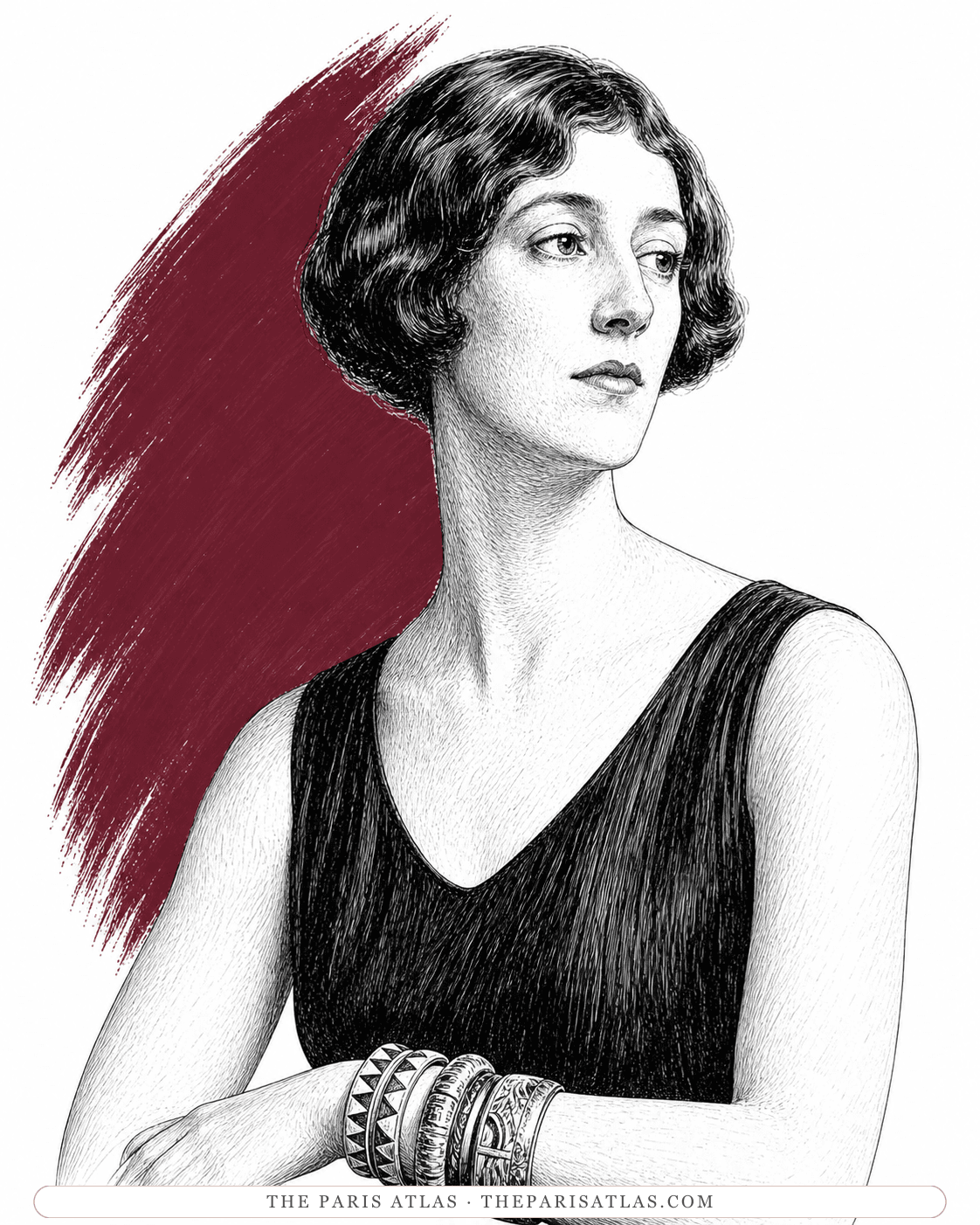
Lord Edward's daughter, a restless beauty who collects sensations and people. Drawn from Nancy Cunard.
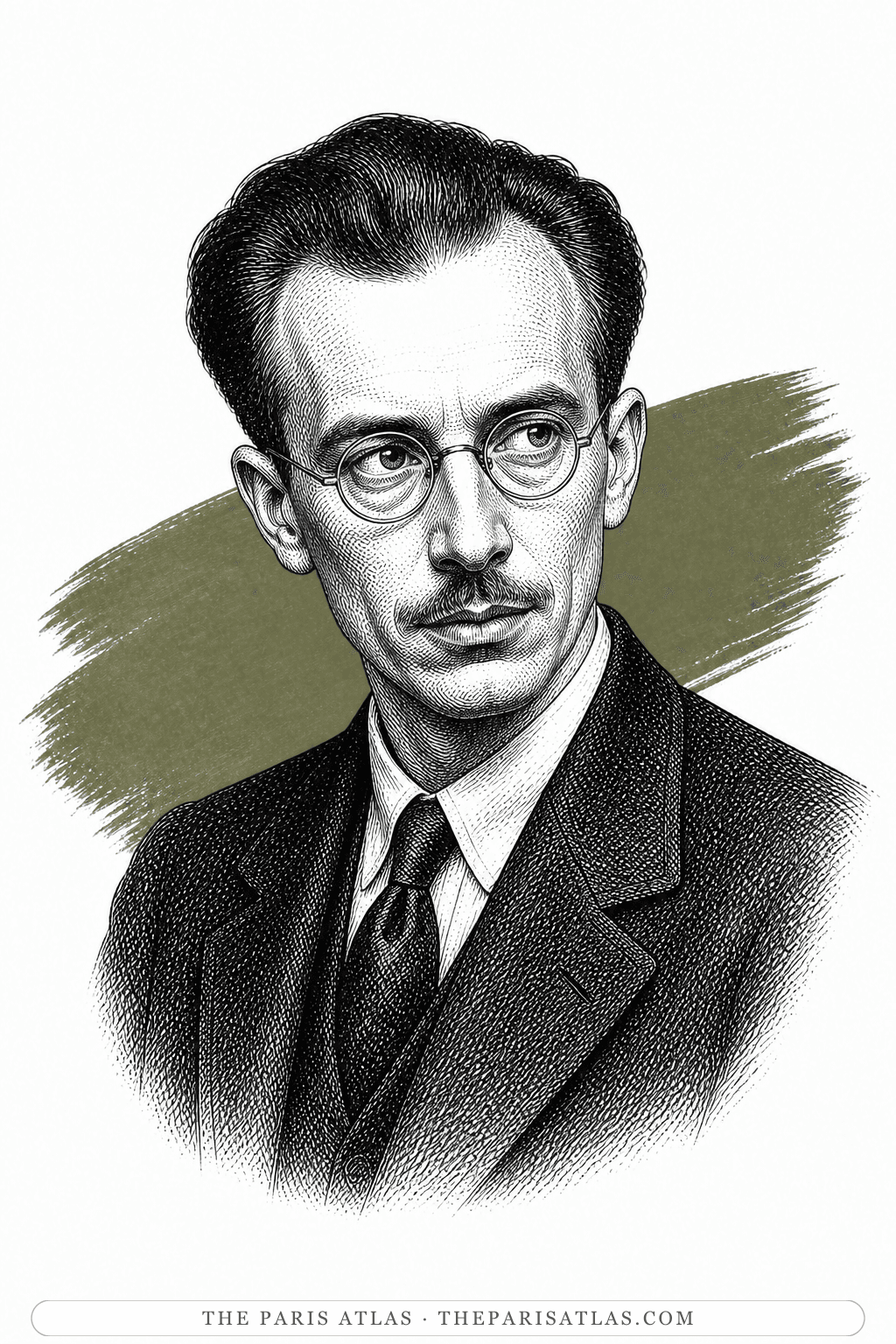
A novelist who thinks about life instead of living it. His notebook explains how the novel itself is built. Partly a self-portrait of Huxley.
A young journalist who leaves his pregnant partner Marjorie for Lucy Tantamount and hates himself for it.
Philip's wife and John Bidlake's daughter. Lonely in her marriage, she is drawn to Everard Webley.
Leader of the Brotherhood of British Freemen, who dress in green. Keith Cushman sees Oswald Mosley in him.
Editor of The Literary World, who hides his greed behind a gentle Christian manner. Drawn from the critic John Middleton Murry.
Lord Edward's laboratory assistant, a communist from a poor home, who helps Spandrell with the murder.
Walter and Elinor's father, an old and famous painter who has lived for pleasure and is now afraid of illness.
The woman who left her husband for Walter and is carrying his child.
Philip and Elinor's small son, left with his grandparents at Gattenden while his parents travel.
January 1927
Huxley is at work on Point Counter Point.
October 1928
Chatto & Windus publishes the novel in London. The same month the Huxleys move into 3 rue du Bac in Suresnes, west of Paris.
20 October 1928
L. P. Hartley reviews it in the Saturday Review and Cyril Connolly in the New Statesman.
28 October 1928
D. H. Lawrence writes to Huxley from Port-Cros and calls Rampion a gas-bag.
1928
Doubleday, Doran publishes the first American edition in Garden City, New York.
5 February 1929
Lawrence writes to Lady Ottoline Morrell that Maria Huxley found it hard to forgive the death of the child in the novel.
1930
Plon publishes Contrepoint in Paris, translated by Jules Castier with a preface by André Maurois.
1932
Huxley edits The Letters of D. H. Lawrence, which prints Lawrence's letter about the novel.


Huxley's next novel, written three years later on the Mediterranean coast. The satire moves from real London society to an invented world state.
Read our take
D. H. Lawrence's novel of the same year. Aldous and Maria Huxley told him to take it to Paris for a cheap edition.
Read our take
Virginia Woolf's novel of London society in the 1920s also moves between many minds and ends at a party.
Read our takeThe Perennial Philosophy
Aldous Huxley
Seventeen years later Huxley turned from Rampion's worship of the body to the mystics, and gathered their writings into an anthology.
Read our takeIsland
Aldous Huxley
Huxley's last novel tries to imagine the whole, sane life that Rampion only talks about.
Read our takeA dozen or so clever, unhappy Londoners in the late 1920s: lovers who no longer love each other, a novelist who cannot feel, a hypocritical editor, a political strongman and a man who wants to find God through evil. Their stories run side by side and end in a murder, a child's death and a suicide.
Counterpoint is music in which separate tunes play at once and fit together. Huxley builds the novel the same way, with parallel stories that echo each other. Philip Quarles's notebook in Chapter XXII calls the idea the musicalization of fiction.
D. H. Lawrence, Huxley's close friend. Lawrence read the book in October 1928 and wrote that Rampion was the most boring character in it, a gas-bag. Huxley later admitted Rampion was only some of Lawrence's notions on legs.
Partly. Keith Cushman identifies Rampion as D. H. Lawrence, Burlap as John Middleton Murry, Lucy Tantamount as Nancy Cunard and Philip Quarles as Huxley himself. Everard Webley seems partly based on Oswald Mosley.
Yes. Two chapters are Lucy Tantamount's letters from the quai Voltaire, and the book came out the month the Huxleys moved to Suresnes, just west of Paris. Plon published the French translation, Contrepoint, in Paris in 1930.
In the United States, yes. The novel was first published in 1928, and American copyright on works published that year ended at the start of 2024. A scan of the 1928 London first edition can be read free on the Internet Archive.
ISBN 9780099458197 is the Vintage Classics paperback with an introduction by David Bradshaw. Penguin Random House lists its current printing at 592 pages.
Explore authors with a similar voice, perspective, and influence.
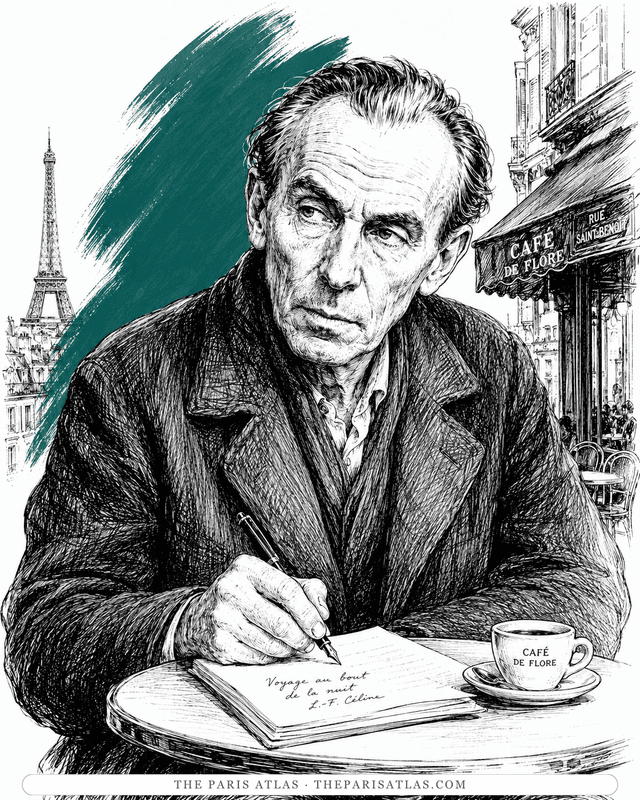
The doctor of the Paris slums who wrote the century's blackest, funniest novel — and changed the sound of French prose.
View author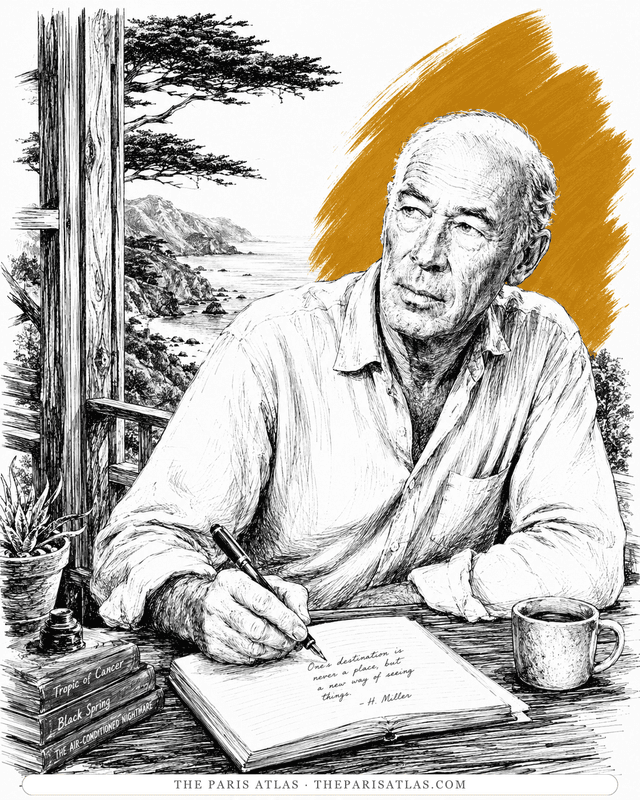
The Brooklyn dropout who arrived in Paris broke at thirty-eight and wrote the exuberant, banned books that ended American censorship.
View author
American poet and novelist of Los Angeles rooming houses, racetracks and the post office, who quit his job to write when a publisher offered him a hundred dollars a month. He came to Paris once, in September 1978, drank his way through a live television book programme and walked off the set — and French television has been replaying it ever since.
View authorThe sources below include the primary text, editions, scholarship, archival materials, and other records that informed this page. They document Point Counter Point, its publication, and its place in literary history.


Dates of writing and publication, and of the move to Suresnes.
Catalogue record for the first French translation.

Lawrence's letters about the novel, in the edition Huxley himself edited.
David King Dunaway's biography of Huxley: the novel turned his friendship with Lawrence into an international best-seller.
Plot summary and list of principal characters, used to cross-check the reading of the primary text.
Catalogue record for the 1931 Plon printing marked twenty-first edition.
Library record for the first American edition.
Selected ISBN, introducer and current extent.
Library record confirming ISBN 9780099458197 as this novel.
The primary text represented by this page, used for descriptions of the work’s contents and for any quoted passages shown here.
The primary text is the baseline reference for every book page. Additional references document publication history, interpretation, and historical context where that evidence is available.
 Explore more resources