Maurice Spandrell
A clever, idle man who drinks, seduces and despises himself. He wants to feel something enough to believe in God.
He wants proof that goodness and God exist, and he tries to force that proof by doing the worst things he can.
The book
Point Counter Point
Aldous Huxley
Who they are in the book
Spoiler-freeSpandrell never got over his mother's second marriage, when he was fifteen. Since then he has spent his life degrading himself and others, half hoping to find God by going as far from goodness as he can. The critic Keith Cushman sees him as the opposite of Rampion. Rampion worships life, while Spandrell searches for an absolute through evil.
How Maurice Spandrell Is Portrayed
- A regular techniqueIn Chapter X he boasts that he chooses unhappy young women, the ones who want to go on the stage or cannot sell their stories, and seduces them on purpose.
- His mother's visitIn Chapter XIII his mother, now Mrs Knoyle, brings him money. He remembers how she married Major Knoyle when he was fifteen, and he turns his face away when she tries to kiss him.
- Mildew in the soulIn Chapter XVII it has been raining for days. Spandrell lies in bed or leans on a pub counter, feeling as though fungus were growing inside him.
- A joke about murderIn Chapter XXXII Elinor peeps through her window and sees him at the door. When she says she thought he was a murderer, he jokes that he still might be.
- Little StavroginIn Chapter XXXIV Rampion calls him a morality-philosophy pervert and compares him to Stavrogin, the demonic hero of Dostoevsky's Demons. Spandrell laughs without making a sound.
- The letterIn Chapter XXXVII he buys cheap writing paper in the Vauxhall Bridge Road and writes to the Freemen from a tea-shop. He notices that the note sounds like the threats he wrote as a nine-year-old at school.
Maurice Spandrell quotes
It's the art of a man who's lost his body.
Spandrell and Illidge kill Everard Webley in Chapter XXXIII. In the last chapter Spandrell tells the Freemen where to find the murderer, plays the Rampions his Beethoven record, and is shot dead at his own door.
If you like Point Counter Point


If you like Aldous Huxley
Explore authors with a similar voice, perspective, and influence.
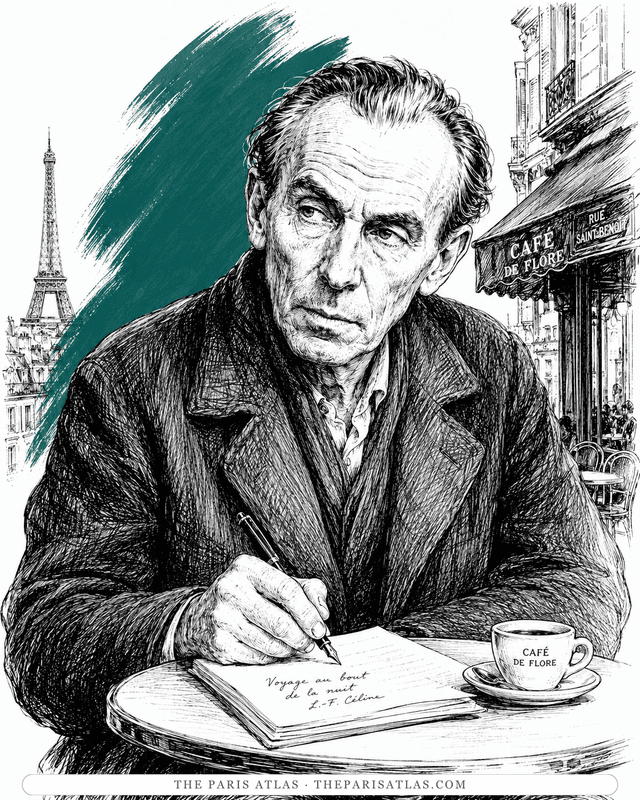
Louis-Ferdinand Céline
The doctor of the Paris slums who wrote the century's blackest, funniest novel — and changed the sound of French prose.
View author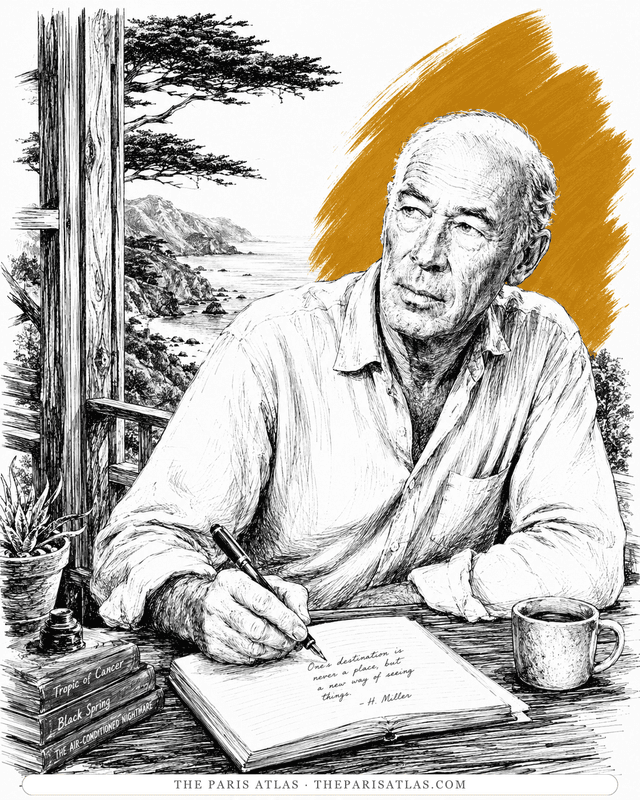
Henry Miller
The Brooklyn dropout who arrived in Paris broke at thirty-eight and wrote the exuberant, banned books that ended American censorship.
View author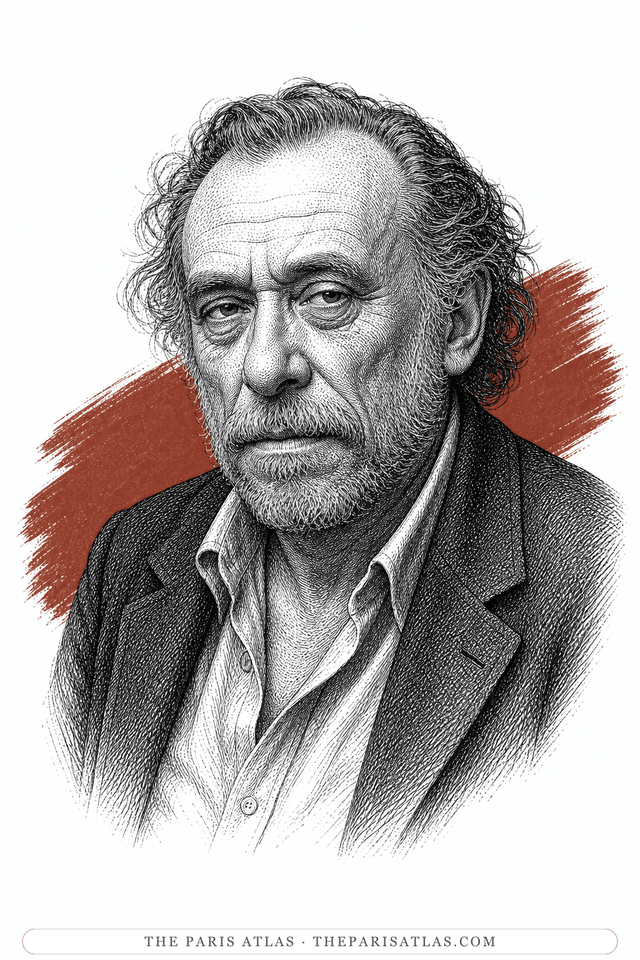
Charles Bukowski
American poet and novelist of Los Angeles rooming houses, racetracks and the post office, who quit his job to write when a publisher offered him a hundred dollars a month. He came to Paris once, in September 1978, drank his way through a live television book programme and walked off the set — and French television has been replaying it ever since.
View author