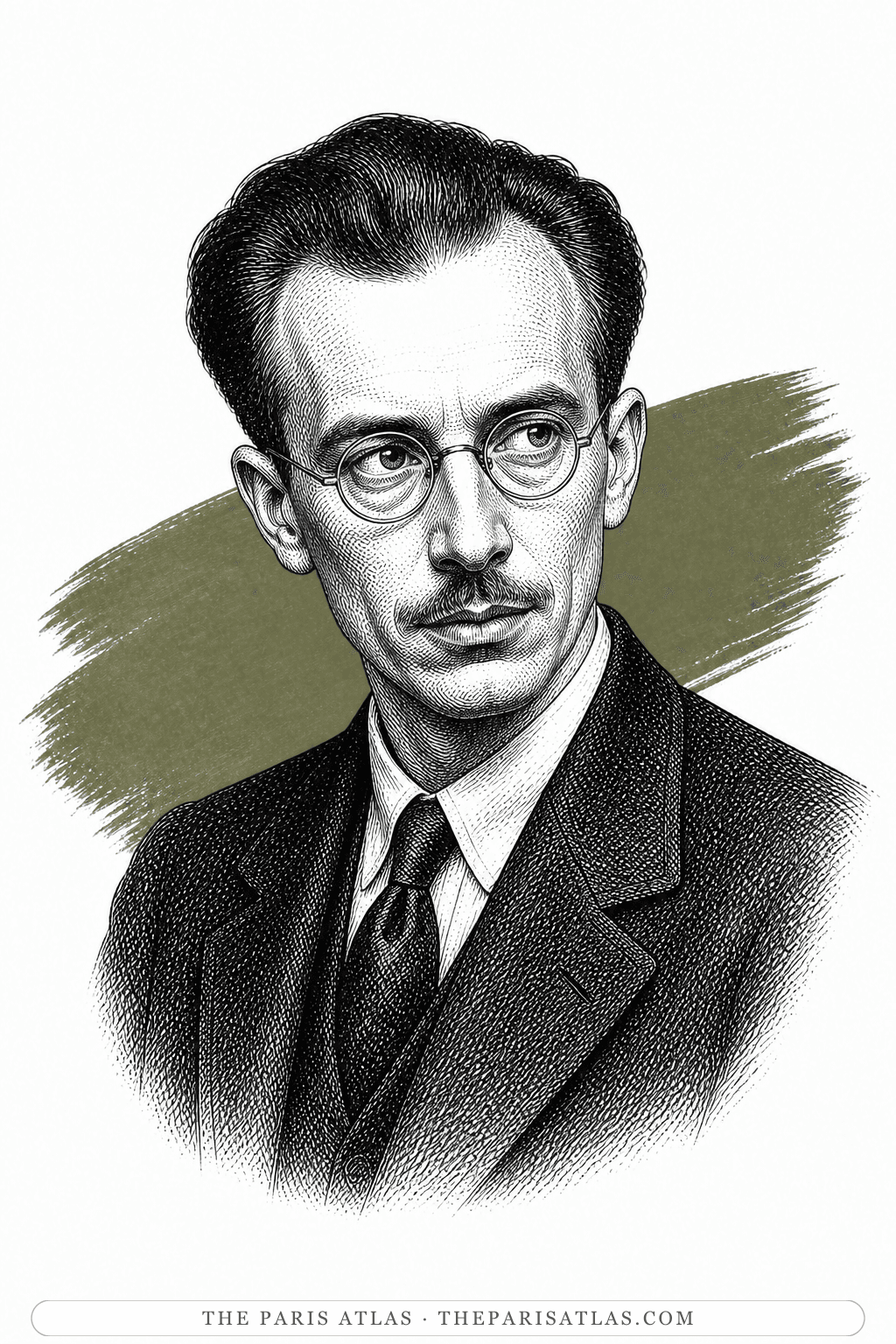
Philip Quarles
A novelist who thinks about life instead of living it. His notebook explains how the novel itself is built. Partly a self-portrait of Huxley.
He wants to understand people well enough to put them in a book, and he avoids the feelings that would make him one of them.
The book
Point Counter Point
Aldous Huxley
At a glance
- Aldous Huxley · 1894–1963 · The author himself. Keith Cushman calls Philip a Huxley self-portrait in tone if not in degree.
Who they are in the book
Spoiler-freePhilip is intelligent, kind in a distant way and emotionally absent. His wife Elinor loves him but cannot reach him, which is part of why she turns to Webley. Keith Cushman calls him Huxley's alter ego, and his notebook chapters are where the novel talks about its own method.
How Philip Quarles Is Portrayed
- In IndiaIn Chapter VI an Indian politician, Mr Sita Ram, points an accusing finger at Philip and quotes his own speech about Indians drinking their liberalism at English fountains.
- The game legIn Chapter XVIII, going ashore at Port Said, Philip hesitates to jump into the launch because of his lame leg. When a stranger asks if it was the war, he says it was an accident when he was a boy, and blushes.
- The notebookIn Chapter XXII he plans a novel built like music, with a novelist inside it, and admits that the novel of ideas is a made-up affair.
- His father's machineIn Chapter XXXII he finds his father dictating into a dictaphone in bed, sure he is dying, and is made his literary executor.
- Late on purposeIn Chapter XXXV he takes a late train to Gattenden as a protest, thinking Elinor fusses too much. She meets him at the door and tells him the doctor says it is meningitis.
- Drawing for PhilIn Chapter XXXV, when the boy seems better, Philip draws him landscapes full of elephants, airships and flying pigs on the back of an old letter.
Philip Quarles quotes
The musicalization of fiction.
All you need is a sufficiency of characters and parallel, contrapuntal plots. While Jones is murdering a wife, Smith is wheeling the perambulator in the park.
Put a novelist into the novel.
Little Phil dies the same afternoon. In Chapter XXXVI Philip tells Spandrell that he and Elinor will go abroad, to Siena, and he cannot bear to talk about his grief.
If you like Point Counter Point


If you like Aldous Huxley
Explore authors with a similar voice, perspective, and influence.
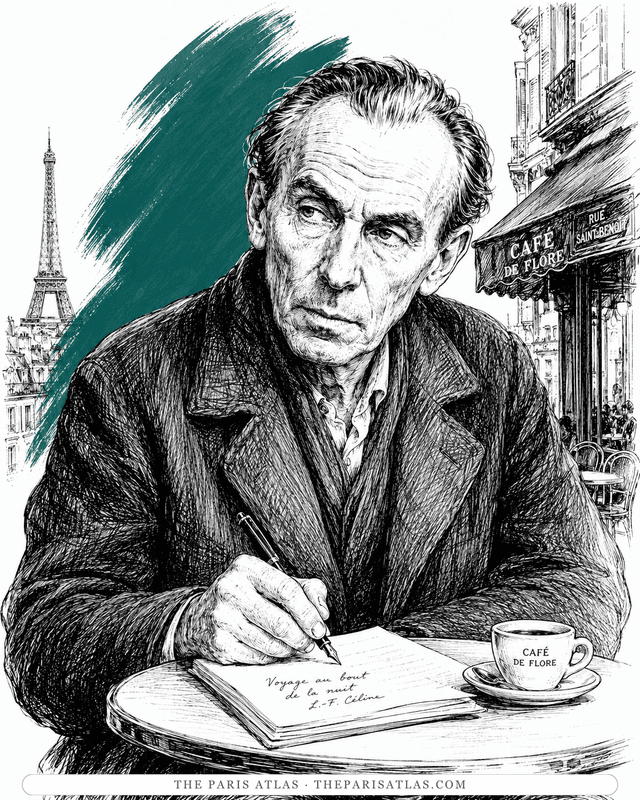
Louis-Ferdinand Céline
The doctor of the Paris slums who wrote the century's blackest, funniest novel — and changed the sound of French prose.
View author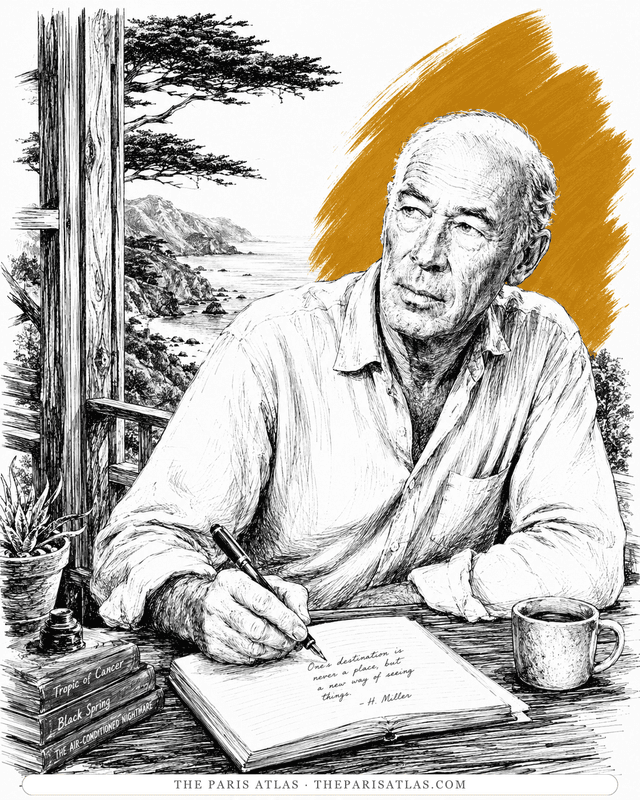
Henry Miller
The Brooklyn dropout who arrived in Paris broke at thirty-eight and wrote the exuberant, banned books that ended American censorship.
View author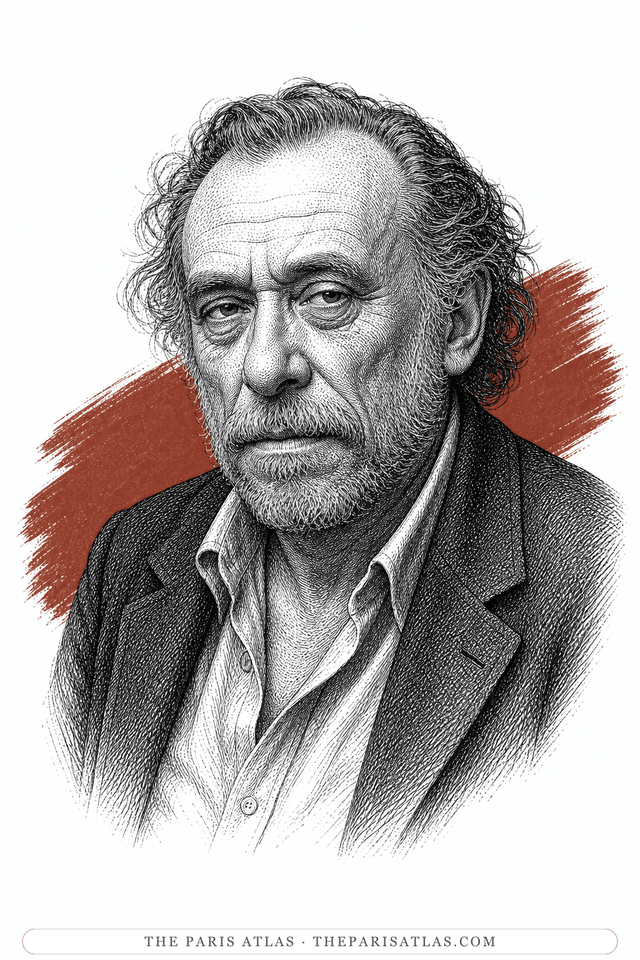
Charles Bukowski
American poet and novelist of Los Angeles rooming houses, racetracks and the post office, who quit his job to write when a publisher offered him a hundred dollars a month. He came to Paris once, in September 1978, drank his way through a live television book programme and walked off the set — and French television has been replaying it ever since.
View author