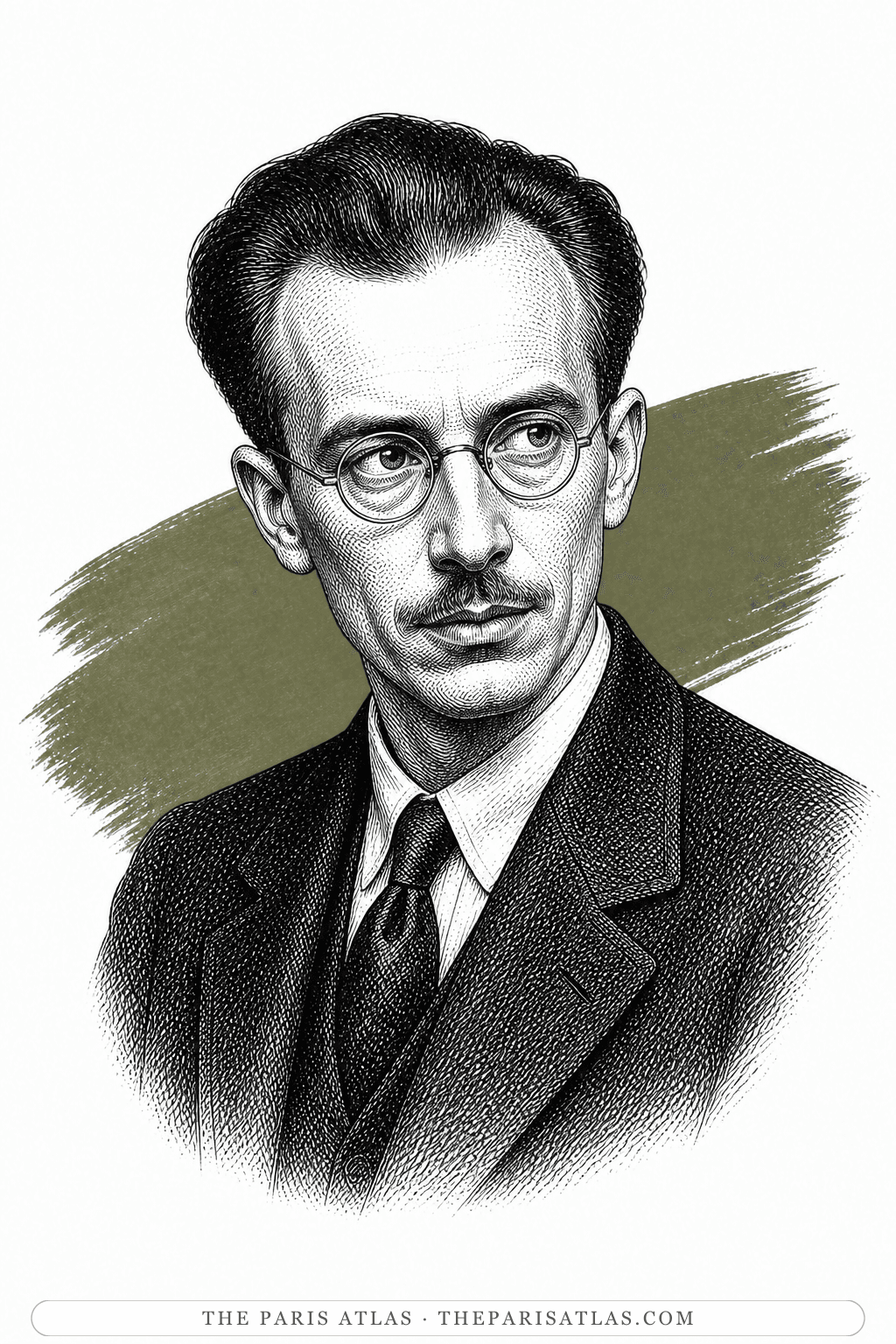
The Doors of Perception
Aldous Huxley
The Doors of Perception
Nine years later Huxley wrote about visionary experience from his own mescaline session.
Read our takeThe Perennial Philosophy
Aldous Huxley
Aldous Huxley gathers the saints and sages of East and West into one book, and argues that they were all describing the same thing.
The Perennial Philosophy is Aldous Huxley's anthology of mystical writing, with his own commentary running between the passages. He takes his extracts from Hindu, Buddhist, Taoist, Sufi and Christian sources and arranges them by subject in twenty-seven chapters. His argument is that the great religions share one core. A divine reality underlies the world, something like it lives in each person, and the purpose of a human life is to know it. Harper published the book in New York in September 1945.
Huxley put the book together in the Mojave desert in California. In 1942 he had bought a cottage at Llano del Rio with money from his screenwriting.[1] He collected the material there from February 1944 to March 1945.[2] The book came out six months later, on 26 September 1945.[3]
The title is Latin in origin. Huxley opens his introduction by saying that the phrase philosophia perennis, the perennial or everlasting philosophy, was coined by the German philosopher Leibniz. He calls the thing itself immemorial and universal. He says a version of it was first written down more than twenty-five centuries ago.[4]
The book surprised many of Huxley's readers. In the 1920s he had been known for satirical novels. Karen Kildahl's account of his life says that his turn to mysticism in the 1940s astonished many of his followers.[5] David King Dunaway's biography describes the book as an effort to find common ground among the world's religions in mysticism.[1]
The introduction sets out the method. Huxley has chosen passages for their meaning, and also for their beauty and the way they stay in the mind. He places them under headings and connects them with a commentary of his own. He takes few extracts from professional writers or philosophers. He prefers people he calls saints, prophets, sages and enlightened ones, because he thinks they knew at first hand what they were talking about.[4]
His reason is a claim about knowledge. He writes that what a person can know depends on what kind of person they are. In his view the divine reality can be seen directly only by people who have made themselves loving, pure in heart and poor in spirit. For Western Christianity he mostly avoids the Bible. He says familiar scripture tends to produce a reverent deafness, so he quotes less familiar Christian writers instead.[4]
The first chapter is called That Art Thou. The title translates tat tvam asi, a Sanskrit phrase. Huxley explains it as the teaching that the eternal Self in each person is one with Brahman, the principle behind all existence. He says the last end of every human being is to find this out for themselves.[4]
The later chapters move through the rest of religious life. They include Charity, Truth, Self-Knowledge, Grace and Free Will, Good and Evil, Time and Eternity, Silence, Prayer, Suffering and Faith. Some chapters turn critical. One is headed with a line from the Roman poet Lucretius about the evils religion has led people to commit. Others deal with Idolatry and Emotionalism. The last chapter is Contemplation, Action and Social Utility.[4]
The Kirkus reviewer in 1945 described the book as extracts from the religious writings of the last 2,500 years, with the religions of India, China and Persia perhaps the most prominent. The Hindu sources include the Upanishads, the Bhagavad Gita and the teacher Shankara. From China come the Taoist writers Lao Tzu and Chuang Tzu. The Sufi poet Rumi speaks for Islam.
Among Christians, two names come back more often than any others. One is Meister Eckhart, the medieval German preacher. The other is William Law, an English devotional writer. Huxley also quotes Saint Augustine, Saint Bernard, Saint John of the Cross, the anonymous English book The Cloud of Unknowing, and the poet Thomas Traherne.
French is well represented. Huxley quotes the bishop and spiritual writer Saint François de Sales, and Jean-Pierre Camus, whose book The Spirit of St. Francis de Sales he acknowledges at the front of the volume. He also quotes Fénelon, the archbishop of Cambrai.
In 1946 Huxley wrote a new foreword to Brave New World. Dunaway's biography explains what he said there. The novel had denied that a sane society was possible, and Huxley now called that the book's most serious defect.
Dunaway links that change of mind to The Perennial Philosophy. In the anthology's commentaries Huxley set out what sanity might look like, as a deliberate search for the final end of human life. The Kirkus review saw the same journey, from what it called extreme negation to extreme ascetic faith.
The turn had begun years earlier. Dunaway writes that Huxley, an atheist in his youth, became a follower of Vedanta, a school of Hindu philosophy, after moving to California. His friends Gerald Heard and Christopher Isherwood took the same path. Keith Cushman adds that D. H. Lawrence was only a stopping point on Huxley's road towards mysticism and the perennial philosophy.
The book reached Paris three years after the American edition. Plon published La Philosophie éternelle in 1948, with the Latin Philosophia perennis as a subtitle. Jules Castier translated it, as he had translated Huxley's novels for the same house. The volume ran to 384 pages.
Castier's translation is still the French text. The Éditions du Seuil in Paris reissued it in 1977 in the paperback series Points Sagesses. Les Belles Lettres, also in Paris, published it again in 2023.
Knowledge is a function of being.
Philosophia perennis—the phrase was coined by Leibniz
Hindu, Buddhist, Taoist, Sufi and Christian writers stand side by side, arranged by subject, with Huxley's commentary joining them.
The anthology comes between Brave New World and Huxley's later books on visionary experience, The Doors of Perception and Island.
Meister Eckhart, William Law, Rumi, Shankara and the French spiritual writers appear in short passages chosen for how well they stay in the mind.
1942
Huxley buys a cottage at Llano del Rio in the Mojave desert with money from screenwriting.
February 1944
He begins collecting material for the anthology at Llano.
March 1945
He finishes collecting the material.
26 September 1945
Harper publishes The Perennial Philosophy in New York.
1946
Chatto & Windus publishes the British edition. Huxley writes a new foreword to Brave New World.
1948
Plon publishes Jules Castier's French translation, La Philosophie éternelle, in Paris.
1977
The Éditions du Seuil reissues the French translation in its Points Sagesses paperback series.
2009
Harper Perennial Modern Classics reissues the book in paperback.

The Doors of Perception
Aldous Huxley
Nine years later Huxley wrote about visionary experience from his own mescaline session.
Read our takeIsland
Aldous Huxley
Huxley's last novel imagines a whole society built on a mix of Eastern religion and Western science.
Read our take
In a 1946 foreword Huxley said the novel's worst fault was leaving out a sane choice. The anthology describes one.
Read our takePoint Counter Point
Aldous Huxley
Seventeen years earlier Huxley's hero Mark Rampion preached the life of the body. Keith Cushman calls D. H. Lawrence, Rampion's model, a stopping point on the road to this book.
Read our takeThe idea that the world's great religions share one core teaching. Aldous Huxley gathers passages from Hindu, Buddhist, Taoist, Sufi and Christian writers under shared headings and adds his own commentary to connect them.
Huxley opens the book by saying that the phrase philosophia perennis was coined by the German philosopher Leibniz.
That Art Thou is Huxley's title for the first chapter, translating the Sanskrit tat tvam asi. He explains it as the teaching that the eternal Self in each person is one with Brahman, the principle behind all existence.
The book is about religion, but it does not belong to any one church. Huxley argues that direct knowledge of the divine is open to people who make themselves loving, pure in heart and poor in spirit, whatever their tradition.
In a 1946 foreword to Brave New World, Huxley said the novel's worst defect was that it offered no sane way of life. David King Dunaway's biography says The Perennial Philosophy is where Huxley set out what that sane way might be.
Through its French edition and some of its sources. Plon in Paris published La Philosophie éternelle in 1948, and Huxley quotes French spiritual writers such as Saint François de Sales and Fénelon.
ISBN 9780061724947 is the Harper Perennial Modern Classics paperback, subtitled An Interpretation of the Great Mystics, East and West, published 28 July 2009, 352 pages.
Explore authors with a similar voice, perspective, and influence.
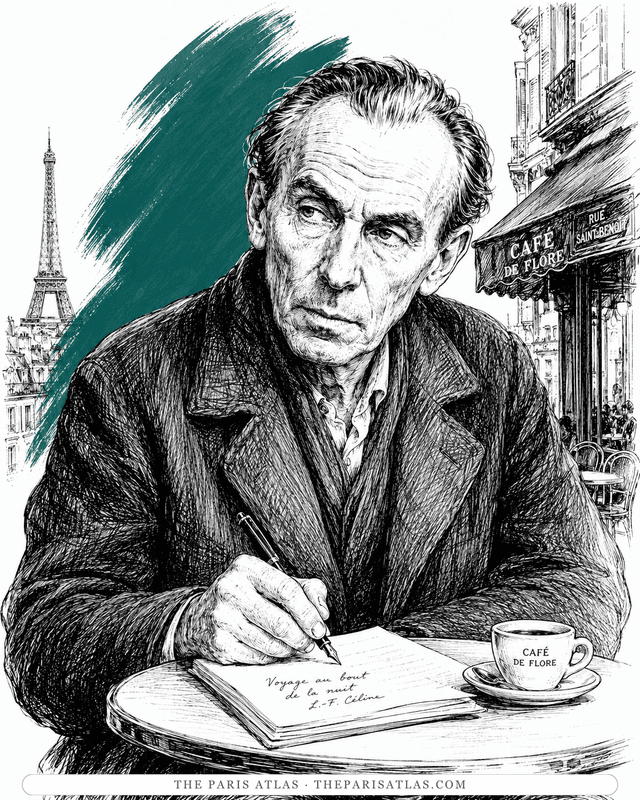
The doctor of the Paris slums who wrote the century's blackest, funniest novel — and changed the sound of French prose.
View author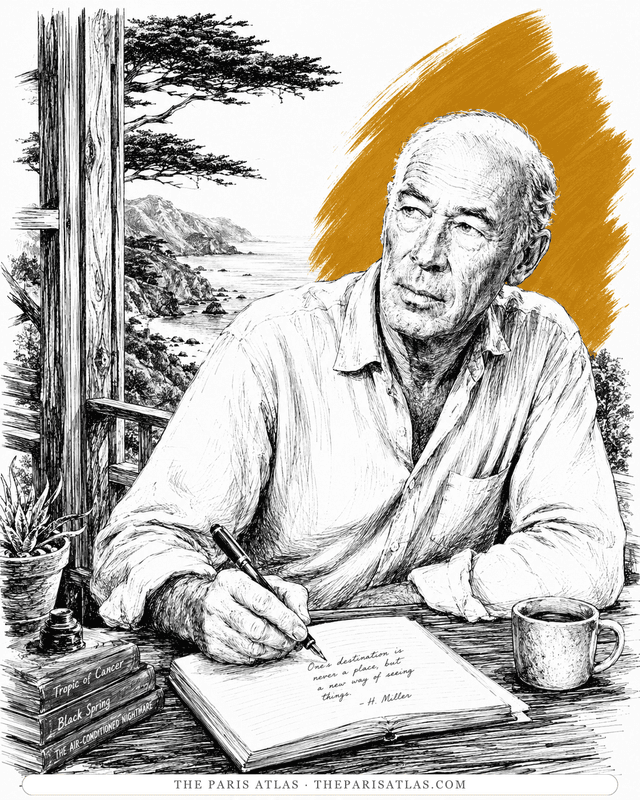
The Brooklyn dropout who arrived in Paris broke at thirty-eight and wrote the exuberant, banned books that ended American censorship.
View author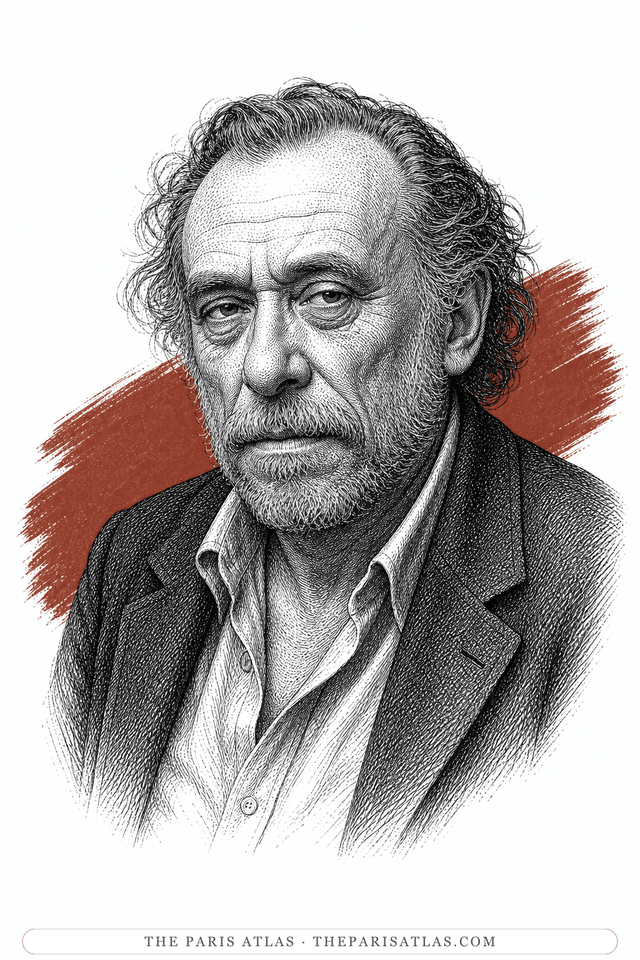
American poet and novelist of Los Angeles rooming houses, racetracks and the post office, who quit his job to write when a publisher offered him a hundred dollars a month. He came to Paris once, in September 1978, drank his way through a live television book programme and walked off the set — and French television has been replaying it ever since.
View authorThe sources below include the primary text, editions, scholarship, archival materials, and other records that informed this page. They document The Perennial Philosophy, its publication, and its place in literary history.

Dates of compilation and publication.
Contemporary review with the publication date and publisher.

Karen Kildahl on how Huxley's turn to mysticism surprised his readers.
Keith Cushman on Lawrence as a stage on Huxley's way to mysticism.
Library record for the first edition.
Catalogue record for the French translation.
Library record confirming ISBN 9780061724947, date and page count.

The primary text represented by this page, used for descriptions of the work’s contents and for any quoted passages shown here.
The primary text is the baseline reference for every book page. Additional references document publication history, interpretation, and historical context where that evidence is available.
 Explore more resources