
To the Lighthouse
Woolf again moves among private viewpoints, this time around a family holiday, a postponed journey and a painter's work.
Read our take
A London hostess prepares a party while memories, private fears and the aftermath of war move through the city.
On a June day in 1923, Clarissa Dalloway buys flowers and prepares an evening party in London. Elsewhere, the veteran Septimus Warren Smith and his Italian wife, Rezia, seek help for his distress. Virginia Woolf moves between their thoughts and the lives around them, bringing remembered youth, marriage and the First World War into the passing hours of an ordinary day.
Clarissa's walk brings pleasure in flowers, streets and familiar faces, but also memories of choices made long ago. Peter Walsh, whose proposal she once refused, unexpectedly visits from India. His presence revives their intimacy and disagreements, while the memory of Sally Seton recalls a love that her married identity does not fully describe.
Septimus once believed that military service would defend the England he loved through books. Now the death of his friend Evans, his own emotional numbness and disturbing visions make ordinary life difficult. Rezia tries to understand him while struggling with loneliness, life far from her family and doctors who disagree about his condition.
Public sounds connect minds that never meet. A motorcar draws a crowd, a plane writes an advertisement in the sky, and clocks interrupt private reflection. The narration passes from one observer to another, showing how a shared event can produce incompatible experiences.
Clarissa repairs the dress she will wear that evening. Peter's visit unsettles her, while a gift of roses from her husband, Richard, offers affection without the declaration he had intended to make. She thinks of parties as a way to bring people together, even as she recognizes her desire for social success.
Rezia takes Septimus to Sir William Bradshaw, who recognizes serious distress but prescribes separation from his wife in a country institution. Later, working together on a hat gives the couple a brief period of laughter and practical companionship. Rezia resolves to preserve Septimus's papers and remain with him.
Clarissa's daughter, Elizabeth, goes shopping with her history tutor, Doris Kilman. The narration reveals the tutor's poverty, resentment and attachment to Elizabeth. After leaving the store, Elizabeth rides a bus through London and imagines a profession beyond the social life expected of her.
When Dr. Holmes forces his way past Rezia, Septimus fears another intrusion and kills himself. That evening, the Bradshaws bring news of the death to Clarissa's party. Clarissa has never met him; she withdraws to a small room and imagines his experience through her own fears about privacy, authority and mortality.
Clarissa's response contains both recognition and disturbing distance from a life she does not know. Watching an elderly neighbor prepare for bed, she returns to the continuing life of the evening. Sally and Peter wait for her, and the novel ends with Peter's sudden excitement as Clarissa reappears.
Clock strikes divide the London day into public units, but memories refuse to stay inside them. Clarissa's encounter with Peter brings Bourton into the present, while Septimus experiences the war's dead as immediate presences. The novel can move decades within the interval between ordinary errands.
Shared sights and sounds also carry the narration between people. A car, a plane or a clock supplies a point of contact without guaranteeing agreement about its meaning. London becomes a place occupied together by minds that remain partly inaccessible to one another, rather than a neutral backdrop to Clarissa's private history.
Clarissa thinks of a party as an offering: people who live separately can briefly occupy a common occasion. The preparation includes dressmaking, household arrangements and the work of servants. The final gathering tests whether this apparently slight social activity can produce the connection she wants.
Her motives are not entirely generous. Rank, fashionable attendance and anxiety about success remain part of the event, while less confident guests can feel excluded within it. Woolf gives the party value without making its hostess innocent of the hierarchy through which she organizes it.
Holmes dismisses Septimus's distress, while Bradshaw recognizes its gravity but imposes his own account of what a properly ordered life should be. Their diagnoses differ, yet both reduce the space in which Septimus and Rezia can be heard. Professional assurance becomes inseparable from the power to enter a room or separate a couple.
The hat-making scene offers a brief alternative. Rezia's practical skill and Septimus's suggestions produce laughter and shared attention without forcing his experience into a reassuring explanation. The scene does not establish a cure. It shows a form of companionship whose value the more authoritative interventions fail to preserve.
News of the death reaches Clarissa through the Bradshaws at the party. She withdraws and imagines the pressure that might have driven an unknown man to it. The reader has encountered Septimus and Rezia directly, so her response can be measured against experiences she has never witnessed.
Her recognition of a threatened private self is moving but incomplete. Septimus's death should not become merely an instrument of Clarissa's renewal. The novel maintains that difficulty by allowing her to return to the party while the reader retains the history that her imaginative identification cannot fully contain.
The opening London scenes, Clarissa's visits and party preparations, the doctors' consultations, Rezia's hat-making, and the final party and adjoining-room sequence.
An offering for the sake of offering, perhaps.
“But I do not know,” said Peter Walsh, “what I feel.”
The plane and clocks make London a shared space while revealing the different meanings people give it.
Richard's flowers and Rezia's work on a hat communicate forms of care that a general description of either marriage would miss.
Clarissa's response to news of an unknown veteran asks how far an imaginative identification can reach, and what it leaves unseen.
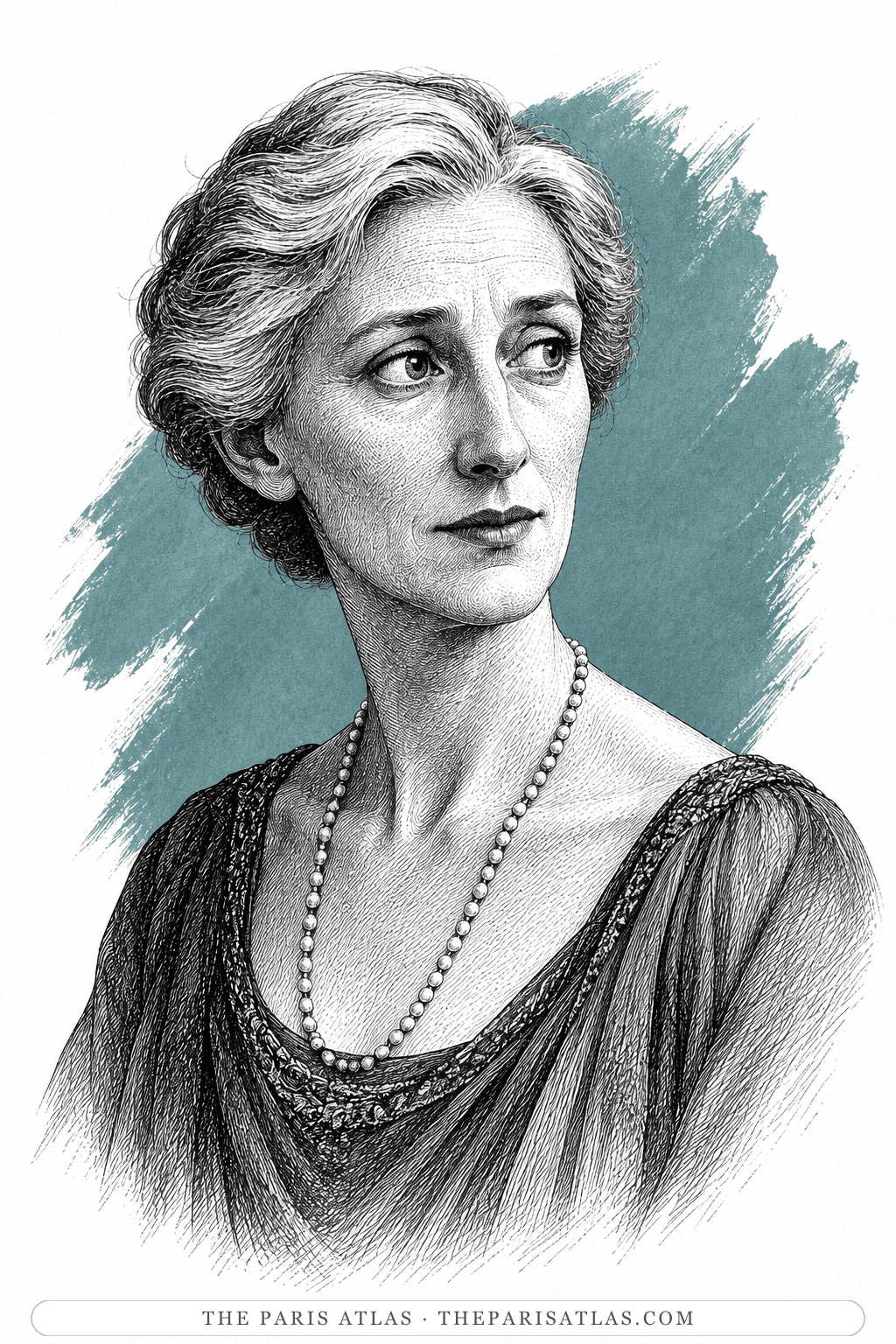
The fictional London hostess whose outward composure contains remembered desire, social ambition and a strong need for privacy.

The fictional former clerk and war veteran whose distress exposes the gulf between professional authority and the experience of being treated.
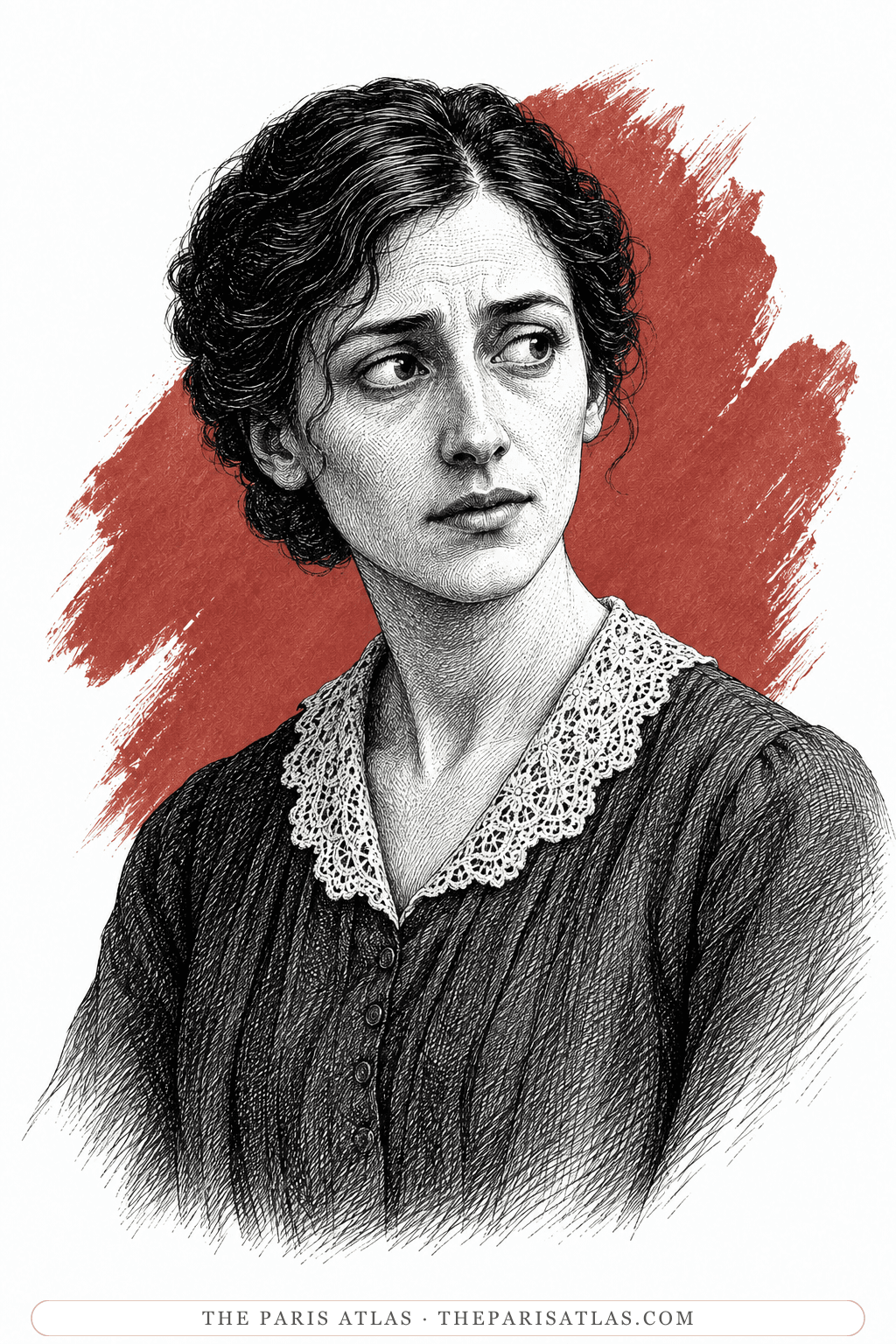
The fictional Italian hat maker who seeks help for her husband while trying to preserve their shared life in London.
1925
The Hogarth Press publishes the British edition on May 14; Harcourt, Brace publishes the American edition on the same day.
1929
The third British impression appears in the Hogarth Press uniform edition of Woolf’s works, another stage in the publication history documented by Edward Mendelson.
2025
NYRB Classics publishes the selected centenary edition on September 16, edited by Edward Mendelson.

Woolf again moves among private viewpoints, this time around a family holiday, a postponed journey and a painter's work.
Read our take
The essay's argument for privacy and material independence offers another way to consider the novel's divided rooms and unequal opportunities.
Read our take
James Joyce's stories also examine city life through particular encounters; The Dead gives a gathering and its aftermath a comparable weight.
Read our takeIt follows one day of party preparations in London while moving through several people’s thoughts, memories and relationships. Clarissa Dalloway’s social world is set beside the distress of the war veteran Septimus Warren Smith and his wife, Rezia.
The present-day action takes place in London on a June day in 1923. Memories, especially of Clarissa’s youth at Bourton and Septimus’s war service, extend the story far beyond those hours.
No. Their stories are connected by shared places and patterns of experience, then by the news brought to Clarissa’s party. Her response is an imaginative identification with a man she has never known.
It has no numbered chapters. Changes of scene, clocks and recurring public events offer points of orientation as the narration moves among characters and between memory and the present.
Lucrezia, usually called Rezia, is Septimus’s Italian wife and a skilled hat maker. She seeks medical help for him, resists their proposed separation and contributes a perspective shaped by craft, migration and loneliness.
The selected paperback is the 224-page NYRB Classics edition published September 16, 2025, ISBN 9781681379982. The quotations and scene locators use the different Harcourt, Brace & World printing transcribed in Gutenberg ebook 71865.
Explore authors with a similar voice, perspective, and influence.

The doctor of the Paris slums who wrote the century's blackest, funniest novel — and changed the sound of French prose.
View author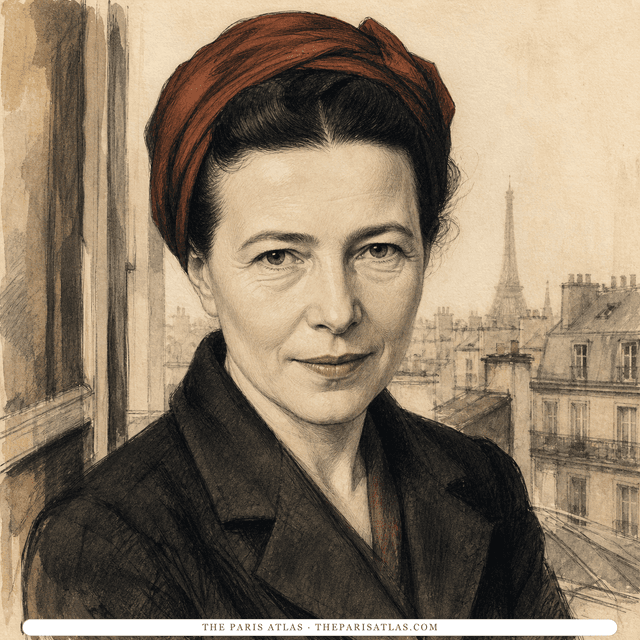
French writer and philosopher whose novels, memoirs, and social analysis examined freedom, gender, responsibility, aging, and the material conditions that shape a life.
View author
The Brooklyn dropout who arrived in Paris broke at thirty-eight and wrote the exuberant, banned books that ended American censorship.
View authorThe sources below include the primary text, editions, scholarship, archival materials, and other records that informed this page. They document Mrs. Dalloway, its publication, and its place in literary history.


The primary text represented by this page, used for descriptions of the work’s contents and for any quoted passages shown here.
Primary passages read in their surrounding scenes for the plot, eighteen character readings, physical descriptions and quotations. Page locators belong to the transcribed later printing, not the selected modern edition.
Identifies Mrs. Dalloway as a novel first published in 1925.
First-edition exhibition catalogue identifies the London Hogarth Press publication and its two principal narrative lines.
Textual bibliography identifies the simultaneous May 14, 1925 British and American publications and September 1929 uniform edition.
Publisher record for the selected US date, imprint, editor, ISBN and page count.
The primary text is the baseline reference for every book page. Additional references document publication history, interpretation, and historical context where that evidence is available.
 Explore more resources