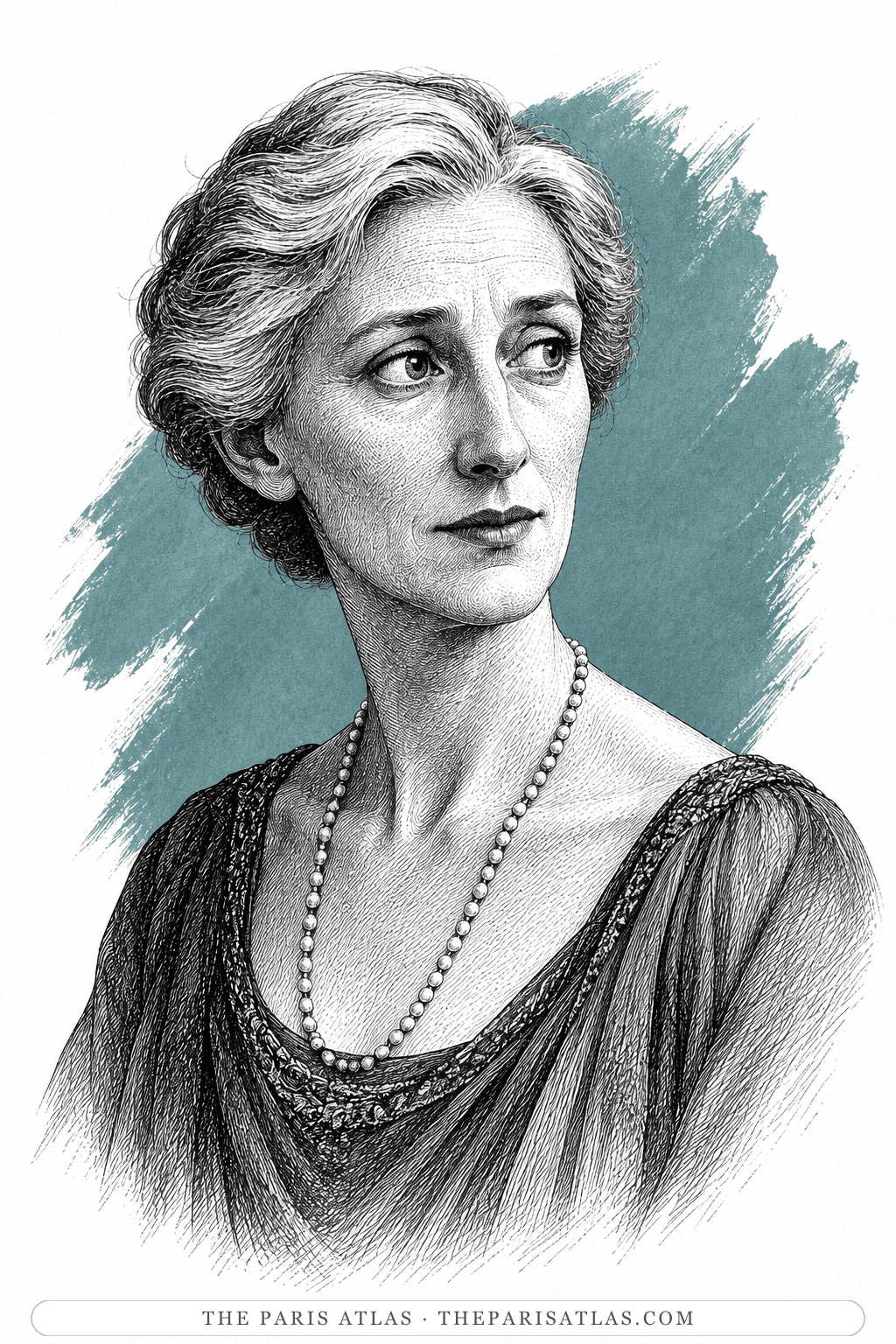
Clarissa Dalloway
The fictional London hostess whose outward composure contains remembered desire, social ambition and a strong need for privacy.
She wants to bring people together without losing the private self that marriage, memory and social expectations cannot entirely contain.
The book

Who they are in the book
Spoiler-freeClarissa enjoys company while knowing how much of a life remains inaccessible to other people. Her kindness and snobbery coexist; the party expresses both a wish to connect and a wish to succeed.
How Clarissa Dalloway Is Portrayed
- Pleasure and fear on the morning walkOn pages 3–19, buying flowers opens into memories of youth and an awareness of mortality. The movement between exhilaration and unease establishes how much can happen inwardly during a simple errand.
- Remembering Sally’s kissOn pages 48–53, Clarissa recalls Sally Seton's kiss in the garden at Bourton as an intensely valuable moment. Peter's interruption becomes part of the memory, preserving a desire that cannot be explained solely through Clarissa's choice of husband.
- Composing a public faceOn pages 54–58, Clarissa studies her reflection and brings incompatible feelings into a familiar expression. Mending her green dress then gives her a quiet task between the household's work and Peter's arrival.
- Receiving the rosesOn pages 177–182, Richard returns with flowers but cannot say the words of love he had planned. Clarissa understands the gesture and values the space their marriage leaves between them, even while recognizing its limits.
- Defending the partyOn pages 183–185, Clarissa describes bringing scattered people together as something she can offer. Her own thoughts also admit vanity and neglected obligations; the party's value remains a question the evening will test.
- Returning after news of a deathOn pages 279–284, Clarissa withdraws after hearing that an unknown veteran has died. She imagines an affinity with him and fears the doctor's power, but knows little of his actual life. The reading must keep that distance in view as she returns to her guests.
If you like Mrs. Dalloway


If you like Virginia Woolf
Explore authors with a similar voice, perspective, and influence.
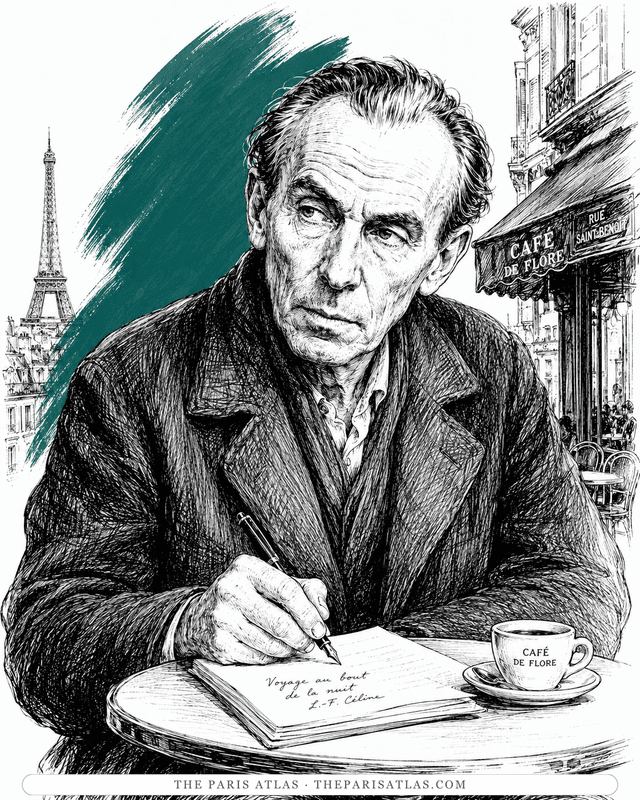
Louis-Ferdinand Céline
The doctor of the Paris slums who wrote the century's blackest, funniest novel — and changed the sound of French prose.
View author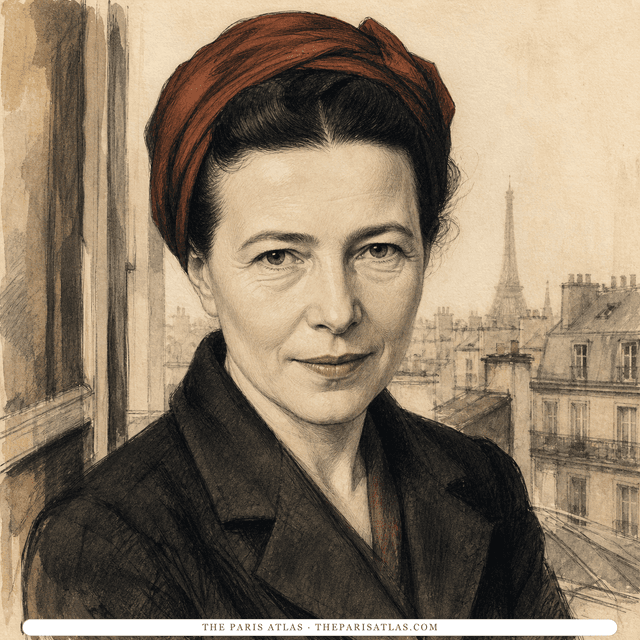
Simone de Beauvoir
French writer and philosopher whose novels, memoirs, and social analysis examined freedom, gender, responsibility, aging, and the material conditions that shape a life.
View author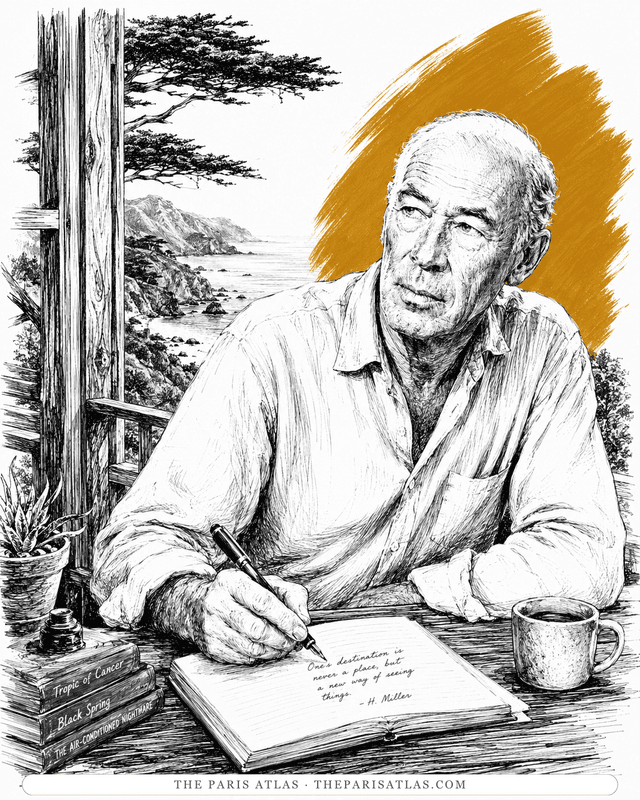
Henry Miller
The Brooklyn dropout who arrived in Paris broke at thirty-eight and wrote the exuberant, banned books that ended American censorship.
View author