The Paris AtlasCharting the artists, works, and places worth returning to.

Park · Latin Quarter (Jardin des Plantes quarter) · 5e arrondissement

Jardin des Plantes

The buildingStill standing
Getting inWalk straight in
What's there nowStill the same

Paris's botanical garden, free to walk through. The galleries, the menagerie and the greenhouses inside it charge separately.

Paris's botanical garden, at the bottom of the Latin Quarter by the Seine — free to walk into, with the natural history galleries and a small menagerie inside it. It is also where George Orwell spent one of the worst days of his Paris poverty, too hungry to think about anything but food.

Address
57 rue Cuvier, 75005 Paris
Years
A royal medicinal garden from 1635; a public garden since 1793

The place, briefly

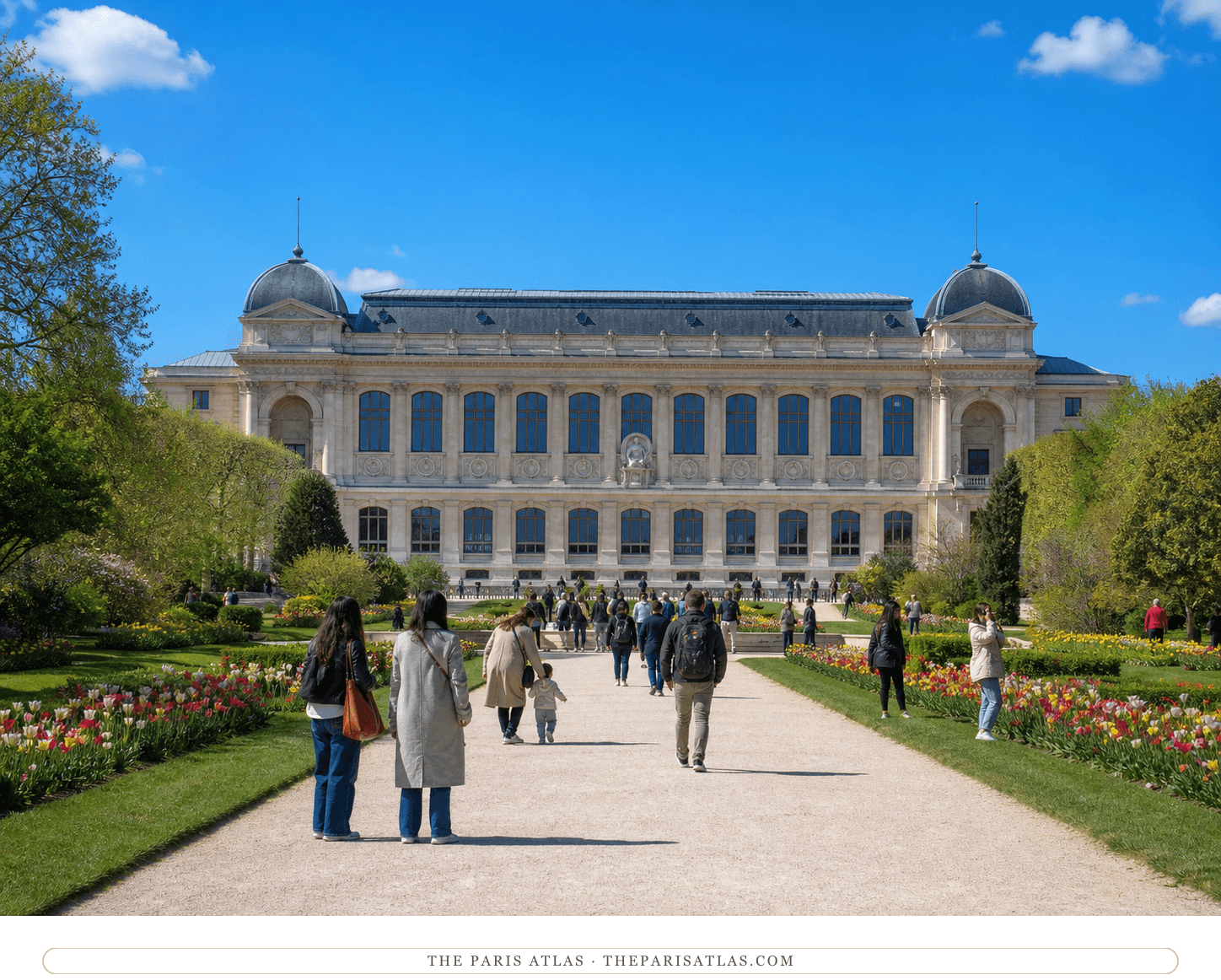
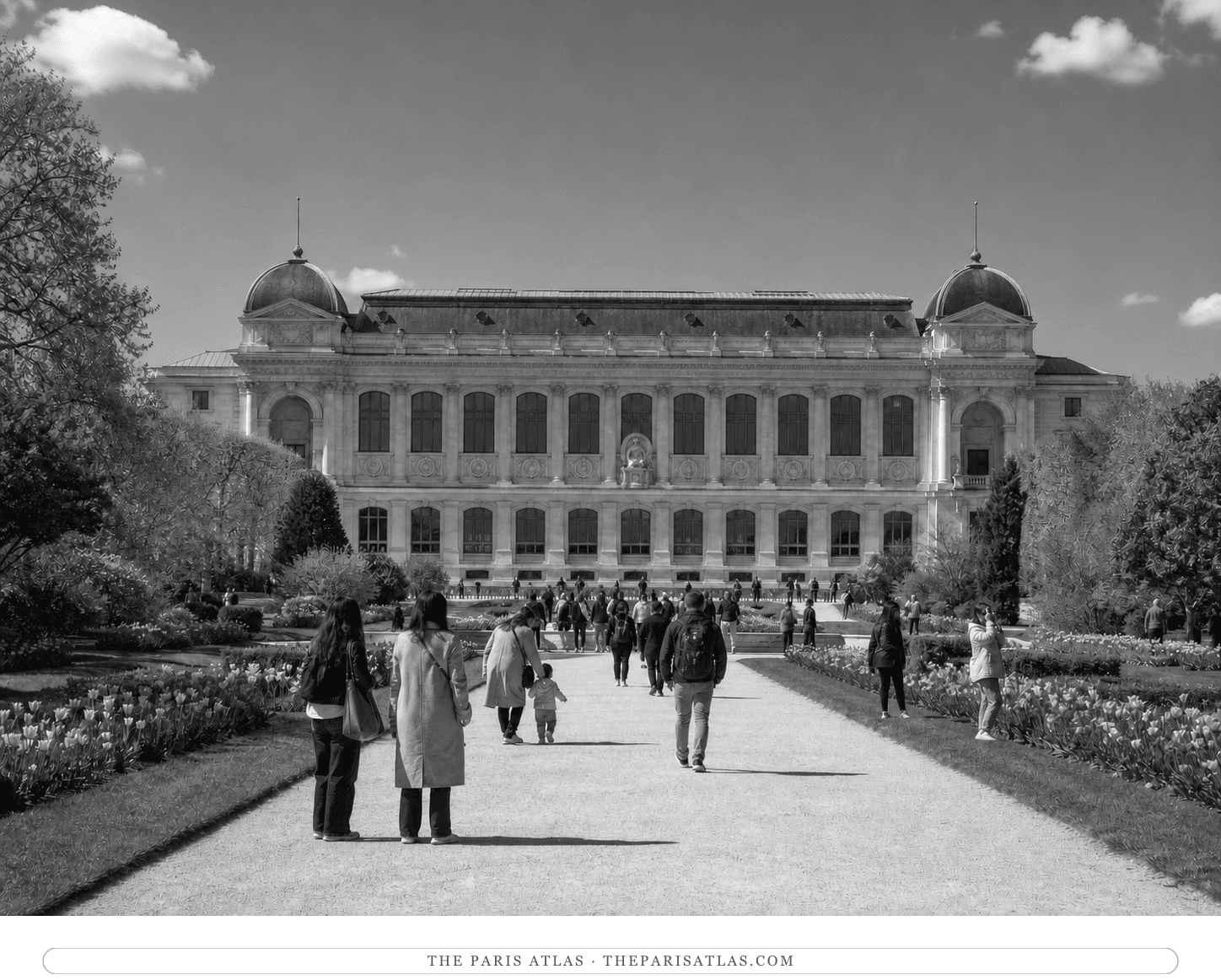
The Jardin des Plantes is the city's botanical garden, laid out on the left bank at the eastern edge of the Latin Quarter. It began in 1635 as a royal garden of medicinal plants and became public property during the Revolution. Today it holds the Muséum national d'Histoire naturelle's galleries, a menagerie, greenhouses and a long formal alley of planted beds, and walking through the garden itself costs nothing.

It appears in the literature of Paris in an unexpected way. In Down and Out in Paris and London, George Orwell and his friend Boris reach the end of their money entirely. They buy half a pound of bread and a piece of garlic to rub on it — Orwell explains that the taste lingers and gives you the illusion of having eaten recently — and then they come here, because sitting in a garden is free.

"We sat most of that day in the Jardin des Plantes," he writes. "Boris had shots with stones at the tame pigeons, but always missed them, and after that we wrote dinner menus on the backs of envelopes. We were too hungry even to try and think of anything except food."

It is one of the most exact things in the book about being poor in a rich city: the public garden as the one place you are allowed to be when you have nothing, and hunger narrowing the mind until the only entertainment left is writing out meals you cannot buy.

The garden has changed less than most of Orwell's Paris. The alleys, the beds and the menagerie are where they were, and the pigeons are still tame.

Key facts

What it is
Paris's botanical garden and the Muséum national d'Histoire naturelle
Founded
1635, as a royal garden of medicinal plants
Public since
1793
Admission
Free to walk through; galleries, menagerie and greenhouses are ticketed separately
Where
The eastern edge of the Latin Quarter, by the Seine, in the 5th
In literature
Orwell and Boris spend a starving day here in Down and Out in Paris and London

Timeline

  1. 1635

    Founded as the royal garden of medicinal plants.

  2. 1793

    Becomes public property and the seat of the Muséum national d'Histoire naturelle.

  3. 1929

    Orwell and Boris, out of money, spend a day here writing imaginary dinner menus on envelopes.

  4. 1933

    Down and Out in Paris and London is published, with the garden scene in it.

On the map

Questions before you go

Is the Jardin des Plantes free?

The garden itself is free to walk through. The natural history galleries, the menagerie and the greenhouses inside it are separately ticketed, so you can spend an afternoon there without paying anything if you stay outdoors.

What is the Jardin des Plantes?

Paris's botanical garden, in the 5th arrondissement at the eastern end of the Latin Quarter. It started in 1635 as a royal garden of medicinal plants, became public in 1793, and now surrounds the galleries of the Muséum national d'Histoire naturelle.

What is the Orwell connection?

In Down and Out in Paris and London, Orwell and his friend Boris — down to their last centimes — buy bread and a piece of garlic and spend the day sitting here, writing dinner menus on the backs of envelopes because they were too hungry to think about anything else. It is one of the book's sharpest passages about being poor in a rich city.

How long do you need at the Jardin des Plantes?

An hour is enough for the garden alone. Add a couple more if you want the Grande Galerie de l'Évolution, which is the strongest of the museum buildings. It pairs naturally with a walk along the Seine or up into the Latin Quarter.

Related books

Cover of Down and Out in Paris and London by George Orwell

Setting of the story

Down and Out in Paris and London

George Orwell · 1933

The day Orwell and Boris run out of money entirely: bread rubbed with garlic, stones thrown at the tame pigeons, and dinner menus written on the backs of envelopes because they were too hungry to think about anything else.

Writers who knew this place

Illustrated portrait of George Orwell

George Orwell

British · English novelist, essayist and journalist, born Eric Arthur Blair, who wrote Animal Farm and Nineteen Eighty-Four. He was an imperial policeman in Burma, a plongeur in Paris kitchens off the rue Mouffetard, and a militiaman shot through the neck in Spain before any of it.

Visited by · 1929

As Down and Out in Paris and London has it, Orwell and Boris reached the end of their money, bought half a pound of bread and a piece of garlic to rub on it, and spent the day here: "We sat most of that day in the Jardin des Plantes... we wrote dinner menus on the backs of envelopes. We were too hungry even to try and think of anything except food."

George Orwell, Down and Out in Paris and London (1933); Richard Erickson, Down and Out in Paris: Orwell's Fact or Fiction?

Within walking distance

The Friday Letter

Paris, one address at a time.

The cafés, studios, and walk-up flats where the work was made — one story from the map in every letter.

One email a week. No spam, no selling your address. Unsubscribe anytime.