The Paris AtlasCharting the artists, works, and places worth returning to.
  • Critic
  • Author
  • Poet
· French · 1858–1915

Remy de Gourmont

French critic and novelist who helped found the Mercure de France, was disfigured by lupus at thirty-three and withdrew from public life, gave Natalie Clifford Barney the name l'Amazone, and was read as a master by Ezra Pound and T. S. Eliot.

Details

Lived
1858–1915
Born
4 April 1858
Birthplace
Bazoches-au-Houlme, Orne
Died
27 September 1915 · aged 57
Place of death
Paris, France
Nationality
French
Partner
Berthe de Courrière · 1886–1915
Roles
CriticAuthorPoet
Also known as
Rémy de Gourmont

About Remy de Gourmont

Remy de Gourmont was a French critic, novelist and poet, and one of the eleven men who founded the Mercure de France in 1889. He wrote about sixty books, and the criticism is what lasted: Le Livre des masques (1896), which introduced the Symbolist poets one by one, and Le Problème du style (1902), an attack on the idea that writing can be taught by rule.

In 1891 two things happened to him in the same year. He published an essay arguing that France and Germany shared a culture and should stop rehearsing the war of 1870, and was dismissed from his post at the Bibliothèque nationale for it. He also fell ill with lupus vulgaris, a tuberculous disease of the skin, which disfigured his face and was treated by cauterisation. He withdrew, worked at home, and for most of the next twenty-four years went out mainly to the offices of the Mercure.

In 1910 the American writer Natalie Clifford Barney sought him out. Out of their friendship he wrote a series of open letters addressed to her as l'Amazone, published in the Mercure and collected in 1914 as Lettres à l'Amazone. The name stayed with her for the next sixty-two years and is on her gravestone. Ezra Pound translated him and wrote about him as a master; T. S. Eliot took the epigraph of The Sacred Wood's opening essay from Lettres à l'Amazone and called him the critical consciousness of a generation.

Normandy, the law, and the library

Remy de Gourmont was born on 4 April 1858 at Bazoches-au-Houlme, in the Orne, in Normandy. He read law at Caen, and in November 1881 took a post as an attaché at the Bibliothèque nationale in Paris, where he stayed for ten years.

In April 1891 the Mercure de France published his essay Le Joujou patriotisme. It argued that France and Germany belonged to one aesthetic culture, that the loss of Alsace and Lorraine twenty years earlier was not worth another war, and that patriotism was a toy adults had refused to put away. Nationalist opinion was not in the mood. He was dismissed from the library and never held a salaried post again.

The lupus

In 1891, the same year he lost the library post, Gourmont developed lupus vulgaris. It is not the autoimmune disease that carries the name today: lupus vulgaris is tuberculosis of the skin, which spreads across the face in raised brown-red patches and destroys the tissue underneath. Before antibiotics the only way to stop it was to burn it out. The cauterisations were repeated and extremely painful, and they did not restore the face.

He stopped going out. For most of the remaining twenty-four years he worked at home and walked to the Mercure's offices, with a summer at Coutances. He was thirty-three when it started, and he had until then been a sociable man in a sociable trade.

Berthe de Courrière had become his companion in late 1886 and stayed until he died. She was the model for Sixtine, the novel he published in 1890, and she inherited everything, including a quantity of unpublished manuscript that she passed to his brother Jean de Gourmont. She died within a year of him.

The biography needs one caution here. Because Gourmont wrote about desire more frankly than almost anyone else of his generation, and because he was disfigured, later writers have been quick to read the books as compensation for the face. What is documented is the diagnosis, its date, the treatment and the withdrawal. What the illness did to him inwardly is not on the record, and he did not put it there.

The Mercure de France

The Mercure de France was got together in the autumn of 1889 by eleven men with no money and no connections, and the first issue came out on 1 January 1890. Gourmont was one of them; Alfred Vallette directed it from the first issue until he died at his desk in 1935; his wife Rachilde reviewed its novels and held the Tuesday receptions in its offices. The first year brought eleven subscriptions. Within a decade it was the review the Symbolists published in and the house that printed their books.

Gourmont wrote for it for twenty-five years, and he said afterwards that its freedom was what had let his own personality develop. He put the same thought to Ezra Pound in a letter in June 1915, three months before his death, when Pound wrote asking him to support a review that would connect Paris, London and New York.

The aim of the Mercure has been to permit any man, who is worth it, to write down his thought frankly — this is a writer's sole pleasure.

Le but du Mercure a été de permettre à ceux qui en valent la peine d'écrire franchement ce qu'il pense — seul plaisir d'un écrivain.

Remy de Gourmont to Ezra Pound, June 1915; the English is Pound's own, printed in Instigations (1920)

The criticism

Le Livre des masques appeared in 1896, with a second volume in 1898. It is a set of short portraits of the Symbolist writers, one each, with a woodcut by Félix Vallotton, and for most readers it was the introduction to the movement. The preface is the part that is still quoted, because it states a position rather than describing one.

A writer's capital crime is conformity, imitativeness, submission to rules and precepts.

Le crime capital pour un écrivain c'est le conformisme, l'imitativité, la soumission aux règles et aux enseignements.

Remy de Gourmont, Le Livre des masques (1896); the English is Jack Lewis's, from The Book of Masks (1921)

Le Problème du style (1902) was written against a book by Antoine Albalat called L'Art d'écrire enseigné en vingt leçons, which promised to teach writing in twenty lessons by imitation of the masters. Gourmont's answer was that style is physiology rather than technique, that a writer sees in a particular way and the sentences follow from it, and that the exercises Albalat recommended could only produce a good pastiche.

His portrait of Rachilde in Le Livre des masques is a strange document, and worth naming plainly, because he was her colleague at the Mercure for twenty-five years and her friend. Most of it argues that women cannot take proper cognisance of themselves, so that "the finest works of women are always inferior to the worth of the women who produced them". He then reverses at the end, calls Le Démon de l'absurde her best book, and says that pages like La Panthère show "that a woman can have phases of virility". Both quotations are from Jack Lewis's 1921 translation.

Physique de l'amour: essai sur l'instinct sexuel (1903) is the odd one out. It surveys sexual behaviour across the animal kingdom, from the hermaphroditism of oysters to the cannibalism of spiders, and argues that human love is continuous with the rest of it and not a separate order of thing. Une nuit au Luxembourg (1906) is a short novel presented as the manuscript of a dead newspaper correspondent, who spends a night in the Luxembourg gardens with a stranger who turns out to be a god, and argues with him about women and religion until morning.

Natalie Clifford Barney and the Lettres à l'Amazone

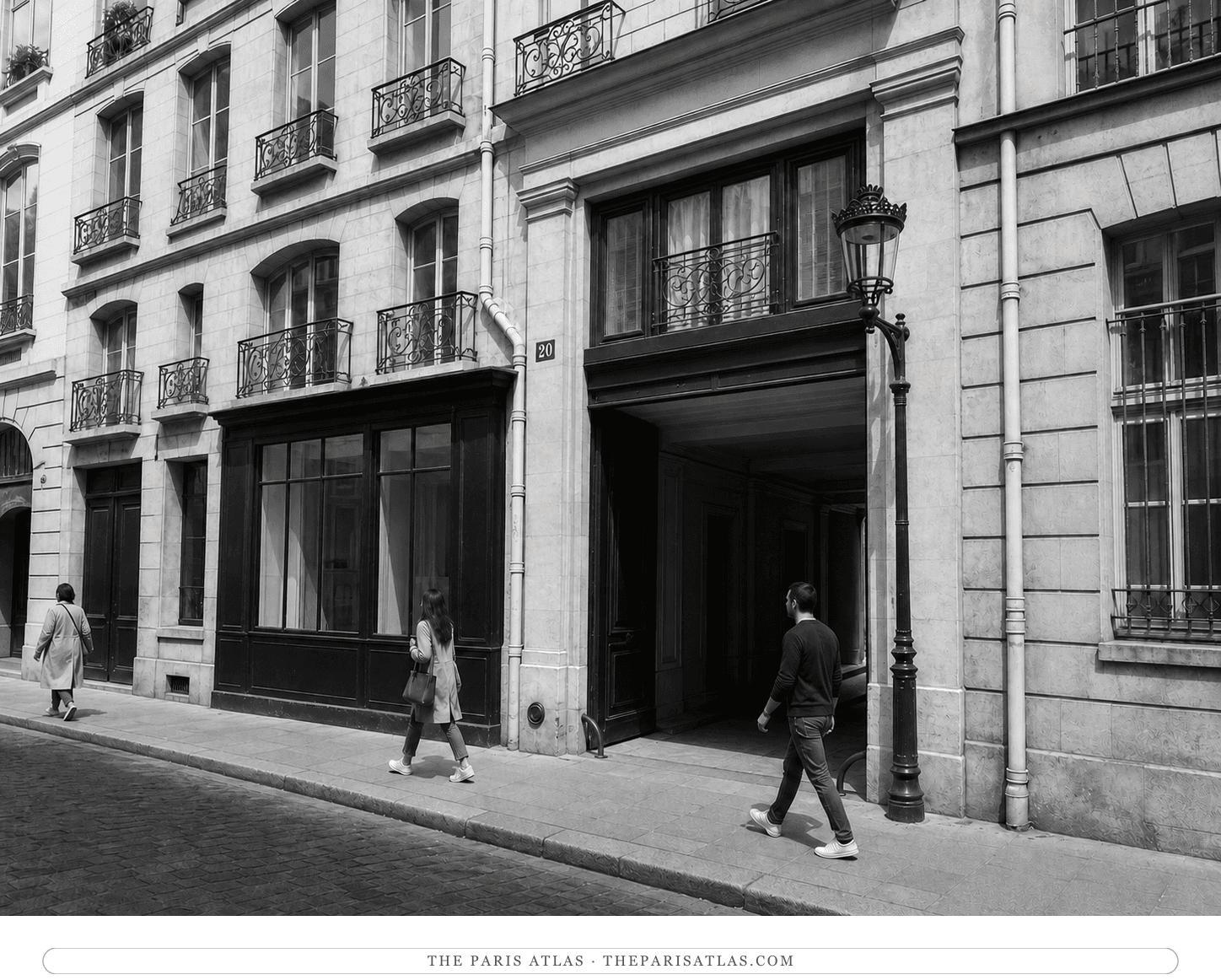
By 1910 Gourmont had been out of society for nineteen years. Natalie Clifford Barney, an American writer thirty-four years old who had been running a Friday salon at 20 rue Jacob since the previous autumn, went and got him. She visited, sent flowers, took him driving and out on the river, and eventually got him to her masked ball and to the salon itself.

Out of the friendship he wrote a series of open letters, published fortnightly in the Mercure through 1912 and 1913 and collected by Georges Crès in 1914 as Lettres à l'Amazone. He called her the Amazon after the way she rode in the Bois de Boulogne in the mornings: to ride side-saddle in French is monter en amazone. The book made her a public literary figure. He died the following year, and she carried the name until her own death in 1972; her headstone at Passy identifies her as the Amazon of Remy de Gourmont.

The letters themselves are not love letters and not quite essays. They are addressed to a real correspondent who answers back inside them, and they move between erotic theory, reading, ageing and the difference between the sexes. One sentence from them has had a longer life than the book.

Ezra Pound and T. S. Eliot

Ezra Pound read Gourmont as the model of what an intelligence in literature should look like, and set about moving him into English. He wrote him into A Study in French Poets, then gave him a chapter of his own, Remy de Gourmont: A Distinction, in Instigations (1920). He translated Un cœur virginal as A Virgin Heart in 1921, and Physique de l'amour as The Natural Philosophy of Love for Boni and Liveright in 1922.

Pound's postscript to that translation is his own, not Gourmont's, and it is worth separating from the book it is attached to. Pound proposes there that the brain is in origin a reserve of seminal fluid, and builds a theory of male invention on it. Gourmont was seven years dead and had proposed nothing of the kind.

T. S. Eliot's debt is on the surface of The Sacred Wood (1920). Its opening essay, The Perfect Critic, carries an epigraph from Lettres à l'Amazone. In the same essay Eliot writes that "Of all modern critics, perhaps Remy de Gourmont had most of the general intelligence of Aristotle", and a few pages later he calls him "the critical consciousness of a generation", a man who "could supply the conscious formulas of a sensibility in process of formation". In the essay on Philip Massinger he quotes Le Problème du style on Flaubert and introduces Gourmont as "the great critic". Eliot's argument about the poet's impersonality, made in Tradition and the Individual Talent in the same volume, rests on those Gourmont pages.

To erect one's personal impressions into laws is the great effort of a man, if he is sincere.

Eriger en lois ses impressions personnelles, c'est le grand effort d'un homme s'il est sincère.

The epigraph of T. S. Eliot's The Perfect Critic (1920), taken from Lettres à l'Amazone. The English is a literal rendering made for this page, not a published one

Death

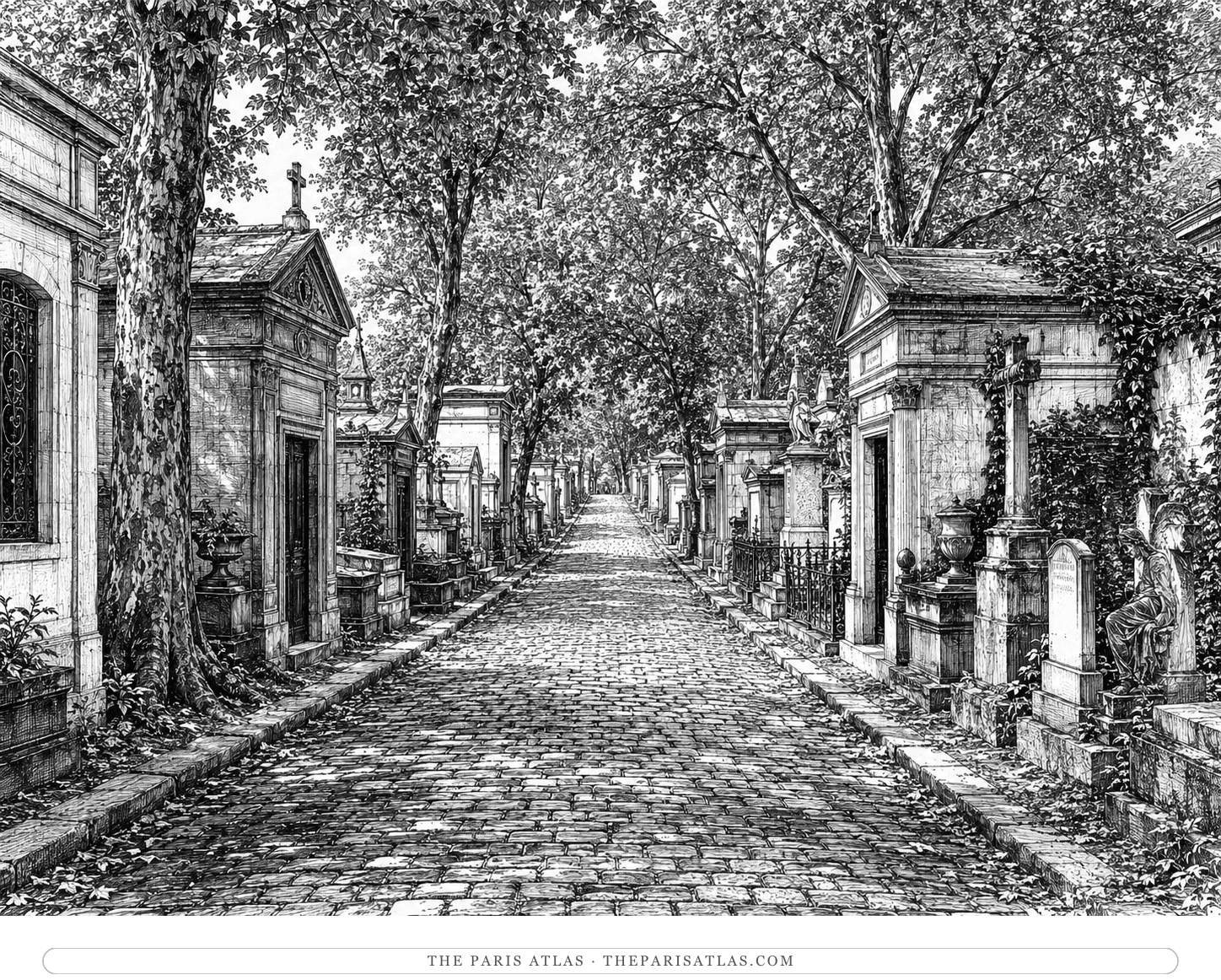
Gourmont died on 27 September 1915, aged fifty-seven, of a cerebral haemorrhage, shortly after being brought to the Hôpital Boucicaut in the fifteenth arrondissement. He had gone on writing through the first year of the war, and had been corresponding with Pound about the transatlantic review that Pound never managed to fund in that form. He is buried at Père-Lachaise, with Berthe de Courrière, who died the following year.

Life events

  1. 1858

    Born on 4 April at Bazoches-au-Houlme in the Orne, in Normandy.

    Remy de Gourmont (Q353876) — authority record

  2. 1881

    Appointed an attaché at the Bibliothèque nationale in Paris in November, after reading law at Caen.

    Remy de Gourmont, in Encyclopedia of World Biography (1998)

  3. 1886

    Meets Berthe de Courrière, who becomes his companion for the rest of his life. His first novel, Merlette, appears the same year.

    Remy de Gourmont, in Encyclopedia of World Biography (1998)

  4. 1889–1890

    One of eleven founders of the Mercure de France, put together in the autumn of 1889; the first issue appears on 1 January 1890. His novel Sixtine follows the same year.

    Alfred Vallette et la fondation du Mercure de France

  5. 1891

    Publishes Le Joujou patriotisme in the Mercure in April and is dismissed from the Bibliothèque nationale for it. Falls ill with lupus vulgaris the same year, and begins withdrawing from public life.

    Remy de Gourmont, in Encyclopedia of World Biography (1998)

  6. 1896

    Le Livre des masques, his portraits of the Symbolist writers, with woodcuts by Félix Vallotton. A second volume follows in 1898.

    Remy de Gourmont, Le Livre des masques: portraits symbolistes (1896)

  7. 1902

    Le Problème du style, written against Antoine Albalat's claim that writing can be taught in twenty lessons by imitation.

    T. S. Eliot, The Sacred Wood: Essays on Poetry and Criticism (1920)

  8. 1903

    Physique de l'amour: essai sur l'instinct sexuel, published by the Mercure de France at 26 rue de Condé.

    Remy de Gourmont, Physique de l'amour: essai sur l'instinct sexuel (1903)

  9. 1910

    Natalie Clifford Barney seeks him out and draws him back into company. He begins calling her l'Amazone, after the way she rides in the Bois de Boulogne.

    Anna Livia, Barney, Natalie Clifford (1876–1972), in Women in World History: A Biographical Encyclopedia (2002)

  10. 1912–1914

    The open letters to Barney run fortnightly in the Mercure de France and are collected by Georges Crès as Lettres à l'Amazone in 1914.

    Remy de Gourmont, Lettres à l'Amazone (1914); Anna Livia, Barney, Natalie Clifford (1876–1972), in Women in World History: A Biographical Encyclopedia (2002)

  11. 1915

    Writes to Ezra Pound in June offering what help he can with a transatlantic review. Dies in Paris on 27 September, aged fifty-seven, of a cerebral haemorrhage, and is buried at Père-Lachaise.

    Ezra Pound, Instigations (1920); Remy de Gourmont (Q353876) — authority record

  12. 1920–1922

    T. S. Eliot puts a line from Lettres à l'Amazone at the head of The Sacred Wood's opening essay. Ezra Pound gives him a chapter in Instigations, then translates Un cœur virginal as A Virgin Heart (1921) and Physique de l'amour as The Natural Philosophy of Love (1922).

    T. S. Eliot, The Sacred Wood: Essays on Poetry and Criticism (1920); Ezra Pound, Instigations (1920); Remy de Gourmont, The Natural Philosophy of Love — translated with a postscript by Ezra Pound (1922)

Remy de Gourmont quotes

Verbatim, as recorded by the witnesses of the era — sources on every quotation.

A writer's capital crime is conformity, imitativeness, submission to rules and precepts.

Le crime capital pour un écrivain c'est le conformisme, l'imitativité, la soumission aux règles et aux enseignements.

Remy de Gourmont, Le Livre des masques (1896), preface
The only excuse a man has for writing, is to express himself, to reveal to others the world reflected in his individual mirror; his only excuse is to be original.

La seule excuse qu'un homme ait d'écrire, c'est de s'écrire lui-même, de dévoiler aux autres la sorte de monde qui se mire en son miroir individuel; sa seule excuse est d'être original.

Remy de Gourmont, Le Livre des masques (1896), preface
To erect one's personal impressions into laws is the great effort of a man, if he is sincere.

Ériger en lois ses impressions personnelles, c'est le grand effort d'un homme, s'il est sincère.

Remy de Gourmont, Lettres à l'Amazone (1914)
The aim of the Mercure has been to permit any man, who is worth it, to write down his thought frankly — this is a writer's sole pleasure. And this aim should be yours.

Le but du Mercure a été de permettre à ceux qui en valent la peine d'écrire franchement ce qu'il pense — seul plaisir d'un écrivain. Cela doit aussi être le vôtre.

Remy de Gourmont, letter to Ezra Pound, June 1915

People they knew

Documented connections — every one carries its source.

Illustrated portrait of Natalie Clifford Barney

Natalie Clifford Barney

  • Author
  • Poet
  • Salon host
  • +2

Met · 1910–1915

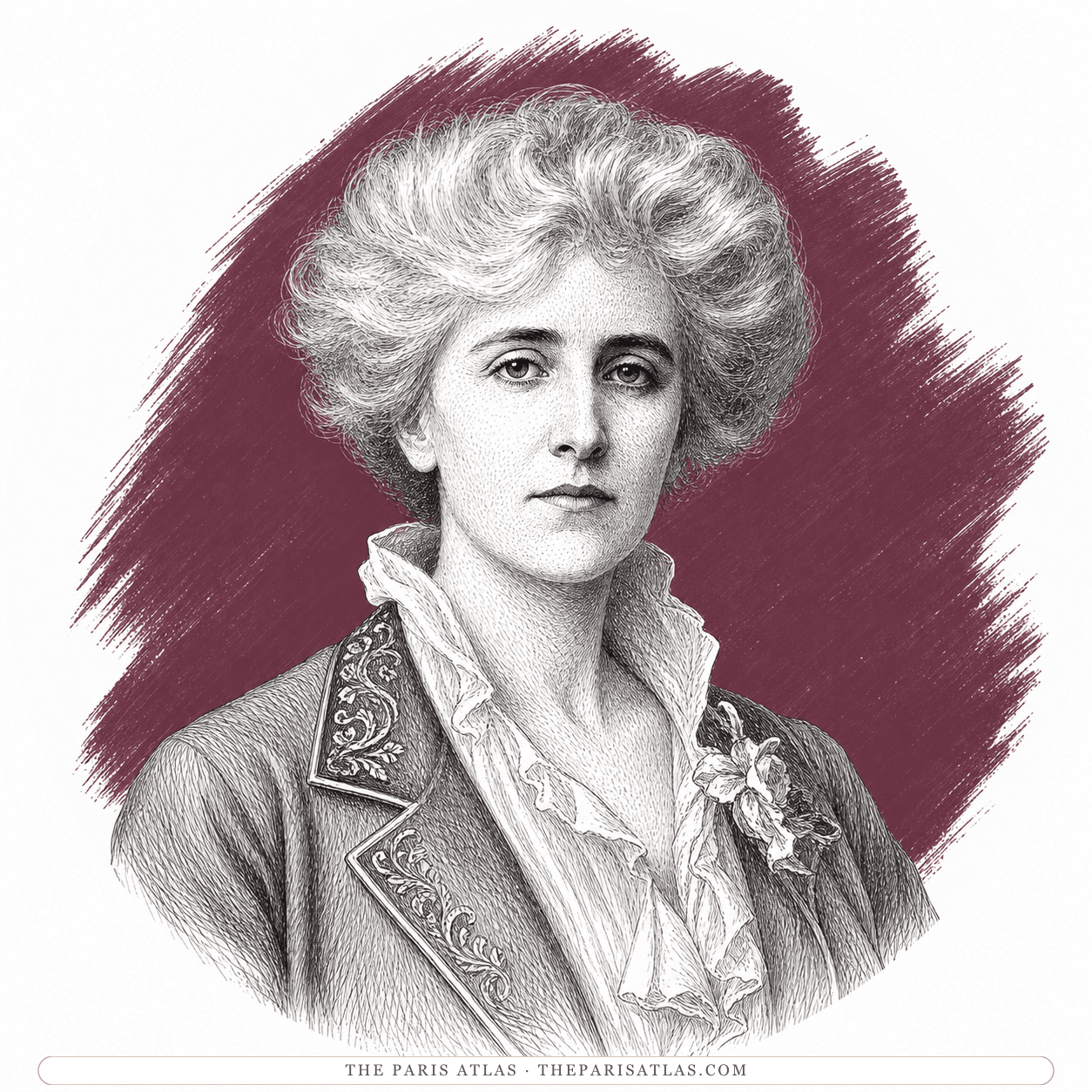
Barney sought Gourmont out in 1910, nineteen years after the lupus had driven him out of company, and drew him back into it with visits, flowers, drives and river trips. Out of the friendship came the open letters he published fortnightly in the Mercure de France through 1912 and 1913 and collected as Lettres à l'Amazone in 1914. He gave her the name l'Amazone, after the way she rode side-saddle in the Bois de Boulogne, and she carried it until her death in 1972. The friendship ended with his death in September 1915.
Remy de Gourmont, Lettres à l'Amazone (1914); Anna Livia, Barney, Natalie Clifford (1876–1972), in Women in World History: A Biographical Encyclopedia (2002)

Illustrated portrait of Rachilde

Rachilde

  • Author
  • Critic
  • Playwright
  • +1

Met · 1890–1915

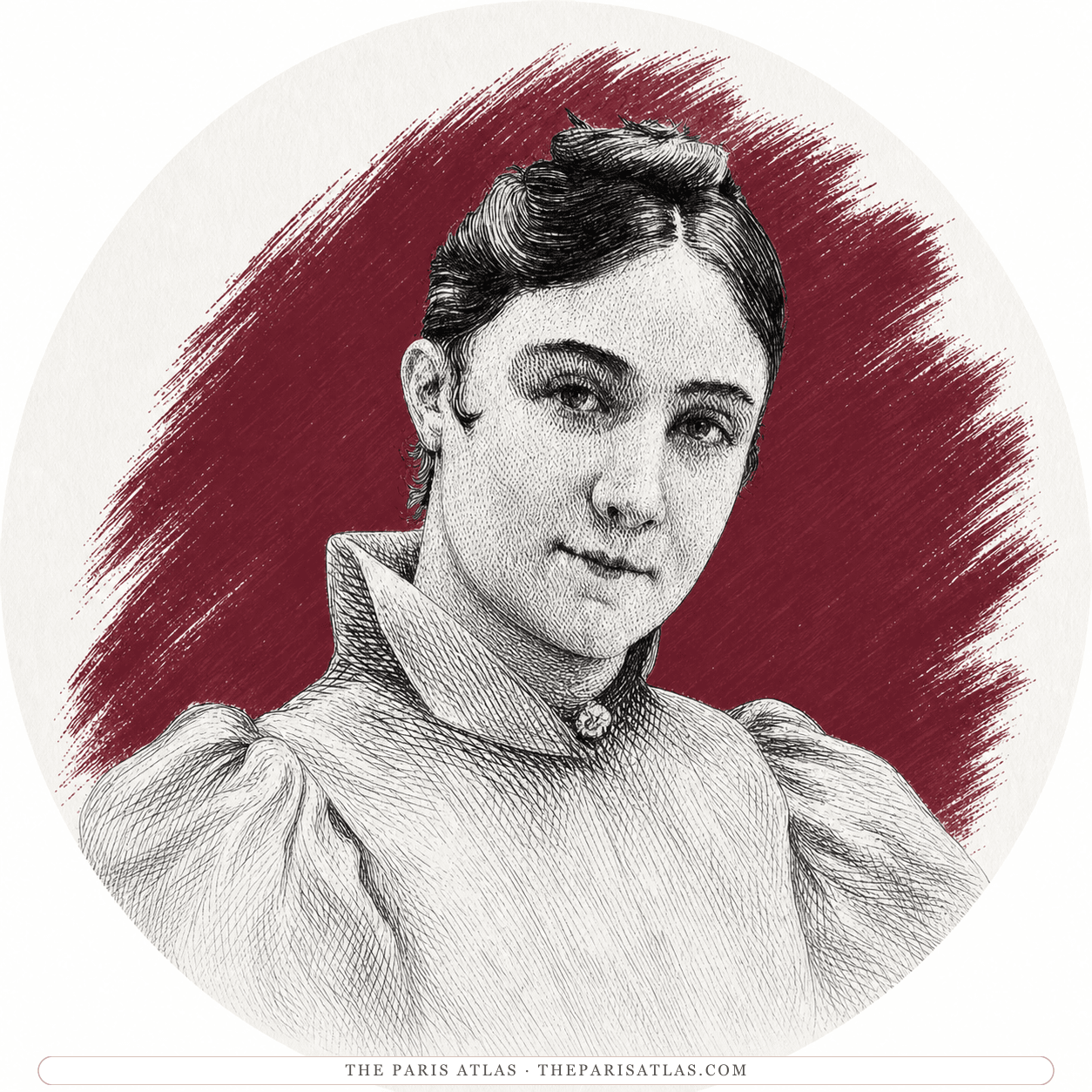
Colleagues at the Mercure de France for twenty-five years, from its first issue in January 1890 until Gourmont's death. He was one of its eleven founders; Rachilde was married to its director, Alfred Vallette, wrote its novel criticism and received on Tuesdays in its offices. Gourmont reviewed her plays in the Mercure in August 1891 and gave her one of the portraits in Le Livre des masques in 1896, an essay that argues at length that women's books are always inferior to the women who write them before conceding that Le Démon de l'absurde is her best work. The start year is the review's first issue rather than a first meeting, which the sources do not fix; both were in the same Symbolist circle in Paris from the middle of the 1880s.

Remy de Gourmont, Le Livre des masques: portraits symbolistes (1896); Remy de Gourmont, The Book of Masks — translated by Jack Lewis (1921); Alfred Vallette et la fondation du Mercure de France; Nelly Sanchez, Rachilde, célébrité sulfureuse des lettres de la Belle Époque (2019)

Who drew from them

Influence running outward — the writers and artists who built on their work.

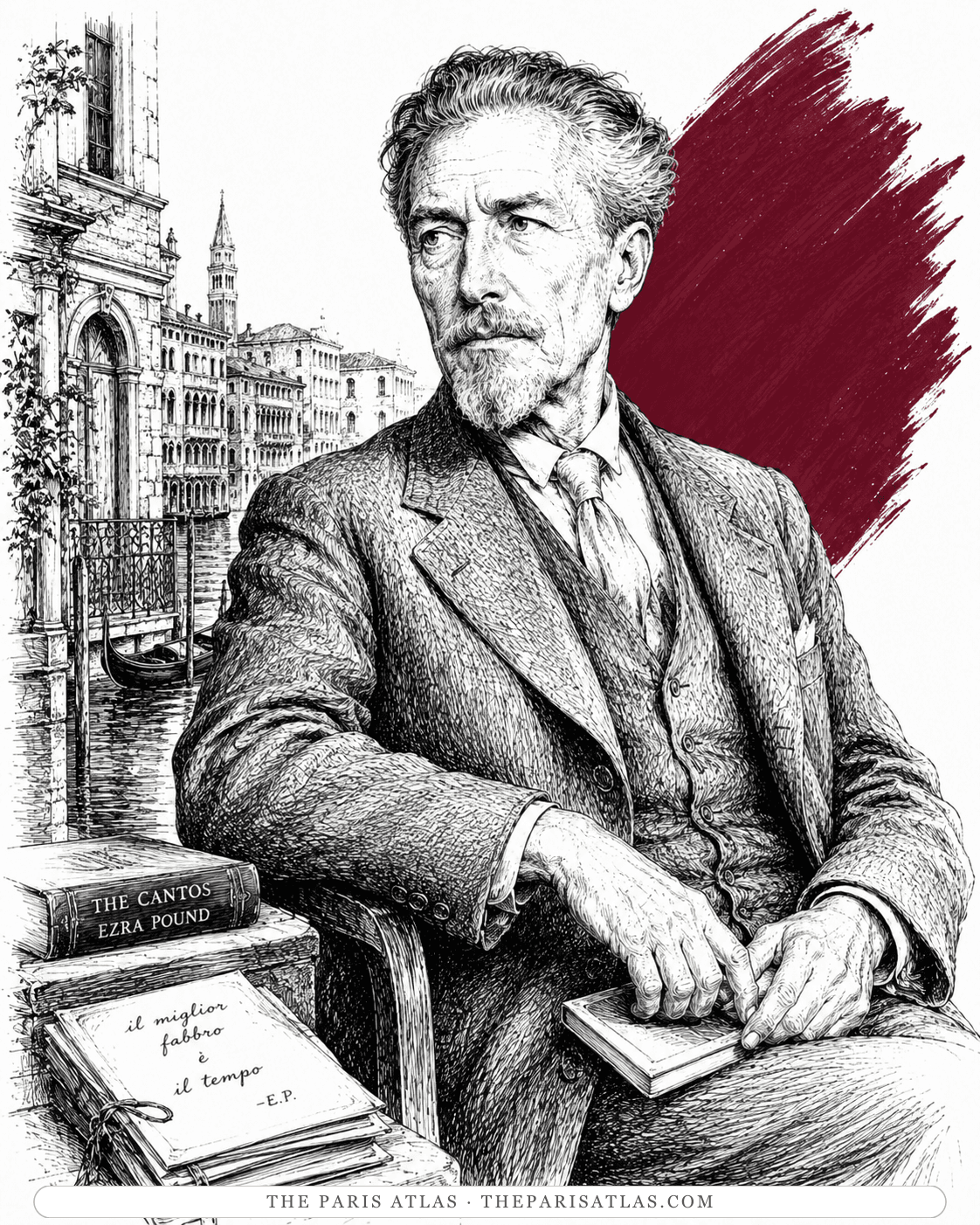
Illustrated portrait of Ezra Pound

Ezra Pound

Pound treated Gourmont as the model of a working intelligence in literature and spent a decade moving him into English. He wrote him into A Study in French Poets, gave him a chapter of his own — Remy de Gourmont: A Distinction — in Instigations (1920), and printed their correspondence there, including Gourmont's letter of June 1915 agreeing to help with a review linking Paris, London and New York. He translated Un cœur virginal as A Virgin Heart in 1921 and Physique de l'amour as The Natural Philosophy of Love in 1922. The postscript Pound attached to that translation is Pound's own argument and not Gourmont's.

Ezra Pound, Instigations (1920); Remy de Gourmont, The Natural Philosophy of Love — translated with a postscript by Ezra Pound (1922)

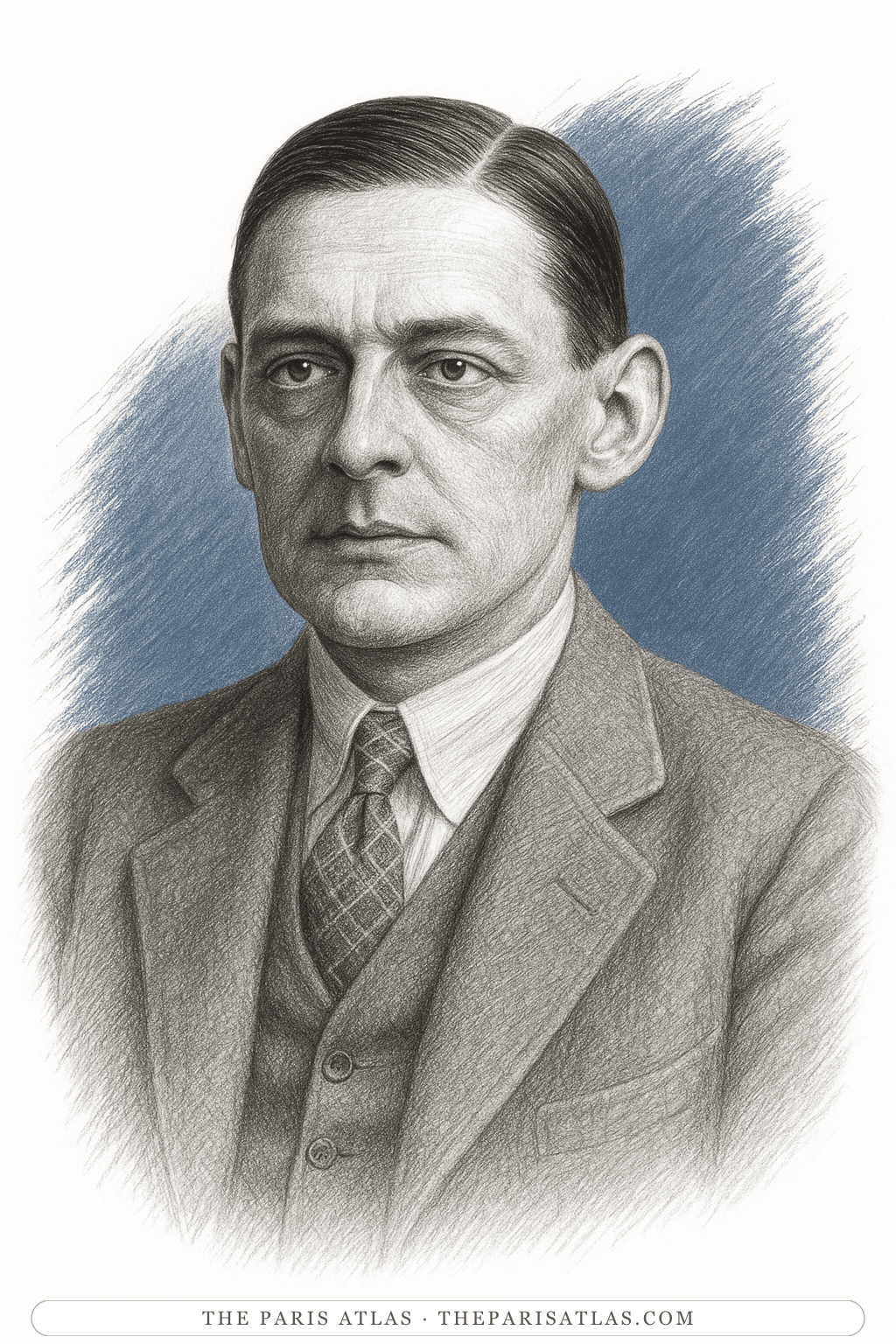
Illustrated portrait of T. S. Eliot

T. S. Eliot

The debt is printed in The Sacred Wood (1920). Its opening essay, The Perfect Critic, takes its epigraph from Lettres à l'Amazone; in the same essay Eliot writes that "Of all modern critics, perhaps Remy de Gourmont had most of the general intelligence of Aristotle", and a few pages later calls him "the critical consciousness of a generation". In the essay on Philip Massinger, in the same volume, Eliot introduces him as "the great critic" and quotes Le Problème du style on Flaubert emptying his personality into his books, which is the position Eliot argues in his own name in Tradition and the Individual Talent. The start year is the book's; Eliot had been reading Gourmont for several years before it, but the citations are what is documented.

T. S. Eliot, The Sacred Wood: Essays on Poetry and Criticism (1920); Remy de Gourmont, Lettres à l'Amazone (1914)

Remy de Gourmont’s Places

The cataloged places connected to Remy de Gourmont — through the books, and through the documented record.

Places you can enter today appear first, followed by addresses to see from outside and sites that have vanished.

Questions about Remy de Gourmont

Who was Remy de Gourmont?

A French critic, novelist and poet (1858–1915) and one of the eleven founders of the Mercure de France, the review that became the headquarters of Symbolism in Paris. He wrote about sixty books; the ones still read are Le Livre des masques (1896), his portraits of the Symbolist writers, and Le Problème du style (1902). Ezra Pound translated him and T. S. Eliot called him the critical consciousness of a generation.

What are the Lettres à l'Amazone?

A series of open letters Gourmont addressed to the American writer Natalie Clifford Barney, published fortnightly in the Mercure de France through 1912 and 1913 and collected as a book by Georges Crès in 1914. He called her l'Amazone, the Amazon, after the way she rode in the Bois de Boulogne in the mornings: riding side-saddle in French is monter en amazone. The name followed her for the rest of her life and is on her gravestone at Passy.

What illness did Remy de Gourmont have?

Lupus vulgaris, which is tuberculosis of the skin rather than the autoimmune disease that now carries the name. It struck him in 1891, when he was thirty-three, spread across his face and destroyed tissue as it went. The only treatment available before antibiotics was repeated cauterisation, which was very painful and did not restore what had been lost. He withdrew from public life, worked at home, and went out mainly to the Mercure's offices for the remaining twenty-four years.

Why was Remy de Gourmont dismissed from the Bibliothèque nationale?

For an essay. He had been an attaché at the library since November 1881, and in April 1891 the Mercure de France published his Le Joujou patriotisme, which argued that France and Germany shared one aesthetic culture, that the provinces lost in 1870 were not worth another war, and that patriotism was a toy grown men should have put down. Twenty years after the defeat this was intolerable to nationalist opinion, and he lost the post. He never held a salaried job again.

What did Ezra Pound translate by Remy de Gourmont?

Two books. Un cœur virginal appeared as A Virgin Heart in 1921, and Physique de l'amour, Gourmont's survey of sexual behaviour across the animal kingdom, as The Natural Philosophy of Love for Boni and Liveright in 1922. Pound also devoted a chapter of Instigations (1920) to him, and printed Gourmont's letters to him there. The long postscript attached to The Natural Philosophy of Love, in which Pound argues that the brain originates as a reserve of seminal fluid, is Pound's own idea and not Gourmont's.

What did T. S. Eliot take from Remy de Gourmont?

The opening essay of The Sacred Wood (1920), The Perfect Critic, carries an epigraph from Lettres à l'Amazone, and in the same essay Eliot writes that of all modern critics Gourmont perhaps had most of the general intelligence of Aristotle. A few pages on he calls him the critical consciousness of a generation. In the essay on Philip Massinger, in the same book, Eliot quotes Le Problème du style on Flaubert and calls Gourmont the great critic; the passage he quotes is about a writer emptying his personality into his work, which is the argument Eliot makes in his own name in Tradition and the Individual Talent.

Where is Remy de Gourmont buried?

At the Père-Lachaise cemetery in Paris, with Berthe de Courrière, who had lived with him from 1886 until his death and who died the following year. He died on 27 September 1915 of a cerebral haemorrhage, shortly after being taken to the Hôpital Boucicaut.

Sourced claims

Every connection the graph holds for Remy, with the evidence behind it.

Buried at · 1915

Père-Lachaise Cemetery

Buried after his death on 27 September 1915, in the same grave as Berthe de Courrière, who had lived with him since 1886 and died the following year.

Remy de Gourmont (Q353876) — authority record

Frequented · 1910–1915

20 rue Jacob

Barney's courtship of Gourmont as a friend eventually got him out of his flat and into the pavilion on the rue Jacob, first for her masked ball and then for the Friday salon itself. He had been a recluse since 1891, so the appearances are the point rather than the frequency, and the accounts do not say how many times he came.

Anna Livia, Barney, Natalie Clifford (1876–1972), in Women in World History: A Biographical Encyclopedia (2002); Remy de Gourmont, Lettres à l'Amazone (1914)

Influenced · 1913

Ezra Pound

Pound treated Gourmont as the model of a working intelligence in literature and spent a decade moving him into English. He wrote him into A Study in French Poets, gave him a chapter of his own — Remy de Gourmont: A Distinction — in Instigations (1920), and printed their correspondence there, including Gourmont's letter of June 1915 agreeing to help with a review linking Paris, London and New York. He translated Un cœur virginal as A Virgin Heart in 1921 and Physique de l'amour as The Natural Philosophy of Love in 1922. The postscript Pound attached to that translation is Pound's own argument and not Gourmont's.

Ezra Pound, Instigations (1920); Remy de Gourmont, The Natural Philosophy of Love — translated with a postscript by Ezra Pound (1922)

Influenced · 1920

T. S. Eliot

The debt is printed in The Sacred Wood (1920). Its opening essay, The Perfect Critic, takes its epigraph from Lettres à l'Amazone; in the same essay Eliot writes that "Of all modern critics, perhaps Remy de Gourmont had most of the general intelligence of Aristotle", and a few pages later calls him "the critical consciousness of a generation". In the essay on Philip Massinger, in the same volume, Eliot introduces him as "the great critic" and quotes Le Problème du style on Flaubert emptying his personality into his books, which is the position Eliot argues in his own name in Tradition and the Individual Talent. The start year is the book's; Eliot had been reading Gourmont for several years before it, but the citations are what is documented.

T. S. Eliot, The Sacred Wood: Essays on Poetry and Criticism (1920); Remy de Gourmont, Lettres à l'Amazone (1914)

Met · 1910–1915

Natalie Clifford Barney

Barney sought Gourmont out in 1910, nineteen years after the lupus had driven him out of company, and drew him back into it with visits, flowers, drives and river trips. Out of the friendship came the open letters he published fortnightly in the Mercure de France through 1912 and 1913 and collected as Lettres à l'Amazone in 1914. He gave her the name l'Amazone, after the way she rode side-saddle in the Bois de Boulogne, and she carried it until her death in 1972. The friendship ended with his death in September 1915.
Remy de Gourmont, Lettres à l'Amazone (1914); Anna Livia, Barney, Natalie Clifford (1876–1972), in Women in World History: A Biographical Encyclopedia (2002)

Met · 1890–1915

Rachilde

Colleagues at the Mercure de France for twenty-five years, from its first issue in January 1890 until Gourmont's death. He was one of its eleven founders; Rachilde was married to its director, Alfred Vallette, wrote its novel criticism and received on Tuesdays in its offices. Gourmont reviewed her plays in the Mercure in August 1891 and gave her one of the portraits in Le Livre des masques in 1896, an essay that argues at length that women's books are always inferior to the women who write them before conceding that Le Démon de l'absurde is her best work. The start year is the review's first issue rather than a first meeting, which the sources do not fix; both were in the same Symbolist circle in Paris from the middle of the 1880s.

Remy de Gourmont, Le Livre des masques: portraits symbolistes (1896); Remy de Gourmont, The Book of Masks — translated by Jack Lewis (1921); Alfred Vallette et la fondation du Mercure de France; Nelly Sanchez, Rachilde, célébrité sulfureuse des lettres de la Belle Époque (2019)

Sources and further reading

  • Remy de Gourmont, Le Livre des masques: portraits symbolistes (1896)
  • Remy de Gourmont, The Book of Masks — translated by Jack Lewis (1921)
  • Remy de Gourmont, Physique de l'amour: essai sur l'instinct sexuel (1903)
  • Remy de Gourmont, The Natural Philosophy of Love — translated with a postscript by Ezra Pound (1922)
  • Remy de Gourmont, Lettres à l'Amazone (1914)
  • Ezra Pound, Instigations (1920)
  • T. S. Eliot, The Sacred Wood: Essays on Poetry and Criticism (1920)
  • Remy de Gourmont, in Encyclopedia of World Biography (1998)
  • Alfred Vallette et la fondation du Mercure de France
  • Anna Livia, Barney, Natalie Clifford (1876–1972), in Women in World History: A Biographical Encyclopedia (2002)
  • Remy de Gourmont (Q353876) — authority record
Browse all authors