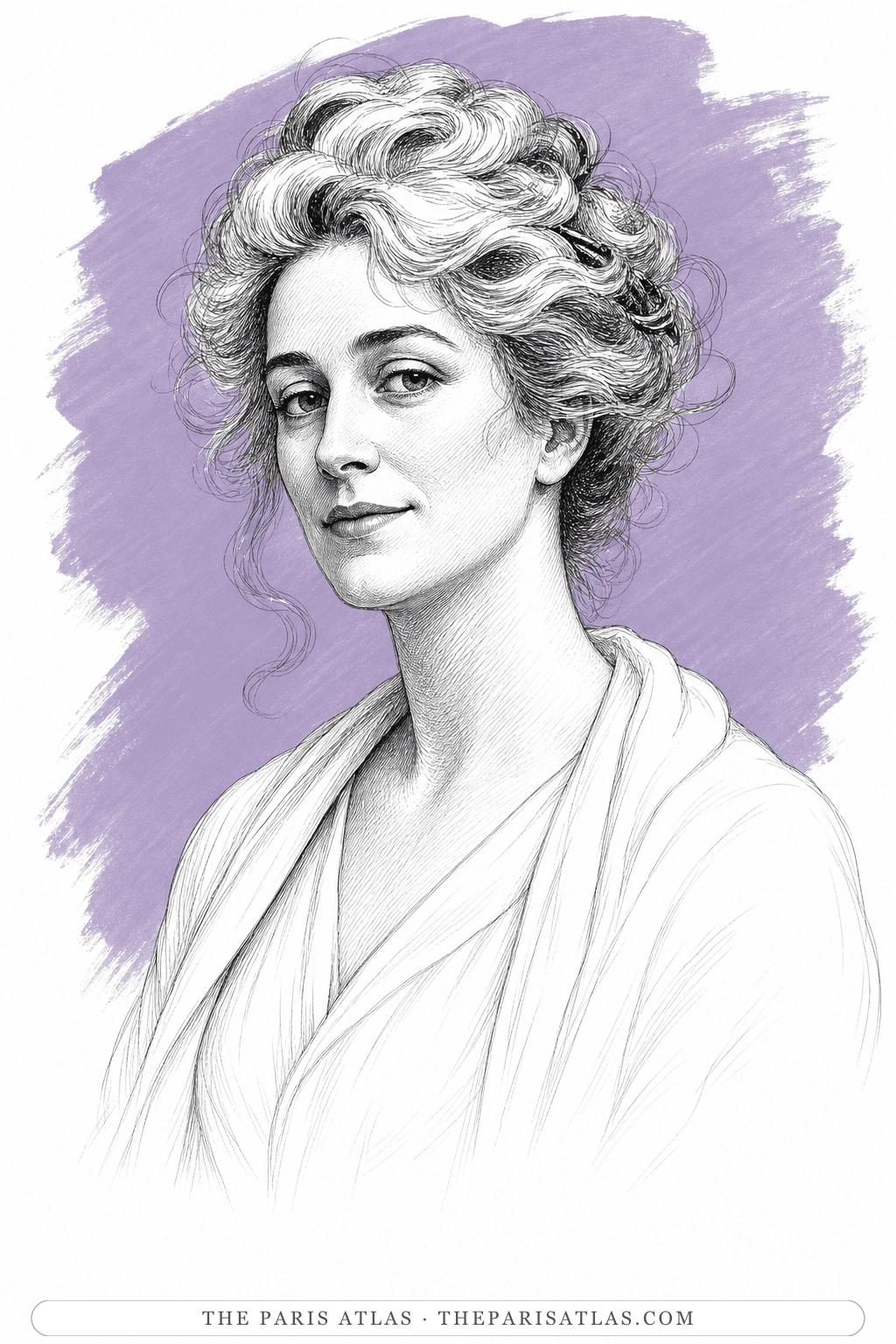
Valérie Seymour
The American writer whose Paris flat is the one room in the novel where nobody has to pretend. Radclyffe Hall drew her from Natalie Clifford Barney.
Beauty, and to be left in peace to arrange her life around it. She is firmly convinced, the novel says, that in this ugly age one should strive to the top of one's bent after beauty, and she runs her monthly gatherings on the single condition that people arrive sober.
The book

At a glance
- Introduced in Book Three; present at the end
- Just over thirty when Stephen meets her
- Satires and sketches of Greek manners, mostly written in French
- An American uncle's fortune
- A flat on the Quai Voltaire and a villa at St. Tropez
- Natalie Clifford Barney, whose Friday salon at 20 rue Jacob had run since 1909
- Natalie Clifford Barney · 1876–1972 · Dayton, Ohio
Who they are in the book
Spoiler-freeValérie Seymour is the Paris salon hostess in The Well of Loneliness, the 1928 novel by the English writer Radclyffe Hall. She is a fictional character, drawn from the American writer Natalie Clifford Barney, who had lived in Paris since 1902 and had been holding a Friday salon at 20 rue Jacob since 1909. Hall knew her.
In the novel she is American, rich from an uncle who left her his fortune, bilingual, and just over thirty. She writes delicate satires and sketches of Greek manners, most of them in French and all of them outspoken. Her flat is on the Quai Voltaire, and Stephen Gordon's first impression of it is of a large and rather splendid disorder — nothing where it should be, a faint layer of dust over everything, someone's Oriental scent mixed with tuberoses in a sixteenth-century chalice, and a box of peppermint creams and a broken lute lying on an enormous divan.
She is the only person in the book who is entirely at ease with herself, and the novel says so directly: she creates an atmosphere of courage, and everybody feels normal and brave in her flat. She is also the one who tells Stephen about the tumbledown house with the good garden in the rue Jacob.
How Valérie Seymour Is Portrayed
- The flatOn the Quai Voltaire, and blissfully unkempt, as though its mistress were too engrossed in other things to control its behaviour. She serves tea, iced coffee, sirops and orangeade; she abhors drink and drugs on the grounds that they are ugly.
- How she comes into the roomNot beautiful and not imposing, but very perfectly proportioned, which makes her look taller than she is. Dressed all in white with a large white fox skin round her shoulders, and masses of thick fair hair busily ridding itself of its hairpins — which, the novel notes, is in rather splendid disorder, like the flat.
- The first thing she says to StephenShe glances at Stephen's stained fingers and tells her to please smoke if she wants to. Stephen, who has spent the drive over being braced for humiliation by Jonathan Brockett, is not braced for that.
- Why Stephen resents her at firstBecause Valérie's eyes are appraising, and Stephen decides she is being approved of not for her brain or her work but for what Hall calls the outward stigmata of the abnormal. The anger passes when Valérie turns her back on Brockett's gossip and starts talking to her guest seriously about books and about work.
- The house in the rue JacobShe mentions it in passing, warns Stephen that it is sad and tumbledown but has a fine garden, telephones the landlord on the spot and makes the appointment for eleven the next morning. Stephen buys it. Her objection that her home is in England gets the reply: "One may have two homes—many homes."
- Her line at the nightclubBrockett, waving his hands at a crowded dance floor, tells her that this is life, love, defiance and emancipation. Valérie answers with her calm little smile: "I think I preferred it when we were all martyrs!"
- What she is forThe novel calls her a kind of lighthouse in a storm-swept ocean, and says she gives her brethren nothing but the freedom of her salon and the protection of her friendship, and feels no urge at all towards philanthropy. Hortense, Comtesse de Kerguelen, left husband, children and home for her; the two of them are now close friends.
- How she deals with griefShe avoids it. She has always shunned tragedy like the plague, and the only time she loses her temper in the book is when Stephen uses the word protection at her.
If you like The Well of Loneliness


If you like Radclyffe Hall
Explore authors with a similar voice, perspective, and influence.
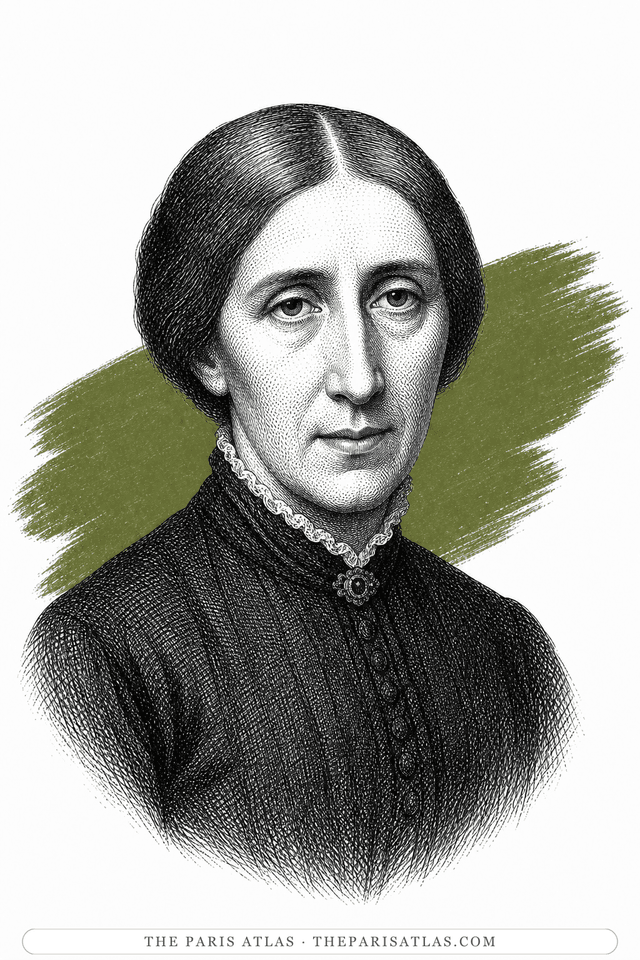
George Eliot
Mary Ann Evans, who wrote Middlemarch under a man's name because she was living openly with another woman's husband and knew what English readers would do with that. Her mind was formed in French and German: she translated Strauss and Feuerbach before she wrote a line of fiction, and the sight she most wanted in Paris was not a monument but the flat where Auguste Comte had lived.
View author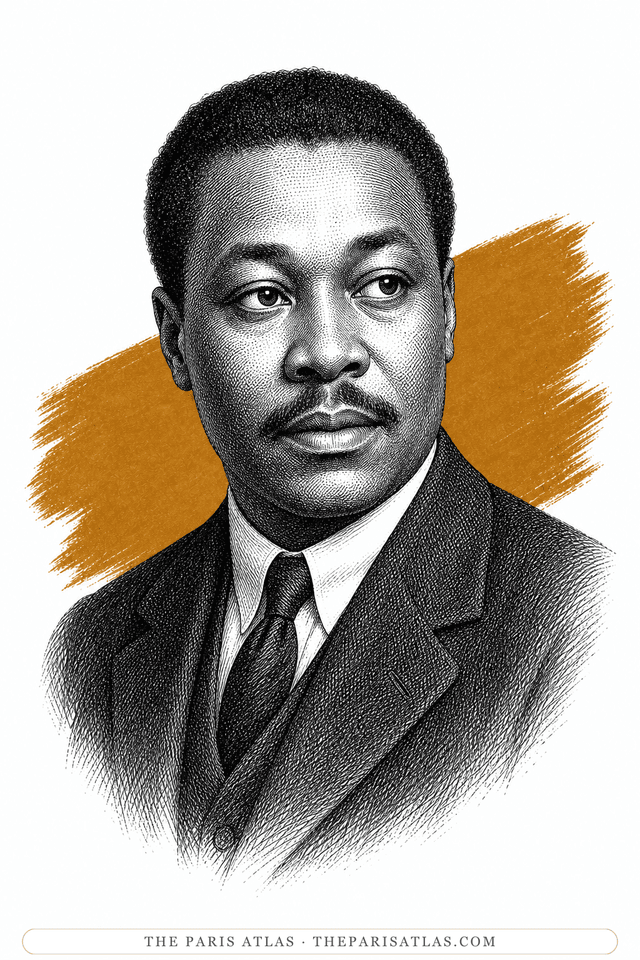
Claude McKay
Jamaican-born poet and novelist, and one of the essential writers of the Harlem Renaissance. He arrived in Paris from Moscow in 1923 and stayed in France until 1928, writing Home to Harlem there — and forming a low opinion of the rich, white expatriate scene that dominates most accounts of the period. His Paris is the same years as Hemingway's and almost nothing like it.
View author
Mark Twain
The Missouri newspaperman who became America's most famous writer, and whose first book made its reputation partly out of Paris: in 1867 he arrived with a shipload of American tourists, renamed his guide Ferguson, watched the high-kicking can-can through his fingers and wrote it all down. He kept coming back — and was living in Paris in the mid-1890s, broke, while finishing the novel he considered his best, Personal Recollections of Joan of Arc.
View author