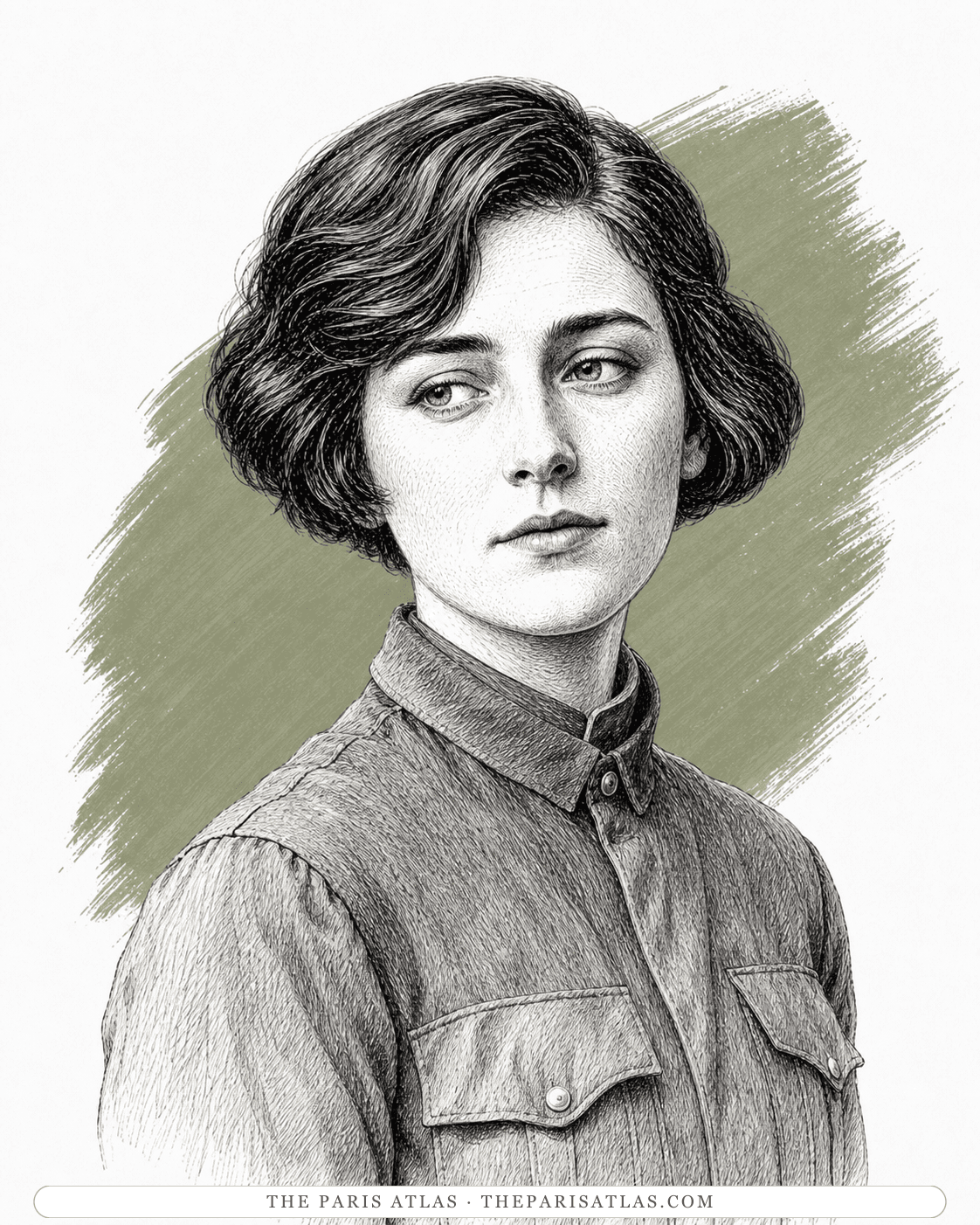
Mary Llewellyn
The Welsh orphan who is Stephen Gordon's second ambulance driver at the front, and afterwards the woman she lives with in Paris.
To be wanted, and to be independent of the household that did not want her. She joins up at eighteen because a Welsh village is no field for endeavour, tells Stephen she means to go into an office because she wants to be free, and never stops asking to be told about Morton.
The book

At a glance
- Introduced in Book Four; the second half is hers and Stephen's
- Not quite eighteen at the outbreak of war; nineteen or twenty when she reaches France
- A village in Wales, raised by a married cousin after being orphaned young
- Five foot five, which she is sorry about
- Driver and competent mechanic, taught by her cousin the country doctor
- The Breakspeare Unit, attached to the French Army Ambulance Corps
Who they are in the book
Spoiler-freeMary Llewellyn is the young woman Stephen Gordon spends the second half of The Well of Loneliness with, in the 1928 novel by the English writer Radclyffe Hall. She is fictional. She first appears asleep on the floor of a shelled villa at Compiègne in March 1918, curled up in an army blanket, and the description is the first thing the reader gets: a pale triangular face, short black lashes, dark brown hair recently bobbed for convenience, a slightly tip-tilted nose, and grey eyes set a little obliquely.
She is nineteen or twenty, an orphan since early childhood, brought up by a married cousin in a Welsh village as an unwanted member of a household with no money to spare. Her education came from a small private school in the next village. She can drive and maintain a car because her cousin was a doctor with a wide practice and no money for a chauffeur. She had heard of the Breakspeare Unit from the local parson and made the journey to France across a war-wrecked country on her own.
The unit's founder took her on with misgivings and asked Stephen to keep an eye on her. She lasts. After the Armistice the two of them go to Orotava in Tenerife, and the friendship becomes something neither of them has a word for until Mary forces it into the open by announcing that she is going home to England.
How Mary Llewellyn Is Portrayed
- Where the reader first meets herAsleep on the floor of a wrecked salon in Compiègne, breathing heavily with her head on her arm, in a room full of women in sleeping bags waiting for the German batteries to start again. Stephen looks at her for more than a minute before waking her for the shift.
- The reason she was nearly turned awayMrs. Claude Breakspeare thought her too frail and too timid and only kept her because the unit was short-handed during the German offensive. She told Stephen to try her out as a second driver and doubted aloud that she would stick it. She stuck it.
- Under firePale, with her mouth set, driving a light Ford ambulance down a road hedged with painted rag camouflage and pitted with shell holes every few yards. Her side of the conversation is mostly one word at a time. When a shell uproots trees in a paddock beside them she moves closer to Stephen on the seat, and is told not to joggle the driver's arm.
- What she asks to be told aboutMorton. She never tires of it, and makes Stephen get out the photographs of Sir Philip, of Anna, of Puddle, and above all of the horse Raftery. She has read neither of Stephen's novels, because there was never money for a library subscription.
- How she ends the silenceAt Orotava, after months of Stephen pushing her away, she follows her into her bedroom and says she is leaving because she will not accept charity and because being repelled is unendurable. It is the only time in the book anybody forces Stephen to say what she feels.
- Her answer to the warningTold exactly what the world will do to her if she stays, she answers: "What do I care for the world's opinion? What do I care for anything but you, and you just as you are—as you are, I love you!" She adds that she is crying about Stephen's face and not about anything she has just been told.
- What Paris does to herThe respectable friends fall away, and she is left with the circle around Valérie Seymour. She hardens deliberately and it does not suit her. Coming home from the bar called Alec's she says that at least they could dance together there without being thought freaks, and that beggars cannot be choosers.
If you like The Well of Loneliness


If you like Radclyffe Hall
Explore authors with a similar voice, perspective, and influence.
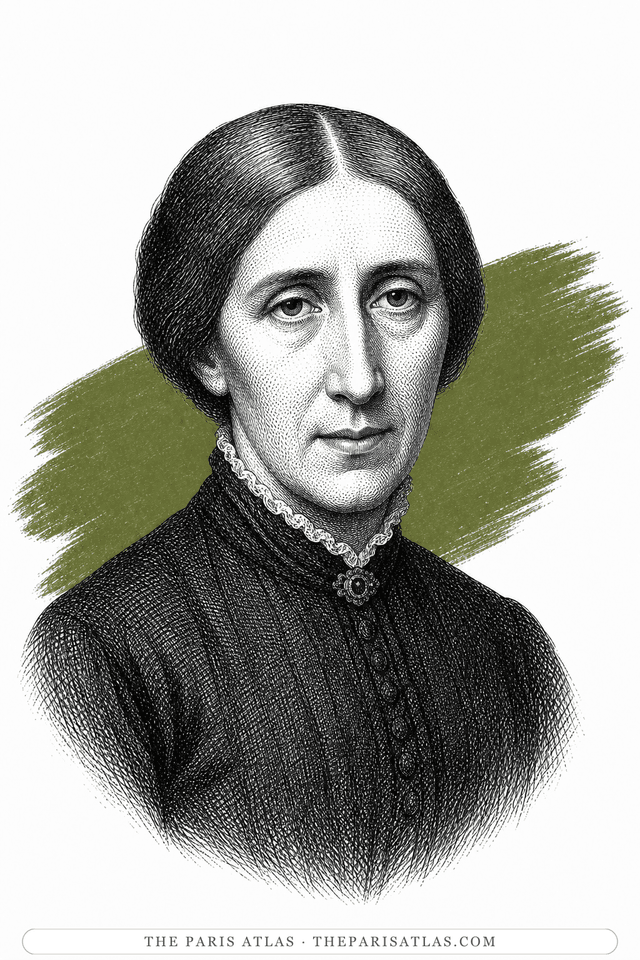
George Eliot
Mary Ann Evans, who wrote Middlemarch under a man's name because she was living openly with another woman's husband and knew what English readers would do with that. Her mind was formed in French and German: she translated Strauss and Feuerbach before she wrote a line of fiction, and the sight she most wanted in Paris was not a monument but the flat where Auguste Comte had lived.
View author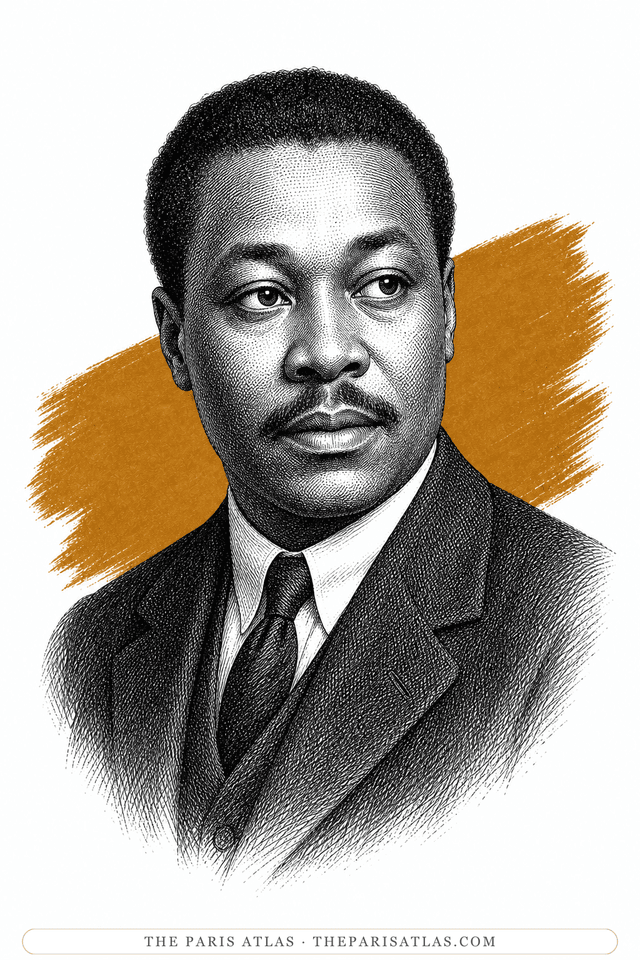
Claude McKay
Jamaican-born poet and novelist, and one of the essential writers of the Harlem Renaissance. He arrived in Paris from Moscow in 1923 and stayed in France until 1928, writing Home to Harlem there — and forming a low opinion of the rich, white expatriate scene that dominates most accounts of the period. His Paris is the same years as Hemingway's and almost nothing like it.
View author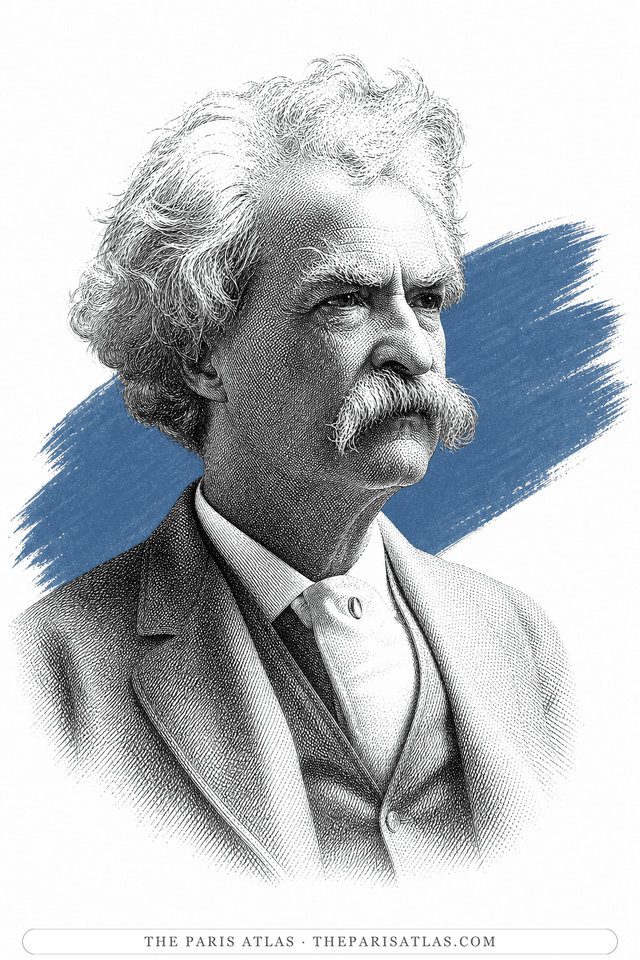
Mark Twain
The Missouri newspaperman who became America's most famous writer, and whose first book made its reputation partly out of Paris: in 1867 he arrived with a shipload of American tourists, renamed his guide Ferguson, watched the high-kicking can-can through his fingers and wrote it all down. He kept coming back — and was living in Paris in the mid-1890s, broke, while finishing the novel he considered his best, Personal Recollections of Joan of Arc.
View author