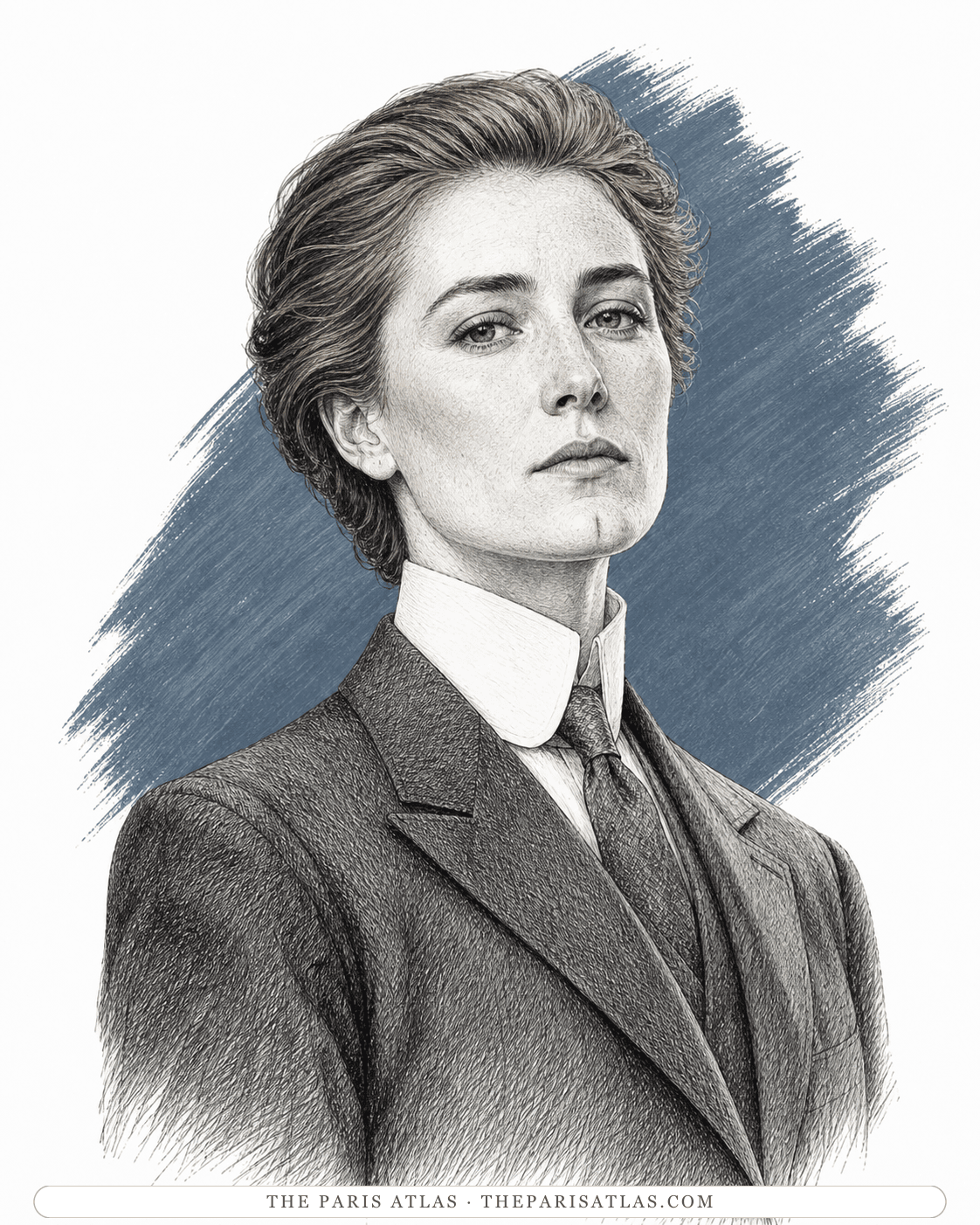
Stephen Gordon
The Englishwoman the novel follows from birth to middle age: given a boy's name by a father who wanted a son, and turned out of her home at twenty-one for loving a woman.
To be allowed to be what she is, in the place she belongs. She tells her father at ten that she wants to be a man; at twenty-one she tells her mother that if she loved Angela Crossby the way a man loves a woman, it is because she cannot feel that she is a woman, and that she would have married her and brought her home to Morton.
The book

At a glance
- The central character, present in every chapter
- Christmas Eve, at Morton in Worcestershire
- Stephen Mary Olivia Gertrude Gordon
- Sir Philip Gordon and Anna, born Molloy, of County Clare
- Novelist. Her first book is called The Furrow; the second makes her famous.
- Ambulance driver in France, 1918; Croix de Guerre
- A house with a courtyard and a walled garden at 35 rue Jacob
Who they are in the book
Spoiler-freeStephen Gordon is the central character of The Well of Loneliness, the 1928 novel by the English writer Radclyffe Hall. She is fictional. She is born on Christmas Eve at Morton, a Georgian house in Worcestershire between Upton-on-Severn and the Malvern Hills, to Sir Philip Gordon and his Irish wife Anna. Her father had spent the pregnancy talking about a son called Stephen, after the saint whose pluck he admired; when a daughter arrives he insists on the name anyway, and she is christened Stephen Mary Olivia Gertrude.
She grows up narrow-hipped and wide-shouldered, tall for her age, with her father's auburn hair, hazel eyes and cleft chin. She rides astride from the age of eight, learns fencing and gymnastics from an ex-sergeant in Malvern, reads Greek and Latin with her governess, and is miserable at every garden party in the county. Her father, who has worked out what she is from a locked bookcase of German sexology, never tells her. Her mother, who has not worked it out, cannot bring herself to touch her.
At twenty-one, after an affair with a married neighbour is exposed, her mother tells her that one of them must leave Morton, and she goes. The rest of the book is what she makes of that: novels published in London, an ambulance at the front, a house on the Left Bank in Paris, and a life with Mary Llewellyn that she can never make respectable enough to protect.
How Stephen Gordon Is Portrayed
- The nameChosen for a son. Sir Philip goes on using it after the birth and has the child baptised with it, telling his wife that they have called her Stephen so long that he cannot see why they should not go on. The vicar thinks it unusual, so three female names are added to satisfy him.
- Dressing up as NelsonAt seven she raids the nursery ragbag to play the young Nelson for the housemaid Collins, who calls the cook in to look. Asked about it, she answers gravely: "Yes, of course I'm a boy." She hates dresses, sashes, ribbons and openwork stockings, and says her legs feel free in breeches.
- The housemaid's kneeTold that Collins has water on the knee and may need an operation, she prays for three weeks to catch it instead — "I do wish I'd got it—I wish I'd got your housemaid's knee, Collins, 'cause that way I could bear it instead of you." When prayer fails she kneels on the nursery carpet for twenty minutes at a stretch until her knees are raw, imitating Collins scrubbing the floor.
- On a horseThe one thing everybody in the county concedes. She takes her first fox's brush at eight, riding astride while the Master's daughter is being taught side-saddle, and at twelve she is given the Irish hunter Raftery. Even the neighbours who dislike her admit the riding; the foul-mouthed Master of hounds swears at anyone who suggests it is only the horse.
- The proposal she runs fromMartin Hallam tells her in the garden at Morton that he is in love with her and wants to marry her. What spreads over her face, the book says, is repulsion and something like outrage, and she turns and runs into the house without a word. She spends months afterwards trying to work out what is wrong with her, and asks her father directly. He lies to her.
- The letter to Angela CrossbyWritten in one night after she finds Angela in the garden with Roger Antrim, and never once mentioning what she saw. She calls herself a poor, heart-broken freak of a creature and God's mistake, and asks to be loved a little. Angela hands it to her husband, who copies it and posts it to Stephen's mother.
- What she says to her motherAnna Gordon calls the love in the letter a sin against creation and an insult to the father Stephen dares to resemble. Stephen answers standing up: "As my father loved you, I loved. As a man loves a woman, that was how I loved—protectively, like my father." She agrees to leave Morton in the same conversation.
- The locked bookcaseOn her last night at Morton she opens her father's locked case, finds a row of books hidden behind the others, and takes out one by Krafft-Ebing with her own name written in her father's hand in the margins. She reads until it is too dark, then opens his Bible for a sign and gets the mark set upon Cain.
- The warShe drives for a women's ambulance unit attached to the French Army Ambulance Corps, based in a shelled villa at Compiègne in the spring of 1918, and wins the Croix de Guerre with three additional citations. It is the only period of her life in which nobody minds what she is, and she says afterwards that the war was the making of her.
If you like The Well of Loneliness


If you like Radclyffe Hall
Explore authors with a similar voice, perspective, and influence.
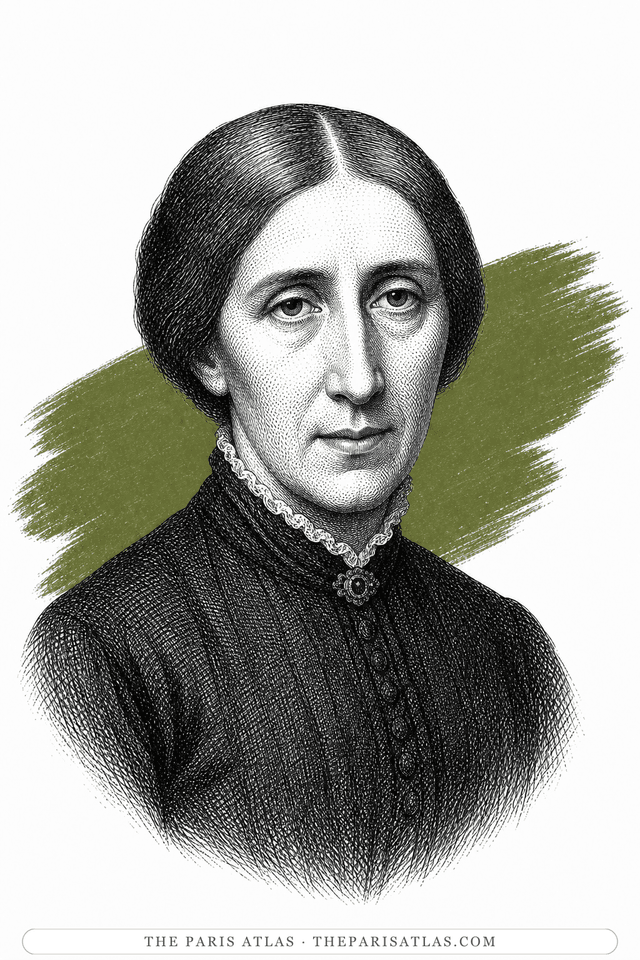
George Eliot
Mary Ann Evans, who wrote Middlemarch under a man's name because she was living openly with another woman's husband and knew what English readers would do with that. Her mind was formed in French and German: she translated Strauss and Feuerbach before she wrote a line of fiction, and the sight she most wanted in Paris was not a monument but the flat where Auguste Comte had lived.
View author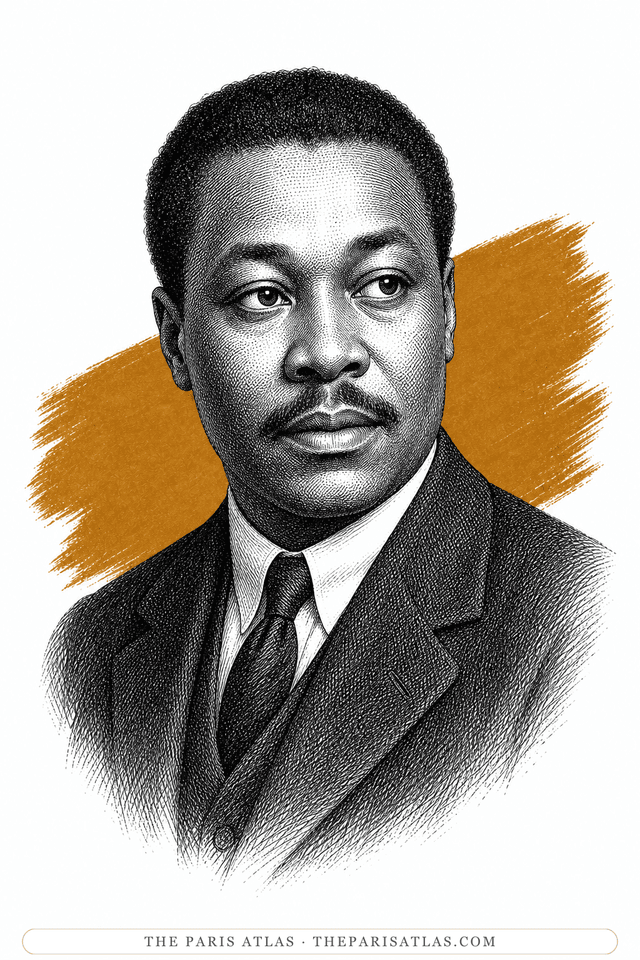
Claude McKay
Jamaican-born poet and novelist, and one of the essential writers of the Harlem Renaissance. He arrived in Paris from Moscow in 1923 and stayed in France until 1928, writing Home to Harlem there — and forming a low opinion of the rich, white expatriate scene that dominates most accounts of the period. His Paris is the same years as Hemingway's and almost nothing like it.
View author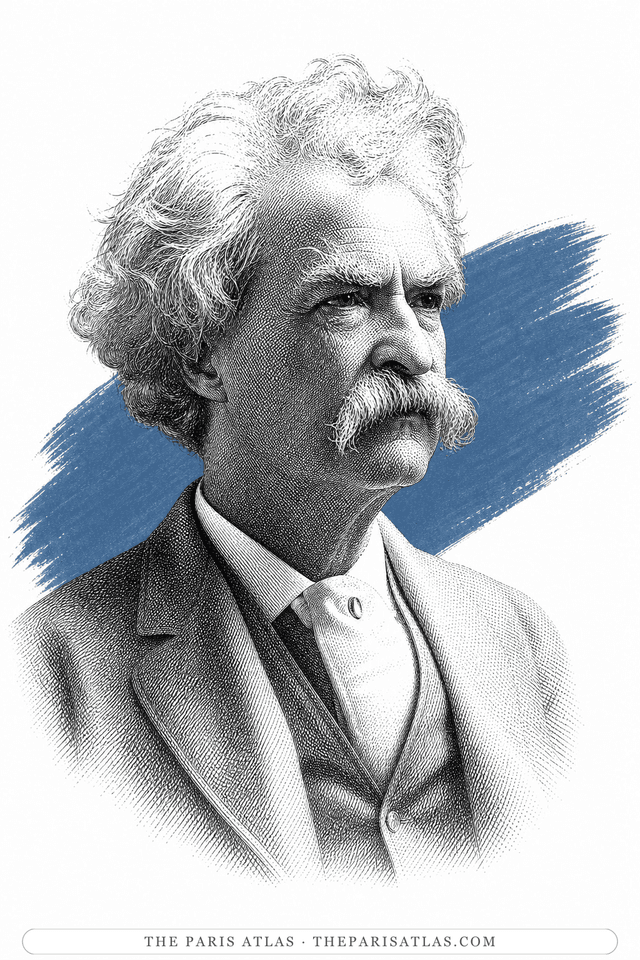
Mark Twain
The Missouri newspaperman who became America's most famous writer, and whose first book made its reputation partly out of Paris: in 1867 he arrived with a shipload of American tourists, renamed his guide Ferguson, watched the high-kicking can-can through his fingers and wrote it all down. He kept coming back — and was living in Paris in the mid-1890s, broke, while finishing the novel he considered his best, Personal Recollections of Joan of Arc.
View author