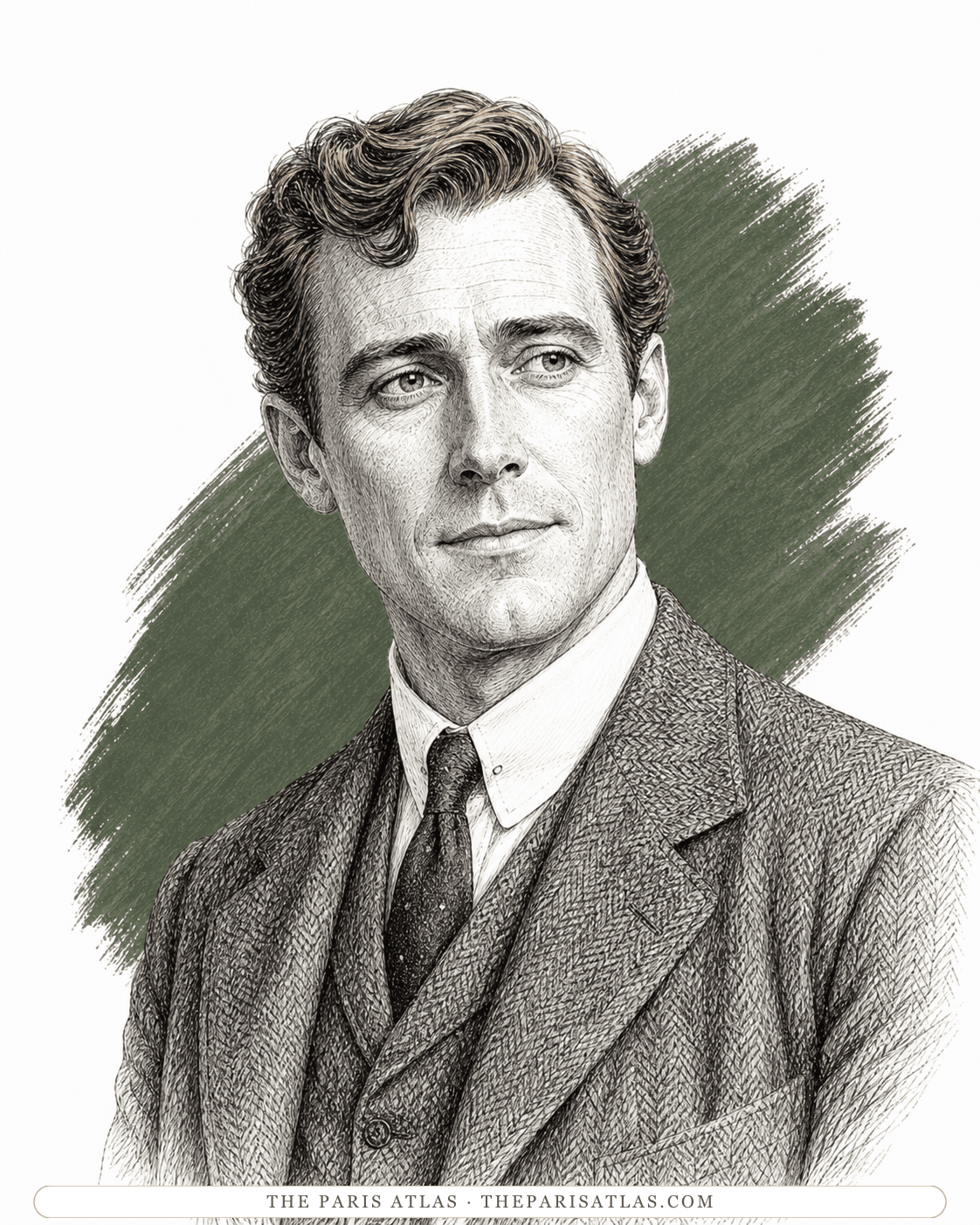
Sir Philip Gordon
Stephen's father, who worked out what his daughter was from a shelf of German sexology, brought her up accordingly, and died before he could tell anyone.
To give his daughter the education and the freedom he would have given a son, and to spare his wife the knowledge that would have explained her. He tells Stephen she is all the son he has got, and asks her to help him prove his judgement sound.
The book

At a glance
- Book One; dies at the end of chapter fourteen
- Fifty-three the last time he mentions it; twenty-nine when he married
- Morton, in Worcestershire between Upton-on-Severn and the Malvern Hills
- Karl Heinrich Ulrichs and Krafft-Ebing, locked away; the Bible, for the literature
- One of the finest libraries in England, and the first motor-car in the neighbourhood
Who they are in the book
Spoiler-freeSir Philip Gordon is the master of Morton and Stephen's father in The Well of Loneliness, the 1928 novel by the English writer Radclyffe Hall. He is fictional. He is tall, well-favoured, auburn-haired, with deep-set hazel eyes that the book keeps calling melancholy, a slightly cleft chin, and a wide, tolerant expression. His daughter inherits all of it, which is the trouble.
He met Anna Molloy in County Clare when he was twenty-nine and married her, and the novel is unusually firm that the two of them loved each other completely for the whole of his life. He is described as a queer mixture, part sportsman and part student, with one of the finest libraries in England. He hunts, he reads the Bible for its literature, he indulges his daughter and does not think he has spoilt her.
What he also does, alone in his study at night, is read a slim volume by the German writer Karl Heinrich Ulrichs and pencil notes about Stephen into its margins. He works out what she is when she is about seven. He never tells his wife, and he never tells Stephen.
How Sir Philip Gordon Is Portrayed
- The name he chose before the birthStephen, after the saint whose pluck he admired. He talks about putting Stephen down for Harrow through the whole pregnancy, and it never seems to cross his mind that the child might be a daughter. When she is, he has her christened Stephen anyway.
- The books in the locked caseKarl Heinrich Ulrichs, read and reread behind a locked drawer while Stephen is seven, with little notes written along the immaculate margins. Later Stephen finds a whole row of such books standing behind the others, one of them by Krafft-Ebing, with her own name in her father's small scholarly hand in the margins.
- How he brings her upAstride, on a hunting pony at eight and a thoroughbred Irish hunter at twelve; fencing and gymnastics because she asks for them; Greek, Latin and mathematics from an Oxford-trained governess because he wants her to have the finest education money can buy. His wife asks what the good of it is for a girl. He does not answer that question.
- The one thing she asks himAfter Martin Hallam's proposal she comes to the study and asks whether there is anything strange about her. He shades his face with his hand while she talks, then turns round, smiles straight into her eyes and tells her there is nothing strange about her and that marriage is not the only career for a woman. The novel calls it the gall of deception, and says he wept after she had gone.
- The first cowardly action of his lifeAnna asks him, frightened, to explain why the way he treats Stephen makes her feel strange with the child. He tells her there is nothing to understand and that he would like her to trust him. Hall's judgement on the scene is that in his pity for Stephen's mother he sinned very deeply against Stephen.
- The cedarAnna is worried about the weight of snow on the old cedar she has sat under all her married life. Sir Philip sends to Upton for chain and felt pads and stands underneath directing the gardeners, because she loves the tree. A branch gives and crushes his chest.
- What he does not manage to sayHe refuses drugs so as to stay conscious, and spends the last hours of his life gathering the strength for one sentence: "It's—Stephen—our child—she's, she's—it's Stephen—not like—". His head falls back before he can finish it, and Anna spends the next fourteen years not knowing.
If you like The Well of Loneliness


If you like Radclyffe Hall
Explore authors with a similar voice, perspective, and influence.
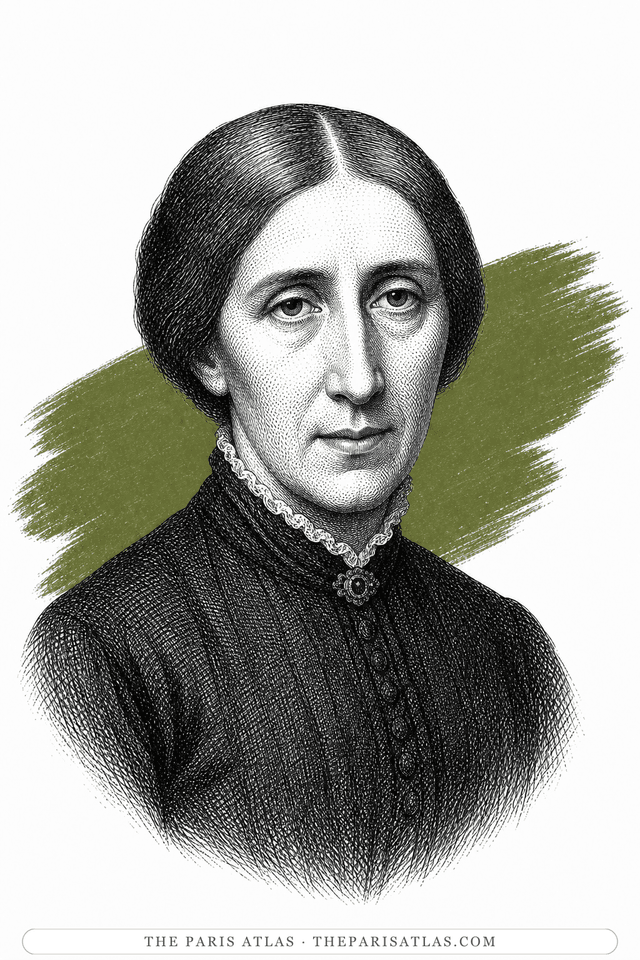
George Eliot
Mary Ann Evans, who wrote Middlemarch under a man's name because she was living openly with another woman's husband and knew what English readers would do with that. Her mind was formed in French and German: she translated Strauss and Feuerbach before she wrote a line of fiction, and the sight she most wanted in Paris was not a monument but the flat where Auguste Comte had lived.
View author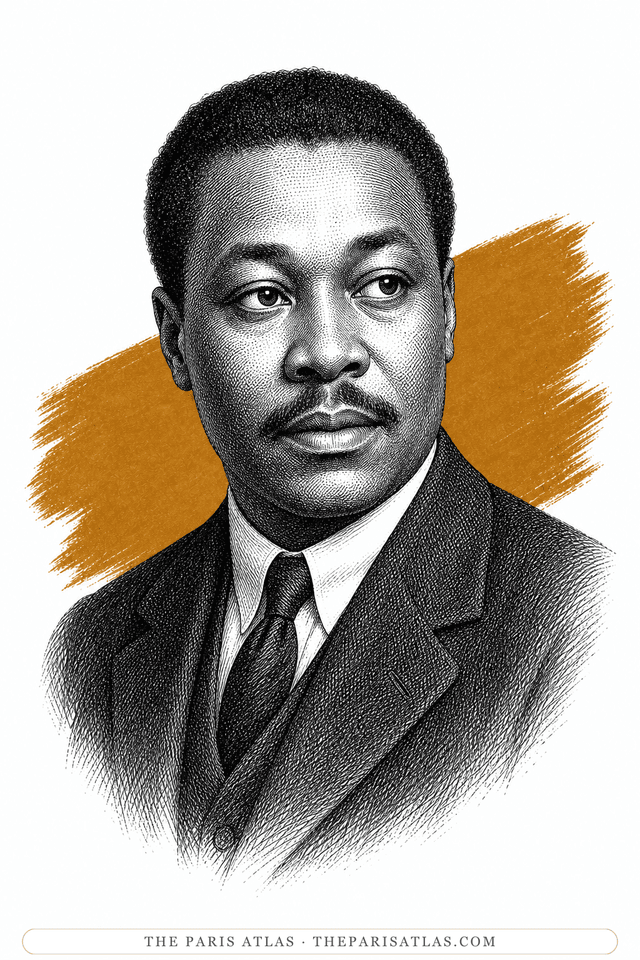
Claude McKay
Jamaican-born poet and novelist, and one of the essential writers of the Harlem Renaissance. He arrived in Paris from Moscow in 1923 and stayed in France until 1928, writing Home to Harlem there — and forming a low opinion of the rich, white expatriate scene that dominates most accounts of the period. His Paris is the same years as Hemingway's and almost nothing like it.
View author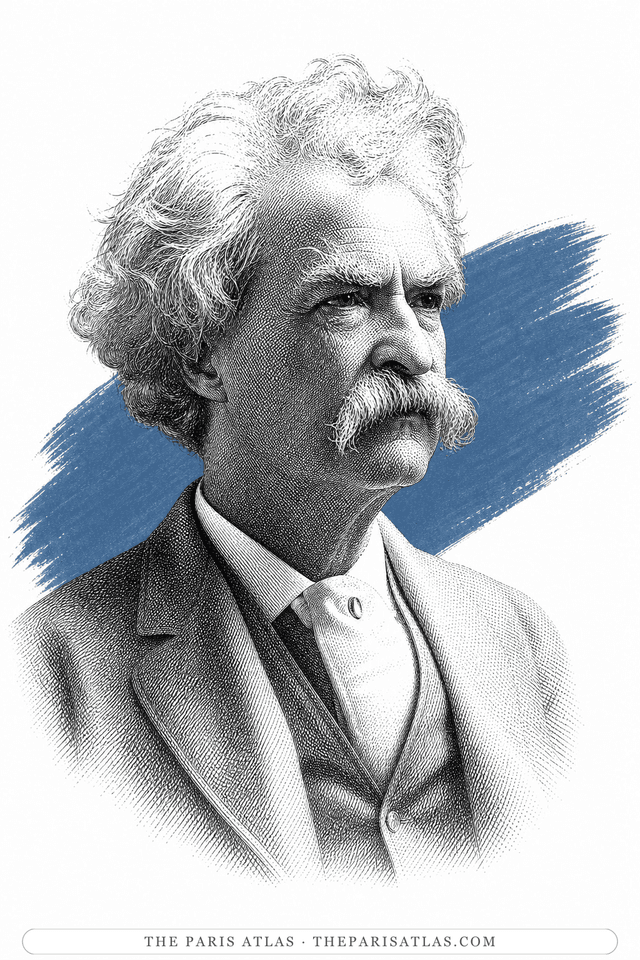
Mark Twain
The Missouri newspaperman who became America's most famous writer, and whose first book made its reputation partly out of Paris: in 1867 he arrived with a shipload of American tourists, renamed his guide Ferguson, watched the high-kicking can-can through his fingers and wrote it all down. He kept coming back — and was living in Paris in the mid-1890s, broke, while finishing the novel he considered his best, Personal Recollections of Joan of Arc.
View author